Guide Contents
Use this guide to explore the story of Boca H2O — from Brian Turner’s original idea and the first 2020 gathering to the Boca Grande Sandbar, Memorial Day tradition, boating safety, environmental responsibility, and the festival experience on the water.
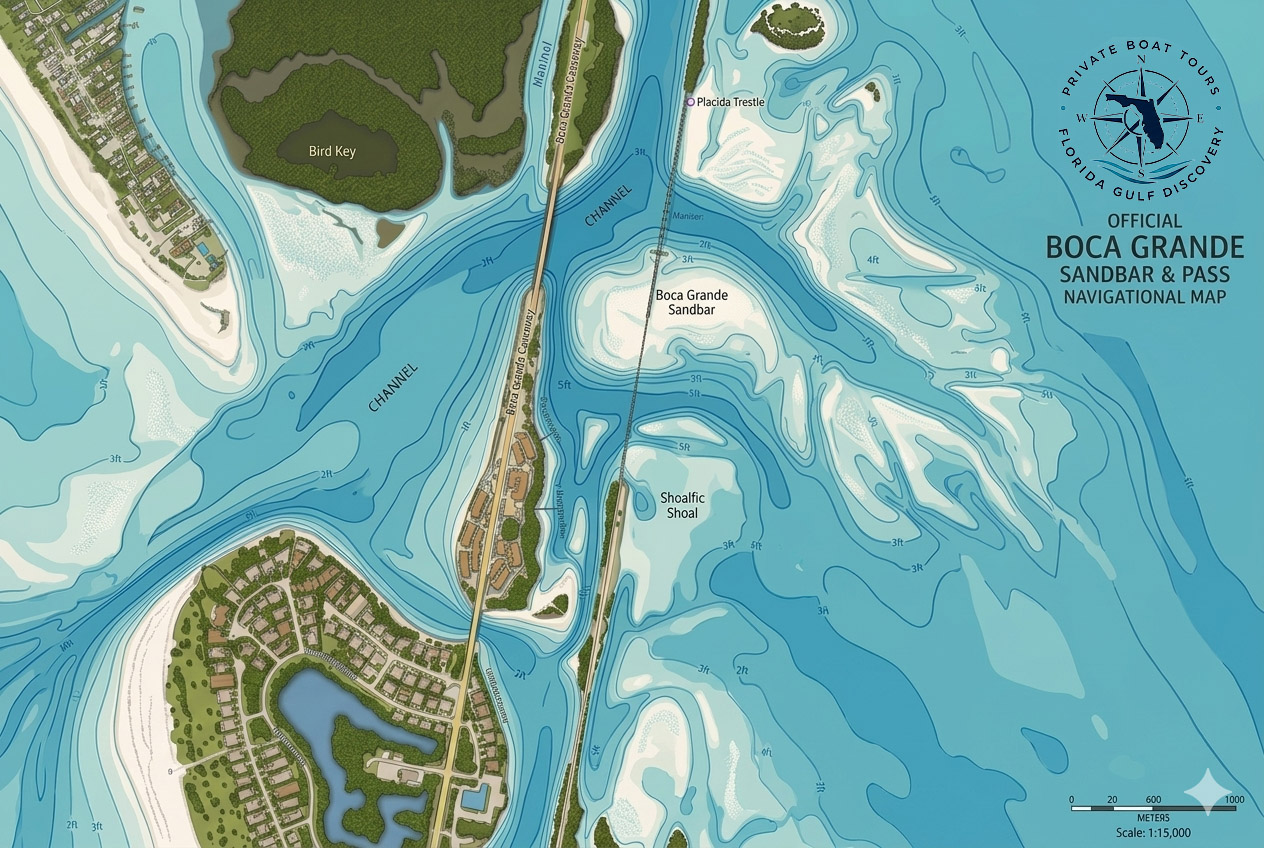
Boca H2O — Where the Sandbar Becomes a Concert Venue
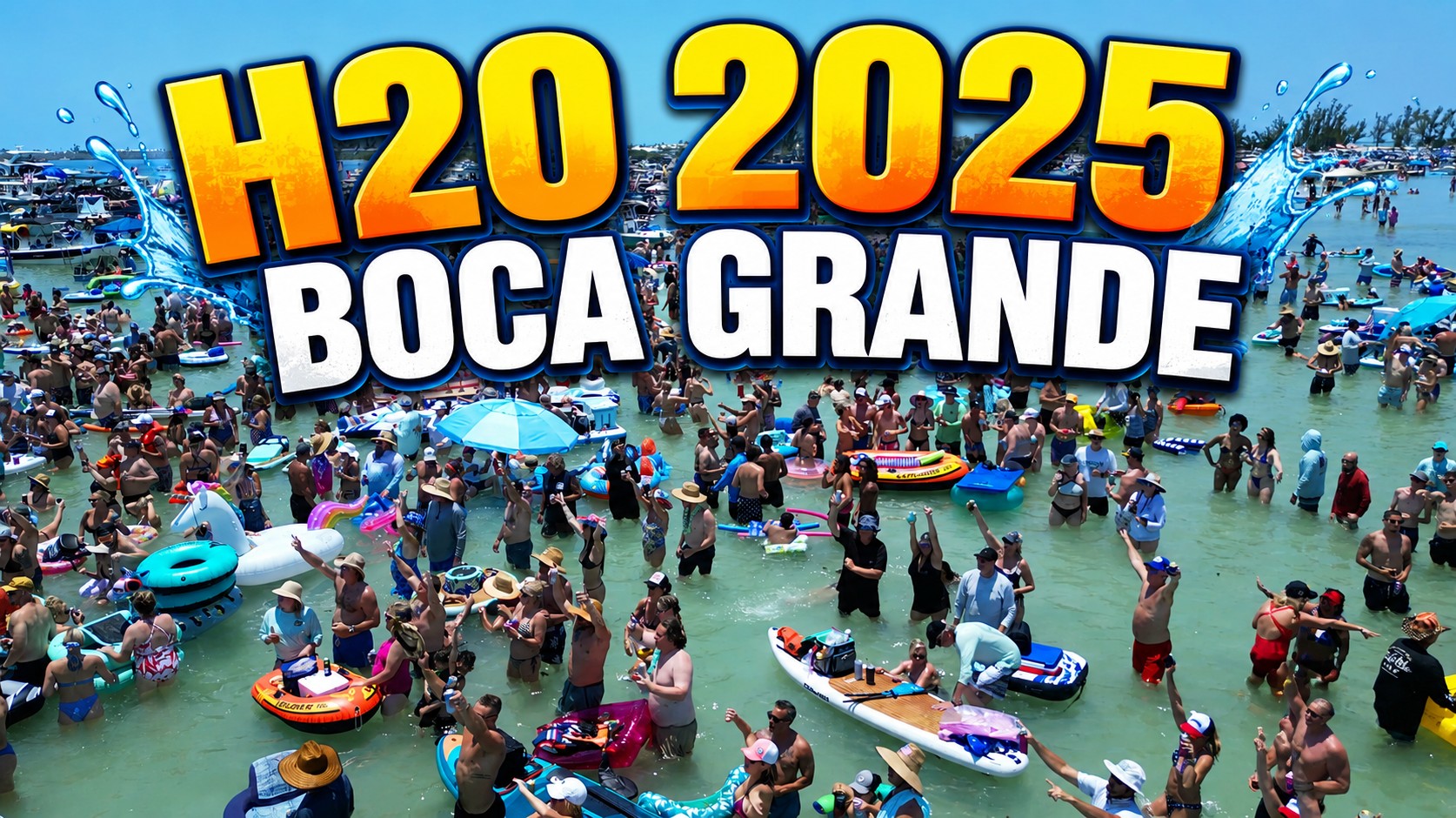
Watch on YouTube: Experience Boca H2O 2025 at Boca Grande, Florida, with Captain Pavel. See hundreds of boats gather around the floating concert stage for one of Southwest Florida's most unusual Memorial Day boating traditions, combining live music, shallow Gulf waters, sandbar fun, and an unforgettable day on the water.
If you visit the waters around Boca Grande on an ordinary day, you may never imagine what happens here during one weekend each year.
The Boca Grande Sandbar normally follows the familiar rhythm of Southwest Florida boating. Boats anchor in the shallows, families step into the warm water, friends meet for a few hours, and dolphins or seabirds may appear nearby. By late afternoon, many of the boats are gone and the sandbar becomes quiet again.
Then Memorial Day weekend arrives, and the same stretch of water can become almost unrecognizable.
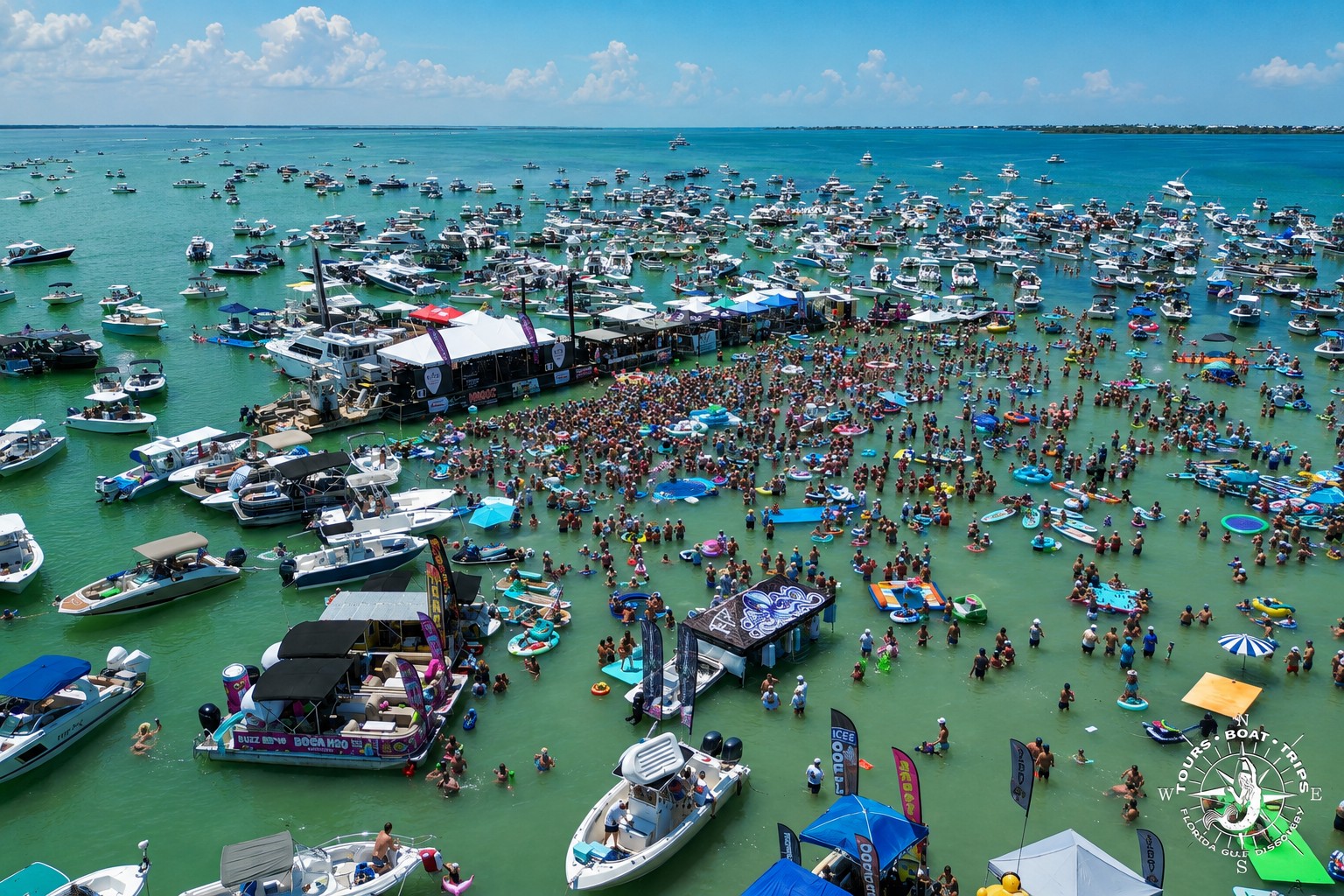
An aerial view captures the extraordinary scale of Boca H2O, the annual Memorial Day weekend gathering at Boca Grande Sandbar between Gasparilla Island and Placida. The scene has become a remarkable expression of the region's boating culture—part concert, part sandbar gathering, and entirely unlike a traditional music festival. In 2025, Boca H2O was held on May 24, with access to the festival area by water.
Boats begin approaching from every direction—Placida and Lemon Bay to the north, Charlotte Harbor to the east, and Pine Island and the barrier-island waterways to the south. What begins as scattered vessels on the horizon gradually becomes a broad field of boats spreading across the shallows.
They are coming for Boca H2O.
As you get closer, center consoles, pontoons, cruisers, and deck boats fill the view. Flags rise above the gathering. People stand on swim platforms or gather in the shallow water between anchored vessels.
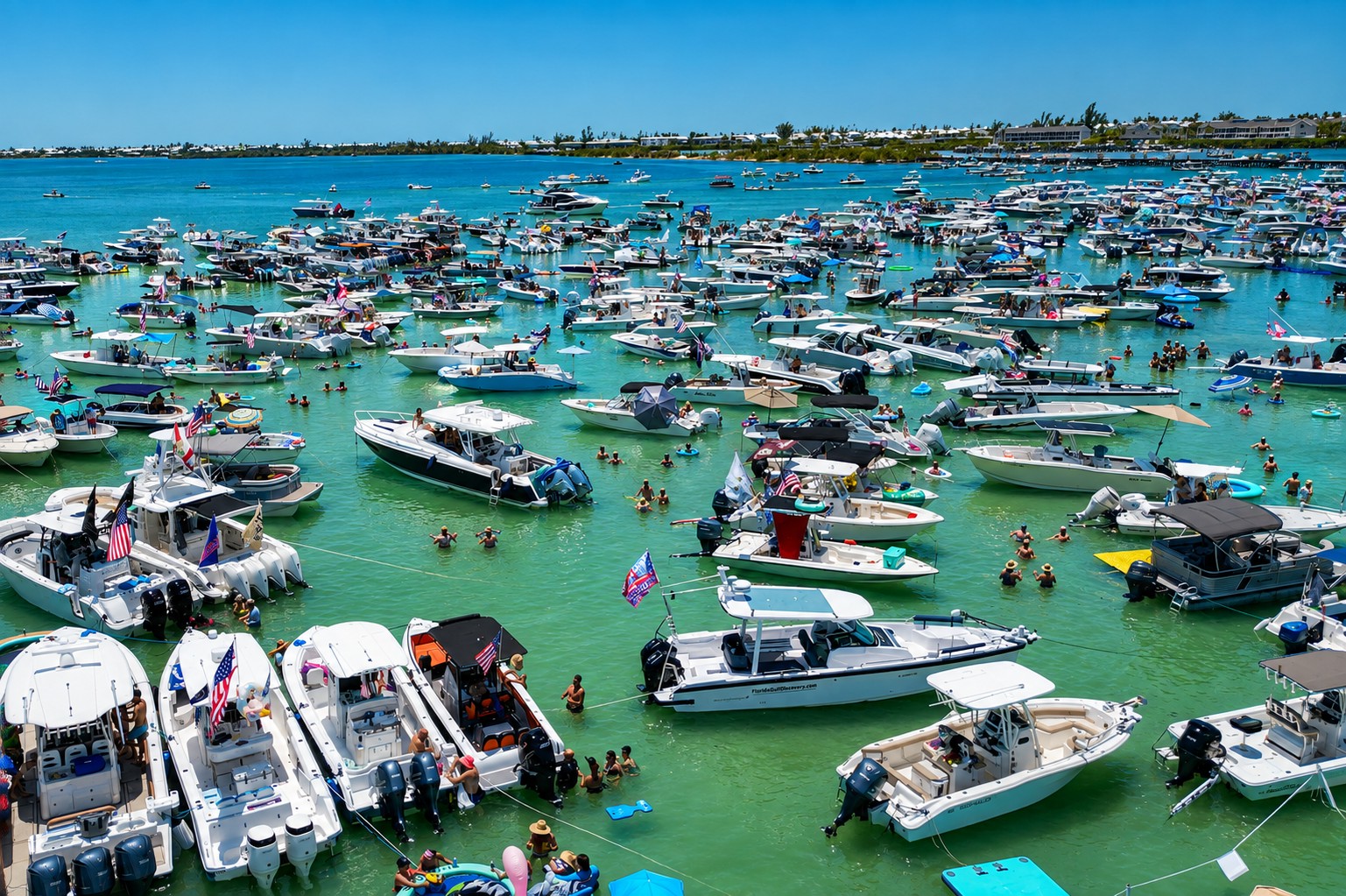
Boats surround the floating stage during the 2025 Boca H2O Music Festival, held on May 24, 2025, at the Boca Grande Sandbar between Gasparilla Island and Placida. Accessible only by water, the Memorial Day weekend event brought together a remarkable gathering of boaters for live music by Austin Snell, American Made, DJ Dank Williams, and other performers. From the water, the scale of Boca H2O is especially striking—boats anchored and rafted across the shallows while the floating stage transformed the sandbar into a one-of-a-kind Southwest Florida music venue. The 2025 gathering further established Boca H2O as a signature celebration of the region's boating culture.
And somewhere in the middle of it all is something you would never expect to find on a Southwest Florida sandbar:
a live concert stage floating on the water.
That is when Boca H2O begins to make sense.
This is not simply a music festival with a waterfront view. The boats are part of the venue. People arrive through channels, bays, passes, and open water, then step directly from their boats into the shallows. From the air, the scene can look almost impossible—a floating stage surrounded by boats and thousands of people in the middle of the Boca Grande coastal landscape.
It naturally raises a question:
How did this ever start?
It Did Not Begin as a Giant Festival
The story goes back to 2020, when conventional concerts, festivals, and public gatherings faced extraordinary restrictions and uncertainty. Yet Southwest Florida boaters still had something that offered space, freedom of movement, and a way to spend time outdoors:
the water.
Brian Turner saw an opportunity and reversed the traditional concert idea. Instead of trying to bring people back to a conventional venue, what if the music went to the boaters?
That simple idea eventually put musicians on a floating stage. But Boca H2O did not become the gathering people recognize today overnight. The location changed, the timing evolved, boaters embraced it, and the event grew far beyond its beginnings.
I Knew the Event Before I Knew the Story
As a captain who spends time on the waters around Boca Grande, I already knew Boca H2O from the boating side.
I knew the sandbar and surrounding waterways. I understood why depth, tide, weather, anchoring, swimmers, and heavy boat traffic matter here. But knowing the water did not mean I knew the complete Boca H2O story.
That changed when I began talking with Brian Turner.
Those conversations gave me something photographs and videos could not: the story from someone who was there when the idea was still only an idea.
The more I learned, the more I realized that Boca H2O is about much more than a floating stage. It is a story about an extraordinary moment in 2020, an unconventional idea, Southwest Florida boating culture, and a coastal location remarkably well suited to something nobody originally imagined on this scale.
And perhaps the most interesting part is this:
The Boca H2O everyone recognizes today is very different from where the story began.
To understand how it became what it is now, we have to go back to the beginning—and meet the man who decided to bring the concert to the boats.
Meet Brian Turner — The Man Behind Boca H2O
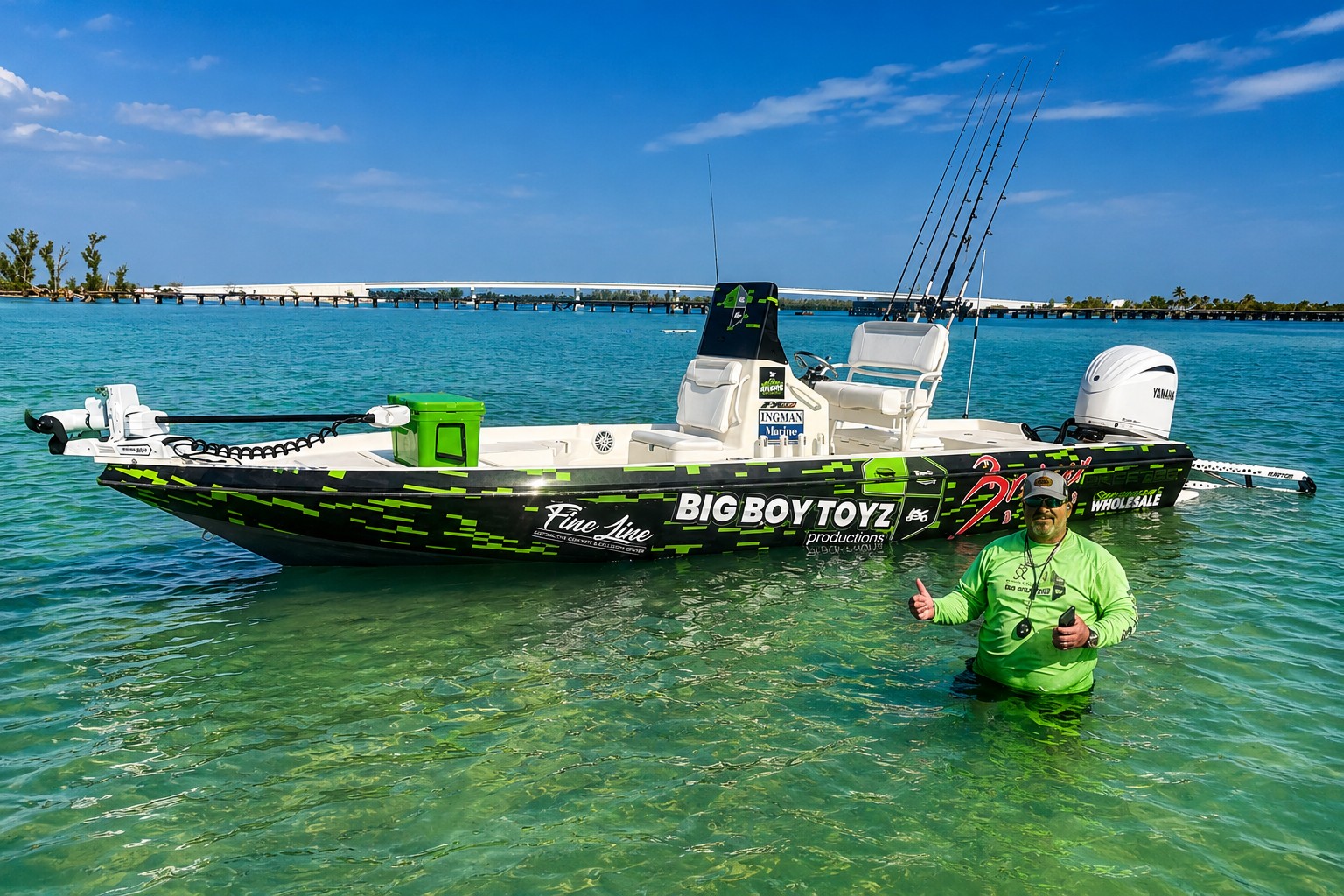
Brian Turner of Big Boy Toyz Productions, the promoter behind Boca H2O, helped transform a simple idea for live music on the water into one of Southwest Florida's most recognizable sandbar traditions. Beginning around 2020, Turner and his team organized live music from barges for boaters gathering near Boca Grande Sandbar. What started as an unconventional way to bring people together on the water continued to grow, eventually developing into the large-scale Boca H2O Music Festival celebrated during Memorial Day weekend. The story of Brian Turner and Big Boy Toyz is an important part of understanding how Boca H2O evolved from a local boating gathering into a major Southwest Florida on-the-water event.
When people see Boca H2O today, they usually see the finished picture: a floating stage, live music, boats spread across the sandbar, and one of the most recognizable Memorial Day gatherings around Boca Grande.
What they do not see is everything that had to happen before the first musician stepped onto the stage or the first boat arrived.
Behind that story is Brian Turner.
Brian is an event promoter and the founder of Big Boy Toyz Expo, the organization closely associated with the creation and production of Boca H2O. In later promotional material, the Big Boy Toyz Productions name also appears in connection with his event work.
Long before he began thinking about concerts on the water, Brian was already building events on land. His work involved bringing together sponsors, vendors, performers, equipment, promotion, and the public.
That experience mattered. Putting musicians on a barge is one thing. Building an event around them is something completely different.
What an Event Promoter Really Does
When Brian explained his background to me, one thing became clear: most people attending an event see only the final result.
They see the stage, performers, vendors, attractions, and crowd. What they usually do not see are the months of planning behind it.
A venue has to be secured. Sponsors and vendors have to be recruited. Entertainment must be booked. Equipment, advertising, staffing, schedules, safety, and logistics all have to come together at the right time.
Brian used his Big Boy Toyz Expo as an example. For a conventional event, he could begin with a fairground or another fixed venue, organize everything inside it, promote the event, and then bring the public through the gates.
For years, that model worked.
Then came 2020.
Experience That Would Matter Later
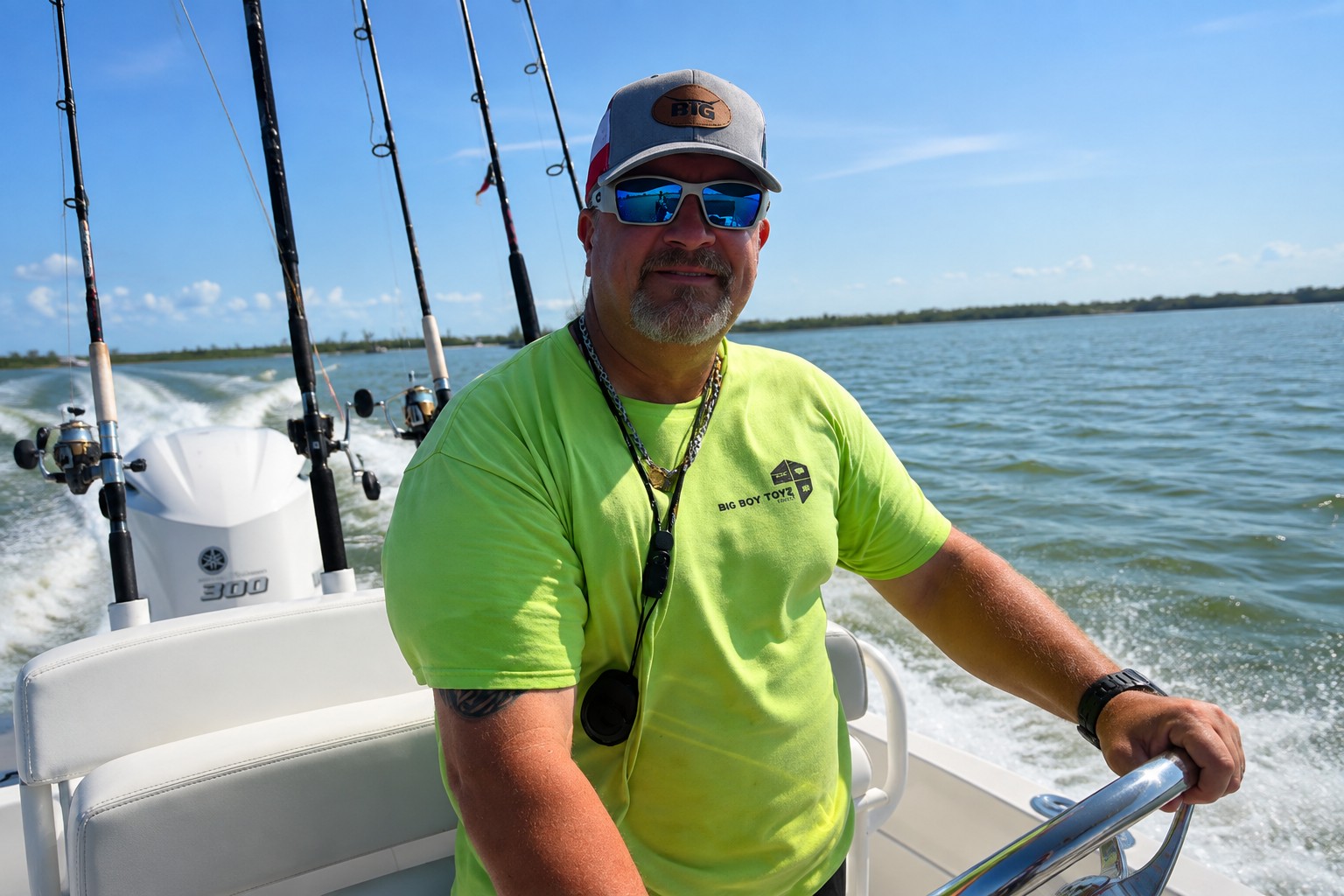
Brian Turner, the organizer behind Big Boy Toyz and Boca H2O, is pictured aboard a boat during the on-the-water gathering near Boca Grande Sandbar.
Boca H2O did not begin simply because someone looked at a sandbar and thought music would be fun.
By then, Brian already understood how to approach sponsors, work with performers and vendors, organize equipment, promote an event, and solve the problems that happen behind the scenes.
What he did not have was a conventional venue.
There would be no fairground, building, parking lot, or entrance gate.
If the idea was going to work, the venue would be open water.
According to Brian, companies and potential partners understood the concept surprisingly quickly. Conversations about sponsorship, boats, a barge, and other support began turning the idea into something that might actually happen.
The timing mattered too. In 2020, when conventional public gatherings had been disrupted and people were looking for ways to spend time outdoors, a concert where the audience arrived aboard its own boats suddenly had a different appeal.
Southwest Florida already had the boaters. Brian understood events. The water offered the space.
Those pieces had not yet become Boca H2O, but they were beginning to come together.
Big Boy Toyz and Boca H2O
As the concept developed, the Big Boy Toyz name became closely associated with Boca H2O and its promotion. Over the following years, it appeared in event announcements, performer promotions, sponsor material, photographs, videos, and media coverage.
But when I sat down with Brian, I was less interested in the finished posters than in what happened before there were posters to make.
I wanted to understand the moment when an experienced event promoter, accustomed to bringing people to a venue, began considering the opposite approach.
What happens when the venue you normally depend on is no longer practical—and your audience is already somewhere else, spending its time on boats?
That question takes us back to 2020.
For Brian, that year created a serious business problem. But it also forced him to look beyond the event model he already knew.
And when he looked toward the waters around Boca Grande, he began to see something he had never needed to see there before:
a venue.
2020 — When Everything Changed
At the end of the previous chapter, Brian Turner was beginning to look at the waters around Boca Grande in a way an event promoter normally would not.
He was beginning to see a venue.
To understand why, we have to return to the spring and summer of 2020, when the COVID-19 pandemic disrupted everyday life across the United States. Concerts, festivals, expos, sporting events, and other large gatherings were canceled, postponed, restricted, or completely redesigned.
For Brian, whose business depended on creating public events, the problem was immediate.
His normal formula—find a venue, organize sponsors and vendors, book entertainment, promote the event, and bring people through the gates—had suddenly become extremely difficult to use.
He could have waited for everything to return to normal.
Instead, he started looking for another way.
Looking Beyond the Traditional Venue
While conventional venues faced restrictions and uncertainty, Southwest Florida still had something no arena or fairground could offer:
open water.
People were still boating. Families could spend time together aboard their own vessels, friends could get outside, and around Boca Grande, boats continued moving between islands, beaches, passes, and sandbars.
Brian already knew that boaters regularly gathered around these waters, especially on weekends and holidays.
They did not need another reason to go boating.
They were already there.
That changed the way he looked at the problem.
Instead of finding another venue and convincing people to come to it, perhaps he could bring the entertainment to a place where people were already spending their time.
Boca Grande Already Had the Audience
Long before anyone had heard the name Boca H2O, boaters were gathering around Boca Grande to anchor, swim, explore the islands, meet friends, and spend the day on the water.
As someone who spends a great deal of time navigating this area, I understand what Brian recognized.
Southwest Florida boaters do not need much convincing to spend a good day at a sandbar.
Boca Grande also had geography working in its favor. Gasparilla Sound provided relatively protected water nearby. Islands and passes created multiple routes into the area. Shallow sandy areas offered places for boaters to gather, while Charlotte Harbor connected Boca Grande with boating communities across Southwest Florida.
Brian did not have to create the destination or the boating culture.
Both already existed.
What was missing was the entertainment.
What If the Audience Never Left the Water?
Normally, an event promoter chooses a venue and brings the audience to it.
Brian began imagining the opposite.
The audience could arrive aboard its own boats. The boats themselves could become part of the gathering. Instead of rows of parked cars outside a venue, there could be anchored vessels surrounding a floating stage.
Most importantly, people would never have to leave the water.
That sounds almost obvious now because we know what Boca H2O became. But in 2020 there was no established festival to copy, no familiar floating stage, and no annual Memorial Day tradition.
There was only an experienced event promoter asking whether a concert could be designed around the way Southwest Florida boaters were already spending their time.
An Idea Is Easier Than an Event
Recognizing the opportunity was only the beginning.
On open water, almost every familiar event-planning question had to be reconsidered.
The musicians needed somewhere to perform. Sound equipment and power had to operate away from a conventional building. Performers, supplies, and equipment had to reach the site by water. Sponsors had to understand an event unlike a normal festival.
Then there were questions Brian rarely had to place at the center of a land-based event: weather, tides, anchoring, marine traffic, water depth, and moving boats.
His event experience still mattered, but now almost everything had to work in a completely different environment.
This time, the venue itself would be moving around him.
From a Business Problem to a New Kind of Event
The pandemic created the problem, but Boca Grande provided the opportunity.
Brian already understood how to build an event. Southwest Florida already had the boating community. Boca Grande already had natural gathering places.
The missing step was combining those pieces.
Nothing had been built yet. No musician had stepped onto a floating stage, and no fleet of boats had gathered around one.
But the most important change had already happened.
Brian was no longer trying to recreate a conventional event without a conventional venue.
He was imagining an event that did not need one.
The water around Boca Grande was no longer an obstacle between the audience and the entertainment.
It could become the place where they met.
And from that realization came the idea that would define everything that followed:
Bring the concert to the boats.
The Idea — Bring the Concert to the Boats
By this point, Brian Turner had reached the idea that would define Boca H2O: instead of asking people to leave the water and come to a traditional venue, bring the entertainment to where Southwest Florida boaters were already spending their time.
The concept sounded simple.
Making it real was not.
A conventional concert begins with a fixed place. There is a stage, power, access for equipment, space for the audience, and roads connecting everything together. On the water, Brian had none of that.
If Boca H2O was going to work, it could not simply be a land-based concert moved onto a sandbar. The entire event had to be designed around boats, shallow water, navigation, weather, and the fact that the audience would arrive in its own vessels.
A Barge Becomes the Stage
The first major question was obvious: where would the musicians perform?
The practical answer was a barge.
A barge could support performers, sound equipment, power, and the basic infrastructure of a live concert while keeping the stage on the water. Once that idea was in place, Brian could finally picture how the gathering might work.
Boaters would arrive through the surrounding waterways and anchor around the stage. Some people could stay aboard, while others could step into the shallows near their boats. Friends arriving separately could meet once they were anchored.
The barge would give the event a center, but the festival itself would spread across the water.
That was the key difference.
Brian was not simply placing a stage on a sandbar. He was creating an event where the boats and the people around them became part of the venue.
The Audience Arrived With Its Own Boats
That changed the experience completely.
At a normal festival, people park somewhere else and walk into the event. At Boca H2O, the boat that brought you there remained part of your day.
It carried your passengers, food, drinks, shade, towels, and floats. Once anchored, it became your small base inside a much larger gathering.
Every new boat therefore added more than passengers. It added another piece to the event itself.
As more vessels arrived, the audience grew and the venue seemed to grow with it. That helps explain why aerial photographs of Boca H2O look so unusual. Instead of a crowd filling a field or stadium, boats and people spread outward around a floating stage until the water itself began to resemble an outdoor amphitheater.
Finding People Who Believed in the Idea
Brian could not build that alone.
The concept required a barge, equipment, technical help, boats, sponsors, performers, and people willing to support something that had never been tested.
According to Brian, the response was surprisingly positive.
Companies and boat owners understood the idea. Southwest Florida already had a strong boating culture, and businesses understood the audience Brian was trying to reach.
Each conversation brought another piece into place. Sponsors could help support the event. Boats could move equipment and people. The barge could carry the stage. Performers could give boaters a reason to gather.
Brian's role was to connect all of those pieces.
That part was familiar.
The difference was that almost everything now had to work on water.
A Concert Without Walls
As the concept developed, Boca H2O began to look less and less like a normal concert.
There would be no grandstand, no rows of chairs, and no walls containing the sound. Boats could spread across the water according to depth, anchoring conditions, navigation, and available space.
For the people attending, the trip to the concert and the concert itself became part of the same experience.
You arrived by boat, spent the day aboard and in the surrounding water, and went home the same way.
There was no point where boating ended and the festival began.
That became one of Boca H2O's defining features.
The Water Also Made Everything Harder
The same environment that made Boca H2O special also created its biggest challenges.
A sandbar is not a parking lot. Boats move at anchor. Tides change water depth. Wind and current affect how vessels lie. Weather can change quickly, and swimmers, floats, paddleboards, and anchor lines can make navigation more complicated.
As a captain, this is one of the parts of the idea I find most interesting.
On land, an organizer can control much of the environment. On the water, the environment is always part of the event.
Brian's simple concept would therefore require much more than musicians and speakers. Marine logistics, navigation, weather, safety, equipment, and support vessels all had to become part of the plan.
But before those questions could be solved, the event still needed something very basic.
It needed a name.
Before the First Note, the Event Needed an Identity
By then, Brian could picture the floating stage, boats gathering around it, music traveling across the water, and the people and businesses helping make it happen.
What had begun as an unusual idea was starting to look like a real event.
But if boaters were going to hear about it, remember it, and tell other people, the event needed an identity.
Brian was not naming another expo or a normal concert. He was naming something built around boats, live music, and a venue whose most important feature was all around them.
The stage could float. The audience could arrive by boat. The gathering could spread across the water.
So the next question was simple:
What do you call a concert where the venue itself is the water?
That question would give Boca H2O its name.
Turning an Idea Into an Event on the Water
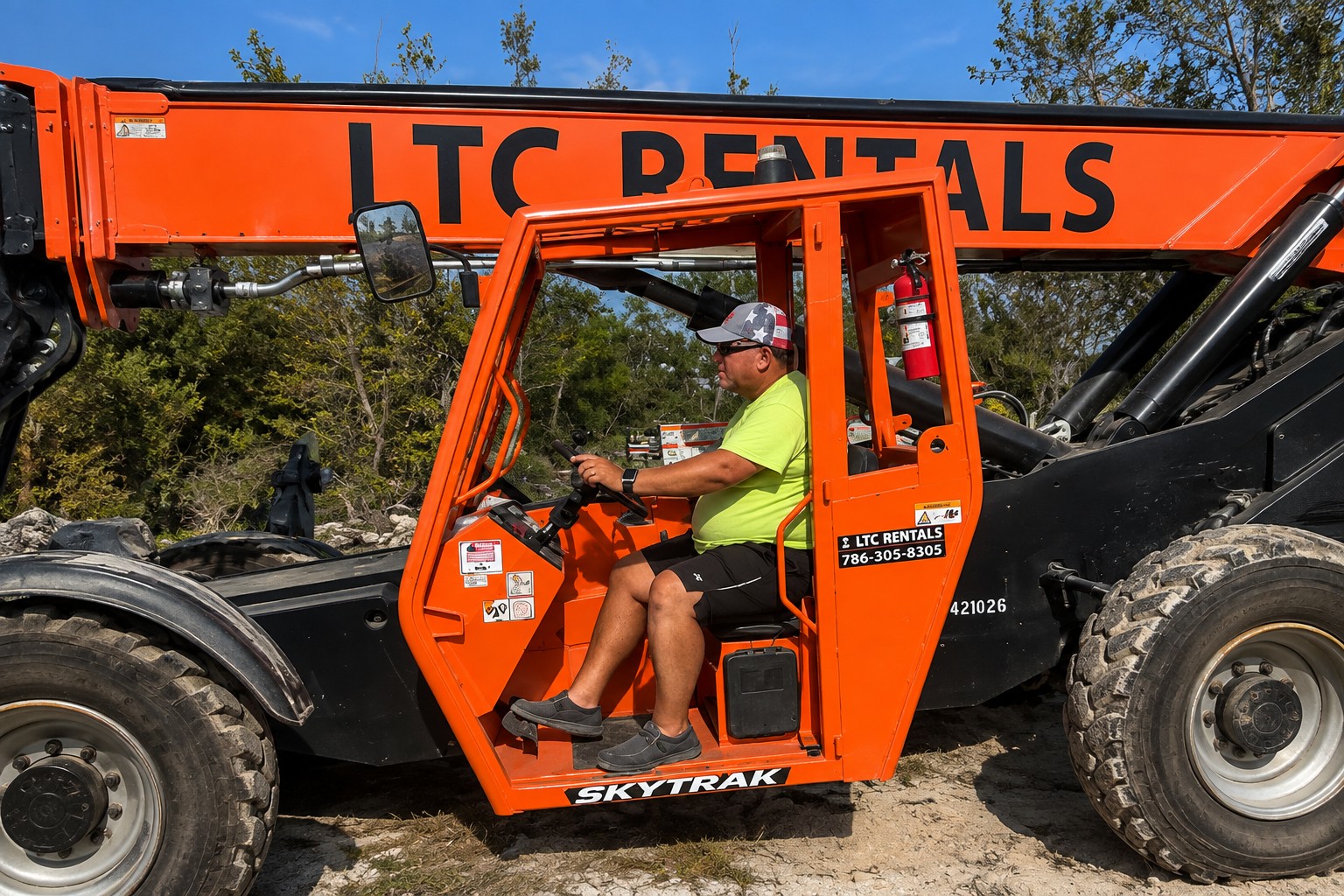
Brian Turner of Big Boy Toyz Productions works with a SkyTrak telehandler during preparations for Boca H2O. Behind the crowds, boats, and live music is a substantial production operation involving heavy equipment, staging, sound systems, barges, vendors, and days of logistical preparation.
By the time Boca H2O had a name, Brian Turner could finally explain the event clearly: a floating music stage, boaters gathering around it, and an audience arriving entirely by water.
But naming the event did not solve the hard part.
Boca H2O would exist inside an active marine environment. Boats attending the festival would share the area with other vessels still traveling through Gasparilla Sound, Boca Grande Pass, nearby islands, marinas, and surrounding waterways.
That meant Brian had to think beyond the stage and the music.
Brian Reaches Out to the U.S. Coast Guard
According to Brian’s firsthand account, one of the authorities he contacted while developing the original concept was the U.S. Coast Guard.
He wanted to explain what he was proposing and better understand how a large gathering of recreational boats around a floating stage could coexist with normal navigation.
One principle was especially important: the surrounding waterways would not become a private festival zone.
Other vessels still needed to be able to move through or around the broader area and continue toward their destinations.
Boca H2O could become a large gathering on the water without making the water belong exclusively to the gathering.
The Festival Did Not Replace the Waterway
This is easy to forget when looking at aerial photographs filled with boats.
The gathering may dramatically change the appearance of the water for a day, but the waterway continues to function.
Captains still have destinations beyond the festival. They remain responsible for maintaining awareness of surrounding traffic, operating according to conditions, and navigating responsibly around anchored boats and people in the water.
As a captain, this is an important part of the story for me.
Boca H2O could change what was happening on the water.
It could not change the basic responsibilities of operating a boat.
Turning a Barge Into a Stage
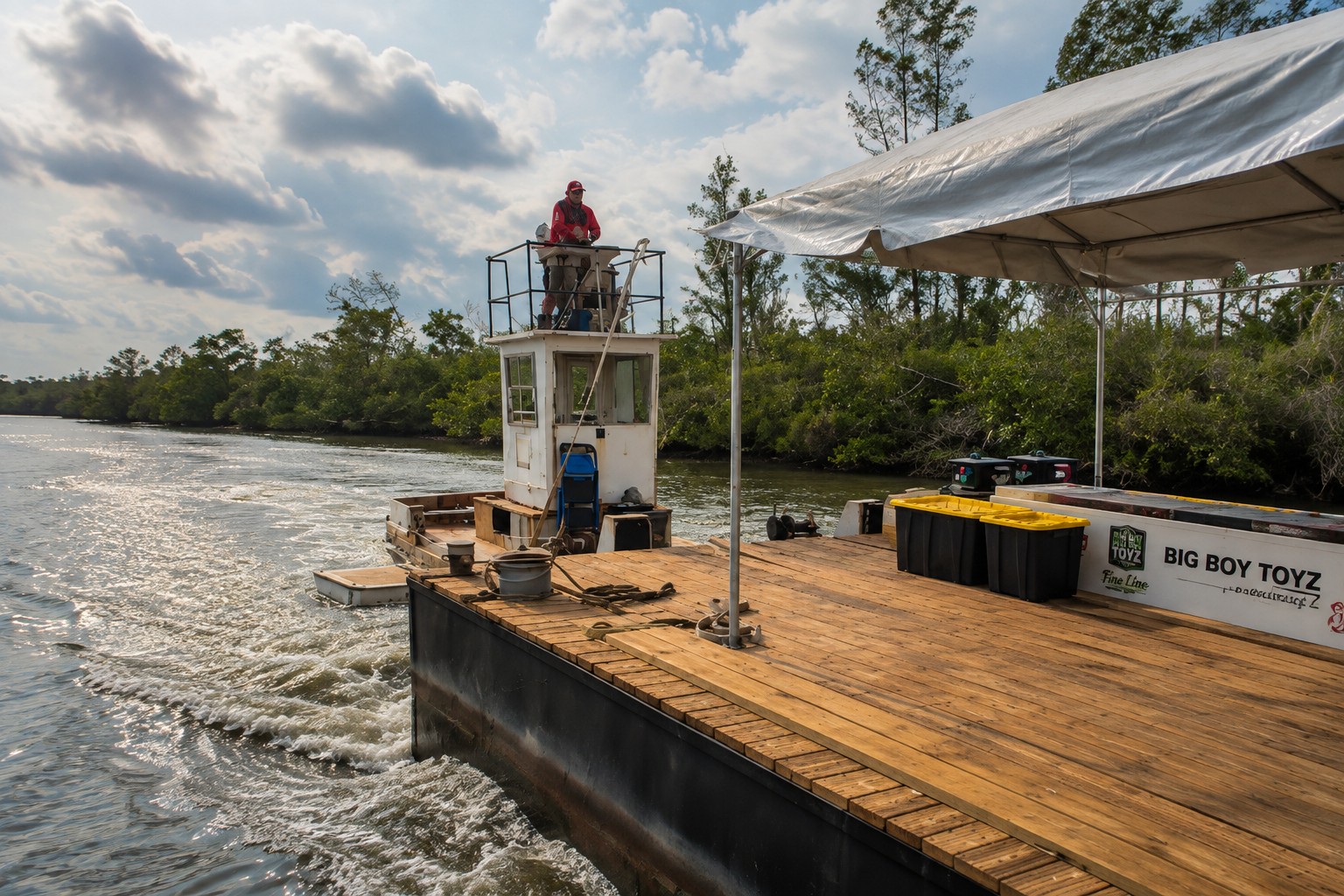
The Big Boy Toyz Productions barge became the centerpiece of the Boca H2O experience—a floating stage that allowed live music to reach boaters gathered across the Boca Grande Sandbar. Instead of bringing the crowd to a conventional concert venue, the concept brought the stage directly onto the water.
While navigation was being considered, Brian and the people helping him also had to transform a marine platform into a working concert stage.
The barge needed to support performers, sound equipment, power, instruments, and other equipment in a saltwater environment.
People and equipment had to reach the platform safely, and according to Brian, preparations also included safety equipment such as fire extinguishers.
Unlike a stage on land, the barge existed inside an environment affected by wind, current, wakes, anchoring, and changing weather.
The stage could not be separated from the water supporting it.
Safety Extended Beyond the Stage
Brian also remembers developing a safety plan as the event moved closer to reality.
Boats would arrive independently, choose their own anchoring positions, and share the area with swimmers and normal marine traffic.
Brian could organize the event, but he could not control every vessel entering the gathering.
That responsibility remained with each captain.
This became one of the fundamental differences between Boca H2O and a land-based festival. On land, organizers can control entrances, parking, barriers, and much of the movement inside the venue.
On the water, every arriving captain brings another independently operated vessel into the environment.
Responsible boating therefore became part of the event itself.
What the Coast Guard Story Does — and Does Not — Mean
There is an important historical distinction here.
Brian recalls consulting the U.S. Coast Guard while developing the original Boca H2O concept and discussing navigation and safety.
That should not be interpreted as meaning that the Coast Guard formally permitted Boca H2O.
Later reporting documented the presence of the U.S. Coast Guard, Florida Fish and Wildlife Conservation Commission, sheriff’s marine units, and emergency services around major gatherings for safety, patrol, enforcement, or emergency response.
Later reporting also indicated that a federal marine-event permit had not been issued by the Coast Guard for the 2024 gathering.
The accurate way to describe the history is therefore simple:
Brian says he consulted the Coast Guard while developing the original event, while marine authorities later maintained a visible safety and enforcement presence around large Boca H2O gatherings.
Those are related facts, but they are not the same thing as saying the event was Coast Guard-permitted.
The Final Question
By late summer 2020, many of the pieces were coming together.
The barge could become a stage. Performers and equipment could be organized. Sponsors and supporters were involved. Navigation and safety had been considered. The event finally had a name.
But one question could not be answered in advance:
Would boaters actually come?
There was no attendance history, no annual tradition, and no previous Boca H2O crowd to study.
At some point, planning had to stop.
The stage had to go onto the water. The music had to start. And Brian had to see who showed up.
On Labor Day weekend 2020, he was finally ready to find out.
The first Boca H2O was about to begin.
Labor Day 2020 — The First Boca H2O
For months, Boca H2O had existed mostly as an idea. Brian Turner had talked with sponsors and supporters, worked through the unusual logistics of putting live music on the water, considered navigation and safety, found a way to use a barge as a floating stage, and finally given the event a name. But one important question could not be answered through planning: would boaters actually come?
On Saturday, September 5, 2020, at the beginning of Labor Day weekend, Brian was finally going to find out. For the first time, the stage went onto the water, musicians began performing, and the concept that had existed through months of conversations and preparation became a real event. As the music traveled across the water, boats began arriving around the floating stage, and Boca H2O came to life.
The First Boca H2O Was Near Little Dog Island
The original gathering did not take place at exactly the same location most boaters associate with Boca H2O today. Brian identifies the first site as the area near Little Dog Island, in the Boca Grande area.
Because there had never been a Boca H2O before, there was no established layout showing organizers how the gathering would develop. Captains approached independently, selected their own anchoring positions, and decided whether their passengers would remain aboard or enter the water. Instead of an audience filling predetermined seats, the gathering gradually formed across the water as more boats arrived.
For Brian, this was the first opportunity to see how his idea would actually work. Planning could prepare the stage, performers, and equipment, but only the event itself could reveal how hundreds of independent boaters would respond once they reached the area.
Watching the Crowd Grow
Attendance had been one of Brian's biggest uncertainties because there were no tickets, entrance gates, or scanners counting participants. Boaters could hear about the event, board their vessels, and simply arrive by water.
Brian remembers watching the gathering become larger as more boats appeared around the stage. What had existed only in his imagination a few months earlier was now happening in front of him, and it soon became clear that Southwest Florida's boating community had responded to the idea.
Brian estimates that approximately 8,000 to 10,000 people attended the first gathering. Because there was no admission gate and I have not found an official attendance count, I treat that number as Brian's recollection and estimate rather than a verified total.
The precise number, however, is less important than the result: the floating stage worked, the musicians performed, and enough boats arrived to demonstrate that the concept had found an audience.
Tracing the First Event to September 2020
Brian's recollection that the first gathering occurred during Labor Day weekend 2020 is also supported by surviving contemporary material. A public promotion from the band American Made advertised a “Musicfest at Boca Grande” for Saturday, September 5, 2020.
Additional support appears in a Southwest Florida boating discussion published before the Memorial Day 2021 gathering. One participant referred to attending the Boca Grande music gathering “last September,” which at that time meant September 2020.
These records do not independently confirm every detail of Brian's account, including his attendance estimate or exactly when the Boca H2O name came into consistent use. They do, however, support an important part of the history: an organized music gathering took place on the water at Boca Grande on September 5, 2020, consistent with Brian's account of the event that began the Boca H2O story.
Before Anyone Knew It Would Become a Tradition
Looking back from today, it is easy to see that first gathering through everything that followed. We know Boca H2O returned, eventually became closely associated with Memorial Day, moved toward the Boca Grande Sandbar, and grew into a much larger event. Brian could not have known any of that on September 5, 2020.
What he learned that day was much simpler and more important: Southwest Florida boaters were willing to travel by boat to experience live music on the water. The concept worked, but the first event also showed Brian that proving the idea and finding the ideal location were two different things.
The First Location Taught Brian Something
According to Brian, the area near Little Dog Island contained grass and other bottom conditions that he did not consider ideal for a growing gathering. If Boca H2O returned with more boats and people, he wanted a location with more suitable space and a greater amount of sandy bottom.
That concern led Brian to begin looking nearby for a better location. He did not have to look far. The Boca Grande area already had a shallow sandy gathering place familiar to local boaters: the Boca Grande Sandbar.
The first Boca H2O had therefore accomplished more than proving that people would come. It gave Brian his first opportunity to see how the event actually behaved on the water and what needed to change if it returned.
Only about eight months later, Boca H2O would be back, but several important things would be different. The holiday weekend would change, the gathering would move, and more boaters would already recognize the name.
Labor Day 2020 proved that Brian's idea could work. The move to Boca Grande Sandbar would help determine what Boca H2O would become.
From Little Dog Island to Boca Grande Sandbar
The first Boca H2O had proved that Brian Turner’s idea could work. Boaters came, the floating stage worked, and the event found an audience.
But after the music stopped, Brian had something he had never had during the planning stage: firsthand experience of how the gathering actually behaved on the water.
He had watched boats approach the stage, seen where captains chose to anchor, and observed how people moved between vessels around Little Dog Island. The experiment was successful, but it also showed him that if Boca H2O returned with even more boats, the location itself deserved another look.
According to Brian, parts of the original area contained grass and bottom conditions he did not consider ideal for a growing gathering. He began looking nearby for a place with more suitable sandy bottom and enough room for the event to develop.
What Was Under the Water Mattered
From a map or an aerial photograph, moving the event a relatively short distance may not seem significant. From the helm of a boat, it can make a major difference.
Shallow coastal water is not all the same. One area may have clean sand while another contains seagrass, shell, or mixed bottom. Those differences matter whenever boats anchor or operate in shallow water.
Seagrass is an important part of Southwest Florida’s estuarine habitat, providing shelter and feeding areas for fish, shrimp, crabs, and other marine life. It can also be damaged by propellers, anchors, and dragging anchor rode.
For a gathering expected to attract many boats, finding a predominantly sandy area therefore made practical and environmental sense.
That search brought Boca H2O toward the Boca Grande Sandbar.
The Sandbar Changed the Experience
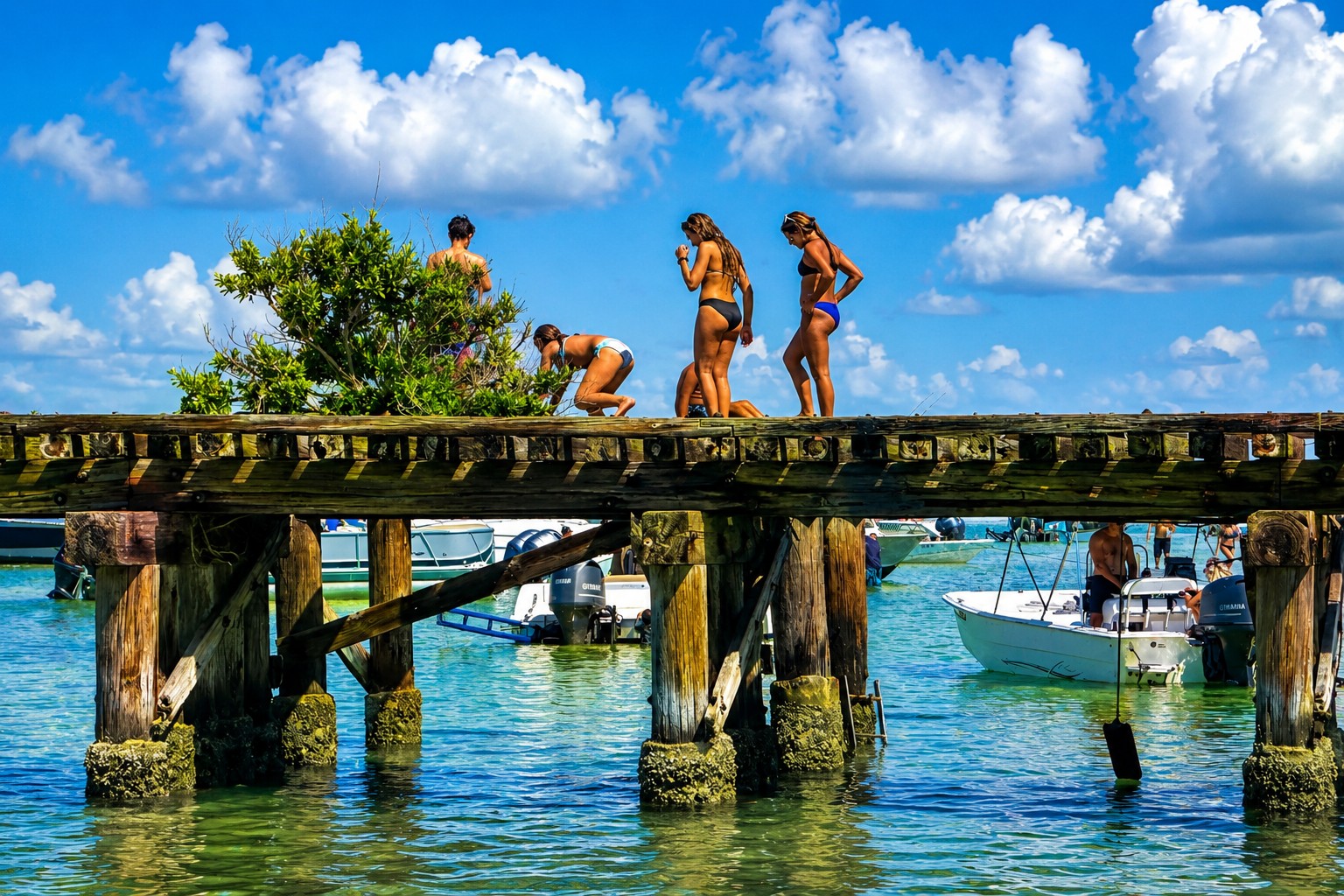
The remains of the historic Placida Trestle stand beside the waters that today form the backdrop to Boca H2O and Boca Grande Sandbar. The original railroad crossing was built as part of the Charlotte Harbor & Northern Railway, which connected the mainland with Gasparilla Island and was completed in 1907. For decades, trains crossed Gasparilla Sound carrying passengers and phosphate toward the deep-water port at Boca Grande. Rail service ended in 1958, but surviving portions of the old trestle remain a recognizable Placida landmark. More than a century after trains first crossed these waters, the same area has taken on a very different role—as a gathering place for recreational boaters and the modern Boca H2O sandbar tradition.
The Boca Grande Sandbar offered more than better anchoring conditions.
Its shallow sandy water changed how people could experience the event.
Boaters could anchor, remain aboard for the music, or step into the water beside their vessels. Friends from neighboring boats could meet in the shallows, float nearby, and move between groups without everyone crowding onto one boat.
The boat remained the home base, but the water between the boats became part of the gathering.
That is one reason later aerial photographs of Boca H2O look so unusual. The audience is not standing on dry land facing a waterfront stage. People are in the water, surrounded by boats, while the music comes from a stage floating among them.
The sandbar was no longer simply the place where Boca H2O happened.
It was becoming part of what Boca H2O was.
Memorial Day 2021 — A New Setting
According to Brian’s account, Boca H2O moved toward the Boca Grande Sandbar for its next gathering on Memorial Day weekend 2021, about eight months after the original Labor Day event.
By then, the idea was no longer completely unfamiliar. Photographs and videos from the first gathering had circulated, boaters had talked about it, and people who had attended could describe the experience to friends.
Boca H2O was beginning to spread through Southwest Florida’s boating community.
The new location helped that growth. The Boca Grande Sandbar offered extensive shallow water, sandy bottom, and access from a larger boating network that included Charlotte Harbor, Gasparilla Sound, Pine Island Sound, Lemon Bay, and the surrounding barrier islands.
At this location, the geography and Brian’s idea fit together.
The floating stage provided the center. The boats brought the audience. The sandbar connected everything.
The Move Helped Define Boca H2O
The shift from Little Dog Island to the Boca Grande Sandbar did more than relocate the event.
It changed its identity.
The first gathering had shown that boaters were willing to travel by water for live music. The second location provided a setting where the boats, shallow water, people, and floating stage could become one larger experience.
The calendar changed too. The original event took place on Labor Day weekend in September 2020, while the next gathering moved to Memorial Day weekend in 2021. That seasonal shift would eventually become another important part of the Boca H2O story.
Brian had learned from the first event rather than simply repeating it.
He reconsidered the bottom, changed the location, changed the holiday weekend, and moved Boca H2O toward the place that would become inseparable from its identity.
Little Dog Island proved the idea could work. Boca Grande Sandbar helped turn that idea into the Boca H2O people recognize today.
Why Boca Grande Sandbar Works for Boca H2O
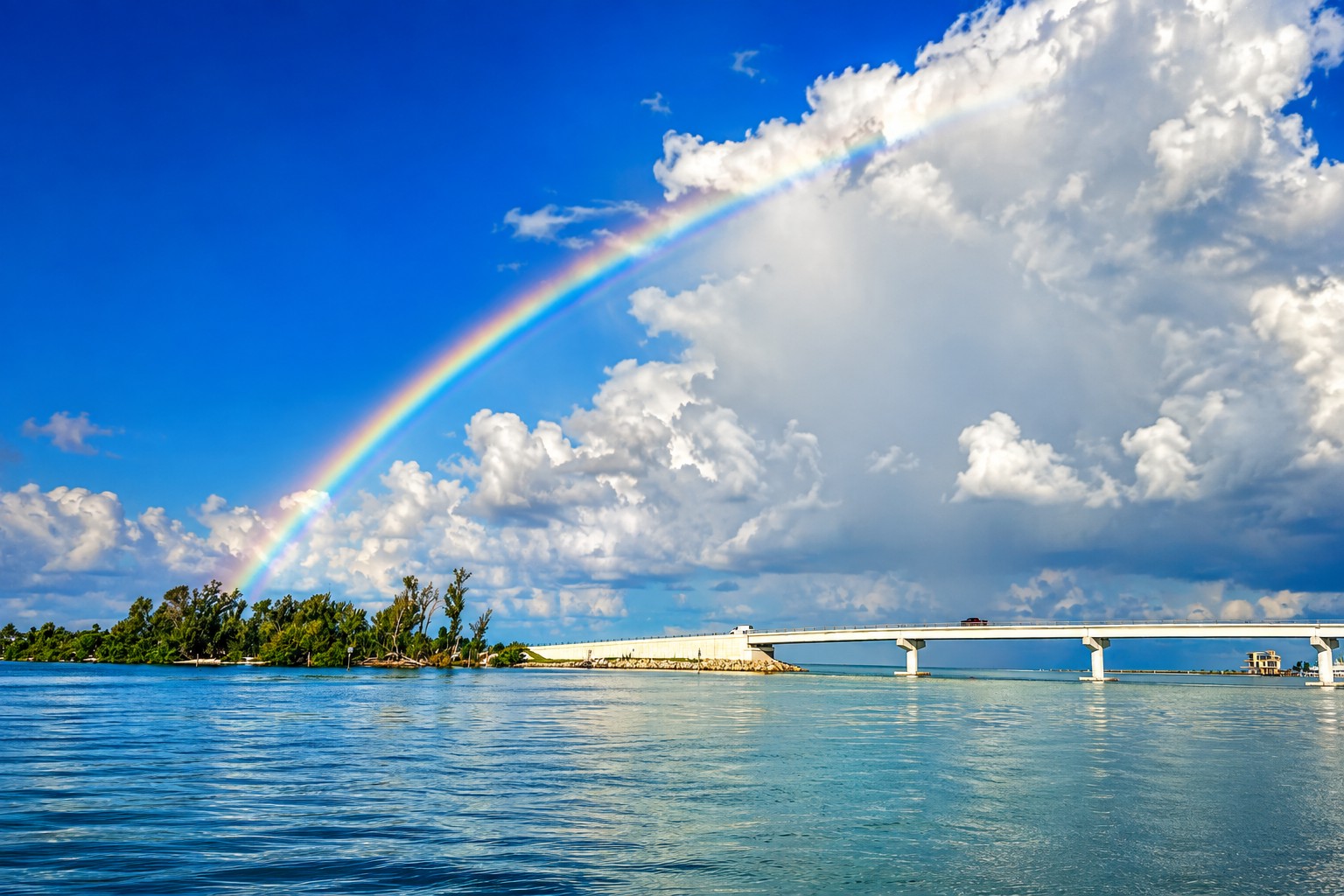
A brilliant rainbow arches over the Boca Grande Causeway, creating a spectacular scene above Gasparilla Sound near Placida. The 2.5-mile causeway is the only road connection between the mainland and Gasparilla Island, crossing a chain of small islands and three bridges before reaching Boca Grande. Its northern swing bridge spans the Gulf Intracoastal Waterway and opens to allow taller vessels to pass. The original causeway opened in 1958, fundamentally changing transportation to Boca Grande; today's swing bridge was completed in 2015. Against the dark Florida storm clouds, the rainbow offers one of those fleeting Southwest Florida moments when weather, water, and the historic route to Boca Grande come together in a single view.
When Boca H2O moved to the Boca Grande Sandbar, the festival found more than a new location. It found a place whose geography naturally suited the kind of gathering Brian Turner had imagined.
The reason goes beyond shallow water. The sandbar sits at a coastal crossroads, with Charlotte Harbor to the east, Gasparilla Sound behind the barrier islands, Boca Grande Pass opening toward the Gulf, and shallow flats close to deeper navigable water. That combination gives boaters a place to gather while remaining connected to the larger Southwest Florida waterway system.
The Sandbar Changes the Experience
At a typical deep-water anchorage, most of the social activity remains aboard the boats. Boca Grande Sandbar is different.
Depending on tide and location, the water can be shallow enough for people to step from their boats and stand nearby. Friends arriving on separate vessels can meet in the water, gather around floats, and move between groups while their boats remain their home bases.
This is something aerial photographs only partly reveal. From above, Boca H2O looks like an enormous collection of boats. At water level, you realize that much of the festival is actually happening between them.
The shallow water effectively becomes part of the venue.
Shallow Water With Navigation Nearby
Boca H2O needs shallow water for the gathering, but the surrounding waterways continue functioning. Boats still travel through Gasparilla Sound, toward Boca Grande Pass and the Gulf, and between nearby islands, marinas, and Charlotte Harbor.
The geography provides an important combination: extensive shallow areas around the sandbar with deeper navigable water nearby.
That does not make navigation easy during Boca H2O. Anchored boats, swimmers, wakes, anchor lines, and vessels arriving and departing can quickly create complicated conditions. As a captain, I have to think not only about where I anchor, but also about how I will safely approach and eventually leave.
The Journey Is Part of Boca H2O
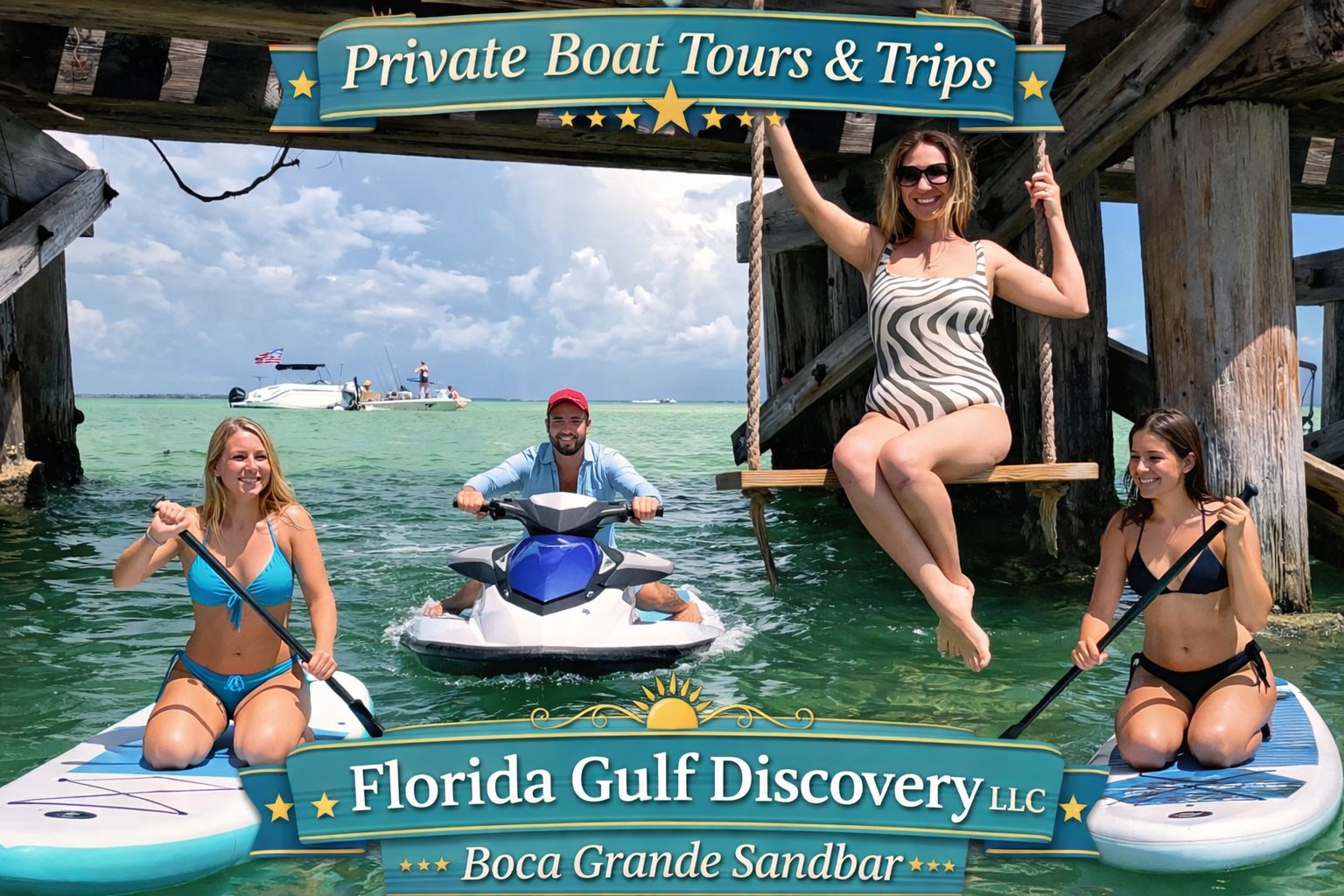
A Florida Gulf Discovery private boat tour enjoys the shallow, clear waters of Boca Grande Sandbar, one of Southwest Florida's favorite boating destinations. Located near Gasparilla Island and easily reached by boat from Placida, the sandbar offers warm water, sandy shallows, swimming, relaxing, and frequent opportunities to observe dolphins and coastal birds nearby. The personality of the sandbar can change dramatically—from a peaceful weekday anchorage to the enormous Boca H2O gathering on Memorial Day weekend. On a private tour with Captain Pavel, guests can experience the quieter side of this famous local destination and discover why Boca Grande Sandbar has become such an important part of Southwest Florida's boating culture.
Boca Grande's location also allows boaters to approach from many parts of Southwest Florida. Some arrive from Placida and Lemon Bay to the north, others from Charlotte Harbor to the east, and others through Pine Island Sound and the barrier-island waterways to the south.
Unlike a land festival where everyone follows roads toward a parking lot, the routes to Boca H2O are waterways.
That journey becomes part of the experience. Islands, mangrove shorelines, channels, passes, changing water conditions, and other boats accompany you long before the festival appears ahead.
You do not simply arrive at Boca H2O. You boat to it.
The Sandbar Is Always Changing
Beautiful shallow water can make Boca Grande Sandbar look almost like a natural swimming pool, but it remains an active marine environment.
Tides change the depth and current. Wind affects how boats lie to their anchors. Vessels can swing as conditions change, and a comfortable anchoring position in the morning may look different several hours later.
When I anchor here, I am therefore thinking beyond the depth beneath my boat at that moment. I want to know whether the tide is rising or falling, how much water will remain later, what happens when the current changes, and whether I have enough room if my boat swings.
Those considerations become even more important when hundreds or thousands of other boaters are sharing the area.
Boca Grande Became Part of the Festival
Boca H2O did not succeed here simply because Brian found an available sandbar. The location became part of the experience.
The shallow water allows people to gather outside their boats. Sandy areas provide opportunities for responsible anchoring. Nearby navigable water connects the sandbar with boating communities throughout Southwest Florida, while Boca Grande Pass, Charlotte Harbor, Gasparilla Sound, and the surrounding barrier islands create a setting no conventional venue could reproduce.
Brian brought the idea. The barge provided the stage. The musicians brought the entertainment, and the boating community brought the audience.
Boca Grande provided the place where all of those pieces could come together.
That is why Boca H2O did not simply find a sandbar. It found the setting that became part of the festival itself.
Why Memorial Day Became the Main Boca H2O Weekend
Boca H2O did not begin as a Memorial Day tradition. The first gathering took place on Labor Day weekend in September 2020. When the event returned about eight months later, Brian Turner made two important changes: Boca H2O moved toward the Boca Grande Sandbar and shifted to Memorial Day weekend.
For several years, both holidays had a place in the event’s history, but Memorial Day gradually became the weekend most closely associated with Boca H2O. According to Brian, experience showed him that late May and early September could bring very different conditions around Boca Grande.
When your venue is a sandbar, those differences matter.
Two Holidays, Different Conditions
Memorial Day arrives in late May, around Southwest Florida’s transition toward the wetter summer pattern. Labor Day comes in early September, after months of summer rainfall and near the climatological peak of Atlantic hurricane activity.
For Boca H2O, weather affects much more than whether people get wet. The event depends on boats, a floating stage, musicians, electrical and sound equipment, support vessels, and thousands of people gathering outdoors in shallow water.
Brian remembers Labor Day as more difficult to plan around. By September, heat, humidity, thunderstorms, heavy rainfall, and tropical-weather uncertainty are familiar parts of Southwest Florida’s seasonal pattern. A tropical system does not need to make landfall at Boca Grande to affect marine forecasts, wind, waves, rainfall, or boating plans.
Memorial Day does not guarantee good weather, but late May generally comes before the most active part of hurricane season and before an entire summer of wet-season rainfall has accumulated. For Brian, that made planning somewhat more predictable.
Memorial Day Already Belonged to Boaters
There was another advantage that had little to do with weather.
Memorial Day already felt like the beginning of summer. Families planned long weekends, friends organized boating trips, and people headed for the water.
Boca H2O did not have to convince boaters to spend Memorial Day around Boca Grande. Many were already planning to be on the water. The festival could become part of that boating day, which made the holiday a natural fit.
As Boca H2O returned, people began expecting it. Plans formed around it, photographs and videos circulated, and Memorial Day gradually became part of the event’s identity.
Brian Was Also Watching the Water
Brian noticed another difference between the two holiday periods: the water itself sometimes looked different.
He remembers late-summer water around Boca Grande appearing darker or more tan at times, while some Memorial Day gatherings experienced clearer or bluer-looking conditions.
There is an environmental basis for that observation. Charlotte Harbor receives freshwater from a large watershed, particularly through the Peace and Myakka Rivers. During wetter periods, increased freshwater flow can carry tannins, dissolved organic matter, and suspended material into the estuary and eventually influence water around Boca Grande.
But rainfall is only part of the explanation.
As a captain who spends considerable time on these waters, I would never use a simple rule such as Memorial Day means blue water and Labor Day means brown water. Tides, wind, river discharge, depth, bottom type, sunlight, and suspended material can all change what we see.
That more complicated story deserves its own section.
When a Weekend Becomes a Tradition
Weather alone did not make Memorial Day the main Boca H2O weekend, and neither did water color.
Several factors came together. Late May reduced some of the tropical-weather uncertainty Brian associated with Labor Day, it arrived at the traditional beginning of the summer boating season, and—most importantly—boaters embraced it.
Labor Day remains an important part of Boca H2O history because that is where the story began in 2020.
But Memorial Day became the weekend that defined its future.
And Brian’s observations about the changing appearance of the water lead naturally to another question:
Why can Boca Grande water look brilliant blue-green one day and green, yellow, tan, or tea-colored another?
Why Does Boca Grande Water Sometimes Change Color?
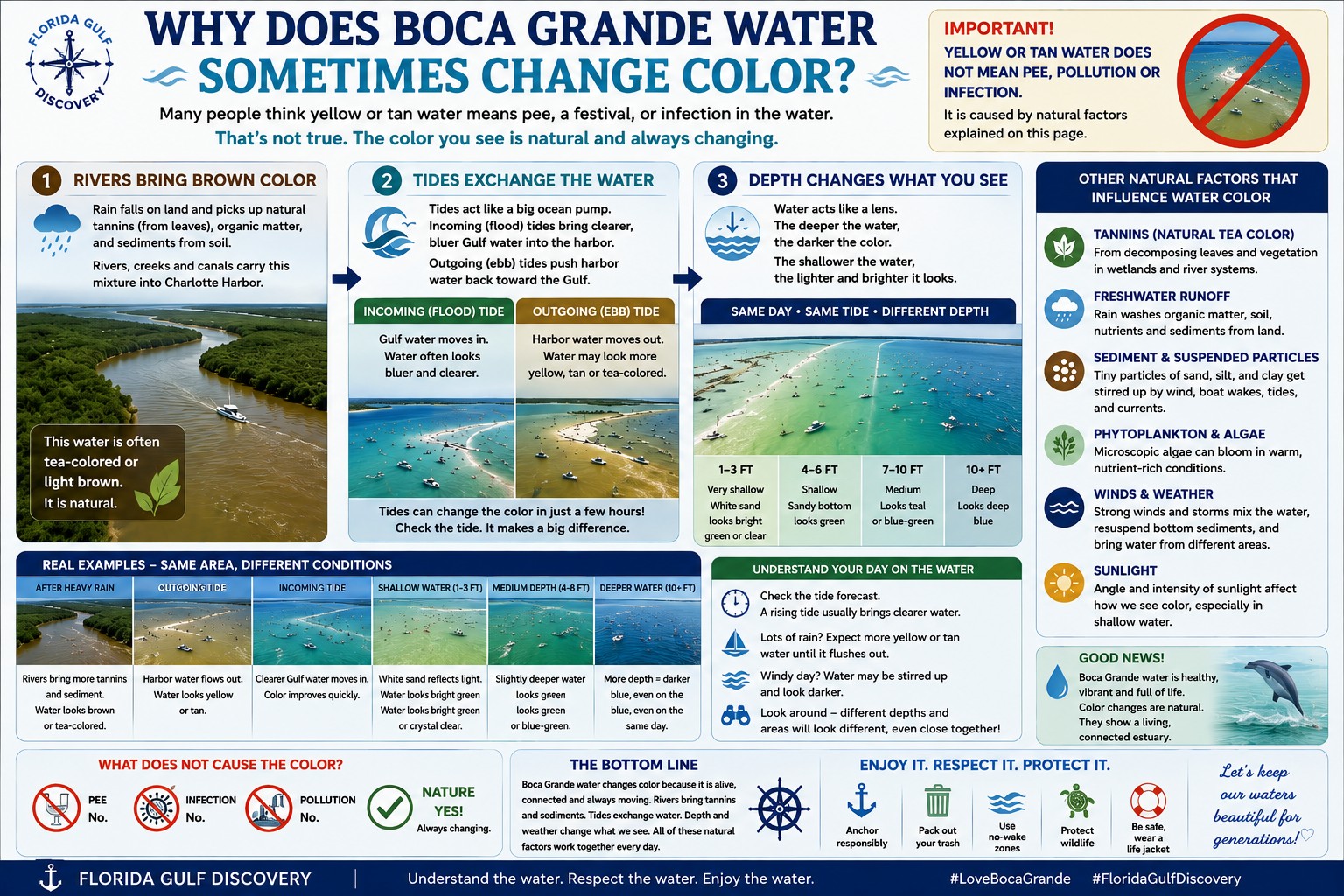
Why does the water around Boca Grande sometimes appear brilliant turquoise and other times darker green or brown? This infographic explains the constantly changing interaction between Charlotte Harbor, freshwater flowing from the Peace and Myakka Rivers, and saltwater entering from the Gulf through Boca Grande Pass. After heavy rainfall, increased river discharge can carry naturally colored organic material and suspended sediment into the harbor, producing darker water. During periods of lower freshwater flow, strong tidal exchange brings clearer, saltier Gulf water through Boca Grande Pass. Water depth also changes what we see: shallow sandy bottoms reflect more sunlight and can produce the spectacular turquoise and emerald colors often seen around Boca Grande's sandbars. The result is a constantly shifting mosaic of water color created by rivers, tides, currents, depth, sunlight, and bottom composition.
Look at photographs of Boca Grande Sandbar taken on different days and you might think you are looking at different places. One day the water is brilliant turquoise or blue-green; another day it may appear green, yellowish, tan, or tea-colored. A drone photograph can even show several colors at the same time.
During Boca H2O, those differences attract particular attention, and when the water looks yellow or brown, people sometimes blame the crowd. But water color alone is not evidence of pollution. Around Boca Grande, the story often begins many miles upstream, long before the first festival boat arrives.
The Story Begins Upstream
Boca Grande sits beside the Charlotte Harbor estuarine system. Charlotte Harbor receives freshwater from a large watershed, particularly through the Peace and Myakka Rivers.
During wetter periods, increased river flow carries more freshwater into the harbor. As rainwater moves through vegetation, wetlands, soils, and decaying organic material, it can collect tannins and dissolved organic matter that give natural Florida water a tea-like color. River flow can also carry suspended material that affects clarity.
This helps explain Brian Turner's observation that some late-summer Boca H2O gatherings had darker or more tan-colored water than he remembered around Memorial Day.
But the rivers are only the beginning of the story.
Boca Grande Pass Keeps the Water Moving
Boca Grande Pass is one of the major connections between Charlotte Harbor and the Gulf. With every tidal cycle, water moves through this system.
During an ebb tide, water generally moves from the harbor toward the Gulf. During a flood tide, Gulf water moves back toward the harbor. The Boca Grande Sandbar lies within this constantly changing exchange.
There is no permanent boundary separating darker harbor water from clearer Gulf water. The waters mix, currents redistribute them, and changing river flow and wind add more variables.
As a result, the water around Boca Grande can look different from one day to another—and sometimes within the same day.
Sometimes the Difference Is Under the Water
This is something aerial photographs can easily hide: the water itself does not always have to change for its visible color to change.
At Boca Grande Sandbar, very shallow water lies close to deeper channels and depressions. Over bright sand, sunlight can pass through the water, reflect from the bottom, and create pale turquoise, aqua, blue-green, or yellow-green colors.
Move into deeper water and less light returns from the bottom, making the water appear darker. Change the bottom from bright sand to seagrass or another darker substrate, and the appearance changes again.
From a drone, these depth and bottom transitions can look like completely different water masses when they may actually be connected water over different underwater terrain.
Yellow Water Does Not Automatically Mean Pollution
This distinction is particularly important when Boca H2O photographs circulate online.
Tannin-colored estuarine water, shallow depth, bright sand, suspended material, tidal mixing, sunlight, and viewing angle can all contribute to yellowish or brownish-looking water.
That does not prove the water is clean—but a photograph does not prove contamination either.
Determining whether water contains elevated bacteria, sewage-related contamination, fuel, excess nutrients, or other pollutants requires appropriate water-quality sampling and analysis. A photograph can show what the water looked like, but it cannot reliably tell us what was in it.
Large boating gatherings can create environmental pressures, and those impacts should be taken seriously. But visible color and measured water quality are two different things.
Wind, Sunlight and Cameras Add Another Layer
Wind can stir sediment from a shallow bottom and reduce clarity, while calm conditions may allow suspended material to settle. Midday sunlight can illuminate bright sand and produce spectacular aqua colors; clouds or late-afternoon light can make the same water appear darker or warmer.
The viewing angle matters too. A drone looking almost straight down sees the water differently from someone looking across it from a boat. Camera exposure, white balance, contrast, saturation, and automatic processing can further change the final image.
That is why comparing two photographs without knowing the tide, depth, weather, sunlight, viewing angle, and camera processing can be misleading.
Reading Boca Grande Water Like a Captain
When I look at Boca Grande water, I do not judge it by color alone. I consider recent rainfall, the Peace and Myakka Rivers, whether the tide is flooding or ebbing, water depth, bottom type, wind, sunlight, and what conditions look like beyond the sandbar.
After enough time on Southwest Florida waters, you begin to recognize that water color is not a fixed characteristic. It is a moving picture of the entire estuary.
Some of the color may begin far upstream and travel through Charlotte Harbor. Tides then move and mix that water around Boca Grande, while depth, bottom type, wind, sunlight, and suspended material change what our eyes and cameras see.
So when one Boca H2O photograph shows brilliant blue-green water and another shows green, yellow, tan, or tea-colored water, there may be no single explanation.
The festival happens in the water, but the story of that water begins long before Boca H2O arrives.
How Boca H2O Grew — From Thousands to Tens of Thousands
From the air, the scale of Boca H2O becomes impossible to miss. Hundreds of boats surround the floating stage while thousands of people gather in the shallow waters of Boca Grande Sandbar between Gasparilla Island and Placida. What began as live music brought directly to Southwest Florida's boating community has grown into a distinctive Memorial Day weekend tradition. The 2025 Boca H2O Music Festival was held on May 24, 2025, with access to the festival area exclusively by water. Scenes like this show why Boca H2O is more than a conventional concert—the sandbar, boats, shallow Gulf water, and floating stage are all part of the experience.
The first Boca H2O had been an experiment. Brian Turner put a stage on the water, invited boaters to come, and discovered that the idea worked.
Then people started talking about it.
Photographs and videos spread through Southwest Florida boating communities. Performers and sponsors shared the event, while people who attended posted their own views from boats, from the water, and eventually from drones above the sandbar.
Boca H2O had one enormous advantage: it looked unlike almost anything else.
An aerial photograph showing a floating stage surrounded by boats and people standing in shallow water needed little explanation. People saw it and immediately wanted to know where it was, when it would happen again, and how they could get there.
That curiosity helped turn an unusual gathering into something much bigger.
Social Media Became the Invitation
Boca H2O was almost made for the social-media era.
Facebook posts traveled through boating groups. Performers shared clips from the floating stage. Sponsors promoted their involvement, and drone footage revealed a scale that was difficult to appreciate from water level.
Most importantly, the boaters themselves became part of the promotion.
Every photograph showed someone else's friends what they had missed. Every video introduced Boca H2O to another group of potential visitors. A successful gathering produced dramatic images, those images created curiosity, and that curiosity brought more boats to the next event.
In many ways, Boca H2O began promoting itself.
But How Many People Were Actually There?
This is where the history becomes difficult to measure.
There is no front gate at Boca Grande Sandbar. Boats approach from different directions, carry different numbers of passengers, and arrive and leave throughout the day. People also move between vessels and the shallow water.
For that reason, historical attendance figures should be treated as estimates unless supported by a reliable counting method.
Brian remembers the first Labor Day 2020 gathering as attracting roughly 8,000 to 10,000 people. I have not found a formal attendance count, so I treat that figure as his recollection rather than an official total.
For later gatherings, Brian remembers crowds reaching into the tens of thousands, including an estimate of approximately 75,000 people for one of the largest events.
Again, I would not present 75,000 as a verified count.
But an exact number is not necessary to understand the larger story. Aerial photographs, videos, public reporting, and the increasing attention from authorities all point in the same direction:
Boca H2O had become a very large marine gathering.
Following Boca H2O Through the Years
The event's history is not as simple as reading a conventional festival calendar. The surviving record is scattered among social-media posts, photographs, videos, performer announcements, news reports, boating discussions, and Brian's firsthand memories.
The trail begins clearly in 2020, when Brian identifies the Labor Day gathering near Little Dog Island as the original event. Contemporary material supports an organized “Musicfest at Boca Grande” on September 5.
By Memorial Day 2021, Brian's account and supporting material place Boca H2O at the Boca Grande Sandbar. He also remembers another Labor Day gathering later that year.
Brian's history includes activity around both holiday periods in 2022, although the public record I located does not document every gathering equally well.
By Memorial Day 2023, surviving material supports the sandbar gathering. Evidence also exists of Labor Day boating activity associated with Brian Turner and Big Boy Toyz, although I have not found enough to describe it confidently as a fully documented formal Boca H2O festival.
Then came Memorial Day 2024, when the gathering attracted considerably more public and media attention. Marine law enforcement, emergency responders, local government, residents, and news organizations were increasingly part of the conversation.
The Memorial Day 2025 gathering continued the tradition and reinforced Memorial Day as the principal weekend associated with Boca H2O.
The historical record is not equally complete for every year. Where contemporary evidence exists, I use it. Where the story depends primarily on Brian's recollection, I identify it that way rather than making the history appear more certain than the evidence allows.
Boca H2O Became a Destination
The biggest change, however, cannot be measured by a calendar or an attendance estimate.
At some point, Boca H2O stopped being something people happened to encounter around Boca Grande.
People began boating to Boca H2O.
Southwest Florida's interconnected waterways allowed vessels to approach through Charlotte Harbor, Gasparilla Sound, Pine Island Sound, Lemon Bay, and surrounding passes and channels. For boaters coming from farther away, reaching the sandbar became part of the experience.
Friends coordinated trips. Boats traveled together. Coolers, floats, food, and everything needed for a long day went aboard.
Unlike driving to a concert, there was no point where transportation ended and the festival began. Your boat carried you there, became your base for the day, and eventually carried you home.
You did not simply attend Boca H2O. You arrived as part of it.
When the Audience Became Part of Boca H2O
As the gathering grew, the floating stage remained the center of the music, but it was no longer the only attraction.
The gathering itself became a spectacle.
From the water, boats stretched across the shallows while people moved between them. From a drone, the scale was even more striking. The audience surrounding the stage had become one of the most recognizable images of Boca H2O.
By then, Brian's original question from 2020 had been answered.
He no longer had to wonder whether people would come.
They were coming in numbers large enough to create a different question:
How do you safely share a sandbar when thousands of people and boats arrive for the same event?
That question leads directly into the next part of the story.
The stage brought the music. Social media spread the word.
But the boating community transformed Boca H2O into what it became.
Boca H2O Safety, Marine Patrols & Crowded-Water Boating
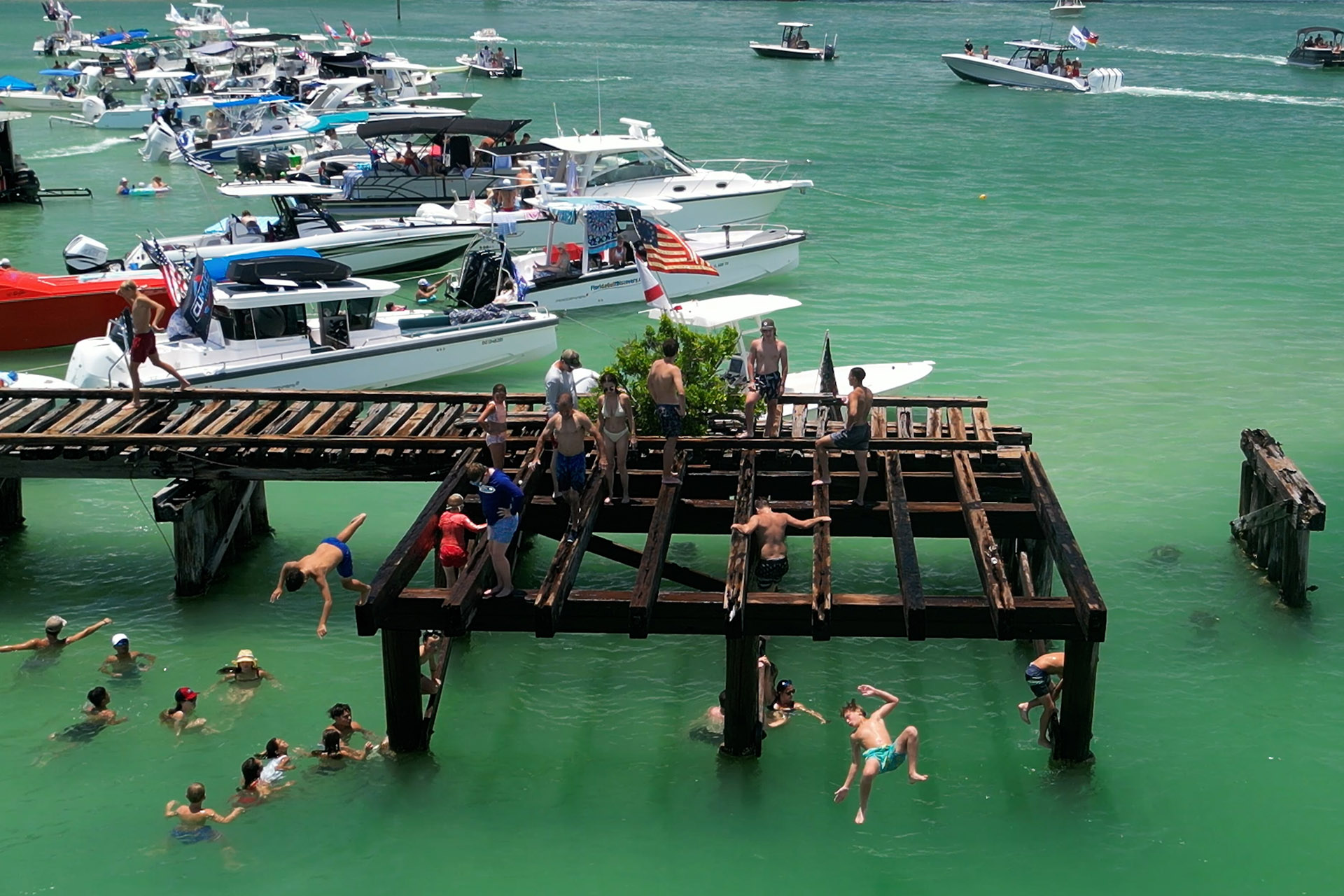
Old railroad history meets modern Southwest Florida tradition. People jump from the remains of the historic Boca Grande railroad trestle near Placida during an Independence Day gathering. The trestle was originally part of the Charlotte Harbor & Northern Railway, completed to Boca Grande in 1907 and built to connect the mainland with Gasparilla Island and its important phosphate port. More than a century later, the surviving structure has become one of the area's most recognizable landmarks. On busy summer weekends, the surrounding waters take on an entirely different character, filled with recreational boats and visitors enjoying the shallow waters around Boca Grande Sandbar. This aerial view captures the remarkable contrast between Southwest Florida's industrial past and its modern boating culture.
On an ordinary day around Boca Grande, a captain usually has room to choose a route, adjust speed, or approach the sandbar from another direction. During Boca H2O, that familiar water becomes a very different operating environment.
As you approach, anchored boats reduce the available space while other vessels are still searching for places to stop. Swimmers move between boats, people climb from swim platforms, and someone can appear from behind a hull with very little warning.
From a distance, Boca H2O may look like one enormous party. From the helm, I also see a constantly changing traffic situation.
That is why safety begins long before the anchor goes down.
The Approach Requires Patience
One of the most demanding parts of Boca H2O can be simply entering the gathering.
I never assume another boat will do exactly what I expect. A vessel may suddenly slow to anchor, reverse, drift, or change direction. A swimmer may appear where moments earlier the water looked clear.
The closer the boats become, the less room there is for assumptions. Sometimes the best decision is simply to slow down, wait, and let the situation develop before moving farther in.
Think of It as People in the Water
At Boca H2O, I do not think of the sandbar simply as a crowded anchorage. I think of it as a people-in-the-water environment.
That changes how I operate.
Swimmers, floats, and paddleboards may be well away from their boats and surprisingly difficult to see from the helm. Speed must match the conditions, maintaining a proper lookout becomes critical, and propeller awareness is especially important.
Swimmers also need to remain visible and pay attention to vessels maneuvering nearby. Everyone is sharing the same water.
Anchoring Is Only the Beginning
Finding a place to anchor does not mean the captain's work is finished.
Wind and current can change how boats lie at anchor. More vessels may arrive, swimmers move through the area, and what looked like plenty of room in the morning can become crowded later.
I continue checking our position and the boats around us throughout the day.
Wake matters too. Even a relatively small wake can travel through anchored vessels where people may be swimming, climbing ladders, standing on platforms, or moving around aboard.
At Boca H2O, one captain's throttle can affect many people.
Marine Patrols Are Part of an Event This Large
As Boca H2O grew, marine law-enforcement and public-safety agencies naturally became more visible around the gathering.
With large numbers of boats and people concentrated in one area, officers may be dealing with navigation safety, unsafe vessel operation, impaired boating, emergencies, and congested traffic.
For me, seeing marine patrols should not raise the question of whether my boat is prepared. That should have been answered before leaving the dock.
Required safety equipment should already be aboard, the vessel should be properly registered or documented as applicable, and the operator should understand the responsibilities of running a boat.
The music may change the atmosphere. It does not change a captain's responsibilities.
The Captain Still Has a Job
Boca H2O is a social event, and alcohol may be part of the day for some people. But whoever is responsible for operating the boat has a different obligation.
Crowded-water boating requires judgment, reaction time, depth perception, and continuous awareness. If I am responsible for my boat and the people aboard, I need those abilities from the moment we leave the dock until everyone is safely back.
That becomes particularly important later in the day, because the most difficult part of Boca H2O may not be arriving.
It may be leaving.
Leaving Can Be Harder Than Arriving
Boats may arrive gradually over several hours, but many can leave within a much shorter period.
Engines start, anchors come up, swimmers return aboard, and vessels that have been stationary for hours suddenly begin moving through the same crowded water. Passengers may be tired from the sun and a long day, and captains may be tired too.
Before moving my boat, I want everyone aboard, the area around the propellers clear, the anchor recovered, loose equipment secured, and a safe route away from the gathering.
Then I leave patiently.
Weather can make timing even more important. If thunderstorms or increasing winds approach, many captains may decide to leave simultaneously. I prefer watching the weather before the decision becomes urgent.
Sometimes leaving a little early is simply better seamanship.
A Captain Never Really Stops Being the Captain
Once the anchor is down, I can enjoy the music, talk with my guests, and appreciate what is happening around us. But part of my attention remains on the boat.
I am still watching the weather, traffic, our position, and people in the water.
Boca H2O can be an extraordinary boating experience because so many people come together on the same stretch of water. That concentration also means one captain's decisions can affect many others nearby.
Good seamanship does not take anything away from the celebration. It helps everyone enjoy it with less risk.
At the end of the day, I am not trying to be the first captain away from the sandbar. I am trying to make sure everyone I brought out comes safely home.
Environmental Impact & Protecting Boca Grande Sandbar
Boca H2O could not exist without the place that makes it special. The shallow water, sandy bottom, surrounding estuary, wildlife, and coastal landscape are not simply the background for the festival. They are part of the experience.
A gathering this large inevitably interacts with that environment. Boats anchor and maneuver in shallow water, thousands of people spend hours around the sandbar, and trash, fuel, propellers, and human activity can all have an impact.
For me, the important question is not whether a large boating gathering affects its surroundings. The question is how we can enjoy Boca H2O while leaving as little impact as possible.
Start With What Is Under the Boat
Environmental responsibility begins before I drop the anchor.
Southwest Florida's shallow waters contain important seagrass habitat that provides shelter, feeding areas, and nursery grounds for marine life. Propellers operating in water that is too shallow can scar seagrass, while anchors and dragging rode can damage vegetation.
That is why, whenever conditions allow, I look for bare sand before anchoring.
Despite the name Boca Grande Sandbar, not everything beneath the surrounding water is sand. Bottom conditions can quickly change from sand to seagrass, shell, or deeper water.
The same principle applies when navigating. If the water is too shallow for my boat, I find another route rather than trying to power through it.
The festival lasts hours. Damage to the bottom can last much longer.
What Comes Aboard Should Go Home Aboard
Trash is one of the easiest impacts to prevent.
A bottle, cup, wrapper, bag, or broken float can disappear overboard quickly, especially when the wind picks up. Once it leaves the boat, it may travel far beyond the sandbar.
My rule is simple: if we bring it aboard, we bring it back.
The same responsibility applies to fuel and sanitation. Preventing spills, securing fuel containers, maintaining the boat properly, and planning for appropriate sanitation are simply parts of responsible boating.
A good day on the water should not leave a problem behind.
Wildlife Is Still There
To us, Boca H2O is a special event. To dolphins, manatees, sea turtles, rays, fish, pelicans, ospreys, and other wildlife, it is still their habitat—only much busier than usual.
If wildlife moves through the area, give it room. Do not chase, surround, or feed animals, and slow down when they are nearby.
One reason people love Boca Grande is the opportunity to experience wildlife in its natural environment. Keeping it natural is part of protecting what makes this place special.
I Cannot Control Every Boat — But I Can Control Mine
With thousands of people around the sandbar, it is easy to think one person's decisions will not matter.
I look at it differently.
I cannot control every boat at Boca H2O, but I can control mine. I can choose where I anchor, avoid water too shallow for my vessel, secure our trash, prevent spills, respect wildlife, and make sure my passengers understand why those choices matter.
If enough captains approach the day the same way, individual responsibility becomes something much larger.
Boca H2O depends on more than the stage, music, boats, and people.
It depends on Boca Grande itself.
Enjoy the music, the water, and the sandbar. But when the day is over, leave as little evidence of your visit as possible.
After the music stops and the last boats leave, Boca Grande still has to be Boca Grande.
What Boca H2O Is Really Like — A Festival on the Water
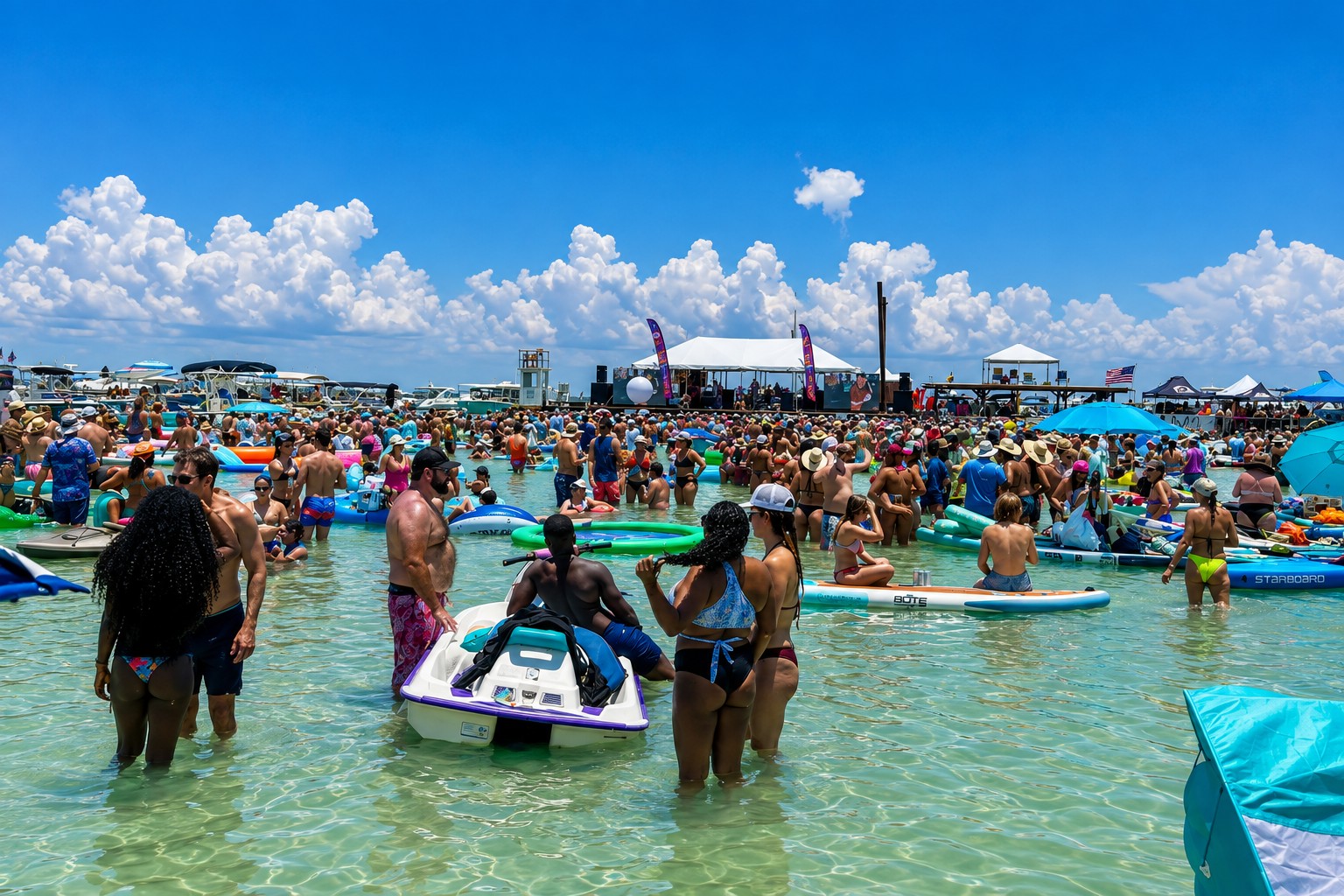
Inside the crowd at Boca H2O 2025. This Florida Gulf Discovery LLC view captures festivalgoers gathered directly in the shallow water at Boca Grande Sandbar during the 2025 Boca H2O Music Festival. Held on May 24, 2025, the event transformed the sandbar between Gasparilla Island and Placida into an unusual open-water concert venue. Boats surrounded the gathering while people floated, waded, and enjoyed live music from the floating stage. There are no traditional seats or concert grounds at Boca H2O—the water, boats, and sandbar become part of the festival itself. This perspective shows the human side of the tradition and the extraordinary boating community that gathers here each Memorial Day weekend.
Photographs and drone videos can show the scale of Boca H2O, but they cannot fully explain what it feels like to arrive by boat.
There is no road leading to the festival and no entrance where you suddenly step inside. Boca H2O appears gradually across the water. At first, it may feel like an ordinary day around Boca Grande. Then more boats begin traveling in the same direction, and individual vessels on the horizon start merging into a much larger gathering.
Flags rise above the crowd. People stand on decks and swim platforms. Others are already in the shallow water, and somewhere beyond all those boats is the floating stage.
You do not suddenly arrive at Boca H2O. You watch an ordinary boating day slowly become a festival.
You May Hear It Before You See It
Sound is another part of Boca H2O that photographs cannot capture.
As you approach, music begins traveling across the water. Boats have their own speakers playing, engines start and stop, and voices carry between neighboring vessels. Closer to the gathering, music from the floating stage becomes part of everything happening around you.
There are no walls containing the sound and no rows of seats facing a stage. The music spreads across open water and mixes with boats, people, wind, and everything happening on the sandbar.
That is when Boca H2O begins to feel completely different from an ordinary boating day.
From Your Boat Into the Festival
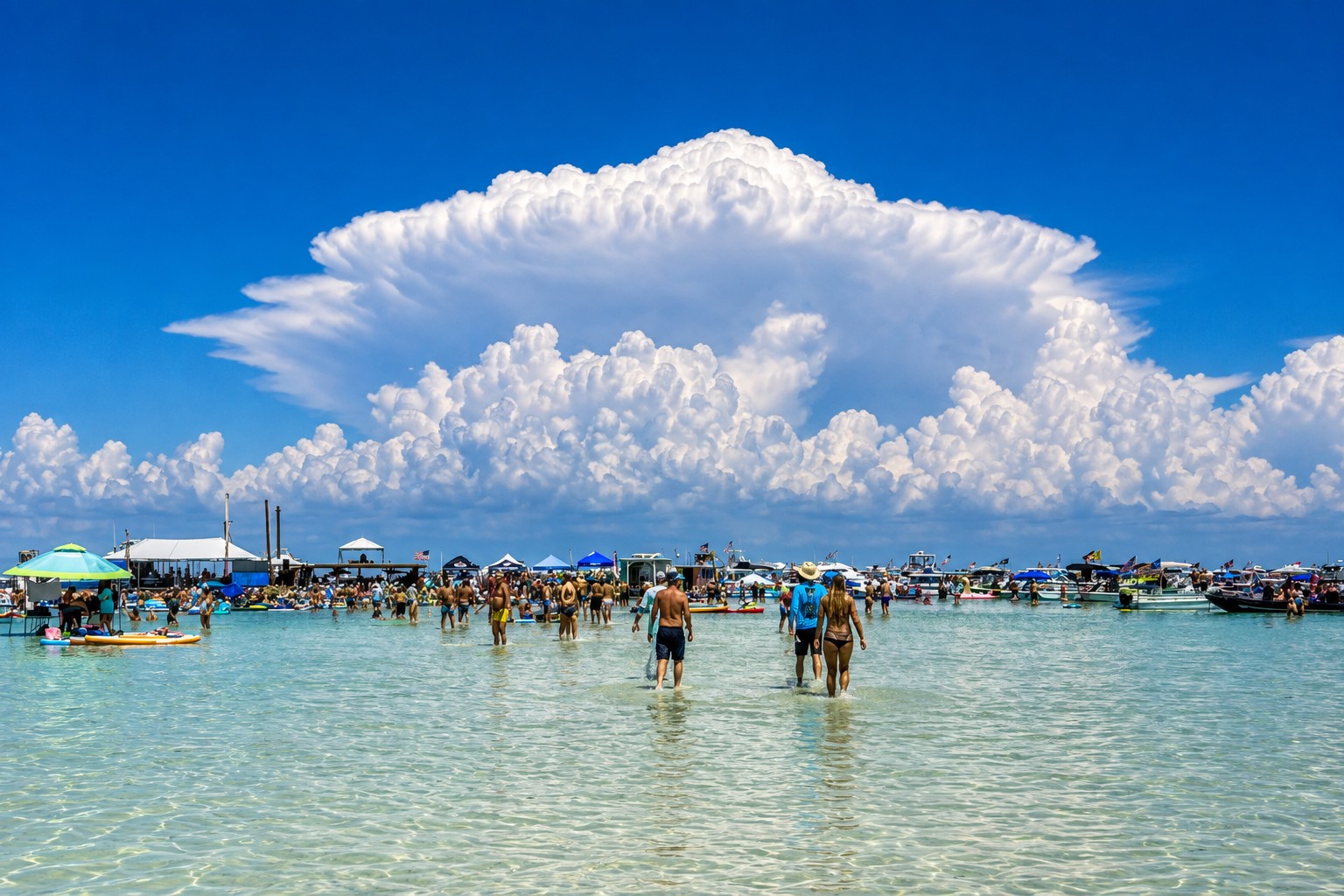
The 2025 Boca H2O Music Festival fills the shallow waters of Boca Grande Sandbar with boats, floats, music, and thousands of people celebrating Memorial Day weekend. Held on May 24, 2025, the festival brought live performers and DJs to a floating stage surrounded entirely by the boating crowd. From above, the scene reveals what makes Boca H2O so unusual: there are no conventional seats, streets, or concert grounds—the sandbar itself becomes the venue, and visitors arrive by water. In 2025, the event's growing regional importance was recognized when it was named a Signature Event of the Southeast by the Southeast Tourism Society.
Once the boat is anchored and people begin entering the water, your perspective changes again.
From a distance, Boca H2O looks like an enormous collection of boats. At water level, it becomes thousands of smaller gatherings happening together.
Friends meet between neighboring vessels. People stand in the shallows talking, swimming, floating, or dancing to the music. Some groups have attended for years, while others are seeing Boca H2O for the first time.
Every boat has its own experience, but the floating stage gives everyone a common center.
From above, you see the crowd.
From the water, you see the people who created it.
The Boats Are Part of the Festival
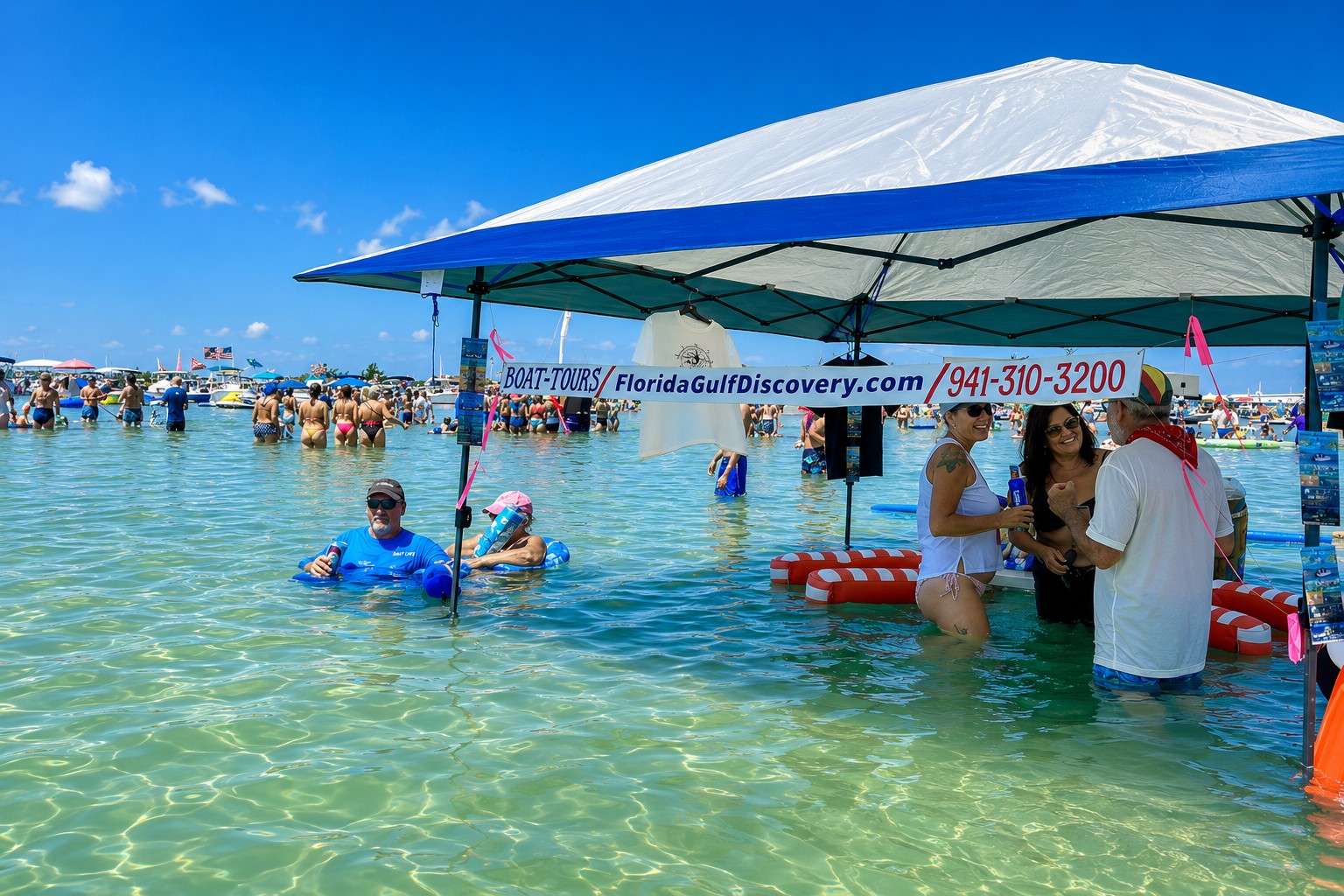
Florida Gulf Discovery's view of Boca H2O 2025 captures the remarkable scene at Boca Grande Sandbar on May 24, 2025. Boats packed the surrounding water while festivalgoers gathered in the shallows around the floating stage for a full day of live music and Memorial Day weekend celebration. Located between Gasparilla Island and Placida, Boca H2O is accessible by water, making the boats, sandbar, and surrounding Gulf waters part of the festival itself. For Captain Pavel, scenes like this show just how dramatically a familiar local sandbar can transform when Southwest Florida's boating community comes together for Boca H2O.
At the center of everything is Brian Turner's original idea from 2020: bring the music to the boaters.
Once you see Boca H2O in person, you realize the boats are much more than transportation. They are part of the event itself.
The performers are surrounded by open water, while the audience stretches across the sandbar aboard boats and into the shallows between them. There is no conventional venue separating the stage from the landscape.
Boca Grande is the venue.
Remove the boats, shallow water, and sandbar, and Boca H2O would become an entirely different event.
Then the Sandbar Becomes Quiet Again
For me, one of the most interesting parts of Boca H2O is how temporary the transformation is.
On an ordinary day, Boca Grande Sandbar follows the familiar rhythm of Southwest Florida boating. Boats come and go, tides move across the shallows, birds pass overhead, and dolphins may appear nearby.
Then Boca H2O arrives, and for several hours the same place becomes a huge social gathering filled with boats, people, flags, and music.
Eventually, the music stops. Anchors come up, boats begin disappearing toward the waterways they came from, and the sound gradually fades.
Boca Grande Sandbar becomes a sandbar again.
That contrast is one of the things I remember most.
Brian began Boca H2O with a simple idea: instead of bringing boaters to a concert, bring the concert to the boaters.
What developed became much larger—a Memorial Day boating tradition and one of the most unusual gatherings on Southwest Florida waters.
Drone photographs can show how big it is. Videos can let you hear the music.
But to understand what Boca H2O really feels like, you have to experience the moment when the boats appear across the horizon, the music reaches you over the water, and you realize your boat is no longer approaching the festival.
Your boat has become part of it.
Captain Pavel’s Final Thoughts on Boca H2O
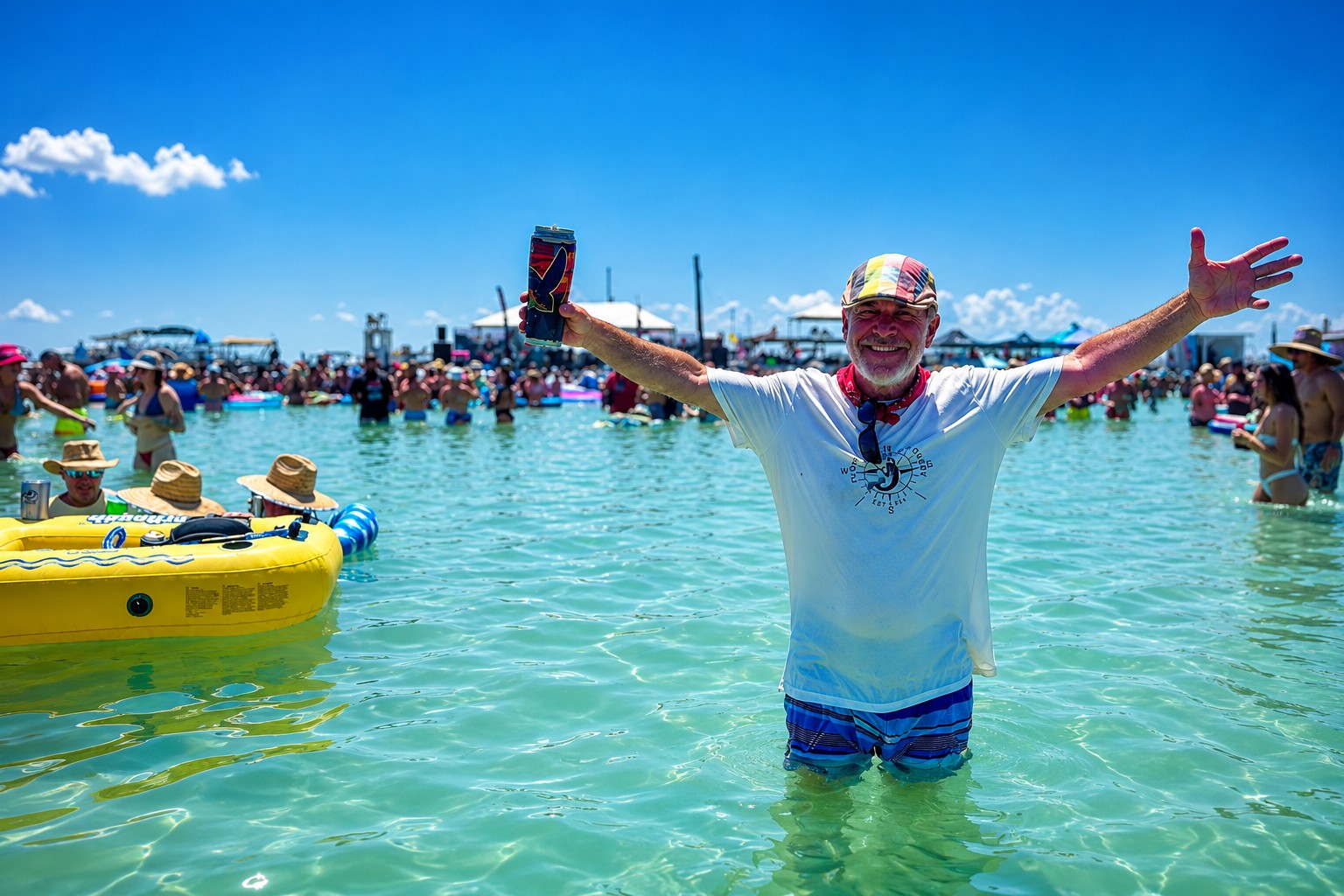
Captain Pavel at Boca H2O 2025. From my usual perspective on the waters around Boca Grande Sandbar, the festival looked very different from an ordinary day at this familiar local destination. On May 24, 2025, boats filled the shallows between Gasparilla Island and Placida as people gathered around the floating stage for live music and a Memorial Day weekend celebration. Boca H2O is a uniquely Southwest Florida event—the audience arrives by water, the boats become part of the venue, and the sandbar itself becomes the festival grounds. For me, documenting Boca H2O from the water is also part of preserving the story of how this unusual Boca Grande tradition continues to grow and change.
When I began working on the story of Boca H2O, I thought I understood the event fairly well. I know Boca Grande, I know the sandbar, and I spend a great deal of time on these waters. I had seen the photographs, watched the videos, and knew what the Memorial Day gathering looked like from the outside.
What I did not know nearly as well was the story behind it.
My conversations with Brian Turner changed that.
Today, when we see a floating stage surrounded by an enormous gathering of boats, Boca H2O can almost look inevitable—as though it had always belonged here.
It didn't.
It began during the extraordinary circumstances of 2020 with an unusual idea: if people could not gather around a conventional stage, why not bring the stage to the people already gathering on their boats?
There was no proven formula. Brian had an idea, a barge, music, boaters, and a willingness to try something different.
Then people came.
They returned with friends. Photographs and videos spread. The location changed, Memorial Day became the main weekend, and an experiment gradually became a Southwest Florida boating tradition.
Brian Sees the Event. I Also See the Water.
Talking with Brian gave me the organizer's perspective. Mine naturally comes from the helm.
When I look at Boca H2O, I see the stage and the crowd, but I also see the water beneath everything. I think about tides, depth, weather, swimmers, wakes, anchoring, wildlife, and what happens after thousands of people leave.
That does not make Boca H2O less interesting to me. It makes it more interesting because this enormous gathering exists inside a natural environment that never stops functioning.
The tide does not know there is a festival. Neither does the current. Dolphins, birds, fish, and other wildlife continue using these waters while the music plays.
For one day, thousands of us are visitors in an environment that was here long before the festival.
That is worth remembering.
Something Uniquely Southwest Florida
Boca H2O also says something about life here.
Around Boca Grande, water is not simply scenery. It is how we reach islands, beaches, sandbars, restaurants, wildlife, and places that cannot be experienced the same way from a road.
Boca H2O takes that boating culture and concentrates it into one extraordinary day.
You could build another floating stage somewhere else. You could hire musicians and invite boaters.
But you cannot manufacture Boca Grande.
The shallow water, surrounding islands, Charlotte Harbor, nearby Gulf waters, and Southwest Florida boating culture are all part of what makes Boca H2O what it is.
Enjoying that place also means respecting it.
As a captain, I cannot control thousands of other boats. I can control mine. I can operate responsibly, watch the weather, respect swimmers and wildlife, protect the bottom, and make sure what comes aboard my boat goes home with me.
The festival occupies the sandbar for a day.
The sandbar has to remain after we leave.
When the Music Stops
As the crowds disappeared after the 2025 Boca H2O Music Festival, a handful of boats remained anchored at Boca Grande Sandbar beneath the fading colors of the evening sky. Just hours earlier, the same waters had been filled with music, people, and an extraordinary gathering of boats for the Memorial Day weekend festival. By sunset, the floating city had almost vanished, replaced by calm water, anchor lights, and the quiet sound of the Gulf. It is a very different side of Boca H2O—the peaceful moment that comes after one of Southwest Florida's largest on-the-water celebrations.
Perhaps my favorite part of the Boca H2O story is what happens at the end.
For several hours, Boca Grande Sandbar can feel like the center of Southwest Florida boating. Music travels across the water. Boats seem to be everywhere. People swim, laugh, meet friends, and become part of a gathering unlike anything seen there on an ordinary day.
Then the music stops.
Anchors come up. Engines start. Boats begin disappearing toward Charlotte Harbor, Gasparilla Sound, and the waterways beyond. Little by little, the crowd disappears.
And Boca Grande becomes quiet again.
The tide continues moving across the sandbar. Birds return. Dolphins may pass through. Soon, someone arriving by boat may see little evidence of the enormous gathering that occupied the same water only hours earlier.
That contrast stays with me.
Brian brought the idea. The musicians brought the music. The boating community turned an experiment into a tradition.
And Boca Grande gave it a home.
When the music stops, the boats leave, and the sandbar becomes quiet again, that is what remains.
People created Boca H2O. But Boca Grande is what made Boca H2O possible.
