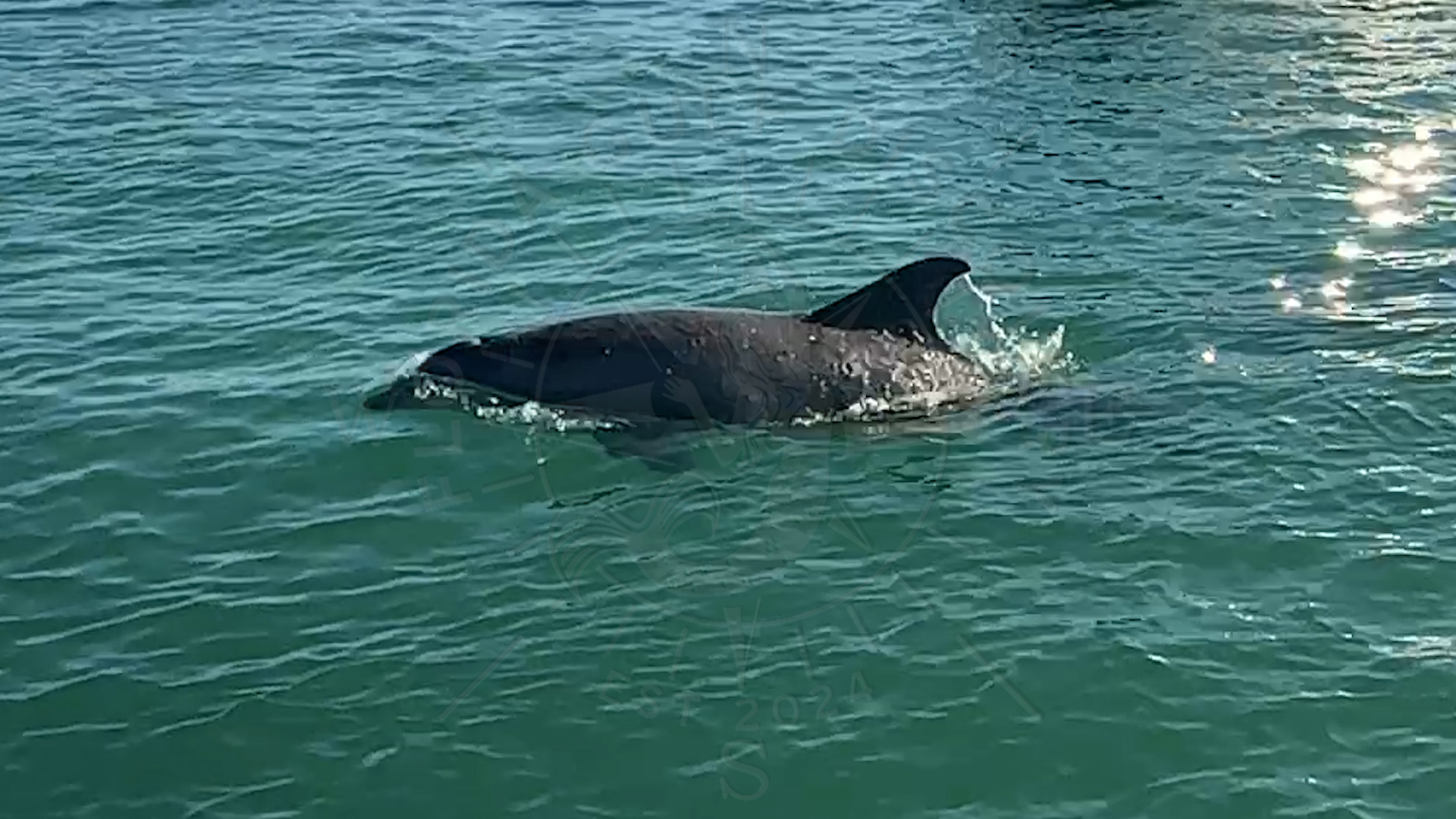
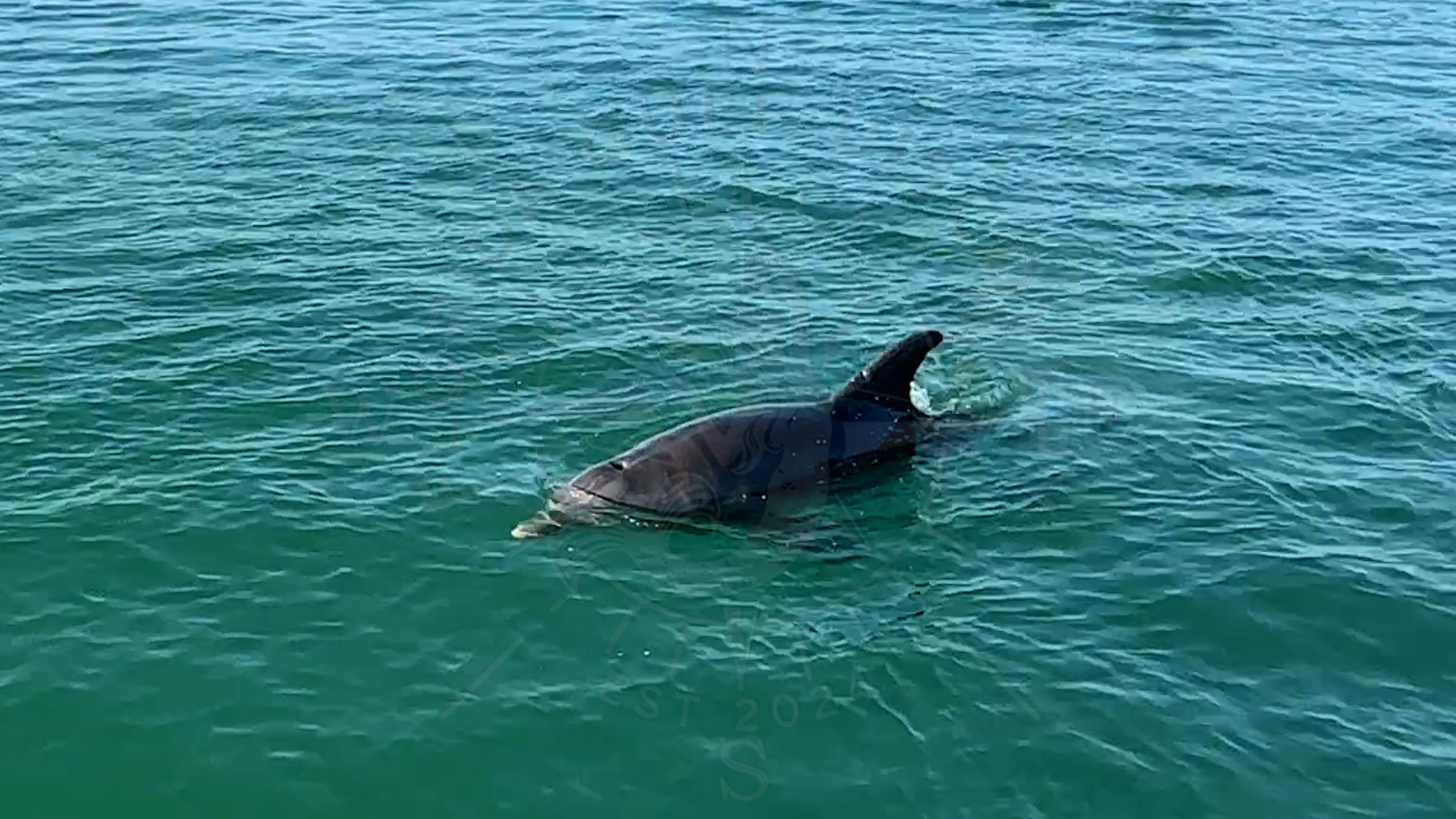
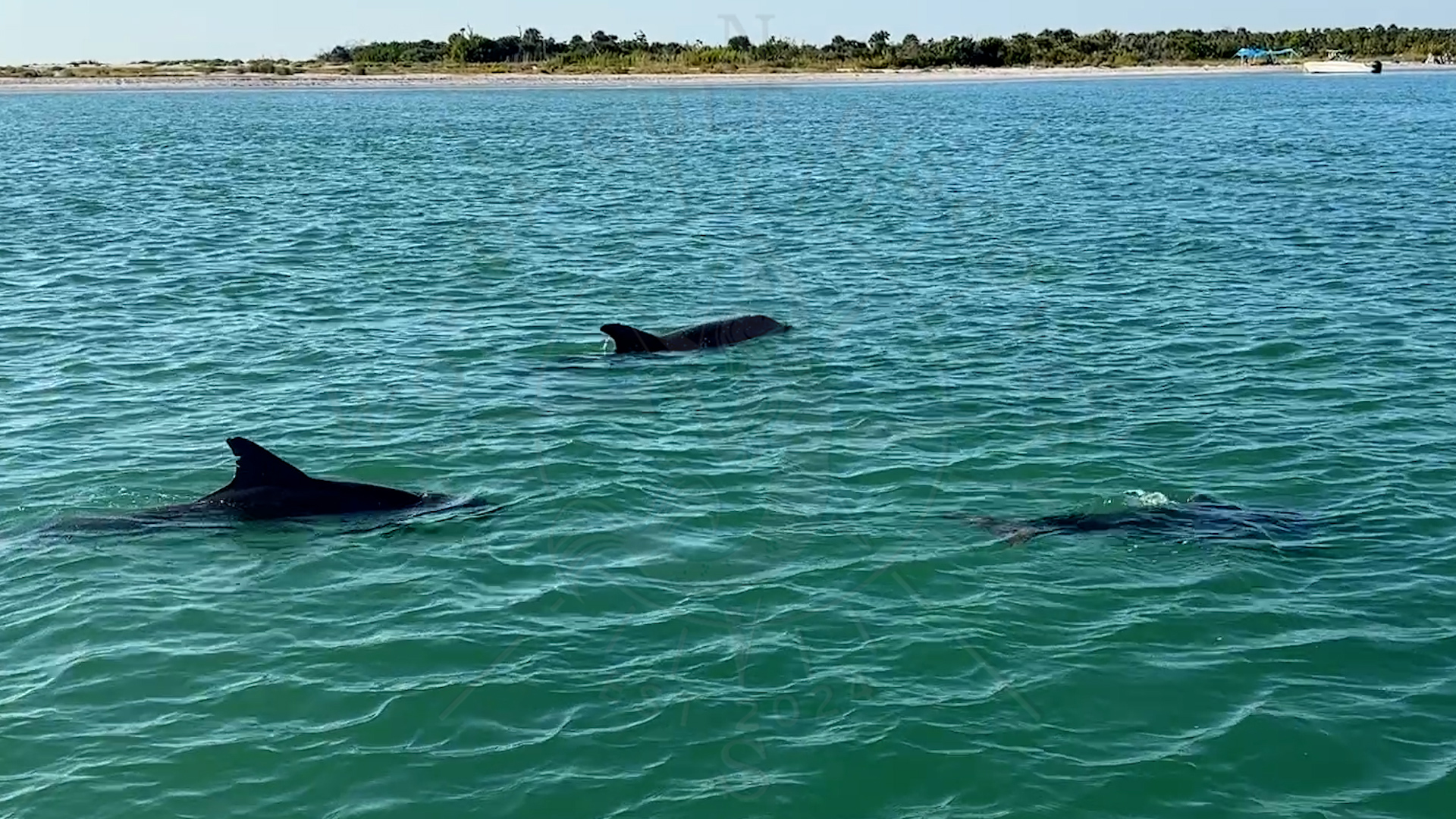
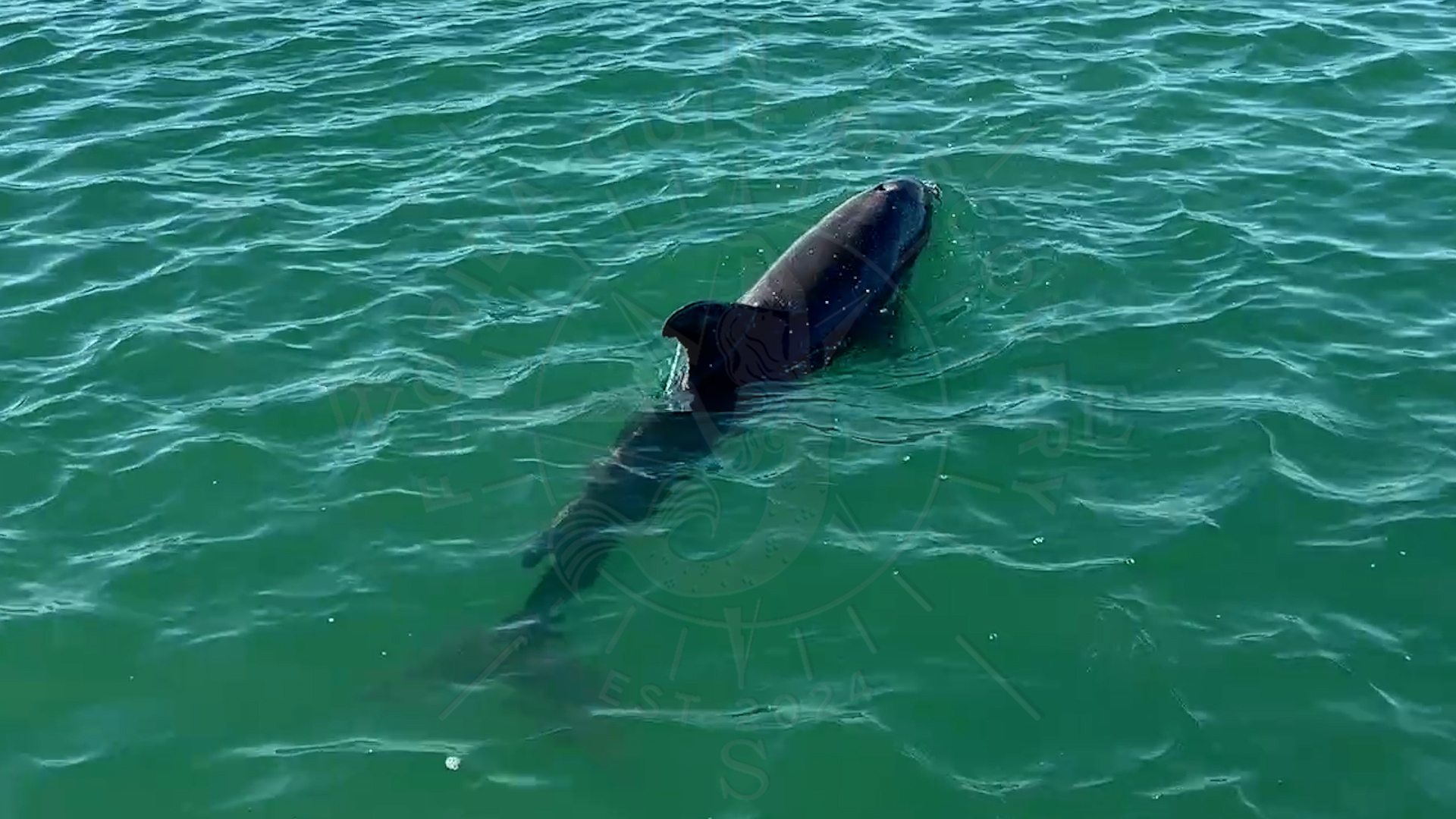
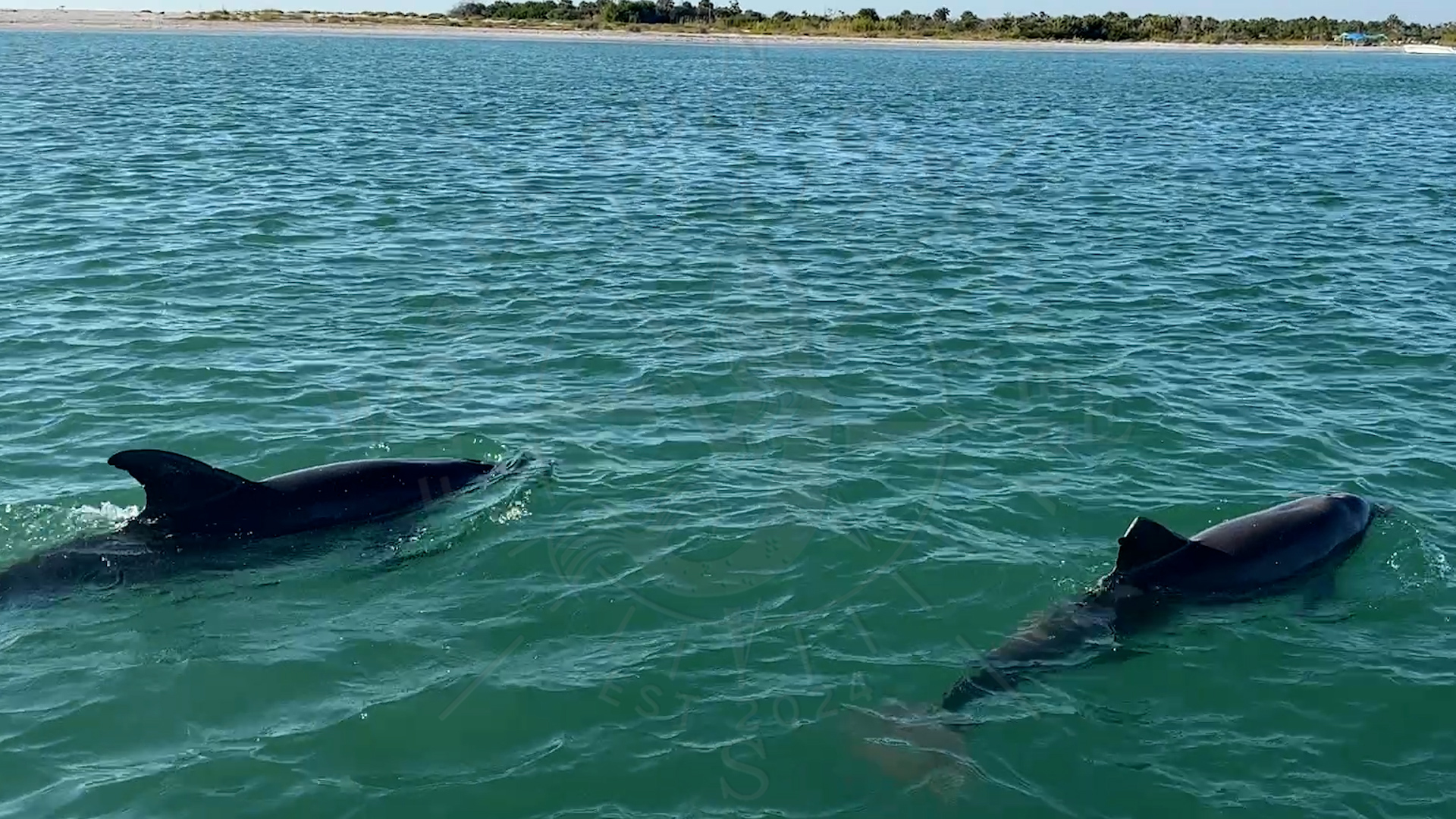
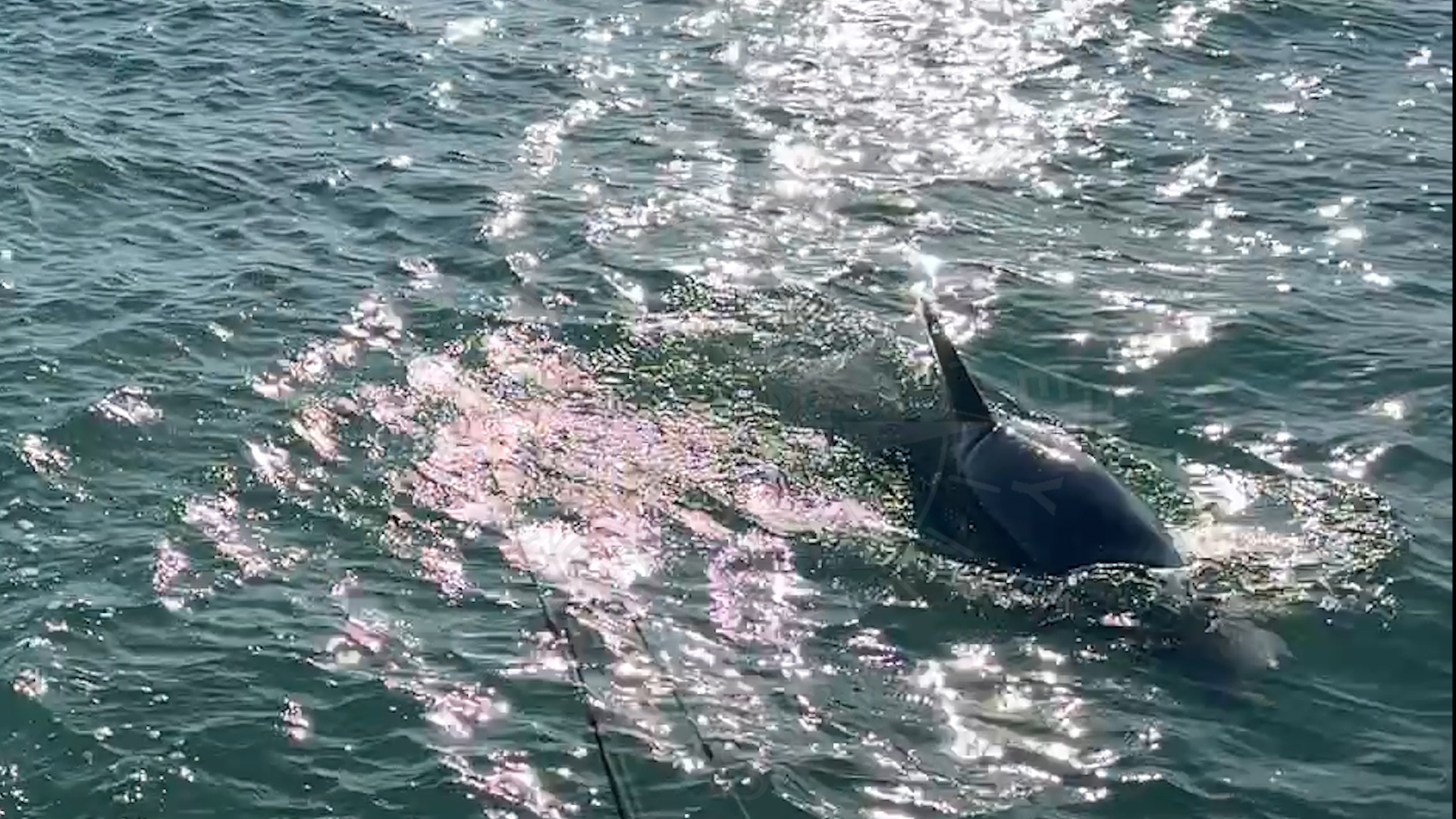
If you spend enough time fishing or exploring offshore reefs in Southwest Florida, you’ll eventually pull up a snapper with strange marks along its body — shallow crescent-shaped impressions, small punctures, or missing scales. Many people think it’s a sign of a serious attack, but the truth is far more interesting.
These marks often come from dolphins, and they reveal a fascinating piece of Gulf wildlife behavior that happens beneath the surface every day.
🌊 Dolphins: Playful, Intelligent, and Naturally Curious
Bottlenose dolphins are some of the most intelligent marine animals in the world. They hunt, communicate, coordinate, and — just like humans — they play.
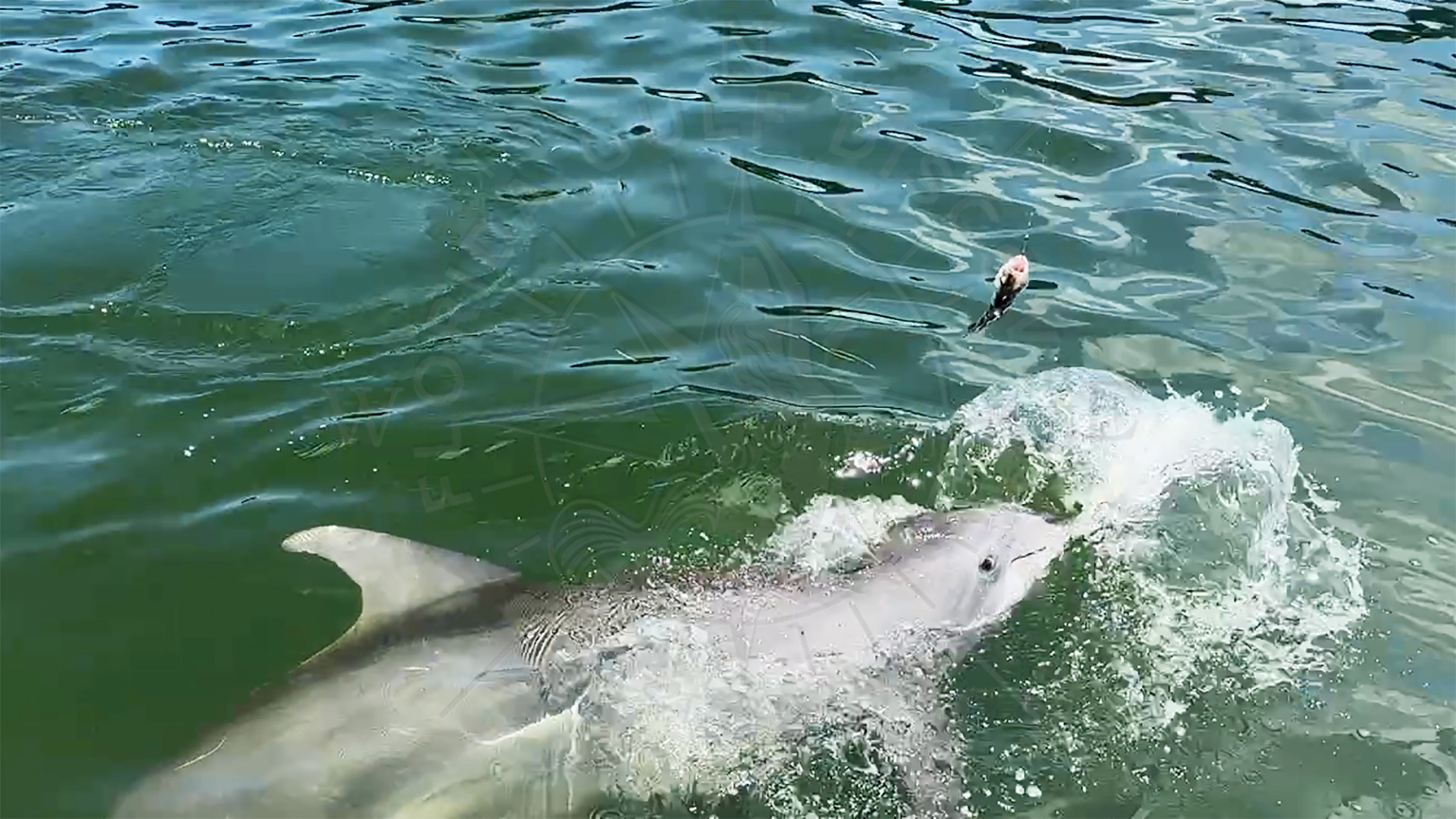
When anglers reel up fish, dolphins often become curious about the movement, sound, or vibration. They are especially interested in:
-
- Struggling snappers near the surface
- Schools of baitfish around the boat
- Sounds from fishing lines or boats
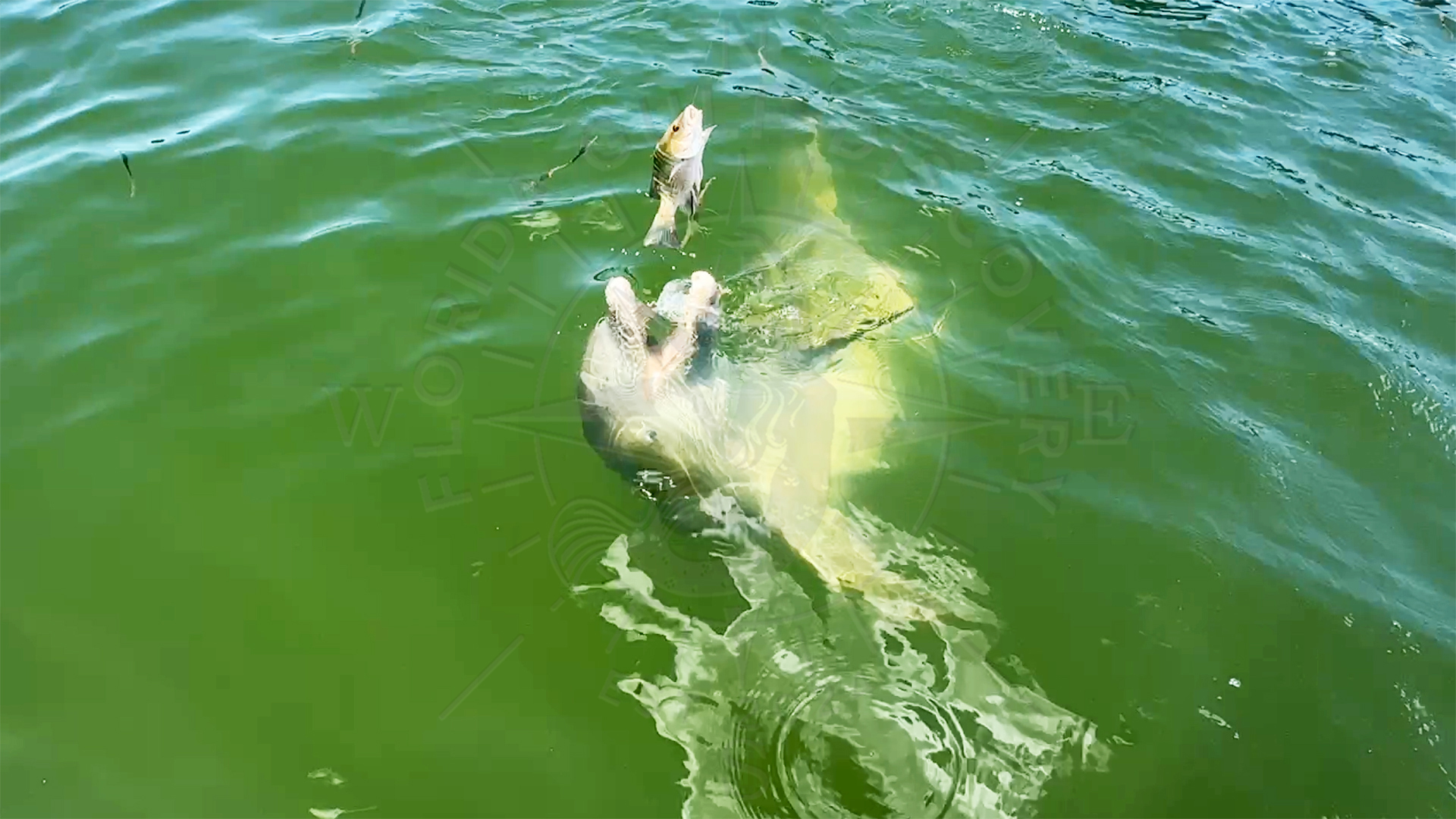
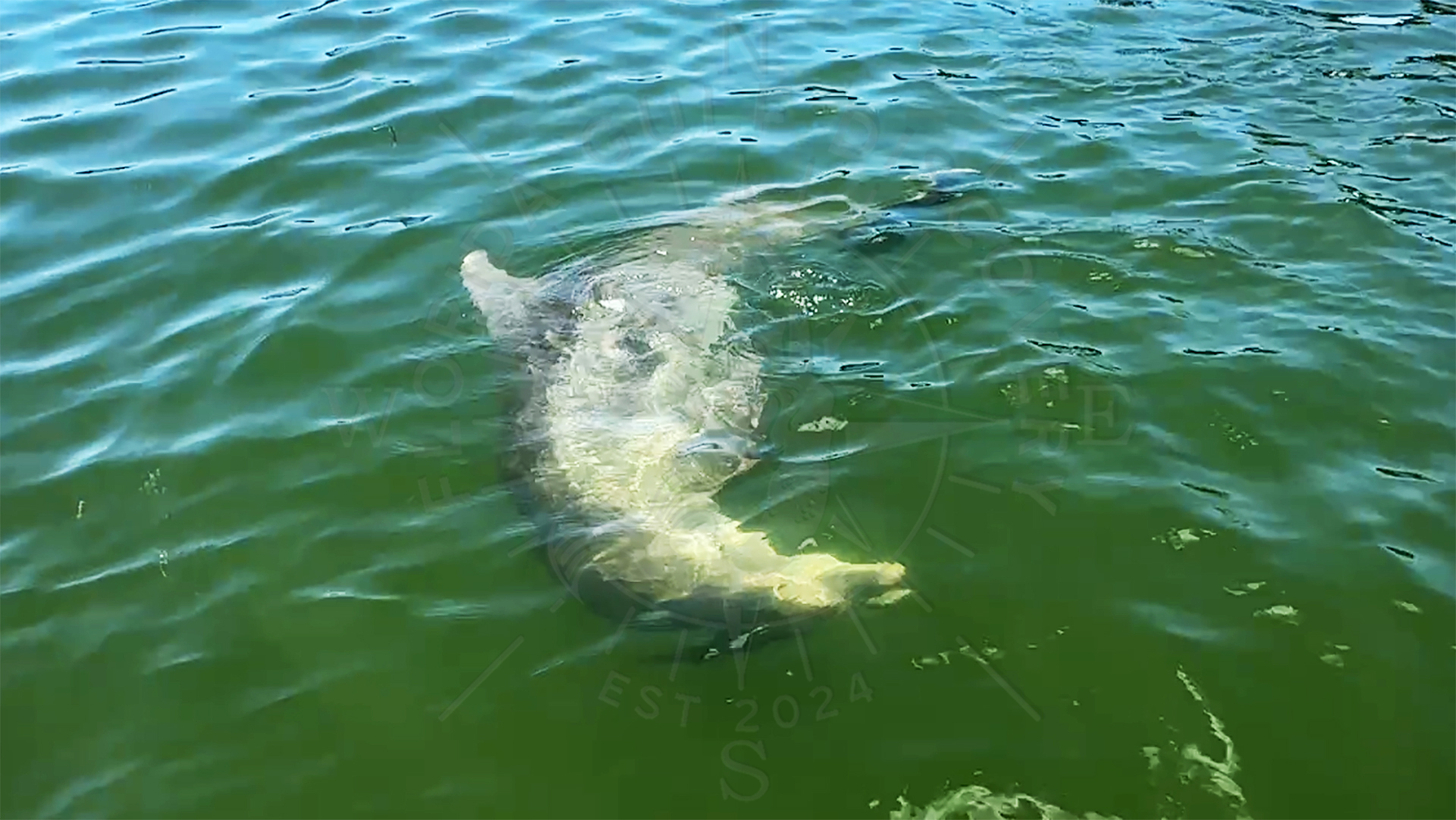
Sometimes, dolphins gently test or nudge a fish without actually wanting to eat it. This behavior leaves distinctive marks on certain snappers.
🐟 Snapper Bite Marks: Why They Happen
The marks usually appear as:
-
- Clean semicircular impressions
- Surface-level bite testing
- Missing scales
- Small scrapes or tooth patterns
The most common reason?
Dolphins “playing” with the fish, not trying to kill it.
Dolphins often:
-
- Swipe the fish from the line
- Mouth it lightly
- Nudge it with their rostrum
- Toss it between each other (especially juveniles)
- Release it unharmed
Because groupers and snappers are strong swimmers, many escape even after a dolphin’s quick test bite.
🎣 A Real Example From Our Offshore Trips
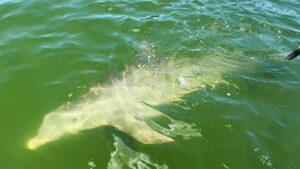
During one of our recent Gulf Discovery trips, we pulled up snappers #1 and #3 from the right side of the cooler. Both had very clear marks left by a dolphin — shallow, evenly spaced impressions.
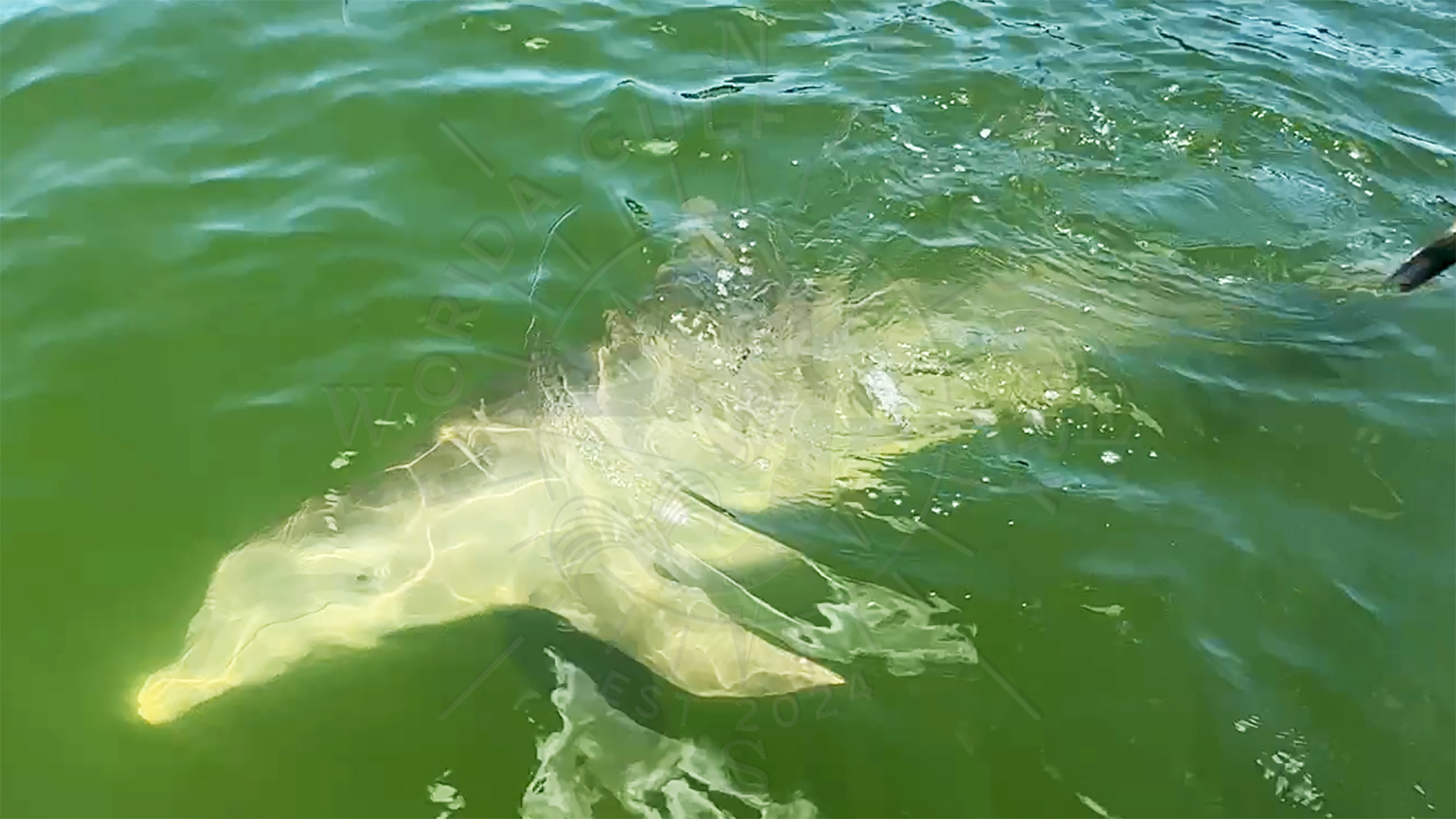
Nothing dangerous had happened to the fish. It was simply a moment of nature interacting with anglers in a playful way. Dolphins were circling the reef that day, curious about the commotion and passing by the boat several times.
This happens often on deeper reefs, especially on calm days when sound travels far through the water.
🧠 What Makes Dolphin Behavior So Unique?
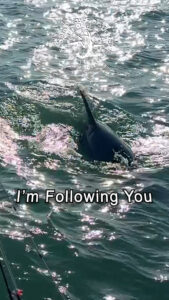
Dolphins are known for their:
✔ Curiosity
✔ Ability to learn
✔ Group play
✔ Tool use
✔ Complex communication
✔ Coordination with each other
They sometimes “inspect” a fish caught by anglers simply because:
-
- It’s moving oddly
- It’s accessible near the surface
- It’s a perfect object for group play
- It’s something new in their environment
Just like children tossing a ball, young dolphins will sometimes toss a fish — then get bored and let it go.
🐬 Are Dolphins Stealing Fish? Sometimes.
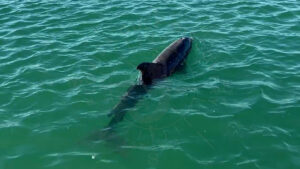
It’s not always play.
Occasionally dolphins do:
-
- Grab the fish and release. The dolphin may repeat this 2-3 times before you pull it out of the water.
- Eat part of it. This can happen, but in my experience it has never happened.
- Take the whole catch. Sometimes, if the fish was not securely hooked.
But most marks we see on snappers are not full predation — they’re light, shallow bites typical of dolphins investigating or playing.
🔍 How You Can Tell Dolphin Bite Marks From Other Causes
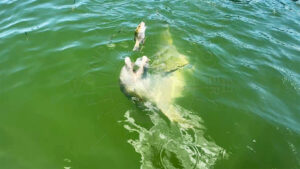
Dolphin marks:
-
- Shallow semicircle shape
- Spaced evenly (teeth pattern)
- Usually no deep tear
- Scales removed but flesh intact
Shark marks:
-
- Deep tearing
- Missing chunks
- Angled jaw pattern
Barracuda cuts:
-
- Very sharp, straight slice
- Flesh cleanly removed
- Fast, precise attacks
Snapper marks from dolphins are the easiest to identify — and the least harmful.
🌅 What This Teaches Us About the Gulf
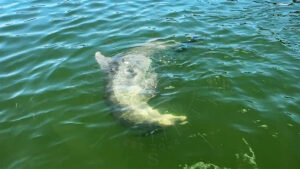
Every time we see these marks, it reminds us that:
-
- The Gulf is full of intelligent wildlife
- Dolphins interact with anglers constantly
- Nature has its own rhythm and behavior
- What looks like “damage” is often just curiosity
For visitors, this becomes a fun educational moment. For locals who spend time offshore, it’s simply part of life on the water.
📸 Next Time You See Bite Marks…
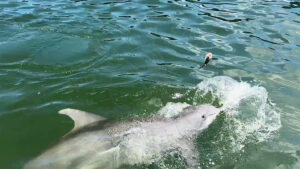
Take a closer look at the pattern.
Chances are, you’re holding proof of a dolphin’s playful curiosity — a small reminder of how connected everything is in the Gulf of America.
If you’d like to learn more about local wildlife, offshore reefs, or the stories behind our trips, follow our latest updates at Florida Gulf Discovery LLC.
Written by Captain Pavel Florida Gulf Discovery – Private Boat Tours, Wildlife Watching & Coastal Adventures & Discovery www.FloridaGulfDiscovery.com