- Wildlife Adventures
-
by Captain Pavel
Guide Contents
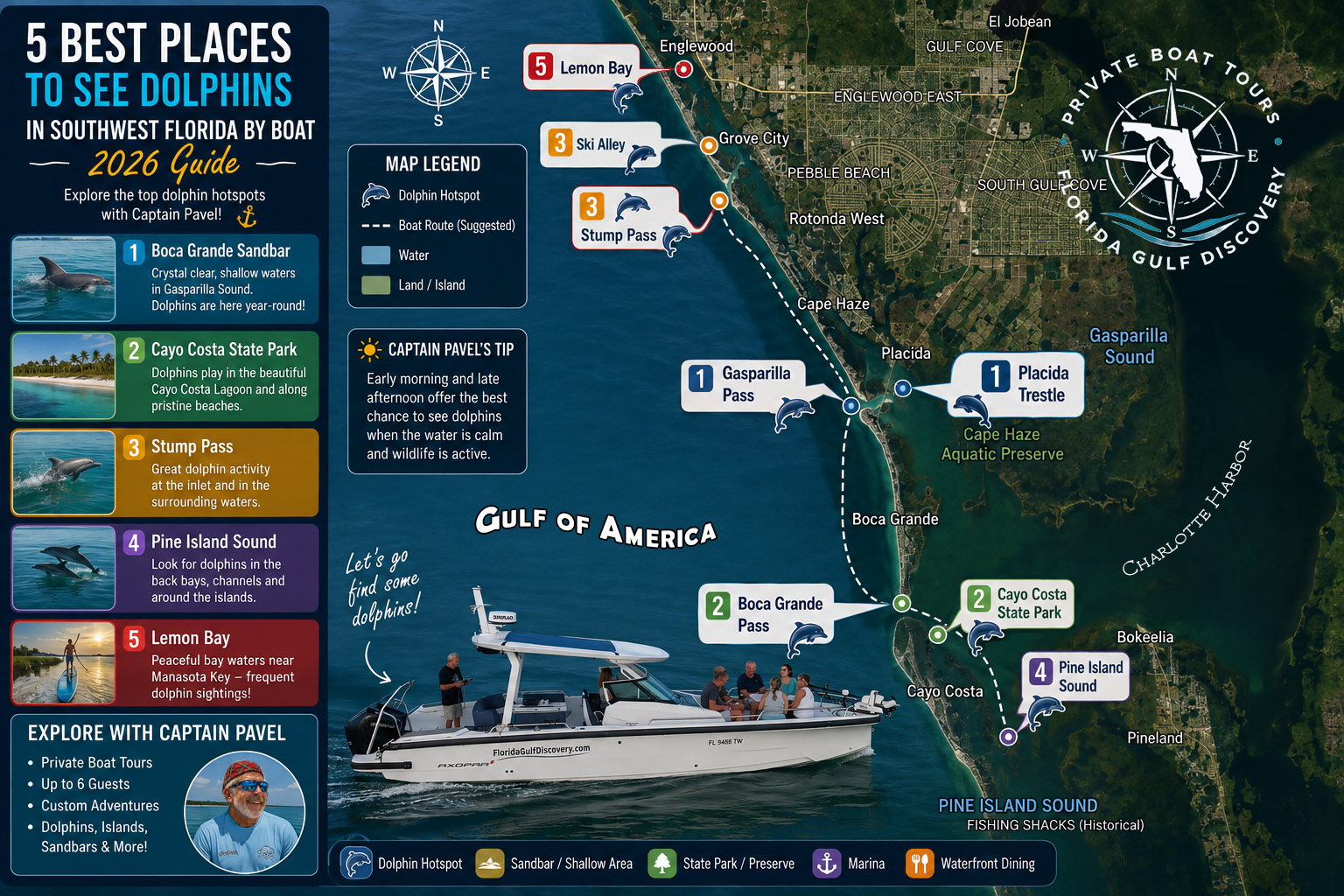
Use this guide to discover the best places to see dolphins in Southwest Florida by boat, learn when to go, understand bottlenose dolphin behavior, and explore Captain Pavel's favorite locations for unforgettable wildlife encounters.
2 Meet the Bottlenose Dolphins
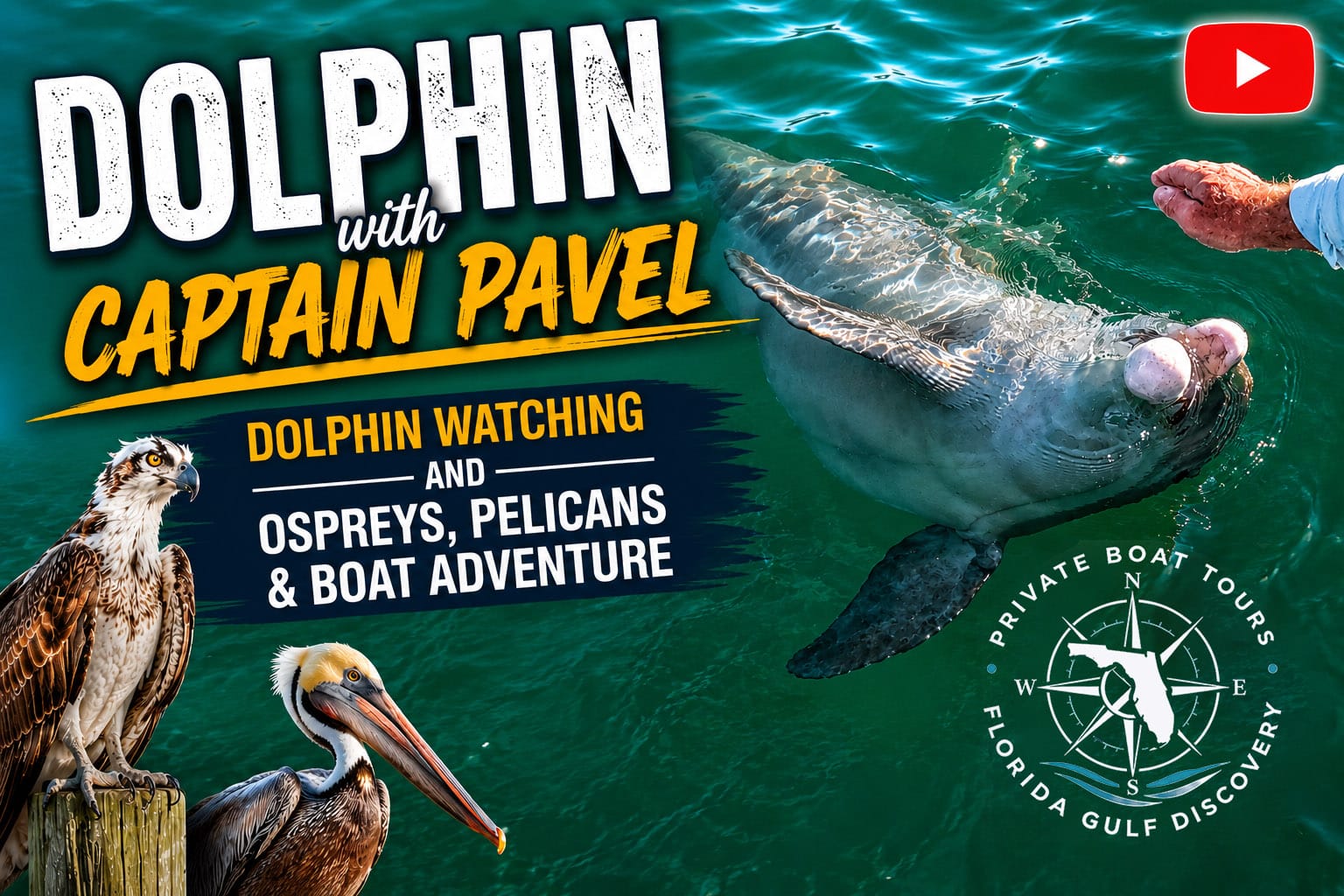
Watch on YouTube: Join Captain Pavel on a memorable dolphin-watching adventure along the Southwest Florida Gulf Coast. Watch wild bottlenose dolphins swimming alongside the boat while ospreys and brown pelicans hunt overhead.
One of the greatest joys of exploring Southwest Florida by boat is sharing the water with Atlantic bottlenose dolphins (Tursiops truncatus). These intelligent marine mammals are year-round residents of our coastal waters and can be found in places like Lemon Bay, Stump Pass, Boca Grande Pass, Pine Island Sound, and around Cayo Costa State Park.
Unlike migrating whales, bottlenose dolphins don't simply pass through Southwest Florida—they live here. They spend their lives traveling through bays, estuaries, tidal passes, and shallow Gulf waters, following schools of fish and taking advantage of changing tides. That's why every boat trip offers the possibility of a memorable dolphin encounter.
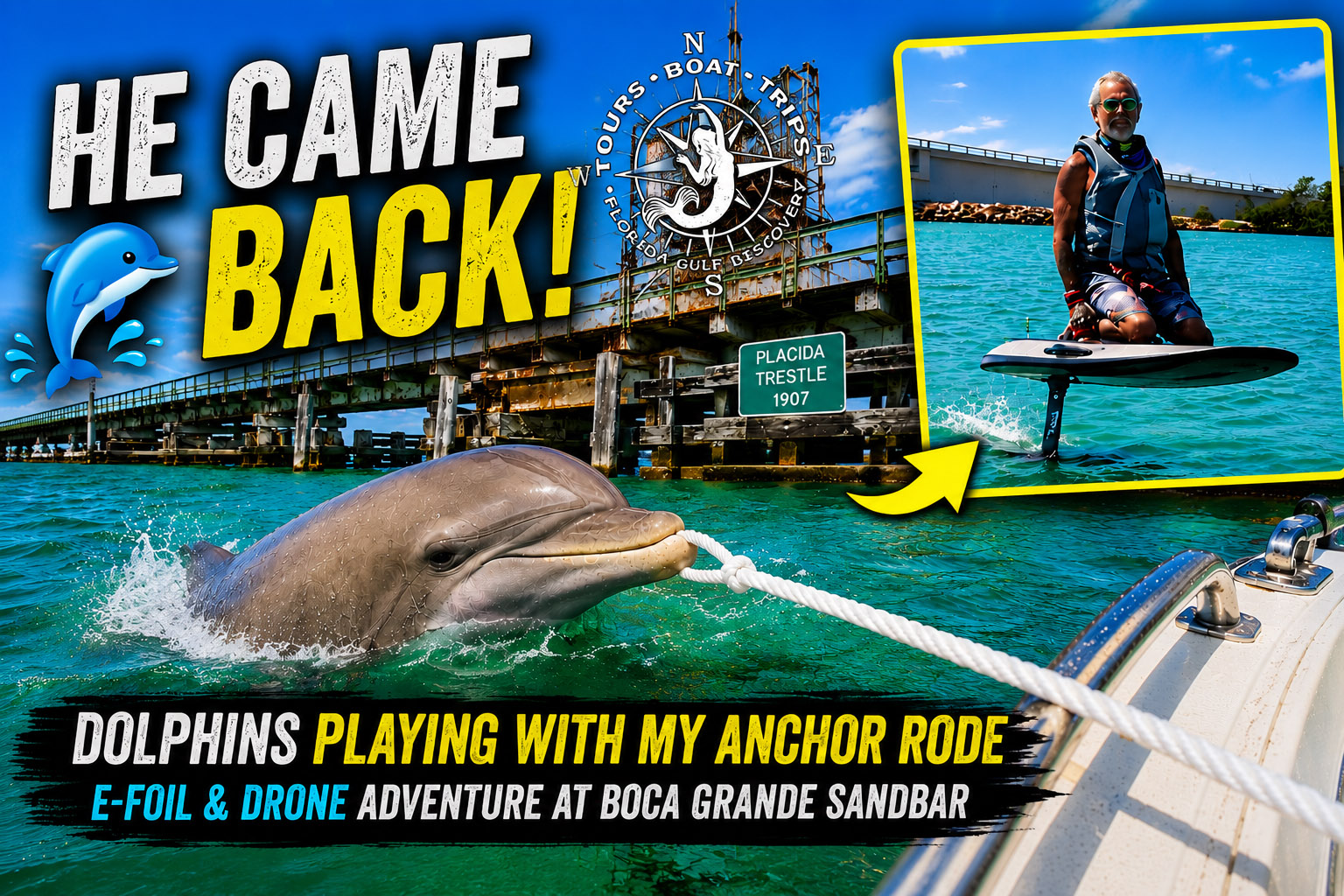
Watch on YouTube: Witness a playful encounter as wild bottlenose dolphins investigate and play with an anchor rope near Boca Grande Sandbar. Filmed during Captain Pavel's e-foil adventure, this unique wildlife moment highlights the intelligence and curiosity of Southwest Florida's resident dolphins in the clear waters of the Gulf Coast.
During my tours, guests often ask if we're guaranteed to see dolphins. My answer is always the same: they're wild animals, so nothing in nature is guaranteed—but Southwest Florida is one of the best places in Florida to find them. Most days, we don't have to search for long before a dorsal fin appears above the surface or a curious dolphin swims alongside the boat.
Bottlenose dolphins are incredibly intelligent and live in family groups called pods. They communicate using whistles, clicks, and body language while working together to hunt fish, protect their young, and navigate their environment. Watching several dolphins coordinate a hunt or seeing a mother swimming beside her calf is an experience visitors rarely forget.
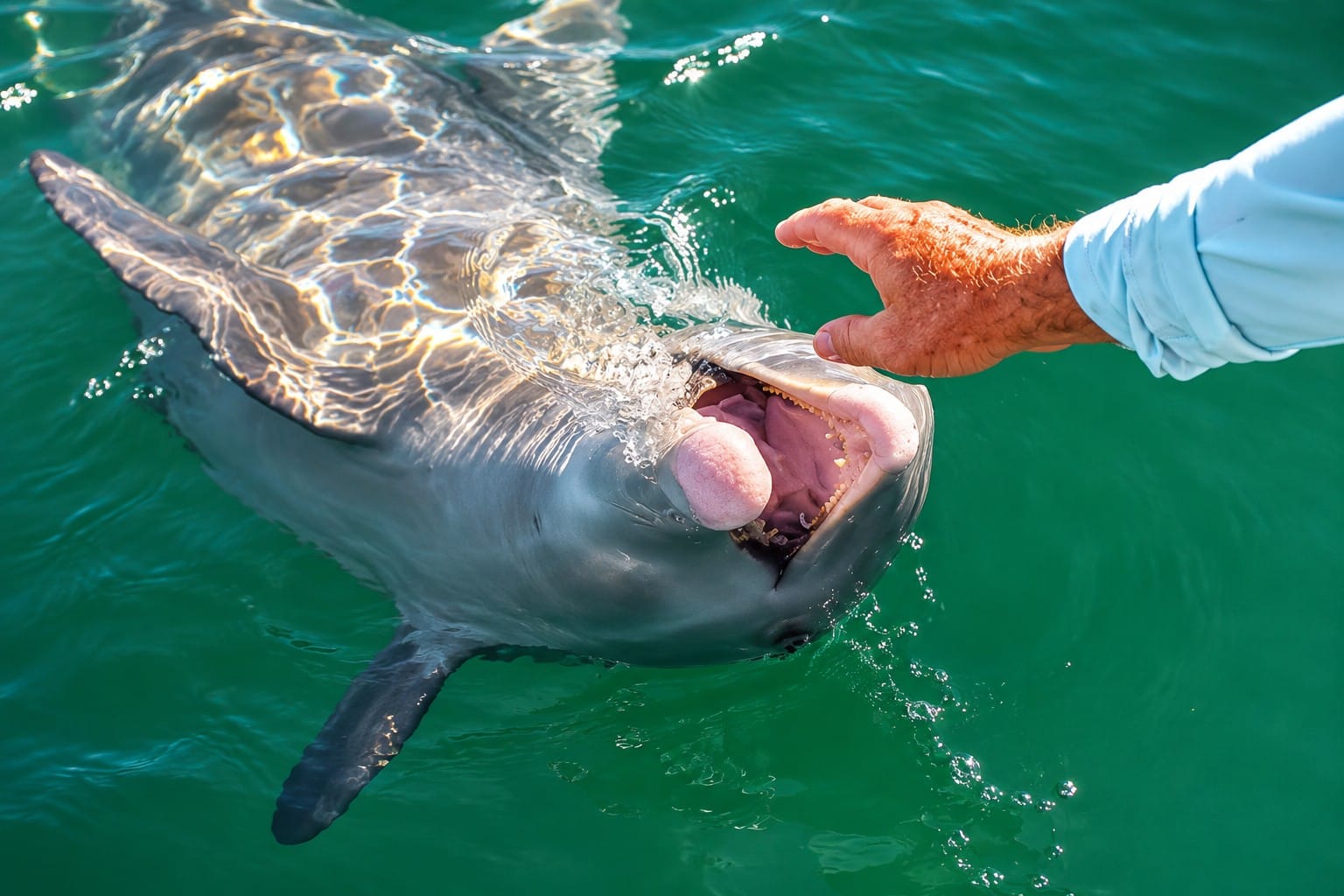
A curious bottlenose dolphin swims alongside the boat in the calm waters of Lemon Bay near Stump Pass. The protected estuary, extensive seagrass meadows, and daily tidal exchange with the Gulf of America provide abundant fish, making this one of Southwest Florida's best year-round habitats for dolphins.
The waters of Southwest Florida provide everything dolphins need to thrive. Healthy seagrass beds, productive estuaries, and nutrient-rich tidal passes support abundant populations of mullet, sardines, pinfish, ladyfish, and other small fish that make up much of their diet. Places where moving tides concentrate baitfish—such as Stump Pass and Boca Grande Pass—often become excellent locations for observing natural feeding behavior.
One of the most exciting moments during any tour is when dolphins decide to approach the boat. They may ride the pressure wave near the bow, surface only a few feet away, or briefly leap from the water before disappearing beneath the waves. They aren't performing for people—they're simply being dolphins. Seeing these remarkable animals behave naturally in the wild is what makes every encounter so special.
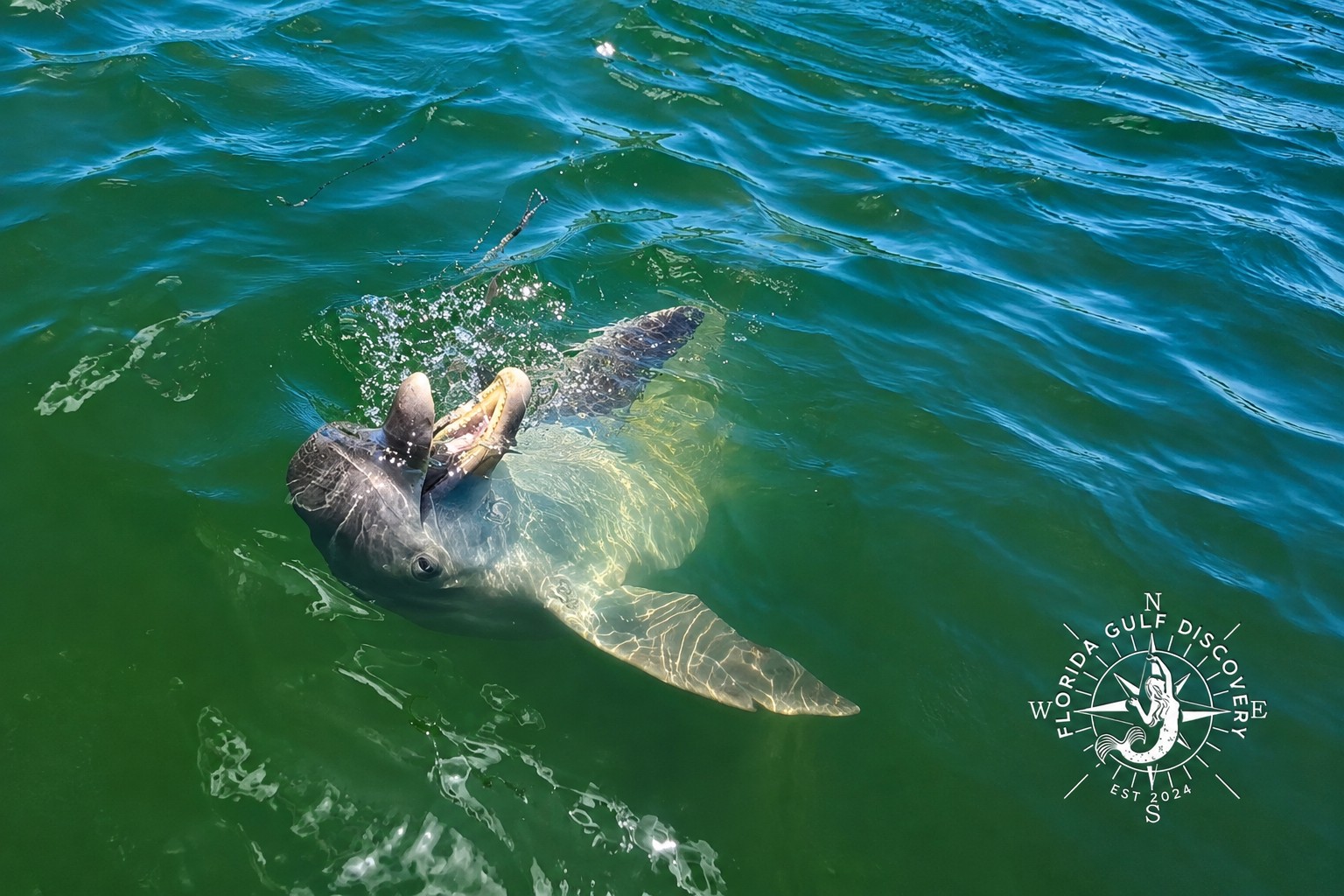
A playful bottlenose dolphin swims upside down near the historic Placida Trestle and Boca Grande Sandbar, revealing one of the species' most entertaining behaviors. Dolphins often roll onto their backs while playing, investigating boats, or closely examining objects and people beneath the surface.
After countless hours on these waters, one thing has become clear to me—no two dolphin encounters are ever the same. Some days they quietly cruise along the shoreline searching for fish. Other days they're playful and curious, swimming alongside the boat or chasing schools of baitfish through shallow water. Every trip tells a different story, and that's one of the reasons I never get tired of exploring these waters.
Understanding how bottlenose dolphins live and why they choose certain habitats will help you better appreciate the locations featured in this guide—and increase your chances of experiencing an unforgettable encounter during your own adventure on the water.
3 Best Time to Visit
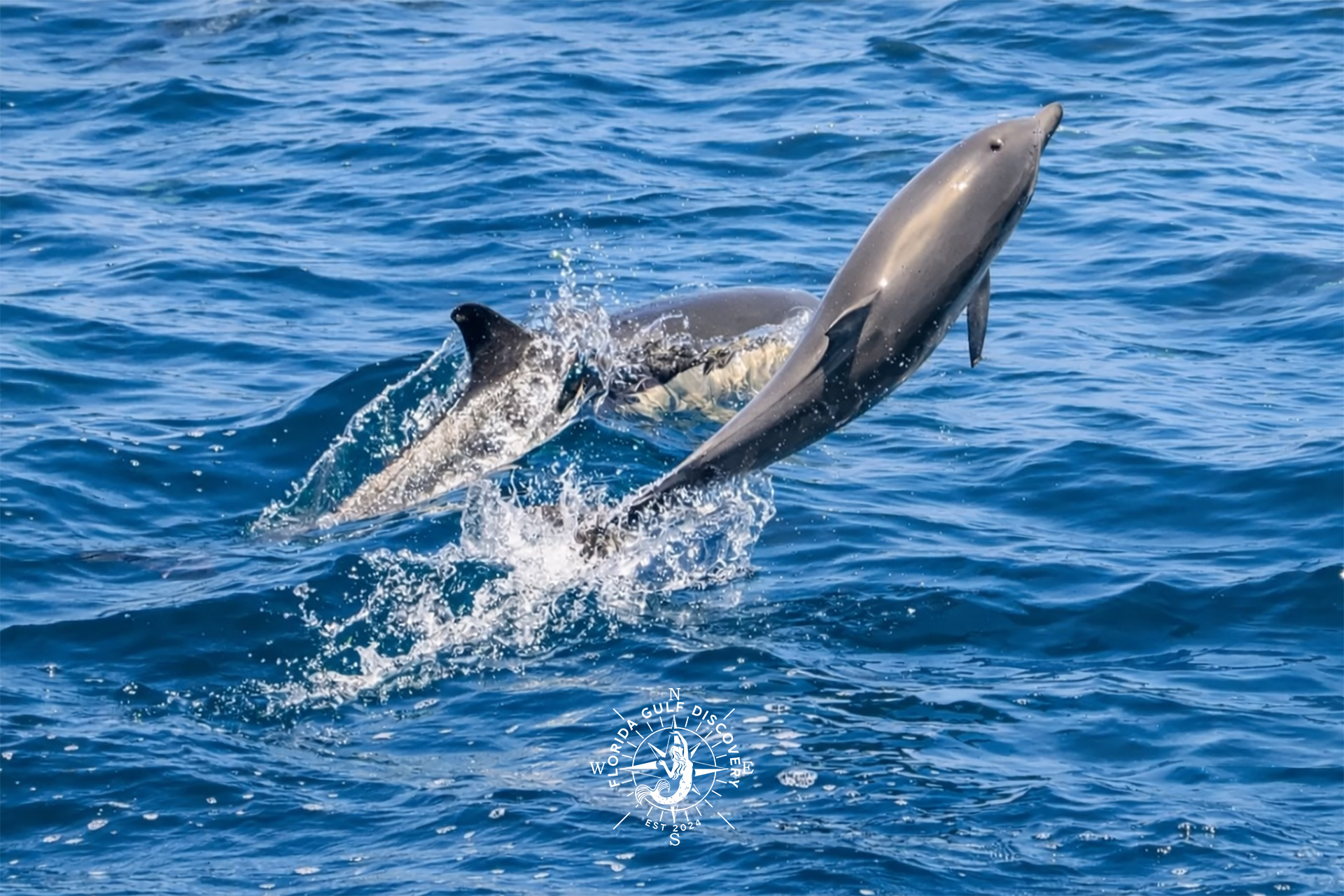
Two playful wild bottlenose dolphins interact in the crystal-clear waters of Stump Pass, displaying the strong social bonds that make this species one of the most intelligent marine mammals on Earth. Dolphins spend much of their lives communicating, cooperating while hunting, caring for their young, and engaging in playful behavior that strengthens relationships within the pod. The productive waters where Lemon Bay meets the Gulf of America provide abundant food, making Stump Pass one of Southwest Florida's best locations to observe these remarkable animals in their natural environment. The best encounters happen when dolphins choose to approach on their own, while boats maintain a respectful distance and allow their natural behavior to continue undisturbed.
If you're wondering when to plan your dolphin-watching adventure, here's the good news—there's no bad time of year to see dolphins in Southwest Florida. Atlantic bottlenose dolphins are year-round residents of these coastal waters, so every season offers the opportunity for an unforgettable encounter. The real secret isn't choosing the right month—it's understanding the tides, weather, and the places where dolphins naturally gather.
Experience has taught me that successful dolphin watching isn't about luck. Before every trip, I check the tides, wind, weather, and recent wildlife activity to help decide where we'll explore that day. Dolphins move with nature, and planning around those conditions often leads to the most rewarding encounters.
Best Time of Day
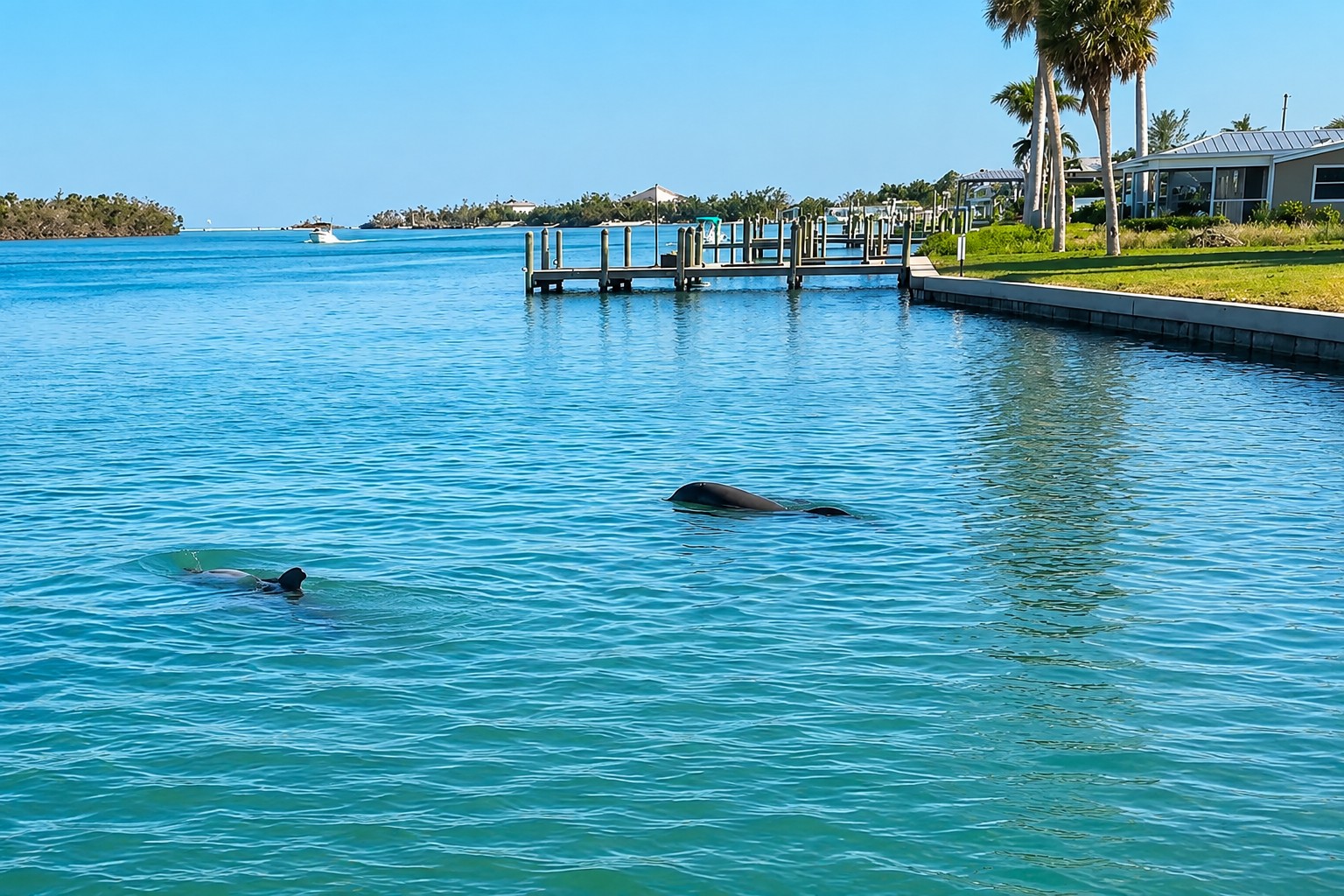
Watch on YouTube: Cruise with Captain Pavel through the peaceful waters of Lemon Bay West in Englewood, where resident bottlenose dolphins are frequently seen feeding, traveling, and playing near the waterfront homes. Lemon Bay's protected estuary provides ideal habitat for dolphins year-round, making it one of Southwest Florida's most reliable places for unforgettable wildlife encounters by boat.
Early morning is usually my favorite time to be on the water. Winds are often lighter, the water is calmer, and boat traffic is minimal, making it much easier to spot a dolphin's dorsal fin breaking the surface. Dolphins are also actively feeding during the morning hours, especially around mangrove shorelines, tidal passes, and shallow estuaries.
Late afternoon is another excellent time for dolphin watching. As the day begins to cool and many boats head back to the marina, dolphins often become more active again. The soft evening light creates beautiful photography conditions, making sunset cruises one of the most memorable times to experience Southwest Florida.
Best Season
One of the greatest advantages of visiting Southwest Florida is that bottlenose dolphins are permanent residents. Unlike many marine animals that migrate with the seasons, these dolphins remain here throughout the year, moving between bays, passes, estuaries, and nearshore Gulf waters as they follow their food sources.
- Spring – Pleasant temperatures, active wildlife, and comfortable boating conditions make spring one of the best times to explore.
- Summer – Calm mornings often provide outstanding dolphin sightings, although afternoon thunderstorms are common.
- Autumn – Warm water, lighter boat traffic, and mild weather create excellent conditions for both boating and wildlife watching.
- Winter – Cooler temperatures, lower humidity, and exceptional visibility often make winter one of my favorite seasons on the water.
Why Tides Matter
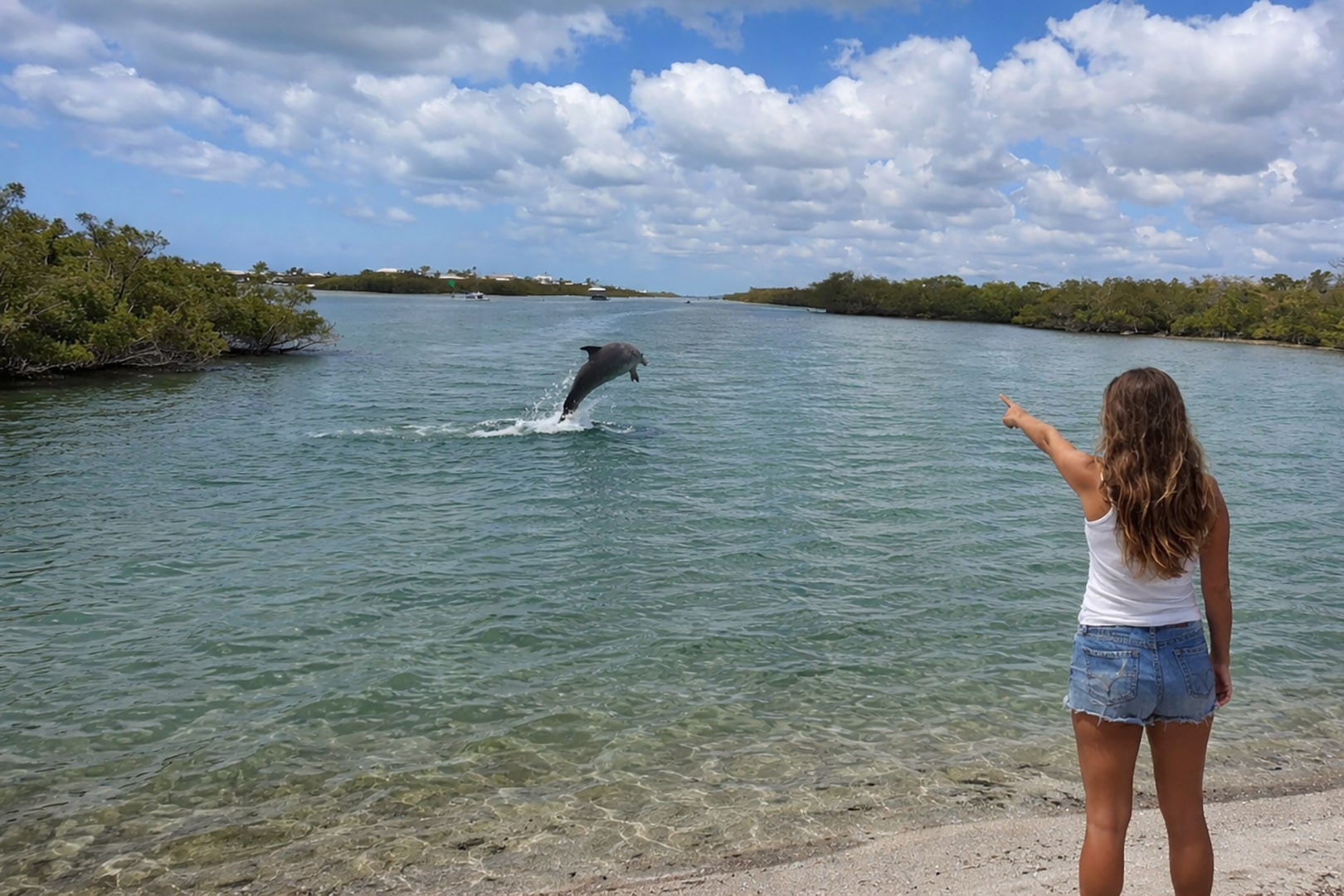
Watch on YouTube: Experience the excitement through a child's eyes as a wild bottlenose dolphin leaps from the water during an unforgettable boat trip near Englewood, Florida. Join Captain Pavel for this magical wildlife encounter and discover why Southwest Florida is one of the best places to watch dolphins in their natural habitat, creating memories that last a lifetime.
If there's one thing that consistently improves the chances of seeing dolphins, it's a moving tide.
Dolphins are intelligent and efficient hunters. Instead of chasing fish across open water, they often position themselves where tidal currents naturally concentrate baitfish. Places like Stump Pass, Placida Trestle, Ski Alley, and Boca Grande Pass become natural feeding areas as schools of mullet, sardines, and other baitfish are carried through narrow channels.
While dolphins can appear at any time, I've found that periods of active tidal movement often produce the most exciting wildlife encounters.
Weather Matters More Than Sunshine
Many visitors hope for bright blue skies, but calm water is actually far more important.
Light winds create smooth water, making dolphins much easier to spot from a distance. On windy days, waves can hide dorsal fins even when dolphins are nearby. After a passing summer storm, dolphins often return to their normal feeding patterns surprisingly quickly once the water settles.
Every Encounter Is Different
After countless hours on these waters, one thing has become clear to me—every trip tells a different story. Some days dolphins quietly patrol the shoreline searching for fish. Other days they're chasing baitfish through a tidal pass, swimming alongside the boat, or playfully riding the pressure wave near the bow.
That's the beauty of observing wild dolphins. They aren't performing for an audience—they're simply living in their natural environment. Every sighting is unique, every encounter is genuine, and every trip offers the possibility of creating a memory that lasts long after the boat returns to the dock.
Now that you know when dolphins are most active, let's explore the five places in Southwest Florida where I've enjoyed some of my most memorable encounters. Some are well-known destinations, while others are local favorites that many visitors pass by without ever realizing what they're missing.
4 Captain Pavel's Top 5 Locations
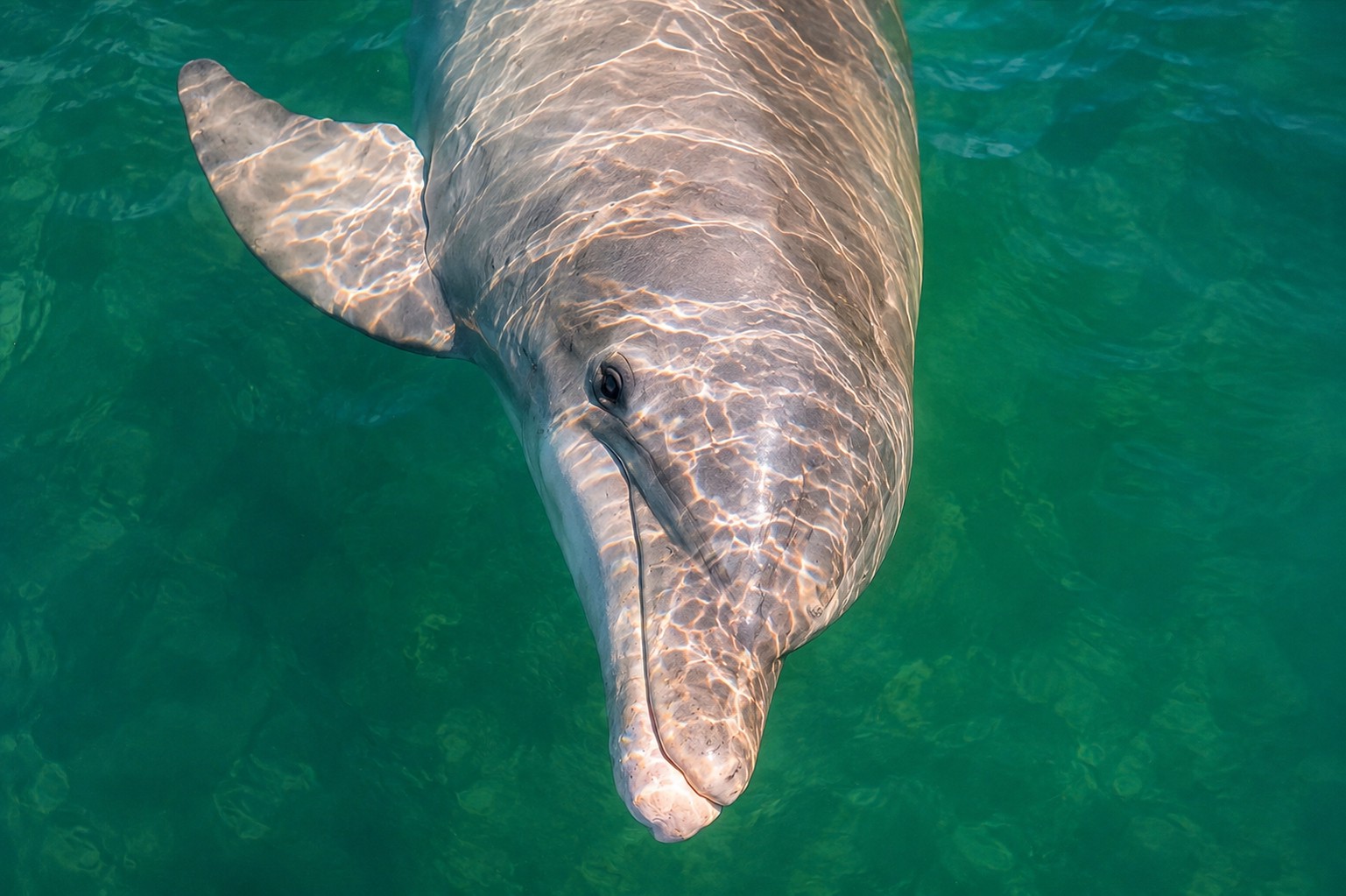
This close-up underwater portrait offers a rare glimpse into the world of a wild bottlenose dolphin beneath the surface of Southwest Florida's coastal waters. Their large eyes provide excellent underwater vision, while a highly developed sonar system called echolocation allows them to navigate, locate fish, and communicate even in murky water. Dolphins are naturally curious and will sometimes approach swimmers or boats to investigate their surroundings. Waters around Charlotte Harbor, Gasparilla Sound, Lemon Bay, and the Gulf of America offer outstanding opportunities to observe these intelligent marine mammals in their natural habitat.
Southwest Florida is home to countless places where dolphins can be seen, but after years of exploring these waters, I've discovered that a handful of locations consistently offer the best opportunities for unforgettable encounters. These are the places I return to season after season—not because dolphin sightings are guaranteed, but because healthy estuaries, abundant fish, and constantly changing tides create ideal conditions for dolphins to thrive.
Each location has its own personality. Some are peaceful mangrove-lined waterways where dolphins quietly patrol the shoreline. Others are powerful tidal passes where they work together to hunt schools of baitfish with remarkable precision. Understanding what makes each place unique will not only increase your chances of seeing dolphins, but also help you appreciate the fascinating behaviors you'll witness along the way.
These are the places where I've shared some of my favorite dolphin encounters with guests over the years. Whether it's watching dolphins hunt with the tide, a curious calf swimming beside its mother, or a playful dolphin riding the bow wave, every location offers a different experience. Let's begin with one of my favorite destinations—Stump Pass.
4.2 Placida Trestle
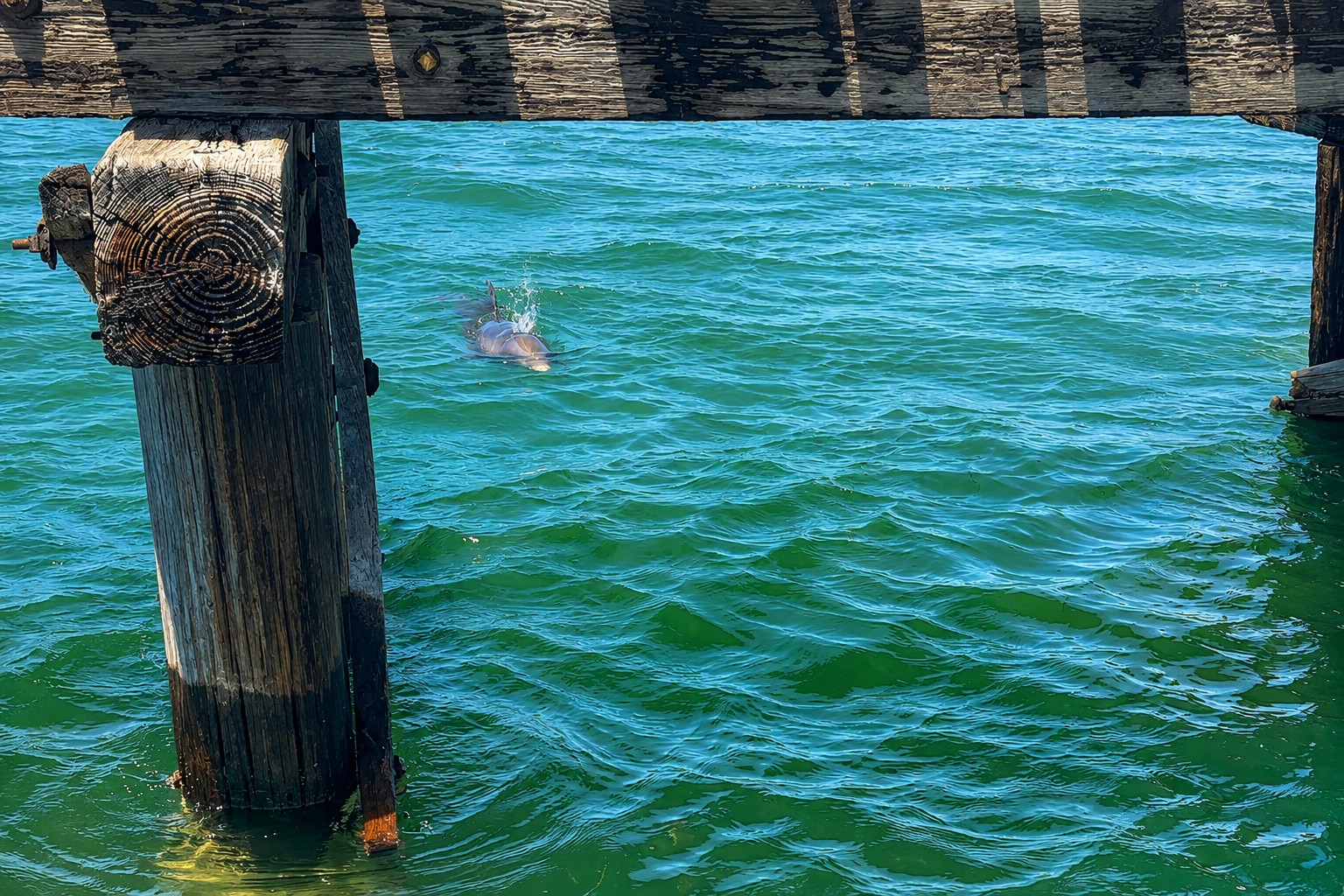
Watch on YouTube: Join Captain Pavel beneath the historic Placida Trestle as a curious wild bottlenose dolphin glides through the emerald waters below the old railroad bridge.
Few visitors realize that Placida Trestle is one of Southwest Florida's hidden gems for dolphin watching. While many boaters simply cruise beneath the historic railroad bridge, they often pass one of the area's richest wildlife habitats without even realizing it.
The former Seaboard Air Line Railroad bridge spans the entrance to Gasparilla Sound, where moving tides, bridge pilings, shallow grass flats, and deeper channels create ideal conditions for marine life. As water flows through this natural bottleneck, schools of baitfish gather around the structure and channel edges, attracting hungry bottlenose dolphins throughout the year.
Experience has taught me that dolphins use this area differently than they do in nearby tidal passes. Instead of dramatic feeding frenzies, they're often seen quietly cruising beneath the bridge, patrolling the mangrove shoreline, or surfacing calmly along the channel as they search for fish. Their relaxed behavior makes Placida Trestle one of my favorite places to observe dolphins in a more peaceful setting.
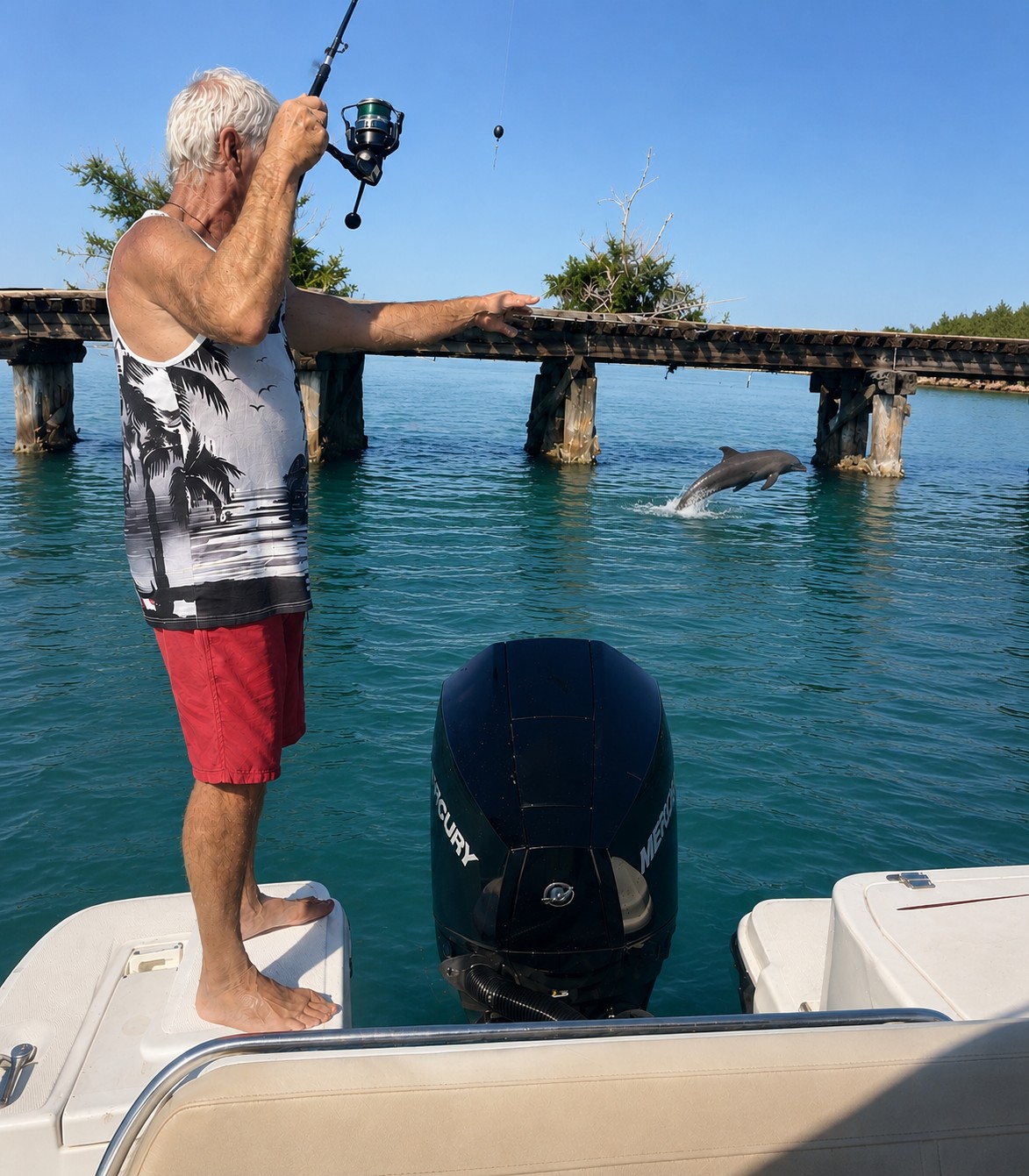
Watch on YouTube: Share an unforgettable moment with Captain Pavel as a wild bottlenose dolphin launches into the air near the historic Placida Trestle. This exciting encounter captures the playful nature of Southwest Florida's resident dolphins and highlights why the waters around Placida, Boca Grande, and Charlotte Harbor are among the best places to experience dolphin watching in their natural habitat.
The surrounding waters are incredibly rich in wildlife. On a single trip, it's not unusual to see dolphins, pelicans diving for fish, ospreys carrying their catch back to the nest, rays gliding across the sandy bottom, and even a manatee quietly surfacing near the mangroves. It's a reminder that healthy coastal ecosystems support far more than a single species.
The tide plays an important role here as well. Moving water carries baitfish through the bridge opening and surrounding channels, creating predictable feeding opportunities. Before every trip, I pay close attention to the tide because even small changes in water movement can influence where dolphins choose to hunt.
I've slowed the boat here hundreds of times, and it's amazing how often a quiet pause is rewarded by the gentle sound of a dolphin surfacing nearby. Sometimes the most memorable wildlife encounters happen when you simply slow down, watch the water, and let nature come to you.
If you're looking for a peaceful and authentic dolphin-watching experience away from the busiest boating areas, Placida Trestle is one of Southwest Florida's best-kept secrets.
4.3 Stump Pass & Ski Alley
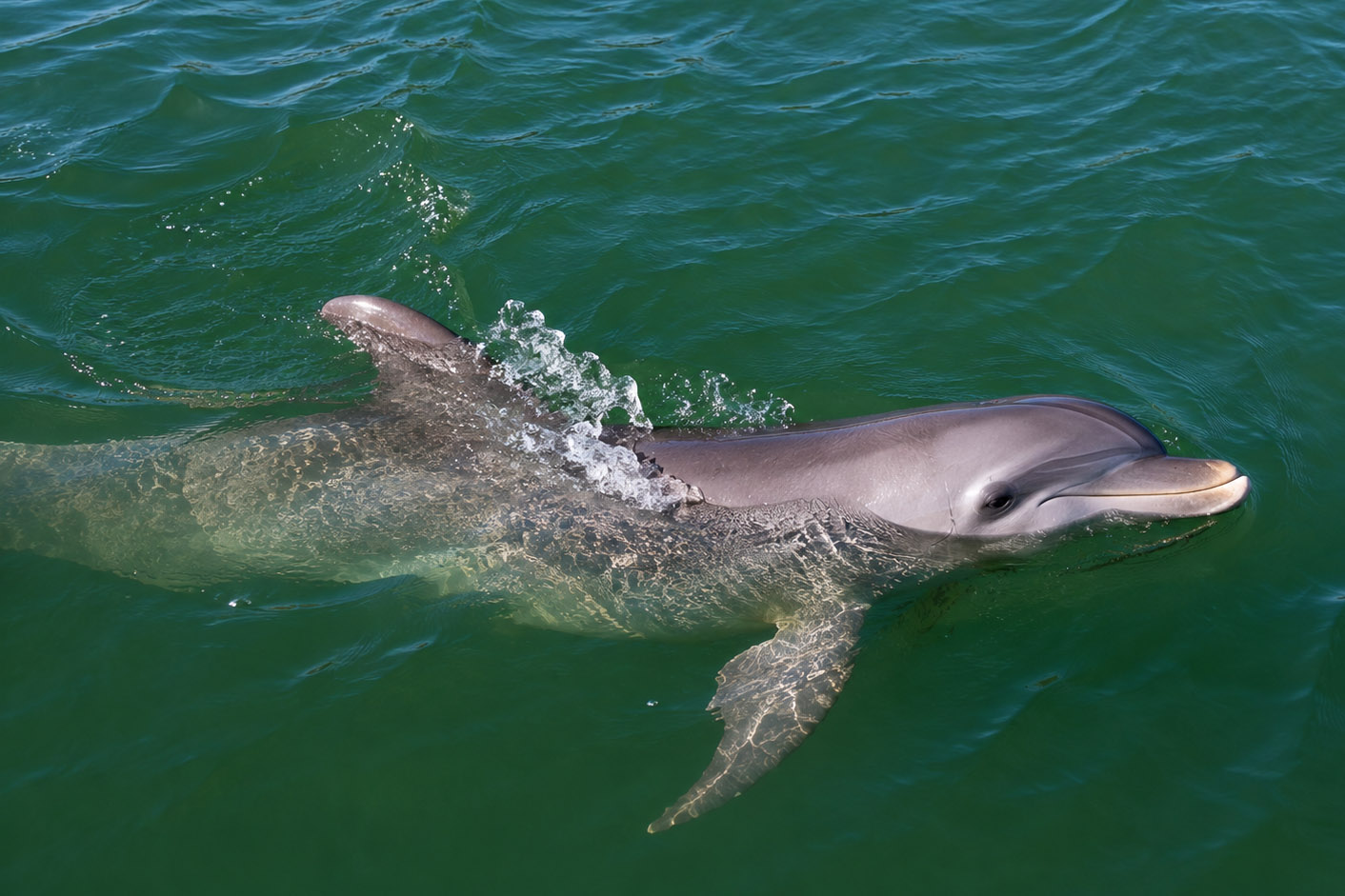
Watch on YouTube: Experience an unforgettable close encounter with a wild bottlenose dolphin in the crystal-clear waters of Southwest Florida. Join Captain Pavel as this curious dolphin swims alongside the boat, offering a rare opportunity to observe one of the Gulf Coast's most intelligent and charismatic marine mammals in its natural habitat. Dolphins are among the most frequently seen wildlife during Captain Pavel's private boat tours.
Stump Pass & Ski Alley is one of those places that many visitors never discover—and that's exactly what makes it so special. Tucked away between Placida and Boca Grande, this quiet waterway has become one of my favorite places to slow down, enjoy nature, and look for dolphins away from the crowds.
Unlike the busy tidal passes, Ski Alley offers calm, protected waters bordered by mangrove islands, shallow grass flats, and deeper natural channels. These diverse habitats support healthy populations of baitfish throughout the year, creating an ideal environment for Atlantic bottlenose dolphins. While there's never a guarantee of seeing wildlife, this is one of those places where I always keep a close eye on the water.
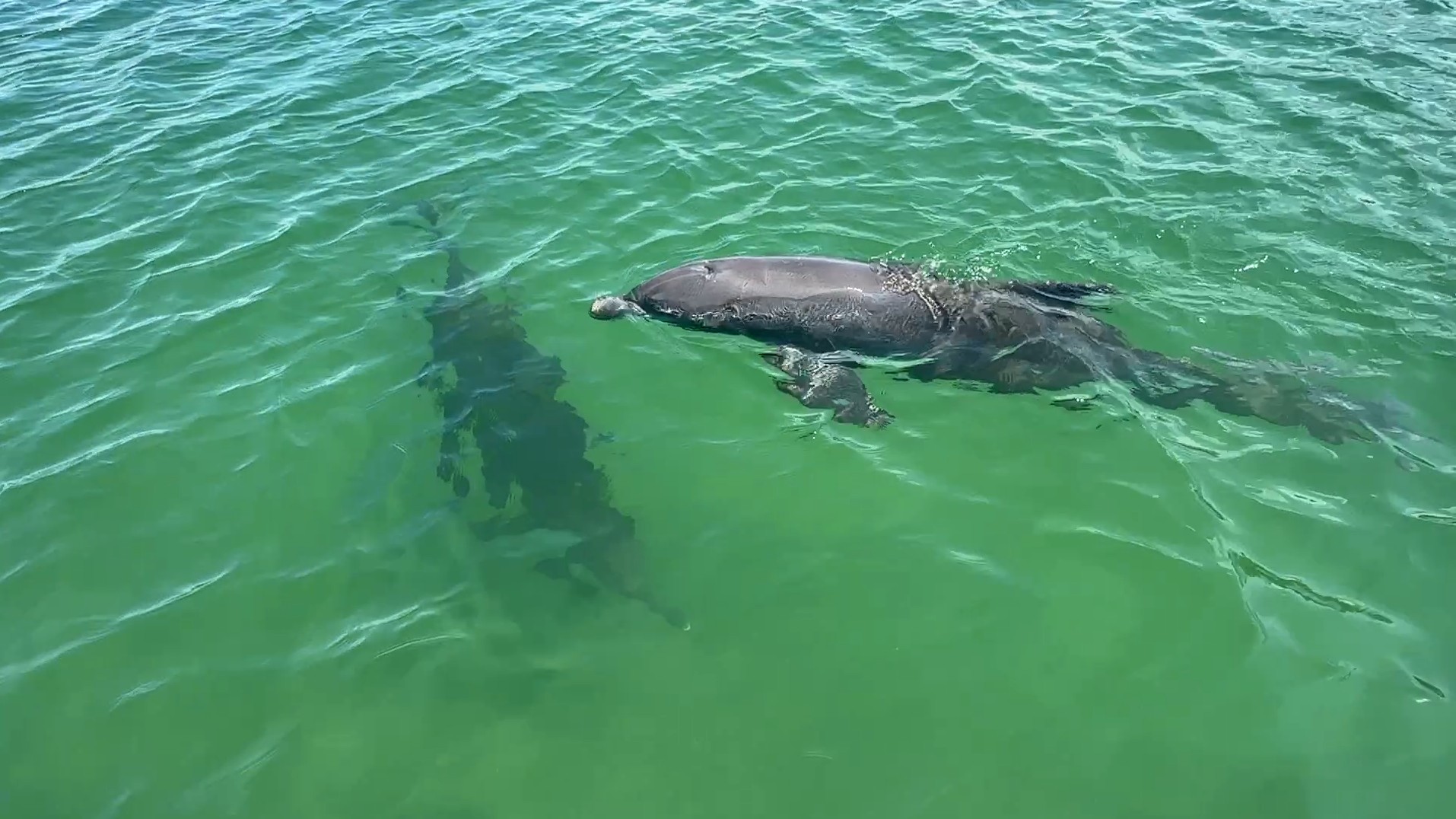
A pair of wild bottlenose dolphins swims through the crystal-clear waters of Stump Pass, one of Southwest Florida's premier locations for observing marine wildlife in its natural habitat. The tidal currents flowing between Lemon Bay and the Gulf of America concentrate baitfish, creating ideal feeding conditions for dolphins throughout the year.
What I enjoy most about Ski Alley is how relaxed the dolphins often appear. Instead of rushing through strong tidal currents, they quietly cruise the shoreline, surface beside the mangroves, or travel in small family groups through the calm water. On a peaceful morning, it's not unusual to spot a dorsal fin gliding across the glass-like surface long before you hear the dolphin take its next breath.
I've learned that Ski Alley rewards patience. Instead of covering water quickly, I often reduce speed, drift with the current, and simply watch. Time after time, some of the best dolphin encounters have happened when everyone on board becomes quiet and lets nature unfold at its own pace. More often than not, curiosity brings the dolphins closer than expected.
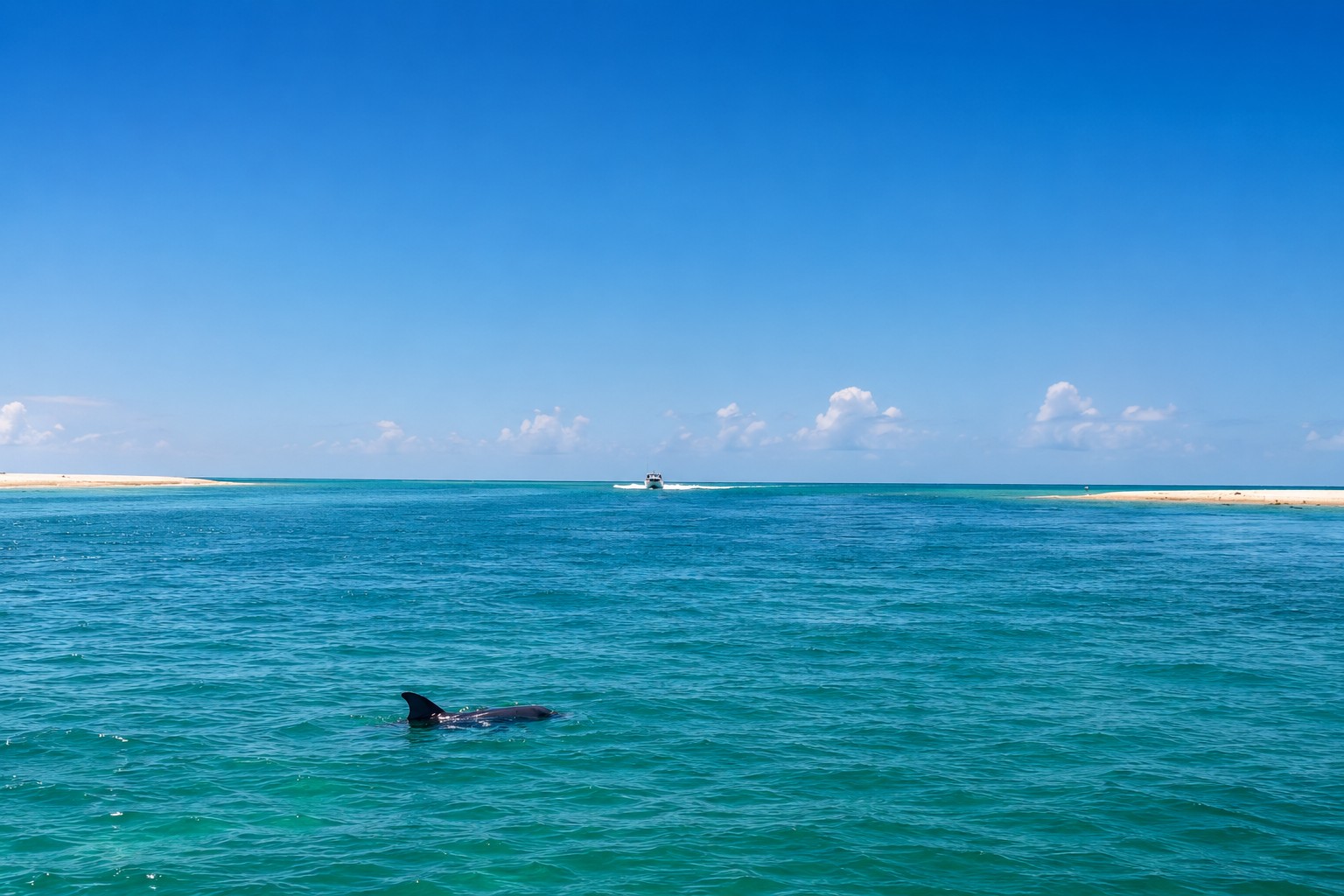
A wild bottlenose dolphin glides effortlessly through the crystal-clear waters of Stump Pass, where tidal currents between Lemon Bay and the Gulf of America create an ideal feeding habitat. Calm conditions often allow visitors to watch dolphins swimming beneath the surface as they hunt schools of baitfish, communicate with one another, and occasionally investigate passing boats. Stump Pass Beach State Park is one of Southwest Florida's premier locations for dolphin watching, and respectful observation from a safe distance offers an unforgettable look into the lives of these intelligent marine mammals.
The area is also rich in other wildlife. Ospreys circle overhead searching for fish, pelicans dive into the water with surprising accuracy, rays glide silently across the sandy bottom, and manatees occasionally surface among the mangroves. It's a reminder that every part of this estuary is connected, and healthy ecosystems support an incredible diversity of life.
What I appreciate most about Ski Alley is its peaceful atmosphere. Away from the larger boats and busier waterways, it offers a chance to experience Southwest Florida at a slower pace. Here, dolphin watching isn't about chasing wildlife—it's about understanding the rhythm of the water and allowing nature to reveal itself.
If you're looking for a quiet, authentic, and unforgettable dolphin-watching experience, Ski Alley is one of Southwest Florida's true hidden treasures.
4.4 Cayo Costa State Park
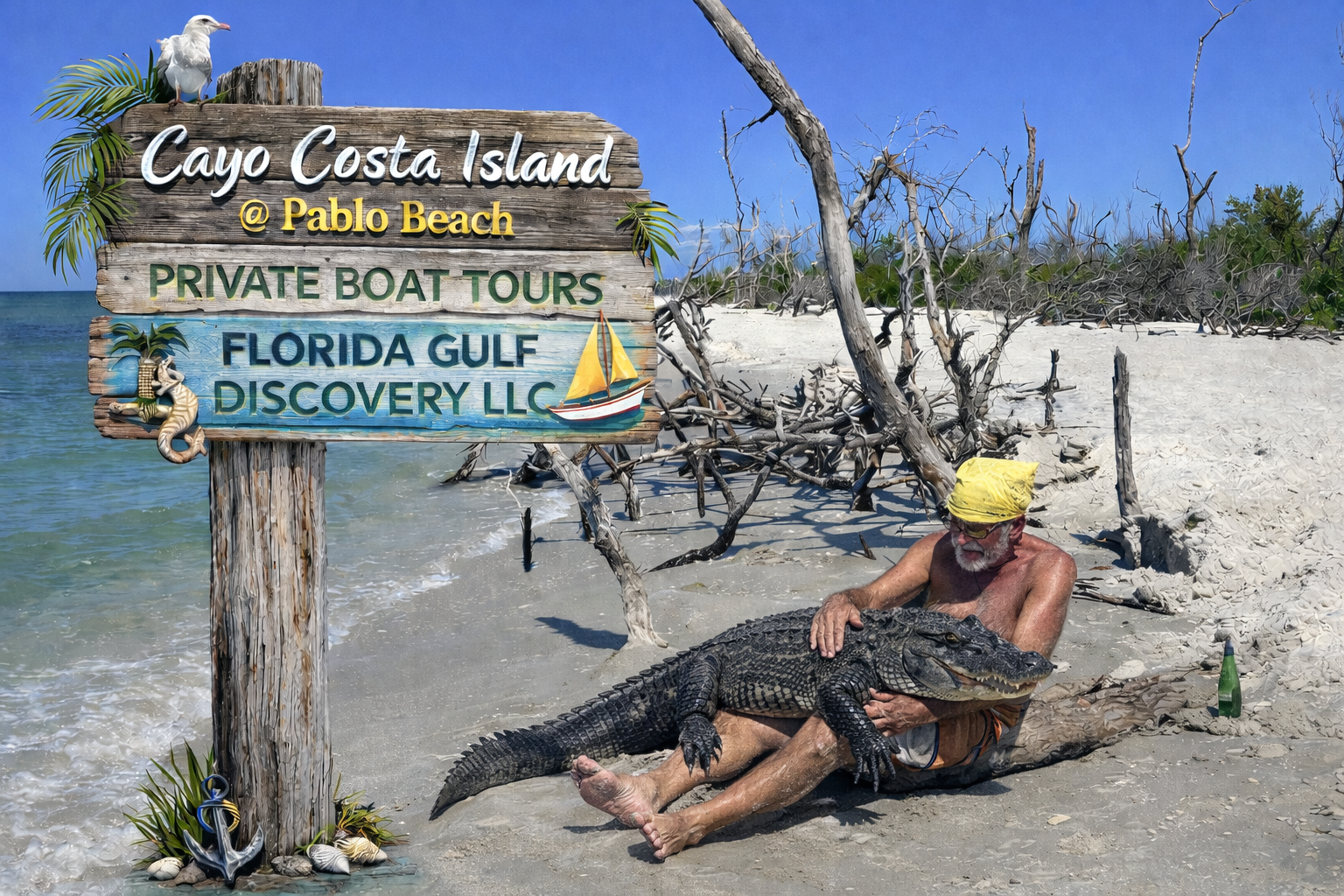
An American alligator rests beside a freshwater pond.
Stepping ashore on Cayo Costa State Park feels like traveling back in time. With no bridges, roads, or beachfront development, this barrier island remains one of the last truly wild places on Florida's Gulf Coast. Nearly nine miles of natural beaches, mangrove forests, shallow bays, and crystal-clear Gulf waters provide an ideal home for bottlenose dolphins and countless other marine species.
Dolphins can be seen almost anywhere around the island, but if I have a favorite place, it's the northeast side of Cayo Costa, near Padilla Beach and the beautiful Cayo Costa Lagoon. I've returned here countless times because the combination of protected water, healthy seagrass beds, mangrove shoreline, and abundant baitfish creates one of the island's richest wildlife habitats.
Unlike the stronger currents of nearby passes, this peaceful corner of the island allows dolphins to quietly patrol the shoreline, travel through the shallow bays, and feed along the edges of the grass flats. On calm mornings, it's not unusual to spot dolphins surfacing nearby while guests are exploring the beach, collecting shells, or simply relaxing by the water.
One lesson I've learned is to never stop watching the water just because we've reached the beach. Some of my favorite dolphin encounters have happened while guests were enjoying the shoreline. Then, almost without warning, a dorsal fin breaks the surface just offshore, followed by another. Moments like these remind everyone that at Cayo Costa, wildlife is never far away.
This peaceful corner of the island is where I often find myself slowing down to simply enjoy nature. Ospreys circle overhead searching for fish, pelicans dive into the water with incredible precision, rays glide silently across the sandy bottom, and manatees occasionally surface in the calm, shallow water. Without roads, buildings, or crowds, it's easy to imagine what Southwest Florida looked like centuries ago.
For me, the northeast side of Cayo Costa near Padilla Beach and Cayo Costa Lagoon represents everything that makes Southwest Florida so special—peaceful, unspoiled, and filled with wildlife. If you're hoping to experience wild dolphins in one of the most beautiful natural settings on Florida's Gulf Coast, this is a place you'll never forget.
4.5 Boca Grande Pass
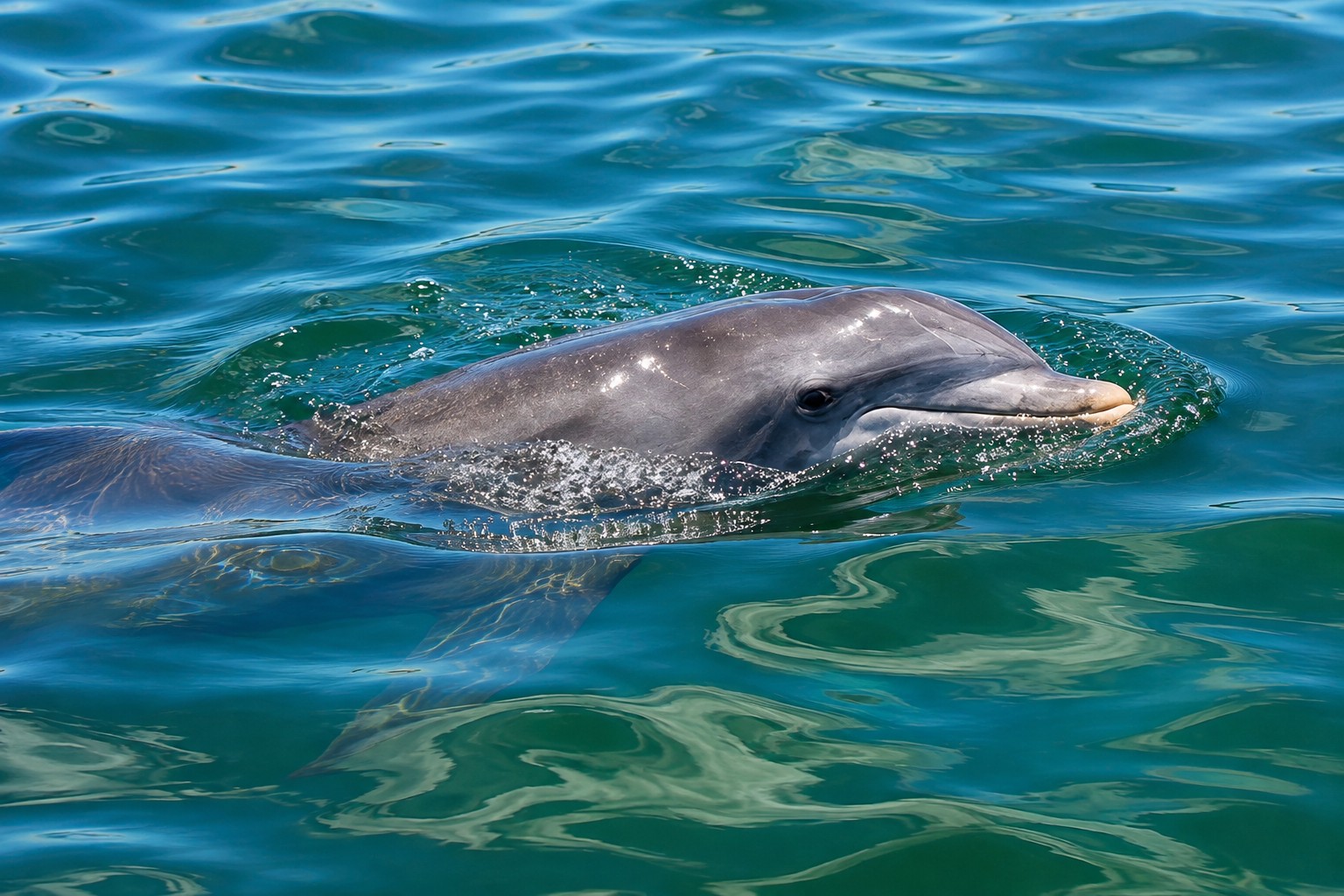
A close-up view of a wild bottlenose dolphin reveals the famous upturned mouth that gives the species its characteristic "smile." While the expression appears friendly, it is actually a natural feature of the dolphin's jaw rather than an indication of emotion.
If there's one place that defines Southwest Florida's marine environment, it's Boca Grande Pass. Famous around the world for its legendary tarpon fishery, it's also one of the most exciting places to encounter wild bottlenose dolphins. Every trip through the pass offers the possibility of an unforgettable wildlife experience.
Connecting Charlotte Harbor with the Gulf of America, Boca Grande Pass carries enormous volumes of water through its deep natural channel with every changing tide. These powerful currents shape everything that happens here—from the movement of baitfish to the feeding patterns of dolphins, seabirds, and countless other marine species.
Dolphins know exactly how to use these conditions to their advantage. Rather than fighting the current, they work with it, gliding effortlessly through the moving water while searching for mullet, sardines, thread herring, and other baitfish. Watching them hunt with such speed, teamwork, and precision is one of the most impressive wildlife spectacles in Southwest Florida.
Although Boca Grande Pass is known for its strong tidal currents, dolphins are often found along the edges of the channel, around nearby sandbars, and close to the shoreline where fish gather. Depending on the tide, they may be quietly traveling through the pass, actively feeding, or simply surfacing nearby before disappearing beneath the water again.
I've learned never to cross Boca Grande Pass without watching the water. Even when we're heading somewhere else, I slow down and keep scanning the horizon because dolphins have a way of appearing when you least expect them. Some days it's a single dolphin quietly surfacing in the distance. Other days it's an entire pod working together in the current. Every crossing is different, and that's part of the magic of this place.
The pass is alive with activity throughout the year. Brown pelicans plunge into the water after baitfish, ospreys patrol overhead, sea turtles surface for a breath of air, and schools of fish move with the tides. Everywhere you look, the changing current supports another piece of this remarkable marine ecosystem.
Every crossing reminds me why Boca Grande Pass remains one of my favorite places on Florida's Gulf Coast. The tides are always changing, wildlife is always moving, and nature never puts on the same show twice. If you're hoping to experience wild dolphins in one of Southwest Florida's most spectacular natural settings, Boca Grande Pass is a place you'll never forget.
5 Watching Dolphins Responsibly
Watching wild dolphins is one of the highlights of any trip on the water, but the most memorable encounters happen when we allow them to behave naturally. Respecting their space not only protects these remarkable animals, but also creates a more authentic experience for everyone on board.
Slow Down and Let Nature Come to You
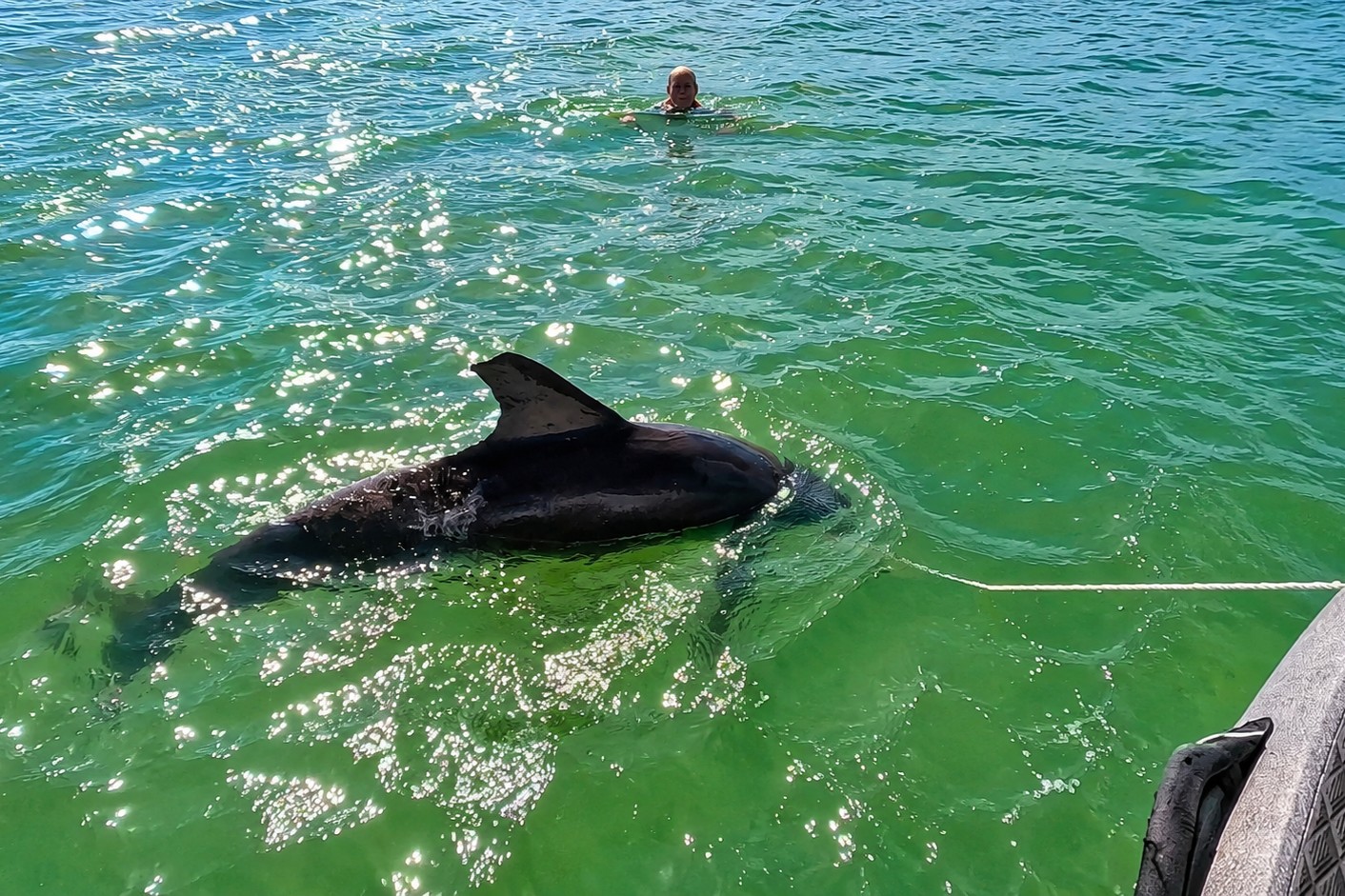
A curious bottlenose dolphin swims just a short distance from guests enjoying the shallow waters of Boca Grande Sandbar in Gasparilla Sound.
Experience has taught me that dolphins are naturally curious. When I slow the boat and let them decide what to do, the best encounters often happen on their own. Sometimes they'll swim alongside the boat or ride the gentle pressure wave near the bow. Other times they'll quietly continue on their way. Either way, it's a privilege to watch them in their natural environment.
Keep a Respectful Distance
Dolphins are protected wild marine mammals and should never be chased or surrounded by a boat. Give them plenty of room to move freely, and avoid crossing directly in front of them. If a dolphin changes its direction or behavior because of your presence, it's a good sign you're too close.
Never Feed Wild Dolphins
Feeding dolphins may seem harmless, but it teaches them to associate boats with food, changing their natural behavior and putting them at greater risk of injury from propellers and fishing gear. The most rewarding encounters are always the ones that happen naturally.
Be Patient
Wildlife doesn't follow a schedule, and that's part of its beauty. Sometimes dolphins appear within minutes, while other times they quietly surface beside the boat when you least expect it. On the water, patience is often rewarded, and slowing down usually leads to the most memorable moments.
Watch for Nature's Clues
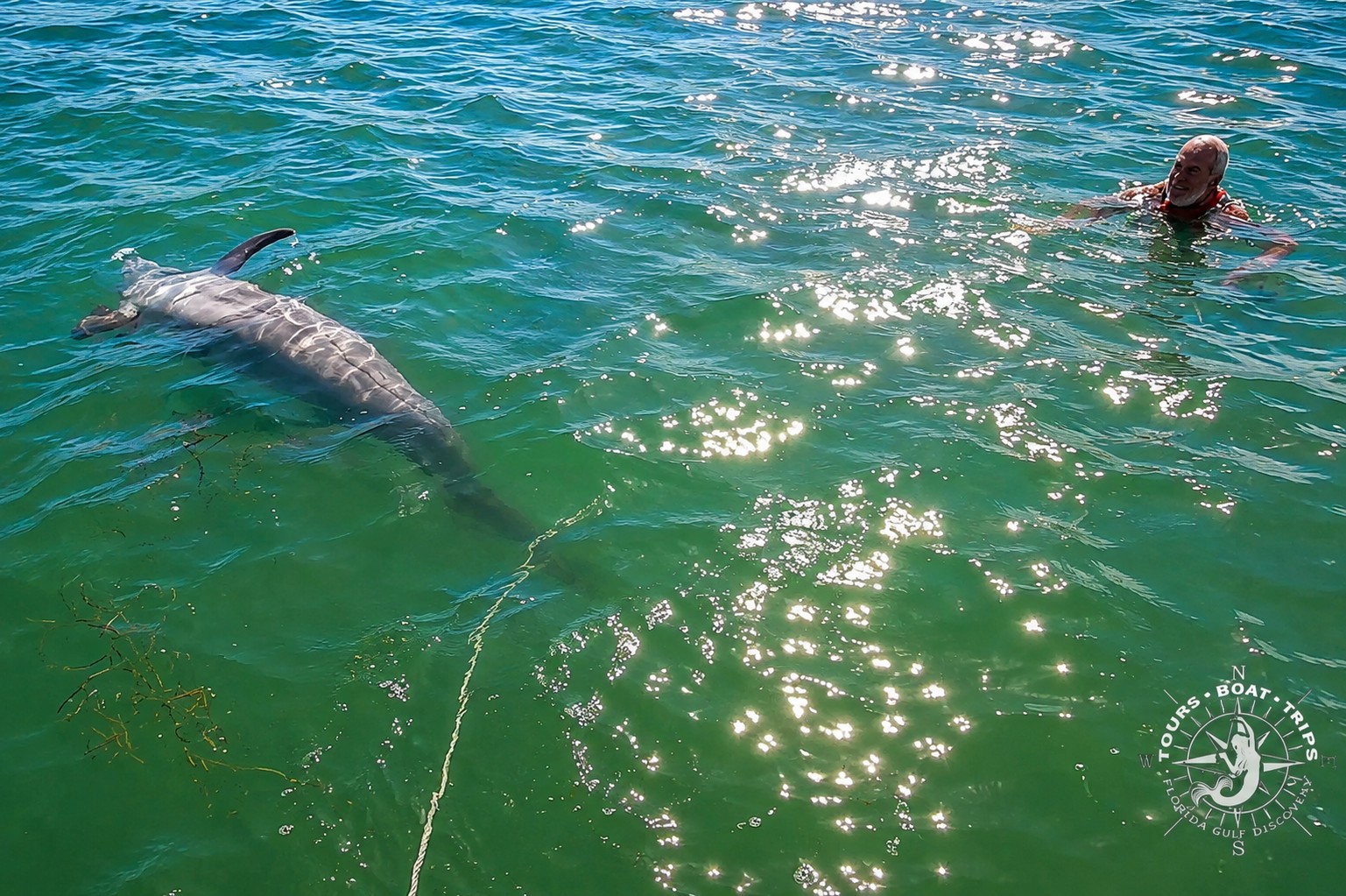
A wild bottlenose dolphin glides through the crystal-clear waters beside guests at Boca Grande Sandbar in Gasparilla Sound.
One of the best ways to find dolphins is by paying attention to everything happening around you. Diving pelicans, circling terns, jumping mullet, nervous baitfish, and areas of moving water often reveal where fish are gathering—and dolphins are usually not far away. After countless hours exploring these waters, I've learned that nature often tells you where to look before the dolphins appear.
Leave Only Memories
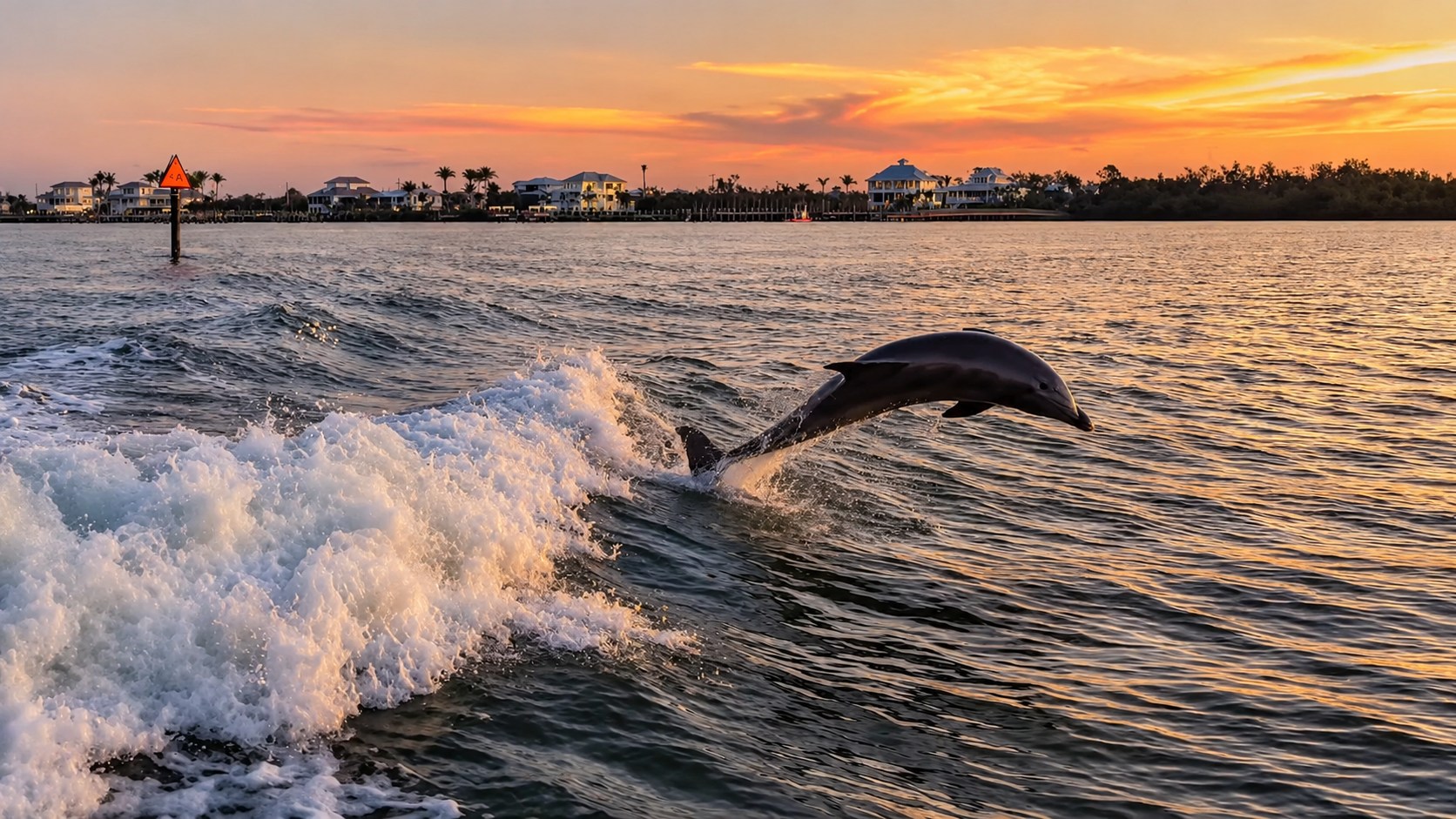
A wild bottlenose dolphin leaps from the glowing waters of Boca Grande Pass as the sun sets over the Gulf of America.
Southwest Florida's dolphins are part of a healthy coastal ecosystem that depends on clean water and responsible boating. Dispose of trash properly, respect wildlife, follow local boating regulations, and help protect these beautiful waters so future generations can enjoy the same unforgettable experiences.
For me, dolphin watching has never been about getting as close as possible. It's about respecting wildlife and enjoying those rare moments when dolphins choose to share their world with us. Some encounters last only a few seconds, but they're often the memories guests talk about long after the trip is over. That's the true magic of exploring Southwest Florida by boat.
6 Final Thoughts
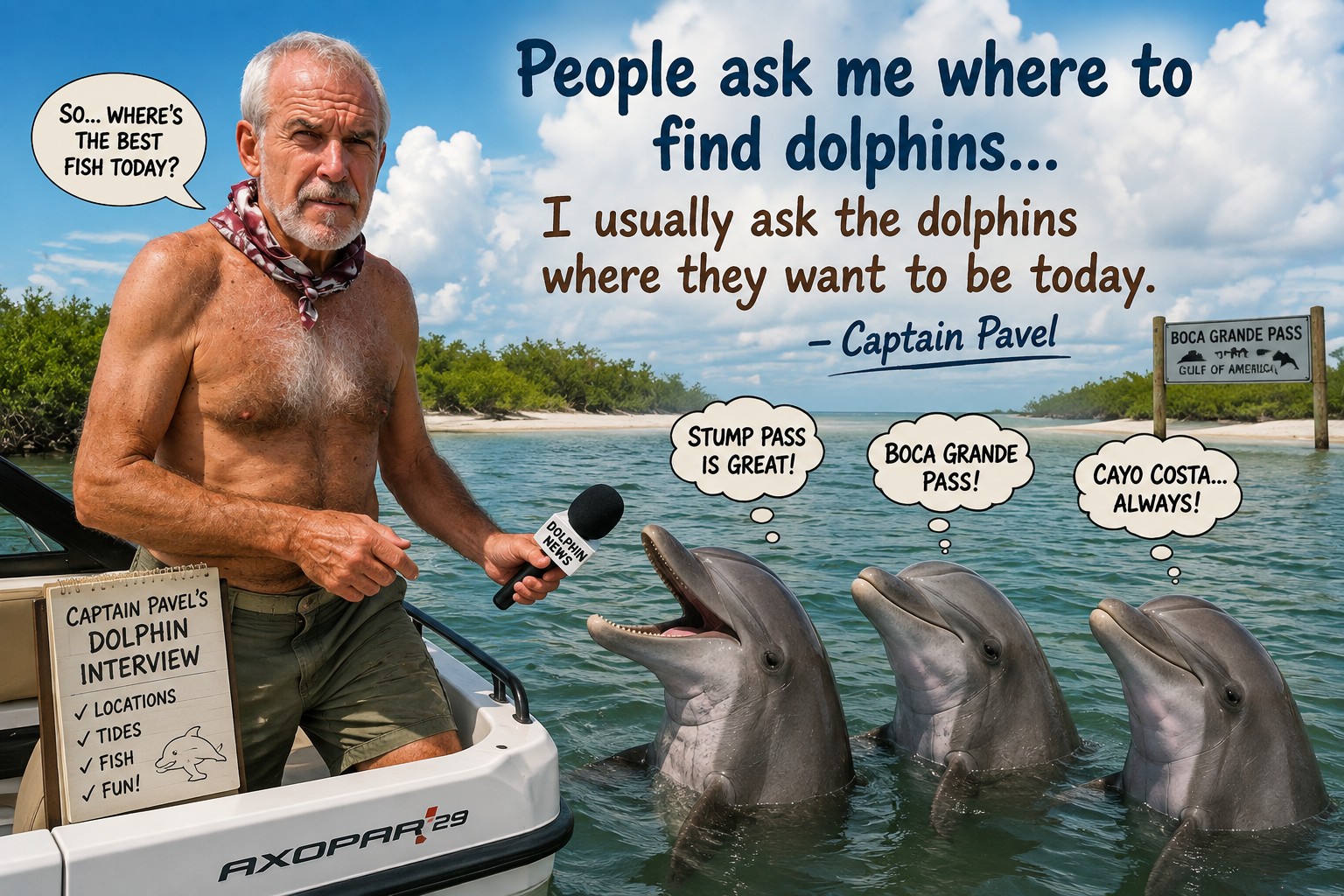
Captain Pavel's Explorer's Note: "People ask me how I always find dolphins. The truth is... I don't. They usually find me first. My job is simply to ask a few questions and let them tell the story." Every dolphin encounter is different. Sometimes they quietly cruise beside the boat, sometimes they leap through the wake, and sometimes they seem just as curious about us as we are about them. That's the magic of exploring Southwest Florida's waters—you never know when the next interview with the locals is about to begin. Discover your own unforgettable dolphin encounter with Florida Gulf Discovery.
After spending countless hours exploring the waters of Southwest Florida, one thing has become clear to me—every dolphin encounter is unique. Some days they're quietly cruising along a mangrove shoreline. Other days they're feeding in a tidal pass, riding the bow wave beside the boat, or surprising everyone with a playful leap from the water. That's the beauty of wildlife—you never know exactly what the next moment will bring.
The five locations in this guide are the places I return to most often because they consistently provide incredible opportunities to experience dolphins in their natural habitat. While no one can guarantee a sighting, understanding the tides, weather, and the dolphins' favorite feeding areas can greatly improve your chances of creating unforgettable memories on the water.
Whether you're visiting Southwest Florida for the first time or returning to explore more of its beautiful coastline, I encourage you to slow down, watch the water, and enjoy every moment. Sometimes the most memorable experiences happen when you least expect them.
For me, dolphin watching has never been about getting as close as possible. It's about respecting wildlife and appreciating those rare moments when dolphins choose to share their world with us.
I hope this guide inspires you to discover your own unforgettable dolphin encounter. And who knows—maybe one day we'll share these waters together. Until then, keep your eyes on the horizon, enjoy the journey, and never underestimate the thrill of seeing that next dorsal fin break the surface.
"The best dolphin encounters aren't the ones you plan for—they're the ones nature gives you."
— Captain Pavel