Best dolphin tours in Englewood and Boca Grande featuring Manasota Key, Stump Pass, Lemon Bay, Gasparilla Sound, Boca Grande Pass and Boca Grande Sandbar
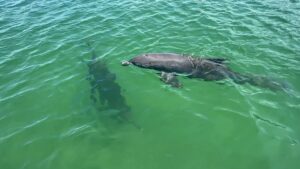
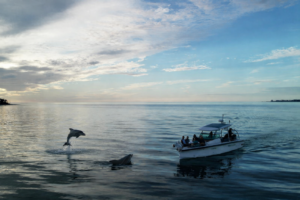
Dolphins playing around Captain Pavel’s boat at Boca Grande Sandbar
Dolphins playing around our boat at Boca Grande Sandbar. Select the image to read Captain Pavel’s complete story.

A dolphin tour is not a show with a fixed schedule—it is a journey through the places where wild dolphins naturally travel, feed, socialize and care for their calves. From Manasota Key and Stump Pass to Gasparilla Sound and Boca Grande Pass, I use my local knowledge to choose a route based on recent activity, tide, wind, water conditions and what is happening on the water that day.

Our private tours depart from Eldred’s Marina in Placida and carry up to six passengers. Because the boat is private, your dolphin search can also become a sandbar day, swimming trip, paddleboarding adventure, shelling stop, waterfront dining cruise or sunset experience.

1

Wild Dolphins, Not a Show

Dolphins playing with the anchor rope beside Captain Pavel’s boat at Boca Grande Sandbar
Dolphins playing with the anchor rope at Boca Grande Sandbar. Select the image to watch Captain Pavel’s video.

The dolphins of Southwest Florida live freely in bays, passes, channels and Gulf waters. Their movements change with tides, weather, prey and social activity. Some days they travel quietly, surfacing only to breathe. On other days they jump, chase fish, interact with one another or ride a boat wake.

No responsible captain can promise exactly where dolphins will appear or how they will behave. What I can provide is patient searching, local water knowledge, a comfortable private boat and the freedom to adjust our route when conditions suggest a better place to look.

Captain Pavel’s rule: I never treat dolphins like performers. We observe their natural behavior and let every encounter happen on their terms.
2

Where We Look for Dolphins

Dolphins can appear throughout our cruising area, but each location offers different water depths, currents, shorelines and opportunities. I select the best route for the conditions that day rather than following one fixed itinerary.

Manasota Key

Along the Gulf shoreline and nearby bay waters, dolphins may travel parallel to the beach or follow schools of fish close to shore.

Stump Pass

Moving water connects Lemon Bay with the Gulf of Mexico. Dolphins may travel through the pass, feed near current lines or appear beside the beaches.

Lemon Bay

Protected water, mangrove shorelines and connecting channels provide excellent places to watch for traveling dolphins and family groups.

Ski Alley

Located near Stump Pass in Lemon Bay, Ski Alley has protected water, shallow areas and nearby channels. Dolphins may travel through this area while guests swim, paddleboard or relax on the water.

Gasparilla Sound

This broad estuary gives dolphins room to travel between islands, deeper channels, feeding areas and passes leading toward the Gulf.

Gasparilla Pass

Currents and changing depths can concentrate fish. Dolphins may work the moving water or travel between the Gulf and protected Gasparilla Sound.

Boca Grande Sandbar

Shallow, clear water makes this a beautiful place to stop. Dolphins sometimes travel through the nearby channels while guests enjoy the sandbar.

Boca Grande Pass

This deep and powerful connection between Charlotte Harbor and the Gulf is an important travel and feeding area where dolphins may follow currents and schools of fish.

These locations are spread North and South of Placida, so one tour may not visit every destination. Your trip length, tide, weather, water conditions and selected activities determine the safest and most enjoyable route.

3

What Dolphins Do in the Water

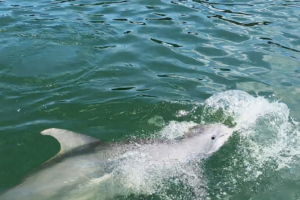
Wild dolphins swimming in Doctors Pass near Naples, Florida
Wild dolphins swimming through Gasparilla Pass near Placida, FL.

Dolphins do much more than jump. Watching closely often reveals the purpose behind their movement:

  • Traveling: steady surfacing in one direction, alone or with companions.
  • Feeding: quick turns, splashes, circling, chasing fish or working together to concentrate prey.
  • Socializing: touching, chasing, rolling, leaping and changing positions within a group.
  • Wake riding: using pressure waves created by a moving boat, but only when they choose to approach.
  • Resting: slow, quiet movement with regular breathing; dolphins remain partly alert because they must surface to breathe.
  • Breaching and tail slapping: behavior that may relate to play, communication, feeding or social interaction.

Dolphins eat fish and squid, but their feeding methods can change by habitat and opportunity. In shallow bays, a sudden splash or muddy patch may be evidence of dolphins working fish near the bottom.

4

How Dolphins Communicate

Dolphins live in a world where sound is extremely important. They use whistles and other vocal sounds to maintain contact and communicate. Each dolphin can develop a distinctive signature whistle that functions like an individual acoustic identity.

They also use echolocation—producing clicks and interpreting the returning echoes—to investigate objects, detect prey and understand their surroundings. Body language matters too. A leap, slap, roll, touch or change in swimming direction can carry information within the group.

They Breathe Air

A dolphin must deliberately surface and breathe through the blowhole on top of its head.

They Recognize Individuals

Whistles, physical features and marks on dorsal fins can help dolphins—and researchers—distinguish individuals.

5

How Dolphin Calves Are Born

Wild dolphins swimming near Stump Pass and Ski Alley in Englewood, Florida
Wild dolphins swimming near Stump Pass and Ski Alley in Englewood, Florida.

After a pregnancy of about one year, a female generally gives birth to one calf. Dolphin births usually occur tail-first, although head-first births can happen. Soon after delivery, the newborn must reach the surface for its first breath. Its mother stays close and may help guide it upward.

A calf swims beside its mother and benefits from the flow of water around her body, which helps the young dolphin keep pace. The calf nurses underwater from mammary slits on the mother’s underside. The bond is strong, and a young dolphin can remain with its mother for several years while learning where to travel, how to find food and how to behave within dolphin society.

When we see a mother and calf: I give them extra room. A close approach is never worth disturbing a nursing, resting or traveling family.
6

Mothers, Calves and Social Groups

Two wild dolphins swimming together in Gasparilla Sound, Florida
Two wild dolphins swimming together in the waters of Gasparilla Sound, Florida.

Dolphin groups are flexible. Individuals may join, separate and meet again rather than remain in one permanent pod. Mothers and calves form especially close relationships. Other dolphins may travel nearby, and juveniles often spend time learning through observation, practice and play.

Group size can change quickly. You may first see one dorsal fin and then discover several dolphins surfacing across the water. At other times, a single animal may be traveling separately. The number of dolphins does not determine the quality of an encounter; quiet observation of one mother and calf can be as memorable as watching an active social group.

7

How I Find Dolphins

Playful dolphin swimming upside down near the Placida trestle and Boca Grande Sandbar
A playful dolphin swimming upside down near the Placida trestle and Boca Grande Sandbar.

Finding dolphins starts with understanding the water. I watch tide direction, current lines, bird activity, baitfish, surface movement and the routes dolphins often use between bays and Gulf passes. I also look far ahead for the brief appearance of a dorsal fin or an unusual splash.

Experience helps, but there is no switch that turns wildlife on. Sometimes the best decision is to slow down and watch. Sometimes it is to move to another channel, pass or shoreline. Because this is a private trip, I can adapt without following a crowded, fixed tour routine.

8

Watching Dolphins Responsibly

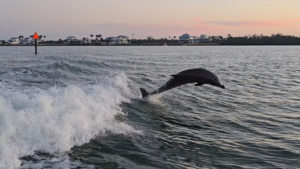
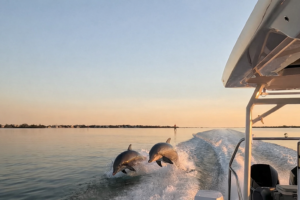
Dolphin playing in the boat wake at sunset near Cape Haze, Florida
A wild dolphin choosing to play in the boat wake during a sunset cruise near Cape Haze, Florida.

Wild dolphins are protected marine mammals. Responsible viewing means allowing them space, maintaining a predictable course, avoiding sudden pursuit and never feeding or attempting to touch them. Feeding changes natural behavior and can teach dolphins to approach boats, fishing lines and propellers.

  • We do not chase, surround or separate dolphins.
  • We reduce speed and watch their direction of travel.
  • We never feed dolphins or throw food into the water.
  • We give mothers, calves and resting animals additional room.
  • If dolphins choose to ride the wake, we keep the boat’s movement smooth and predictable.

These practices protect the animals and create a better experience: you are watching real behavior, not forcing a reaction.

9

Combine Your Dolphin Adventure

Your tour does not need to be only a dolphin search. Every private trip can be personalized around your family, available time and water conditions. Dolphin watching can be combined with:

Sandbar & Swimming

Anchor in shallow, clear water for relaxing, swimming and family time at a sandbar.

Paddleboarding

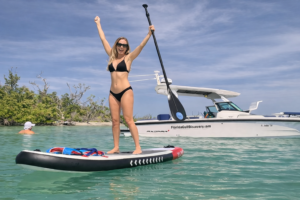
Add a paddleboard stop in protected water when wind, current and depth are comfortable.

Shelling & Beaches

Step ashore where access and conditions allow to explore a quiet beach and search for shells.

Waterfront Dining

Turn the day into a longer coastal experience with a restaurant stop reached directly by boat.

Island Hopping

Explore islands, mangrove shorelines, historic landmarks and changing waterways.

Sunset on the Water

Choose a later trip and finish with Southwest Florida colors across the Gulf or bay.

Tell me what your group enjoys most. I will help create a realistic route that balances cruising time, dolphin searching and your chosen stops.

10

Plan Your Private Dolphin Tour

Florida Gulf Discovery boat at Eldred’s Marina in Placida, Florida
Florida Gulf Discovery private boat at Eldred’s Marina in Placida, the departure point for Captain Pavel’s tours.

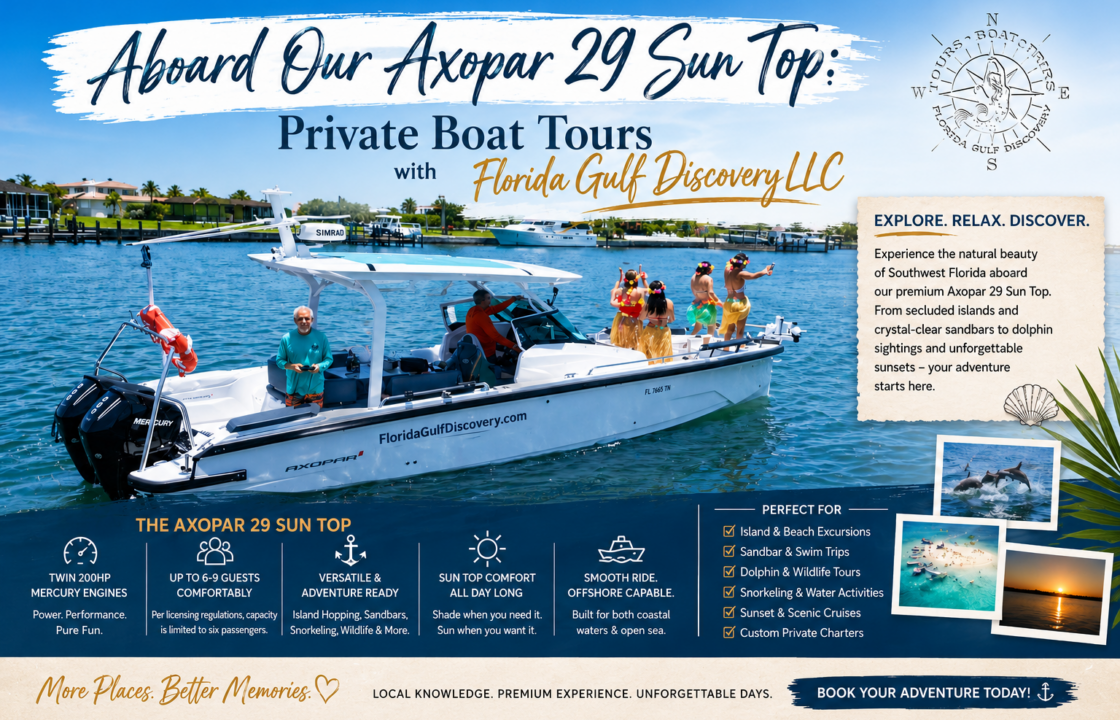
Florida Gulf Discovery LLC departs from Eldred’s Marina in Placida, perfectly positioned between Englewood waters to the North and Boca Grande and Gasparilla waters to the South. Trips are private for up to six passengers aboard a 2024 Axopar 29 Sun Top with Captain Pavel, a USCG-licensed OUPV captain.

Routes are customized according to trip length, tide, wind, Gulf conditions and the interests of your group. Dolphins are wild, so sightings and behavior cannot be guaranteed—but every trip is designed to give you a genuine opportunity to explore their natural coastal habitat.

Let Captain Pavel Create a Personalized Adventure

Search for dolphins, visit a sandbar, swim, paddleboard, explore islands or stop for waterfront dining—all during one private Southwest Florida boat tour.

Book Your Private Tour!
Book Now