Table of Contents
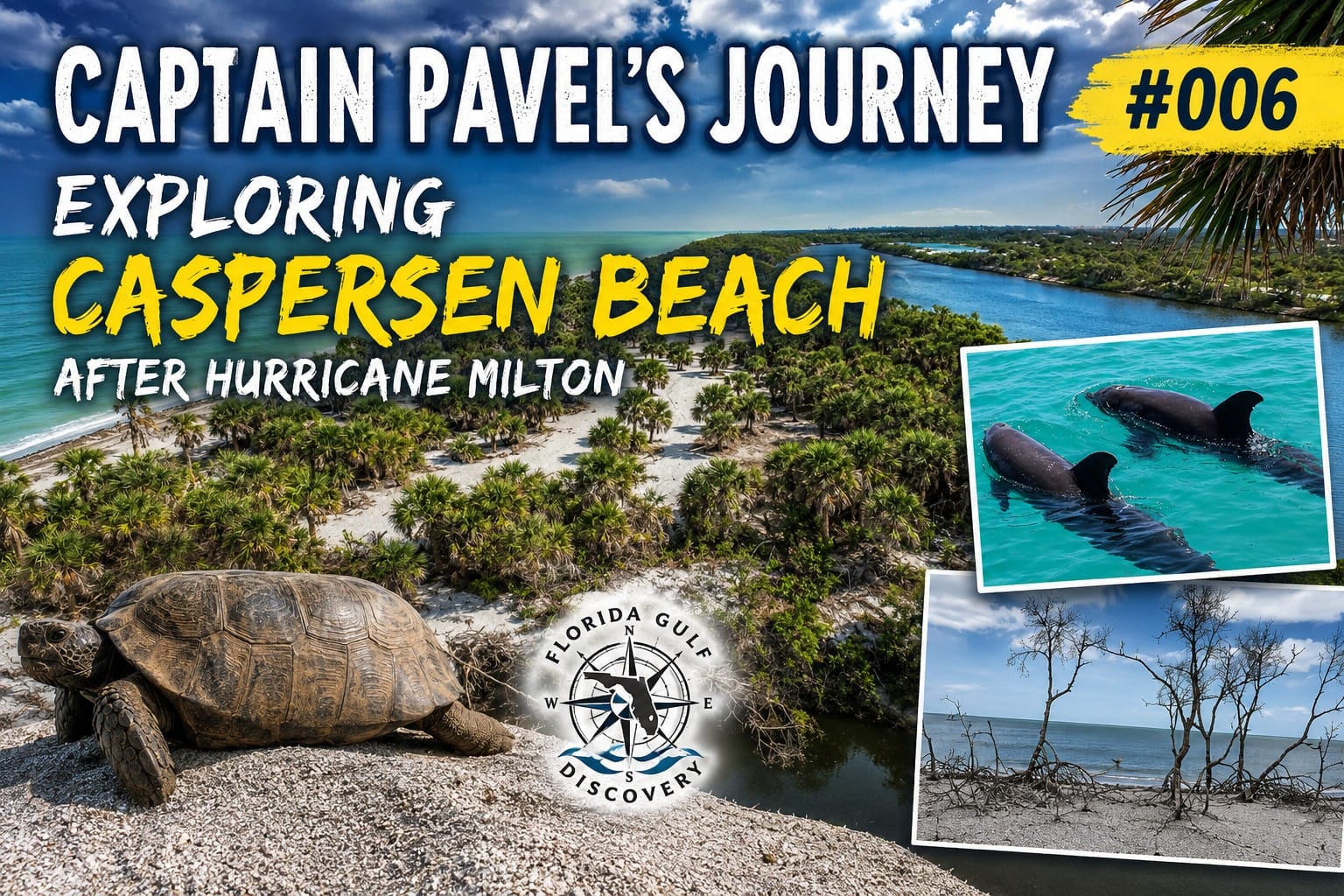
Follow Captain Pavel's journey from Placida through Lemon Bay to Caspersen Beach, with dolphins, a manatee, fossilized shark teeth, gopher tortoises, quiet beaches, drawbridges, and the lasting changes left by Hurricane Milton.
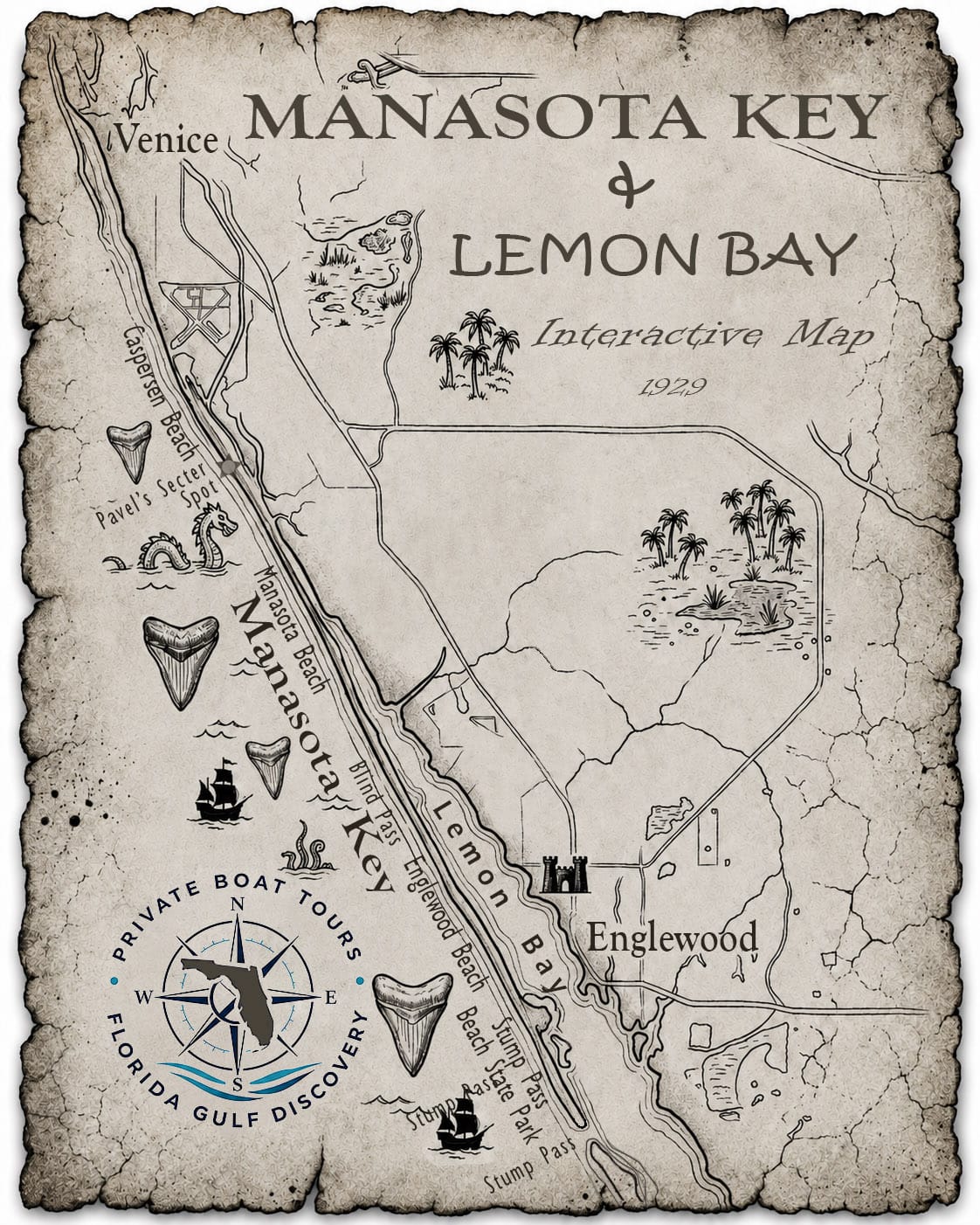
3. Trip Summary
April 2, 2026
Approximately 6–7 hours
Approximately 40 miles round trip
Eldred's Marina, Placida, Florida
Caspersen Beach via Lemon Bay
Dolphins • Manatee • Gopher Tortoise • Shark Teeth • Blind Pass Beach • Tom Adams Bridge • Hurricane Milton's Lasting Impact
4. Spring Along Lemon Bay
Watch on YouTube: Explore Caspersen Beach near Englewood, Florida, with Captain Pavel during a private boat trip along Southwest Florida's Gulf Coast. Enjoy spectacular aerial views, pristine shoreline, coastal wildlife, and one of the region's most scenic natural beaches.
On the morning of April 2, 2026, we departed Eldred's Marina in Placida around 10:00 a.m. for a full day of exploring Southwest Florida's Gulf Coast. My guests wanted to visit Caspersen Beach, a destination known for its natural shoreline, shark teeth, and peaceful atmosphere.
The weather was ideal for spending the day on the water. Clear blue skies, warm spring temperatures, and light winds created excellent boating conditions as we cruised north through the protected waters of Lemon Bay. The calm water reflected the morning sun, and the estuary was already alive with birds, fish, and other coastal wildlife.
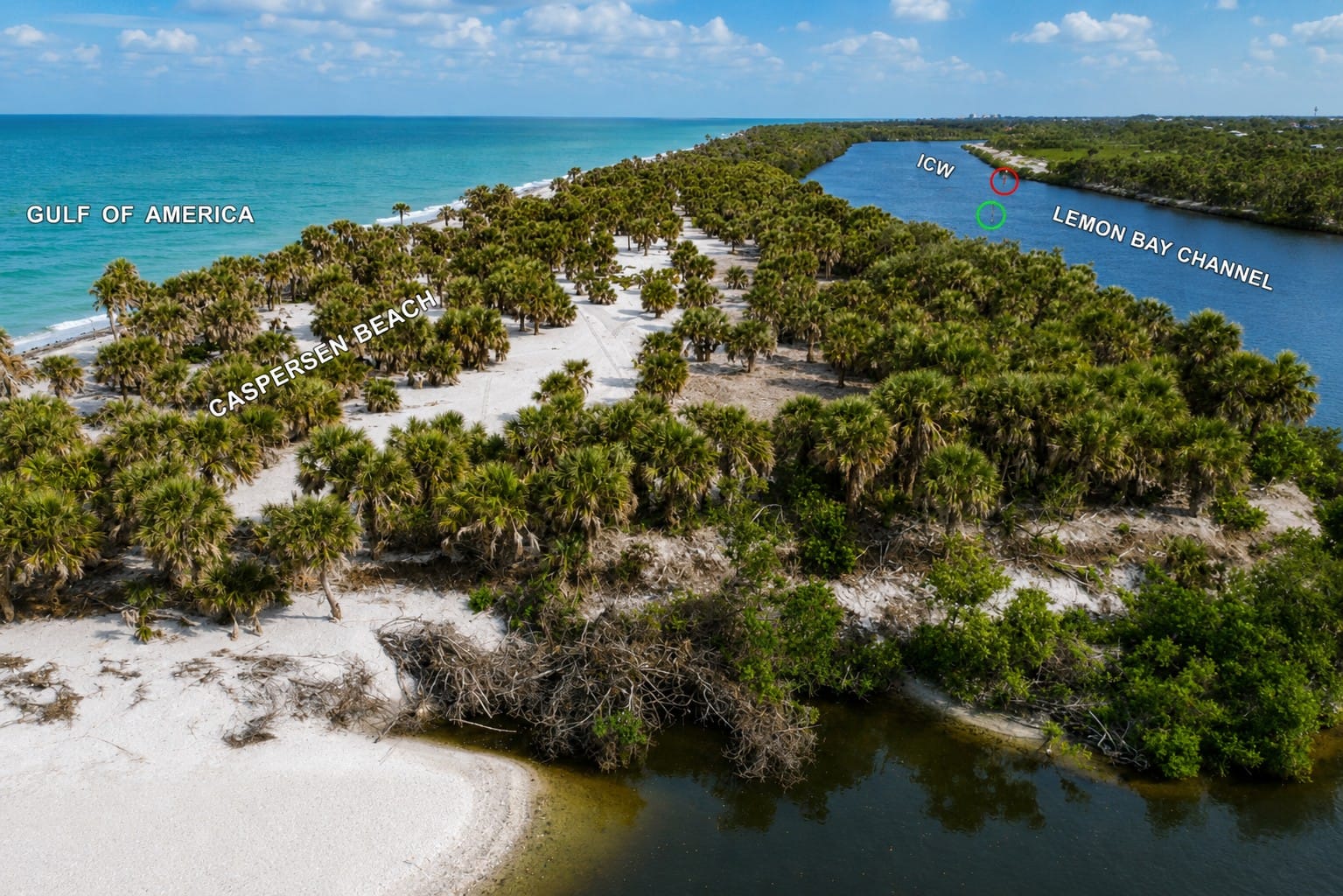
Aerial overview of Caspersen Beach and the Lemon Bay navigation channel near Venice, Florida. The marked Intracoastal Waterway follows the protected estuary behind the barrier island, while the open Gulf of Mexico stretches along the beach to the west. This unique landscape highlights the contrast between calm inland waters ideal for boating and kayaking and the natural Gulf shoreline known for shelling, fossil shark teeth, wildlife, and spectacular sunsets.
Rather than taking the shortest route, we followed the scenic waterway toward Stump Pass, where Lemon Bay meets the Gulf. Every trip along this route offers something different. Tides shift, wildlife appears without warning, and the coastline continues to evolve, especially after the powerful changes brought by Hurricane Milton.
As captain, I never know exactly what we will discover during the day, and that uncertainty is part of what makes every journey unique. With cameras ready and everyone eager for adventure, we continued north toward Stump Pass, where our first memorable wildlife encounter was waiting just ahead.
5. Dolphins at Stump Pass
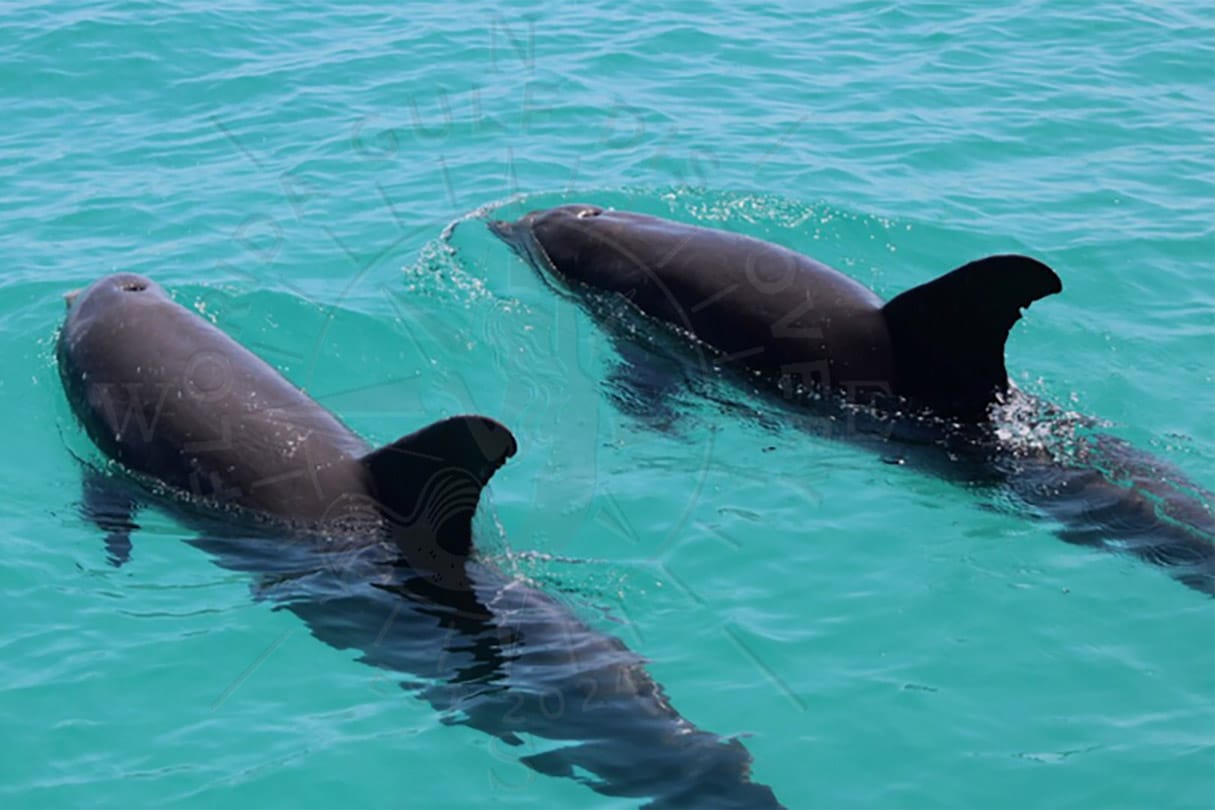
A pair of wild bottlenose dolphins swims through the clear waters of Stump Pass at the southern tip of Manasota Key. The protected waters between Lemon Bay and the Gulf of Mexico provide an ideal habitat for resident dolphin pods, making Stump Pass one of the best places in Southwest Florida to observe these intelligent marine mammals in their natural environment.
As we continued north, we arrived at Stump Pass, one of Southwest Florida's most dynamic coastal waterways. This natural inlet connects Lemon Bay with the Gulf, creating strong tidal currents that constantly reshape the shoreline and nearby sandbars. The moving water also attracts an abundance of marine life, making the area one of my favorite places to watch for wildlife.
It didn't take long before we spotted movement on the surface.
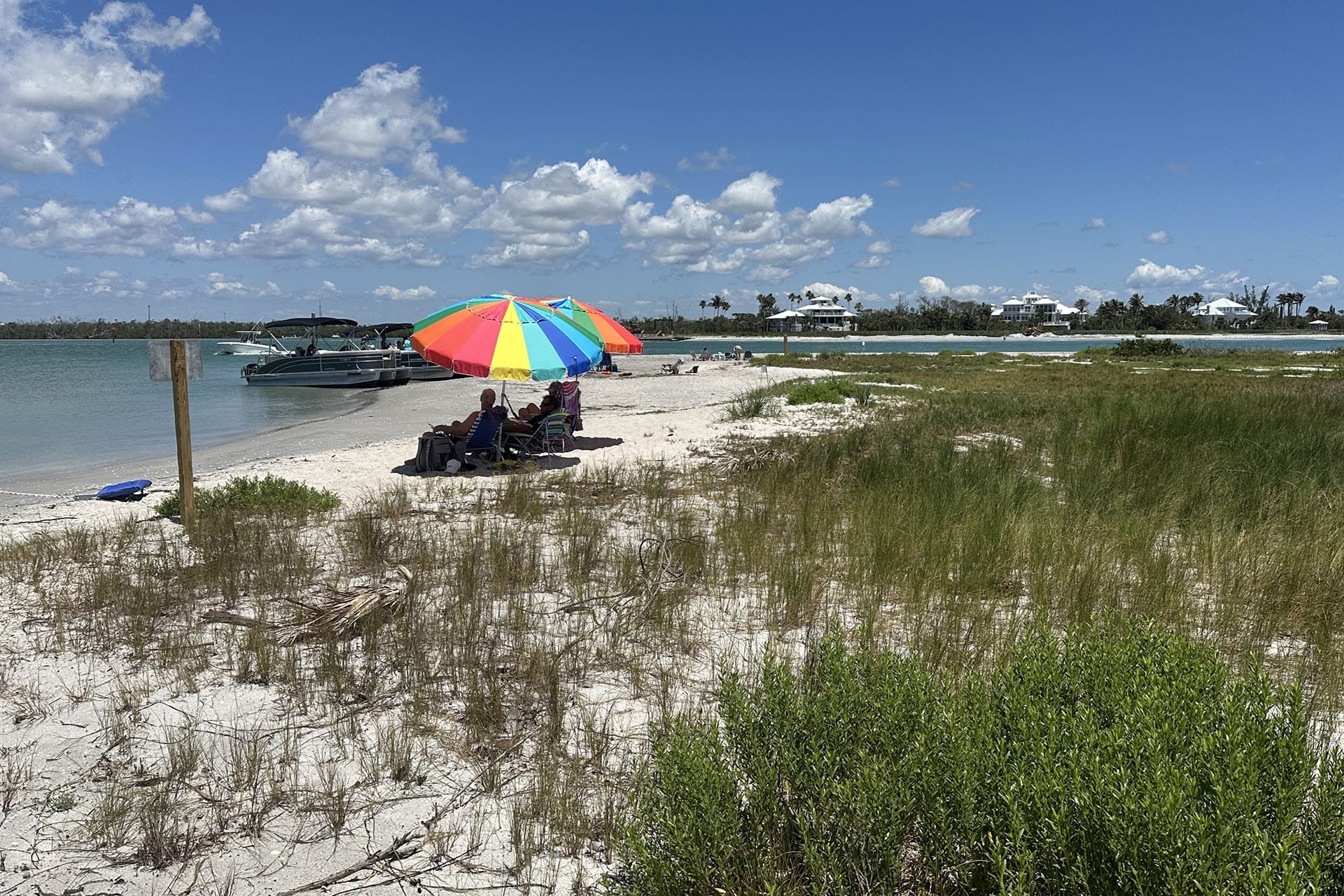
Boaters relax in the calm waters of Ski Alley near Stump Pass at the southern end of Manasota Key. Sheltered from the open Gulf, this scenic stretch of Lemon Bay has long been a favorite gathering place for boating, paddleboarding, swimming, and enjoying Southwest Florida's coastal scenery. Surrounded by mangroves, wildlife, and nearby barrier island beaches, Ski Alley offers a peaceful escape just minutes from the Gulf of America.
Several bottlenose dolphins were actively hunting near the entrance to the pass. They surfaced one after another, their dorsal fins cutting through the calm water before disappearing beneath the waves. Moments later, they emerged again in a different location, working together as they searched for fish carried by the incoming tide.
I brought the boat back to idle and let the dolphins decide how close they wanted to come. On every tour, wildlife comes first. My guests enjoyed every moment, cameras in hand as the dolphins continued their natural behavior around us. Encounters like this are never guaranteed, which makes each sighting feel special.
As the dolphins disappeared into deeper water, we eased the throttles forward and continued north. Our next stop, Blind Pass Beach, offered a completely different side of Southwest Florida—quiet, natural, and far from the crowds.
6. Blind Pass Beach
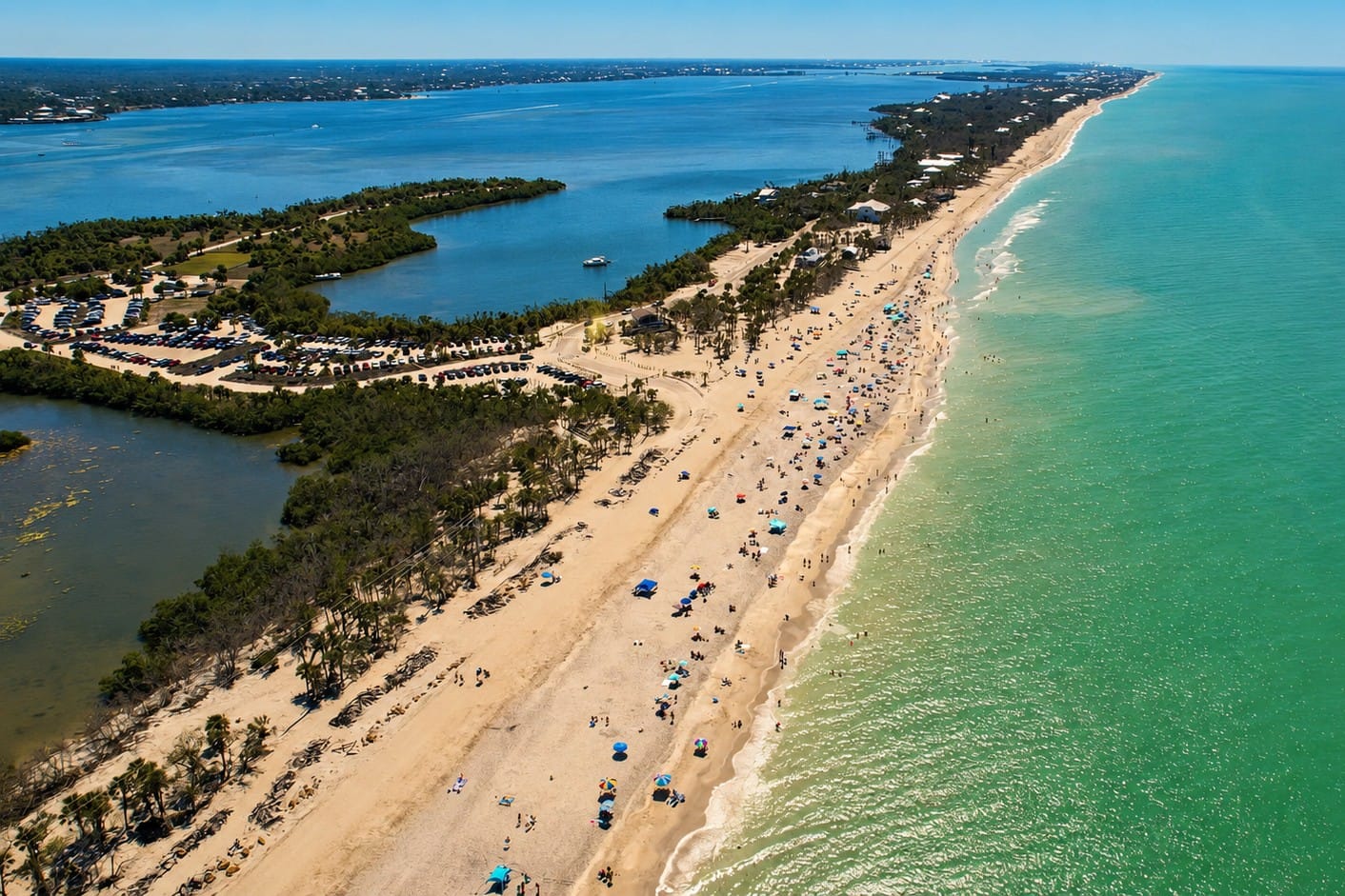
Aerial view of Blind Pass Beach on Manasota Key, one of Southwest Florida's most scenic natural beaches. Stretching nearly 3,000 feet along the Gulf of Mexico, the beach is renowned for shelling, fossil shark teeth, birdwatching, and spectacular sunsets. On the opposite side of the road, visitors can also explore mangrove trails, launch kayaks into Lemon Bay, or fish from the bay-side dock, making Blind Pass one of the region's most diverse coastal destinations.
A short distance beyond Stump Pass, we arrived at Blind Pass Beach, one of the quieter stretches of shoreline along Manasota Key. Unlike many popular Gulf beaches, this area remains largely undeveloped, offering visitors a chance to experience Florida's natural coastline much as it has existed for generations.
The beach was peaceful, with gentle waves rolling onto the sand and only a handful of people enjoying the morning. Sea oats swayed in the breeze above the dunes, while shorebirds searched the water's edge for small fish and crabs. It was the perfect place to pause, stretch our legs, and appreciate the quiet beauty of Southwest Florida.
Although Hurricane Milton dramatically reshaped parts of the nearby coastline, nature continues its remarkable recovery. New sandbars have formed, the shoreline continues to evolve with the tides, and coastal vegetation is gradually reclaiming the dunes. Every visit reveals subtle changes that remind us how dynamic Florida's barrier islands truly are.
After taking a few photos and enjoying the scenery, we returned to the boat and continued our journey through Lemon Bay. Just ahead, the Tom Adams Bridge rose above the Intracoastal Waterway, marking another familiar landmark along our route north.
7. Tom Adams Bridge
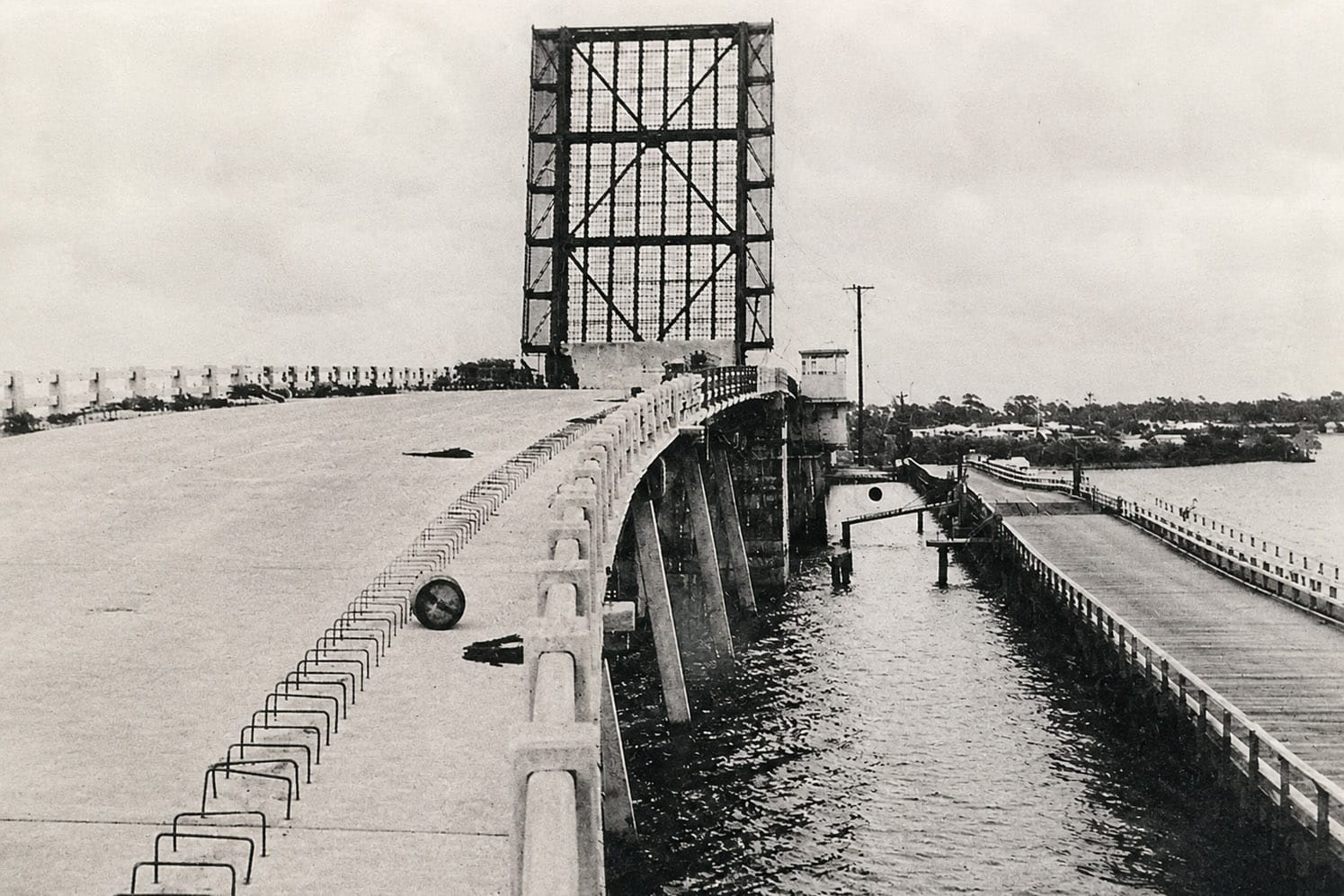
Construction of the Tom Adams Bridge over Lemon Bay in 1964, alongside the original 1927 Chadwick Bridge. The new steel-and-concrete bascule bridge replaced the aging wooden structure while maintaining the vital connection between Englewood and Manasota Key. The Tom Adams Bridge opened in 1965, providing improved navigation clearance for the Gulf Intracoastal Waterway and serving as the area's primary mainland crossing for decades.
Continuing north through Lemon Bay, the Tom Adams Bridge soon came into view. This distinctive high-rise bridge carries Beach Road between Englewood and Manasota Key, providing one of the primary connections between the mainland and the barrier island. From the water, its graceful arches create an impressive landmark visible from a considerable distance.
As we approached, several sailboats were making their way through the Intracoastal Waterway beneath the bridge, their masts towering above the calm water. Watching boats of every size safely navigate this busy channel is always a reminder of how important Lemon Bay is to recreational boating along Florida's Gulf Coast.
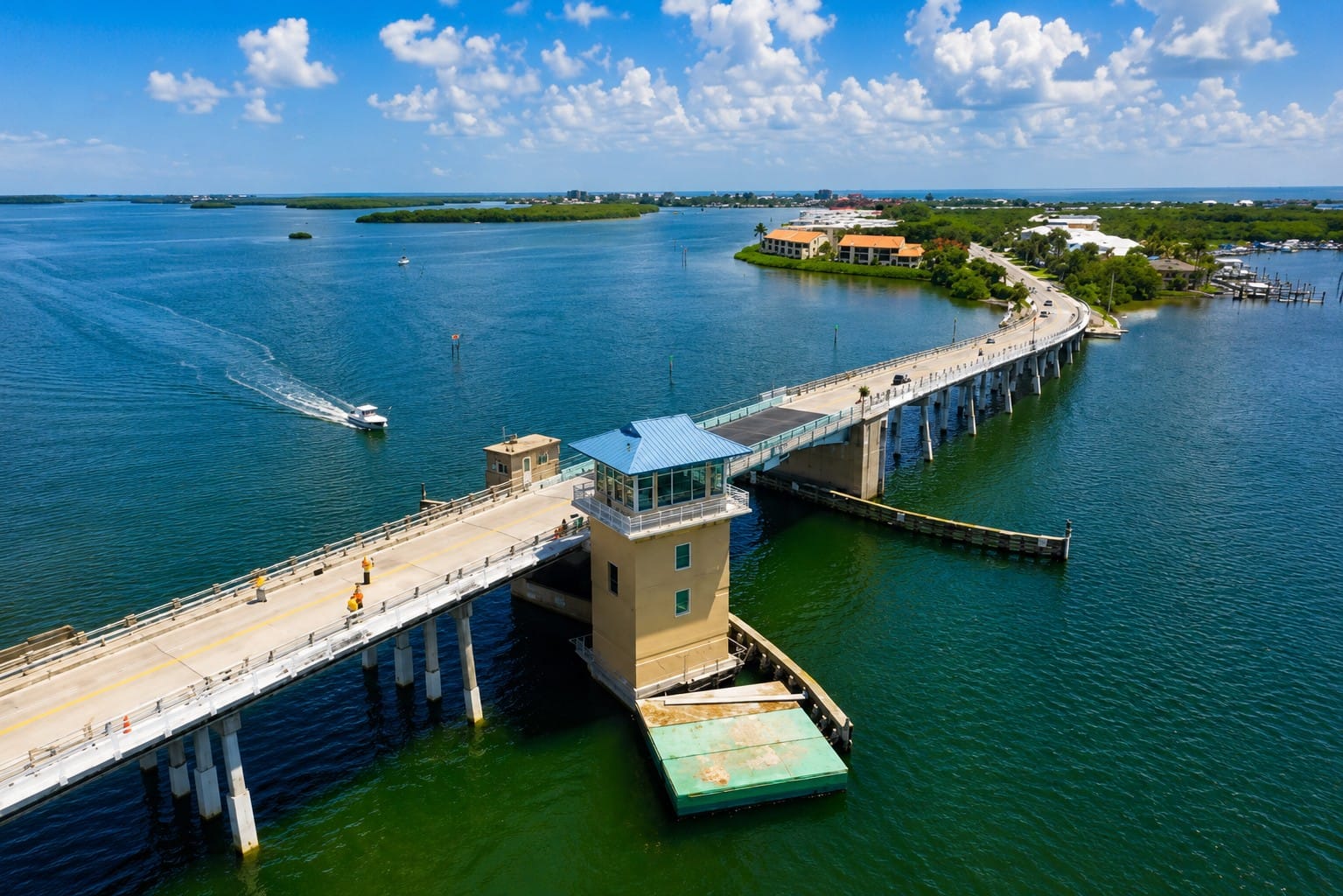
Aerial view of the Tom Adams Bridge spanning Lemon Bay between Englewood and Manasota Key. Opened in 1965, this double-leaf bascule bridge carries Beach Road (CR 776) across the Gulf Intracoastal Waterway, providing a vital transportation link for residents, visitors, cyclists, and boaters while offering panoramic views of one of Southwest Florida's most beautiful coastal estuaries.
Passing beneath the bridge also offers a different perspective of the surrounding coastline. Waterfront homes, mangrove shorelines, and protected estuary waters combine to create a landscape that is constantly changing with the tides while remaining one of the most scenic stretches of the Intracoastal Waterway.
With the Tom Adams Bridge behind us, we continued farther north toward one of my favorite stops along this route—a quiet location that I simply call Pavel's Secret Place.
8. Manasota Key Drawbridge
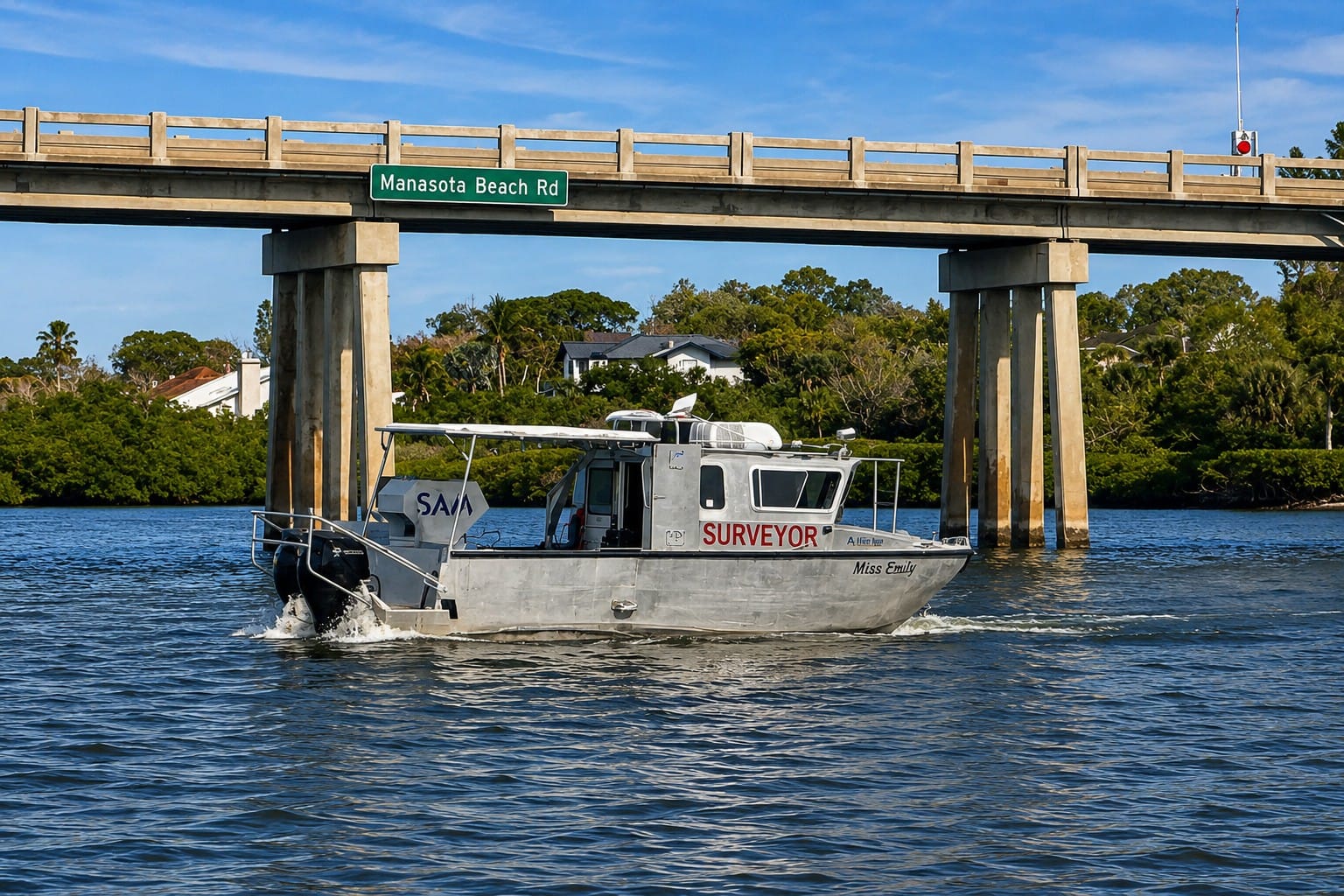
A hydrographic survey boat passes beneath the Manasota Key Drawbridge on Lemon Bay. Survey vessels regularly measure water depths, map navigation channels, and monitor changes to the bay floor, providing valuable information for safe boating and coastal management. The drawbridge carries State Road 776, connecting the mainland community of Englewood with Manasota Key across the Gulf Intracoastal Waterway.
A few minutes after passing beneath the Tom Adams Bridge, we reached the Manasota Key Drawbridge. Unlike the fixed-span bridges farther south, this bridge opens on demand to allow taller sailboats and other vessels to travel along the Gulf Intracoastal Waterway. It has become a familiar landmark for boaters exploring Lemon Bay.
As we cruised beneath the bridge, the waterway narrowed slightly, giving us a closer view of the surrounding shoreline. Waterfront homes, docks, and mangrove-lined banks reflected the close relationship between the local communities and the protected waters of the estuary. Even on busy boating days, this stretch of Lemon Bay retains a relaxed coastal atmosphere.
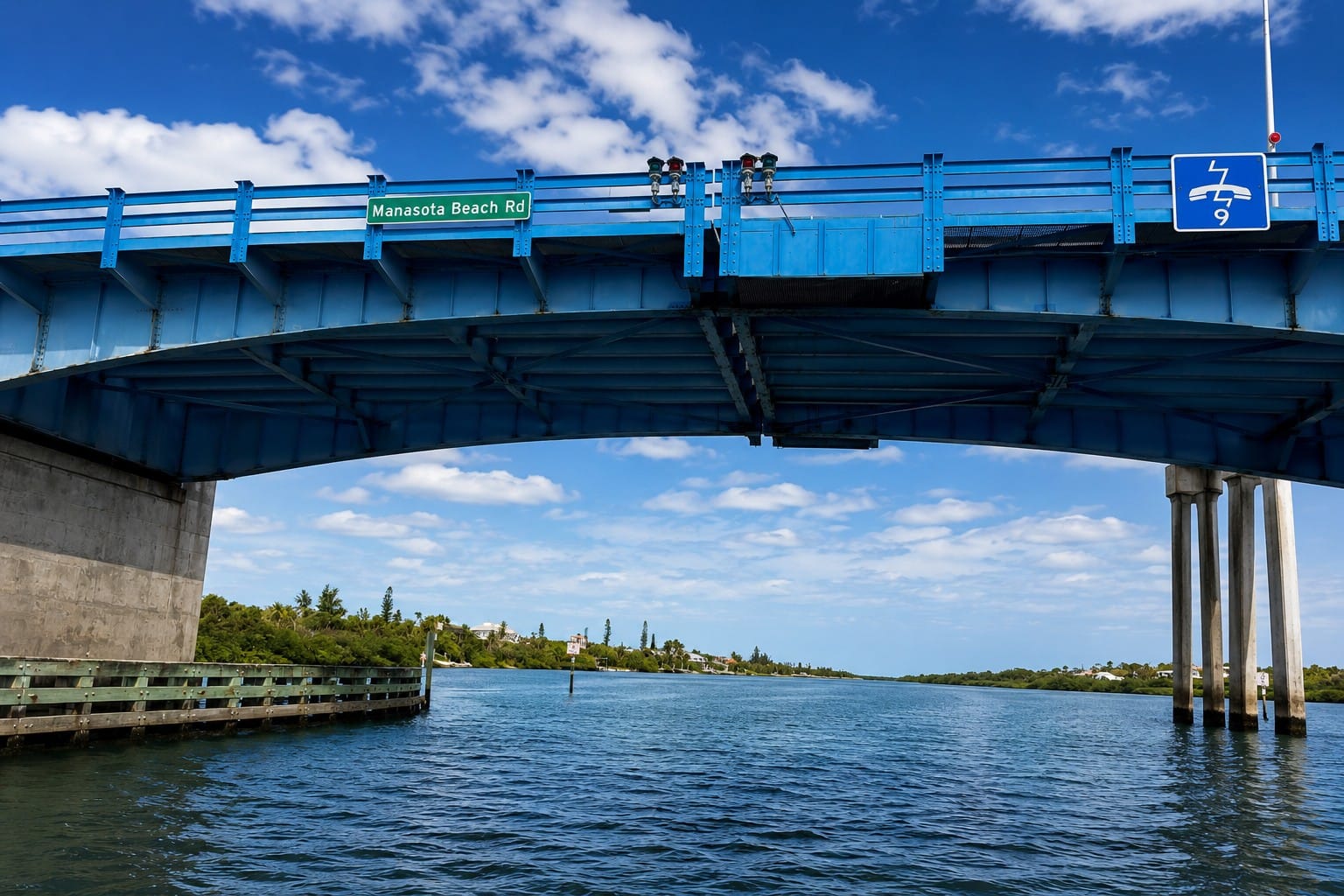
The Manasota Key Drawbridge spans Lemon Bay, providing one of the primary connections between the mainland and Manasota Key. Crossing the Gulf Intracoastal Waterway, the bridge serves residents, visitors, cyclists, and boaters while offering scenic views of the estuary. The drawbridge opens for taller vessels navigating between Stump Pass and the northern reaches of Lemon Bay.
The drawbridge also marks the transition toward the northern reaches of Manasota Key. Beyond this point, the shoreline becomes quieter, with more natural habitat and fewer developed areas. It is another reminder that Southwest Florida offers a remarkable blend of coastal communities and preserved natural landscapes.
Leaving the bridge behind, we continued toward one of my favorite hidden locations along this route. Although Hurricane Milton had dramatically reshaped the area, I wanted to show my guests how quickly nature continues to recover. Ahead of us lay Pavel's Secret Place.
9. Pavel's Secret Place
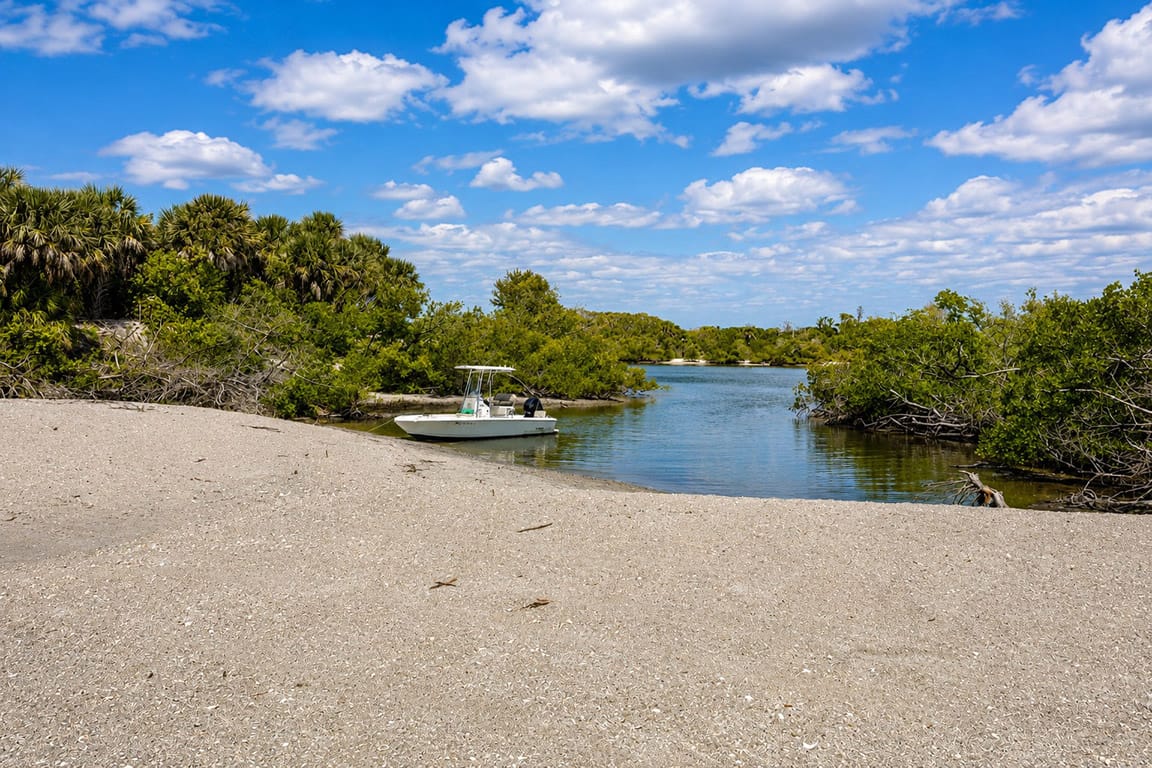
Wide sand flats at Caspersen Beach following Hurricane Milton. The powerful storm dramatically reshaped this section of Florida's Gulf Coast, removing dunes, redistributing millions of cubic yards of sand, and exposing a broad, gently sloping beach. The scene illustrates how hurricanes continually transform Southwest Florida's barrier islands and coastal landscapes through erosion, overwash, and natural beach rebuilding.
One of my favorite stops along this route is a quiet location that I simply call Pavel's Secret Place. Tucked away from the busiest waterways, it has always been a peaceful spot where guests can experience Southwest Florida's natural beauty away from the crowds. Over the years, I've brought many visitors here to enjoy the calm water, abundant wildlife, and ever-changing coastal scenery.
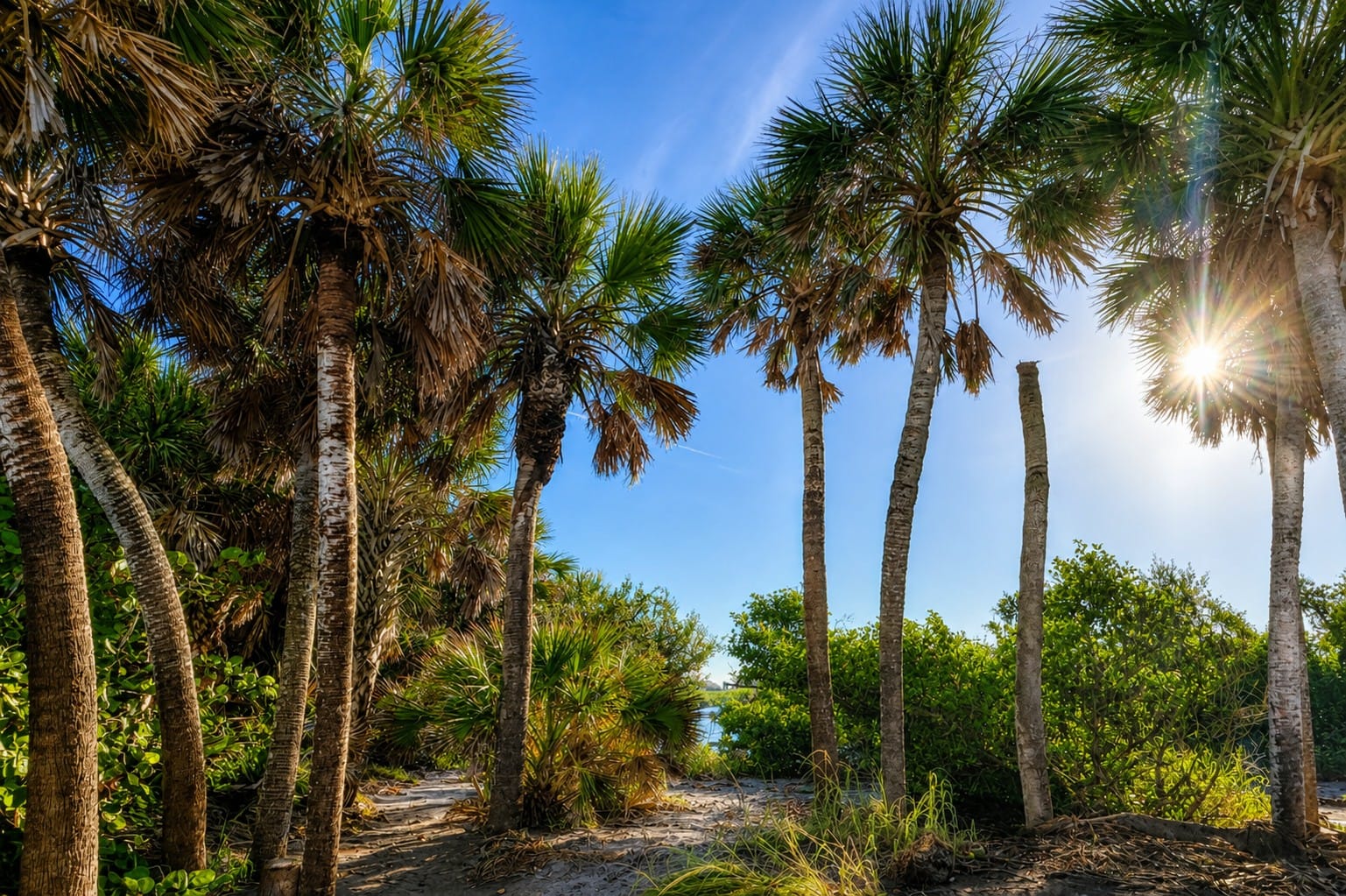
A secluded palm grove hidden within a Southwest Florida barrier island. Protected by native vegetation and coastal dunes, these quiet oases provide shade and shelter for wildlife while preserving the natural character of Florida's Gulf Coast. Places like this, found only by exploring by boat, reveal the untouched beauty that still exists beyond the region's popular beaches and marinas.
When I first returned after Hurricane Milton, I was surprised by how dramatically the area had changed. Powerful storm surge and waves had reshaped the shoreline, moved large amounts of sand, and altered the surrounding landscape. Familiar landmarks had disappeared, while entirely new sandbars and shallow channels had formed in their place.
Nature, however, never stands still. During this visit, signs of recovery were everywhere. Young coastal vegetation had already begun taking root, birds had returned to feed along the shoreline, and the tides continued their slow work of reshaping the beaches. Every trip reveals another small step in the area's remarkable recovery.
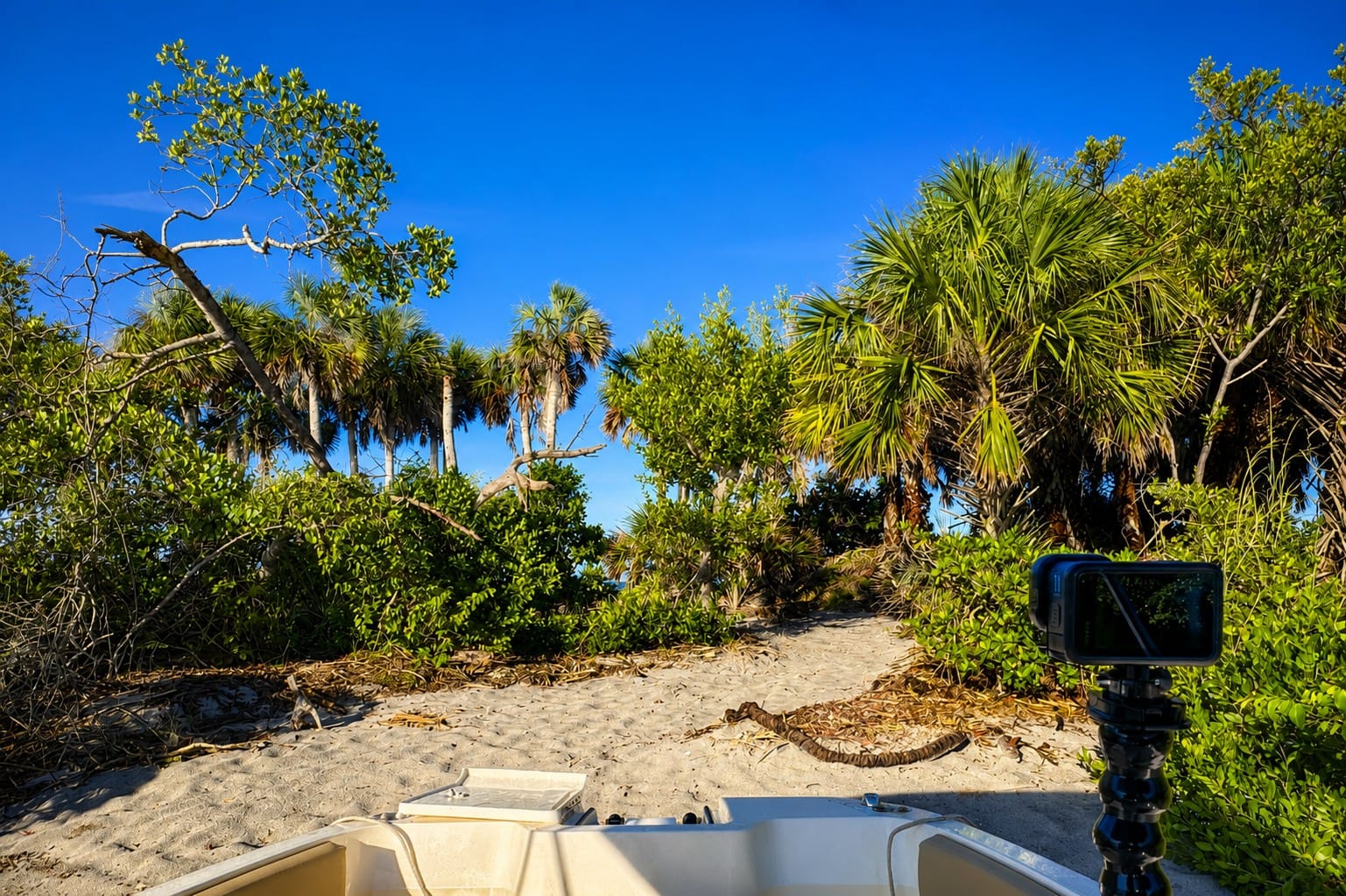
A Private Boat Tour arrives at a secluded hidden beach accessible only by water. Far from busy public beaches, these quiet stretches of shoreline offer opportunities for shelling, swimming, beachcombing, wildlife watching, and exploring Southwest Florida's pristine barrier islands at a relaxed pace. Every landing is planned around the day's tides, weather, and sea conditions, making each adventure unique.
As we slowly explored the shoreline, another unforgettable wildlife encounter was waiting just ahead. In the clear, shallow water, a manatee was quietly feeding on seagrass, completely undisturbed by our presence.
10. A Manatee Encounter
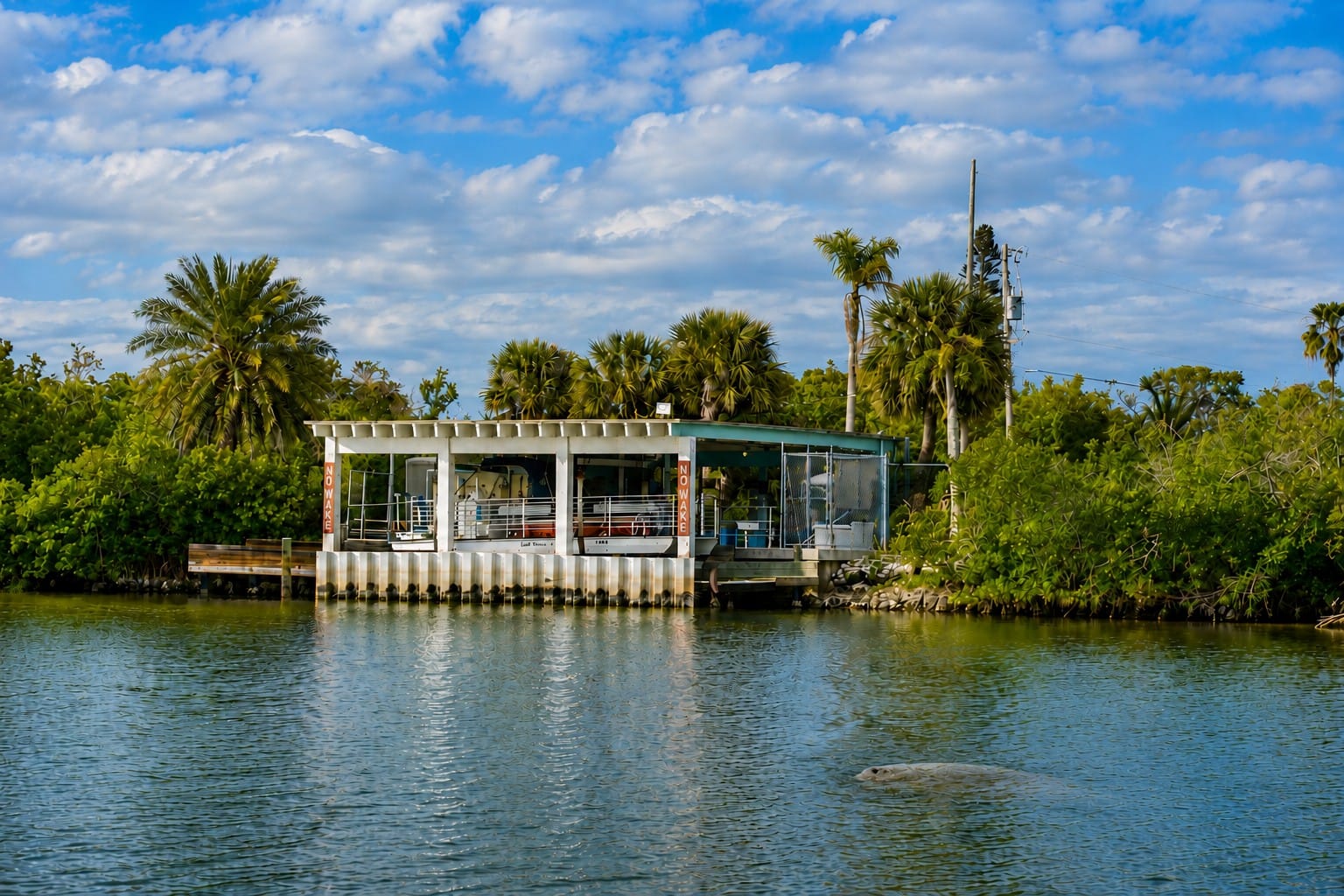
A Florida manatee glides quietly beneath the surface near a covered boat dock on Lemon Bay. The bay's calm, protected waters, abundant seagrass beds, and mangrove-lined shoreline provide important habitat for these gentle marine mammals throughout much of the year. Boaters are encouraged to operate at slow speed near docks, canals, and shallow grass flats, where manatees frequently feed, rest, and travel.
Leaving Pavel's Secret Place, we continued cruising slowly along the shoreline when a large shadow appeared beneath the surface. Within moments, a Florida manatee surfaced beside the boat, taking a gentle breath before returning to feed on the lush seagrass growing in the shallow water.
We immediately slowed to idle and kept a respectful distance, allowing the manatee to continue its natural behavior without interruption. These gentle marine mammals spend much of their day grazing on seagrass, and the protected waters of Lemon Bay provide one of the most important habitats for them along Florida's Gulf Coast.
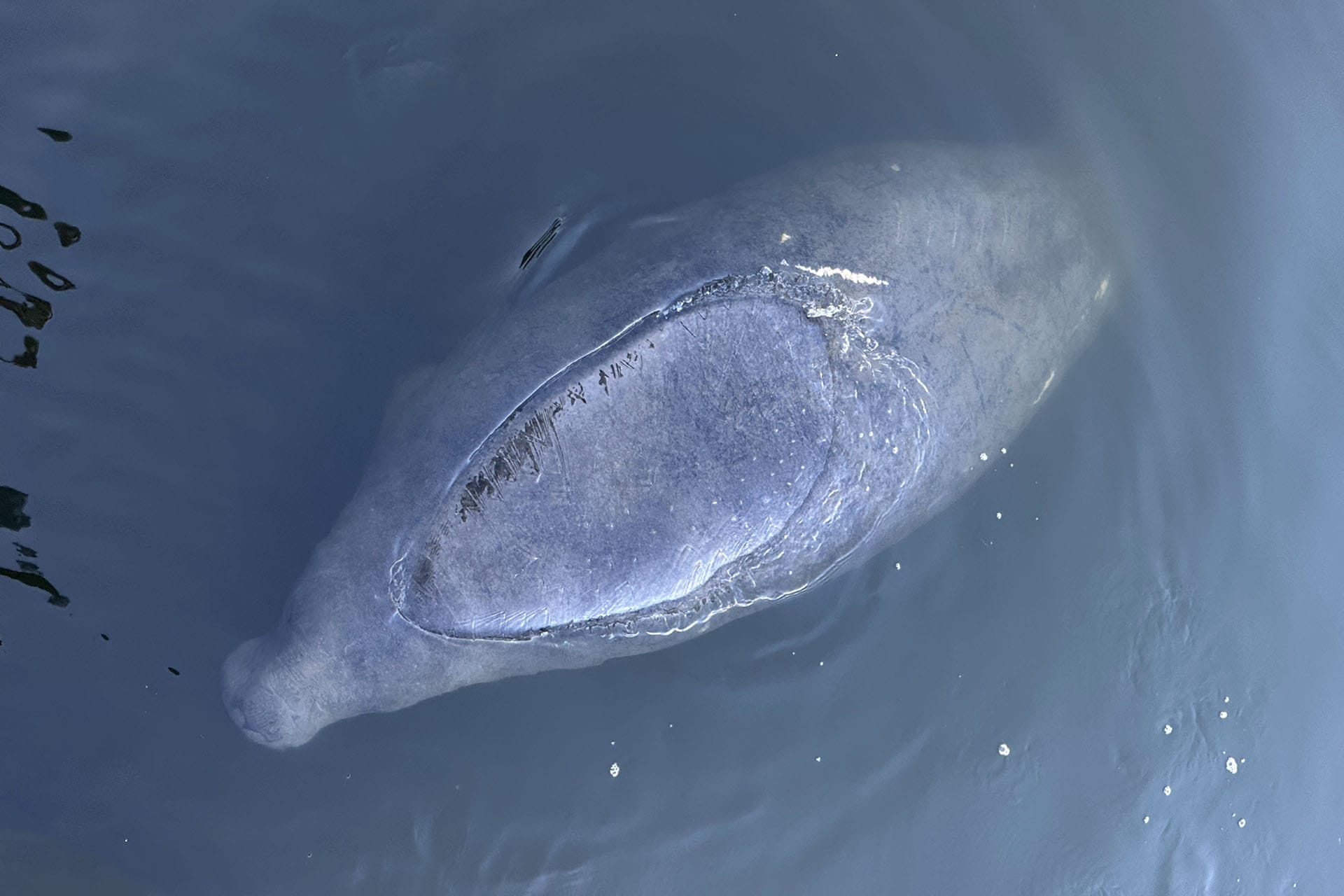
A Florida manatee swims through the clear, shallow waters of Caspersen Cove on Lemon Bay near Venice, Florida. This protected estuary provides ideal habitat with extensive seagrass beds, mangrove shorelines, and sheltered waterways where manatees feed, rest, and travel. Encounters like this are common during the warmer months, reminding boaters and paddlers to maintain slow speeds and watch carefully for these gentle marine mammals.
For several minutes, we quietly watched as the manatee moved through the clear water, occasionally surfacing before disappearing beneath the surface again. Encounters like this are always special because they happen entirely on the animal's terms. Every sighting is different, and there is never a guarantee that wildlife will choose to share the moment with us.
As the manatee slowly disappeared into deeper water, we continued north toward one of Florida's most famous beaches for fossilized shark teeth. Lunch, beachcombing, and another memorable wildlife encounter awaited us at Caspersen Beach.
11. Caspersen Beach
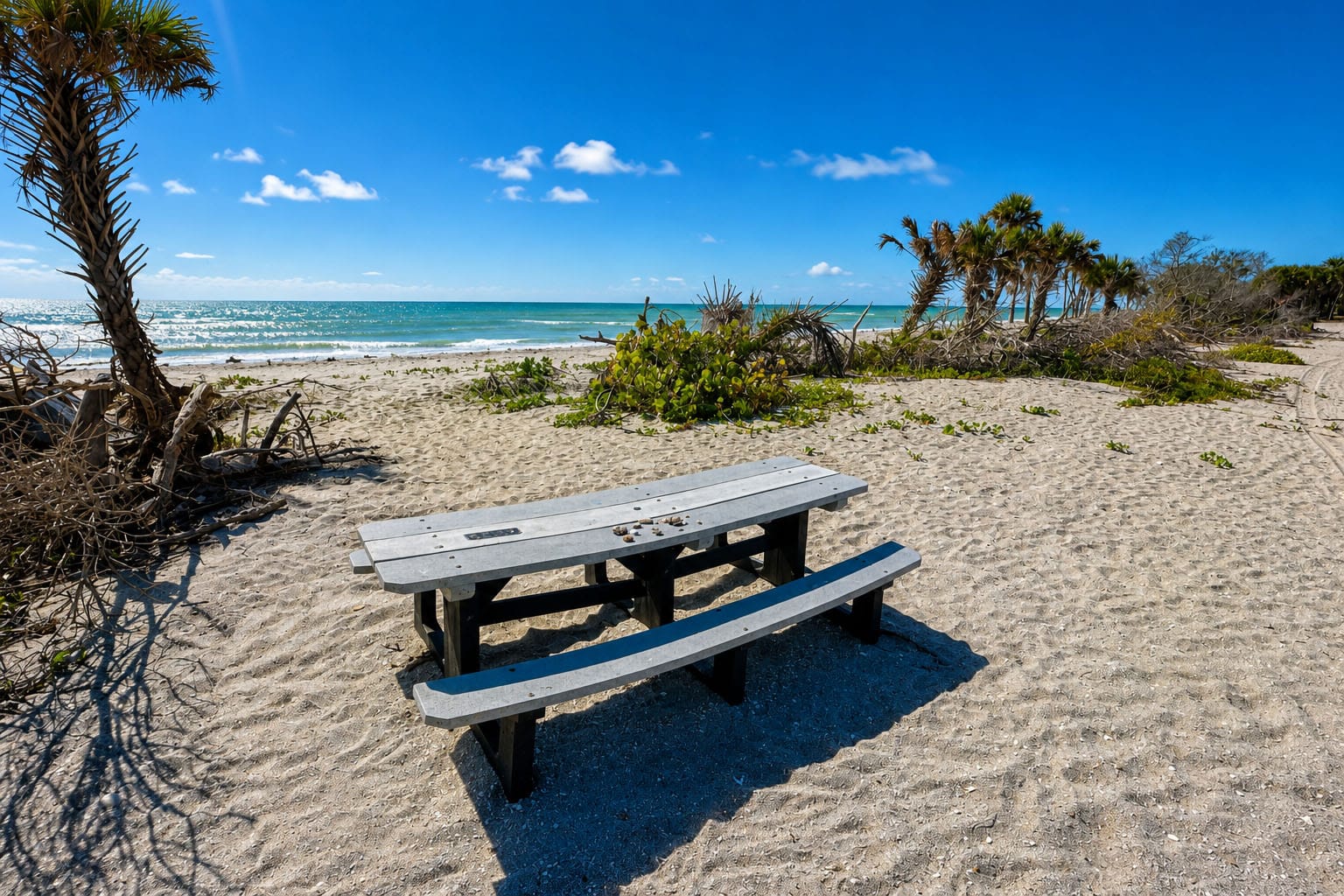
A picnic table overlooking the Gulf at Caspersen Beach near Venice, Florida. Surrounded by natural dunes and coastal vegetation, this quiet spot is ideal for relaxing, enjoying lunch, watching wildlife, or taking in a spectacular Southwest Florida sunset. Caspersen Beach is also well known for fossil shark teeth, nature trails, birdwatching, and its preserved coastal landscape.
By early afternoon, we arrived at Caspersen Beach, one of Florida's best-known destinations for finding fossilized shark teeth. Located south of Venice, the beach is famous for its natural shoreline, dark shell-rich sand, and prehistoric fossils that wash ashore from ancient offshore deposits. It remains a favorite destination for beachcombers and nature lovers from around the world.
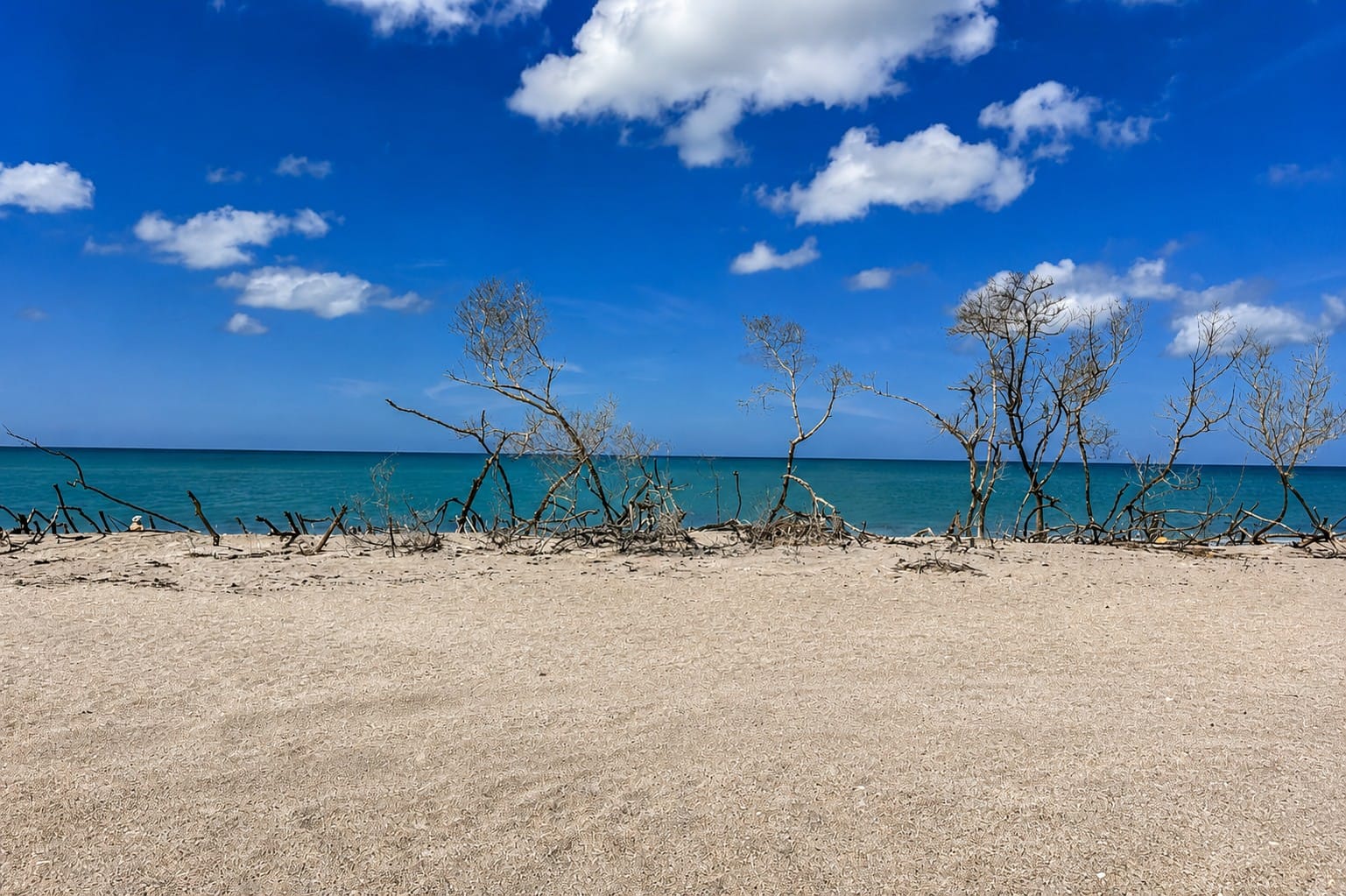
Weathered driftwood rests along the natural shoreline of Caspersen Beach near Venice, Florida. Carried ashore by tides, waves, and seasonal storms, driftwood is an important part of the coastal ecosystem, helping trap sand, stabilize developing dunes, and provide habitat for birds, insects, and other wildlife. Caspersen Beach remains one of Southwest Florida's most unspoiled Gulf Coast beaches, known for its natural scenery, fossil shark teeth, and peaceful coastal landscape.
After securing the boat, we enjoyed a relaxing lunch before beginning our search along the shoreline. The beach was quiet, allowing plenty of time to explore at a comfortable pace. Before long, everyone in our group had discovered several fossilized shark teeth. By the end of our visit, each guest had collected more than a dozen teeth, including several impressive specimens measuring nearly half an inch in length.
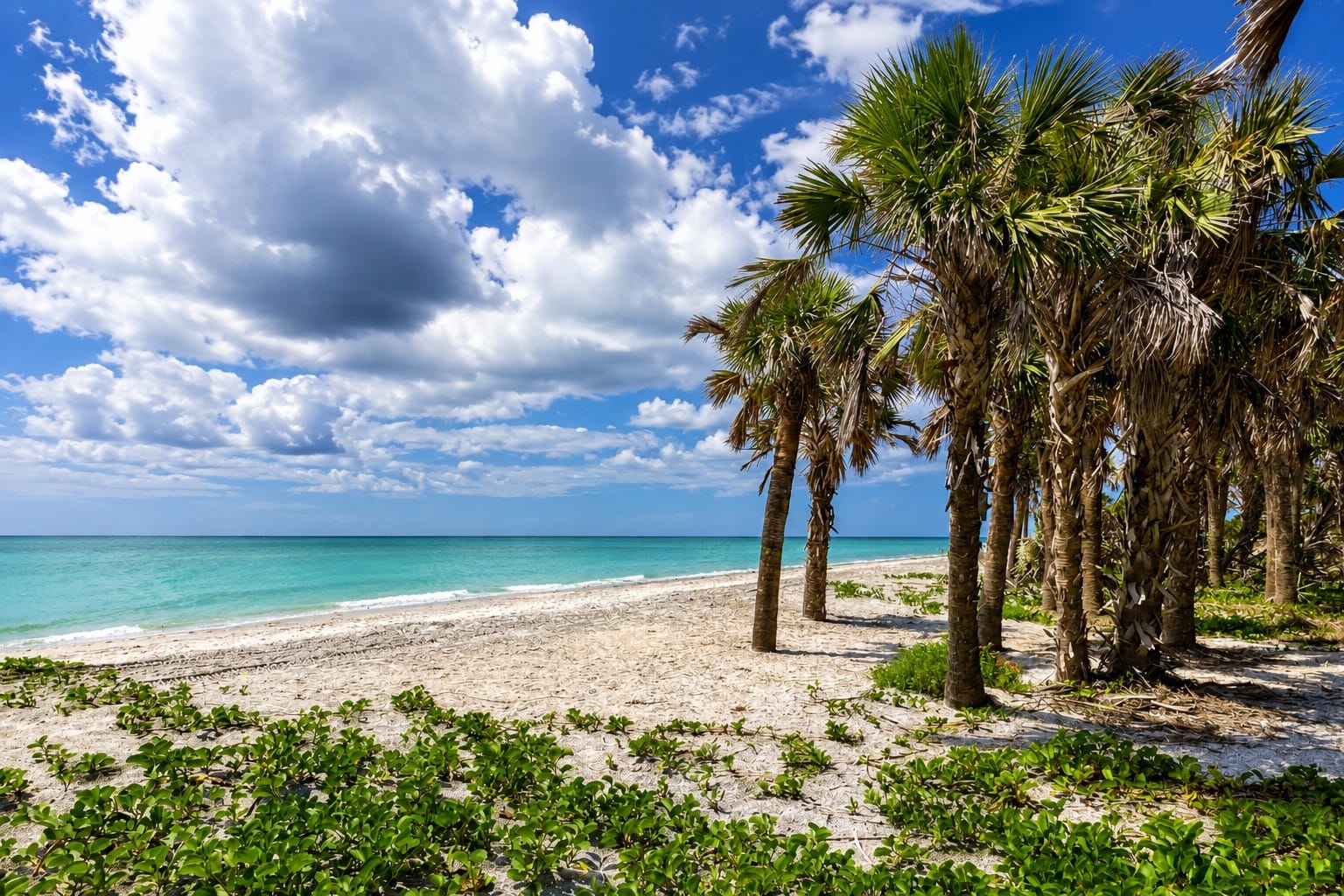
Native cabbage palms (Sabal palmetto) line the Gulf shoreline at Caspersen Beach near Venice, Florida. As Florida's state tree, the cabbage palm thrives in coastal environments, where it withstands salt spray, wind, and periodic storms. Combined with dunes and native vegetation, these palms help define the natural character of one of Southwest Florida's most scenic and ecologically diverse Gulf Coast beaches.
As we continued walking along the beach, we noticed fresh turtle tracks crossing the sand from the dunes toward the Gulf. These seasonal nesting signs are an encouraging reminder that Caspersen Beach continues to provide important habitat for Florida's protected sea turtles, adding another memorable wildlife experience to our day.
Just as we were preparing to return to the boat, another unexpected encounter awaited us. Two gopher tortoises slowly emerged from the coastal vegetation, providing the perfect ending to our visit before beginning the journey home.
12. Gopher Tortoise
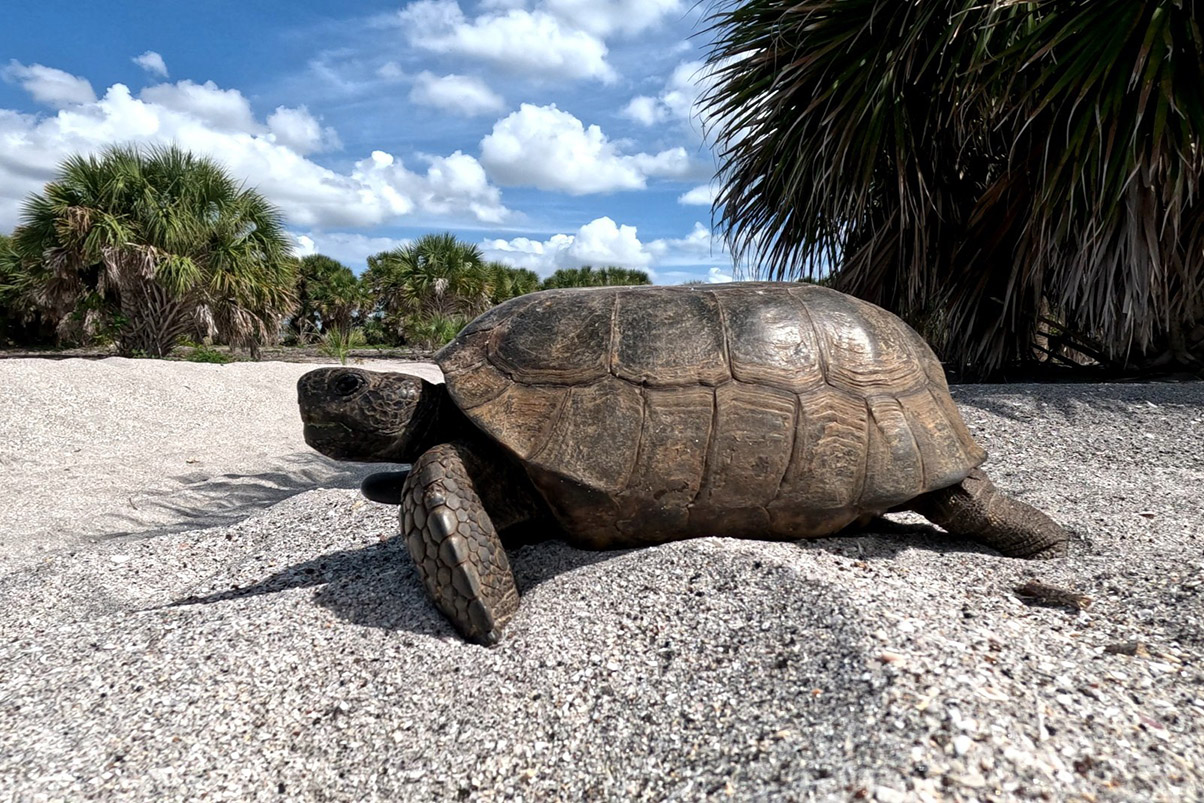
A gopher tortoise at Caspersen Beach near Venice, Florida. This iconic Florida species inhabits the beach's coastal dunes and sandy uplands, where it digs deep burrows that provide shelter for more than 350 other wildlife species. Listed as a threatened species in Florida, the gopher tortoise plays a vital role in maintaining healthy coastal ecosystems and is protected by state law.
As we made our way back toward the boat, we noticed movement near the edge of the dunes. Two gopher tortoises slowly emerged from the coastal vegetation, completely unconcerned by our presence. They paused to feed on low-growing plants before continuing their leisurely walk across the sandy landscape.
The gopher tortoise is one of Florida's most important native species and is protected throughout the state. These remarkable reptiles spend much of their lives in deep underground burrows, which also provide shelter for more than 350 other species of wildlife, including mammals, birds, reptiles, amphibians, and countless invertebrates. Because so many animals depend on their burrows, gopher tortoises are recognized as a keystone species within Florida's ecosystems.
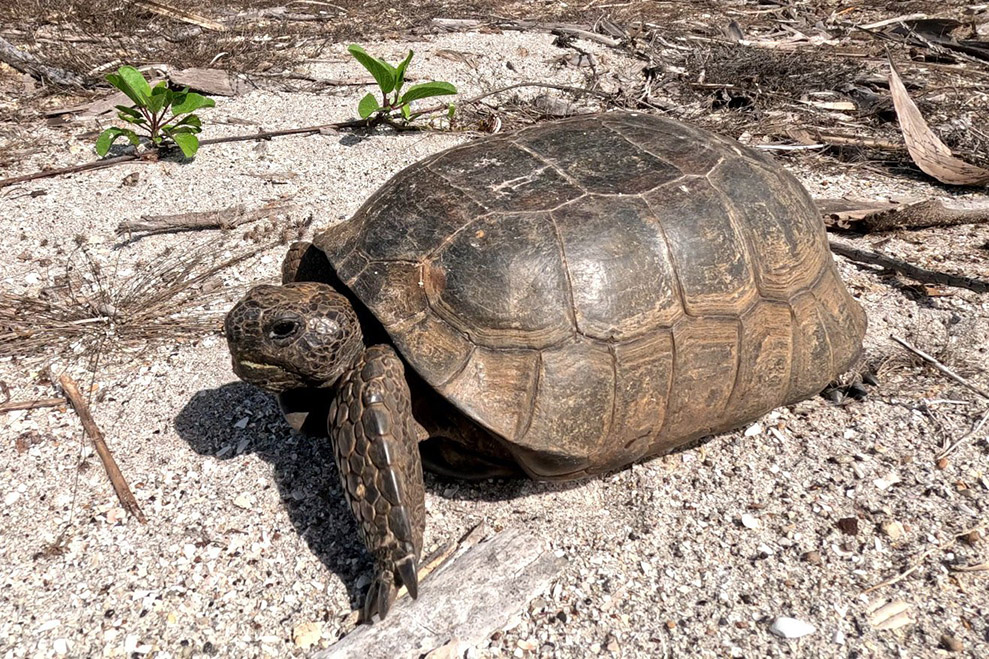
A gopher tortoise makes its way across the coastal dunes at Caspersen Beach near Venice, Florida. As Florida's only native tortoise, it is considered a keystone species because its burrows provide shelter for hundreds of other animals, including reptiles, mammals, amphibians, and insects. Gopher tortoises and their burrows are protected under Florida law, making them one of the Gulf Coast's most important native wildlife species.
My guests quietly watched and photographed the tortoises from a respectful distance, allowing them to continue their natural behavior without disturbance. Encounters like this remind us that Southwest Florida's beaches are home to far more than beautiful scenery. They support an extraordinary diversity of wildlife that continues to thrive when its habitat is protected.
With one final look at the beach and the wildlife that had made the day so memorable, we climbed aboard the boat and began our relaxing cruise back toward Placida through the calm waters of Lemon Bay.
13. The Journey Home
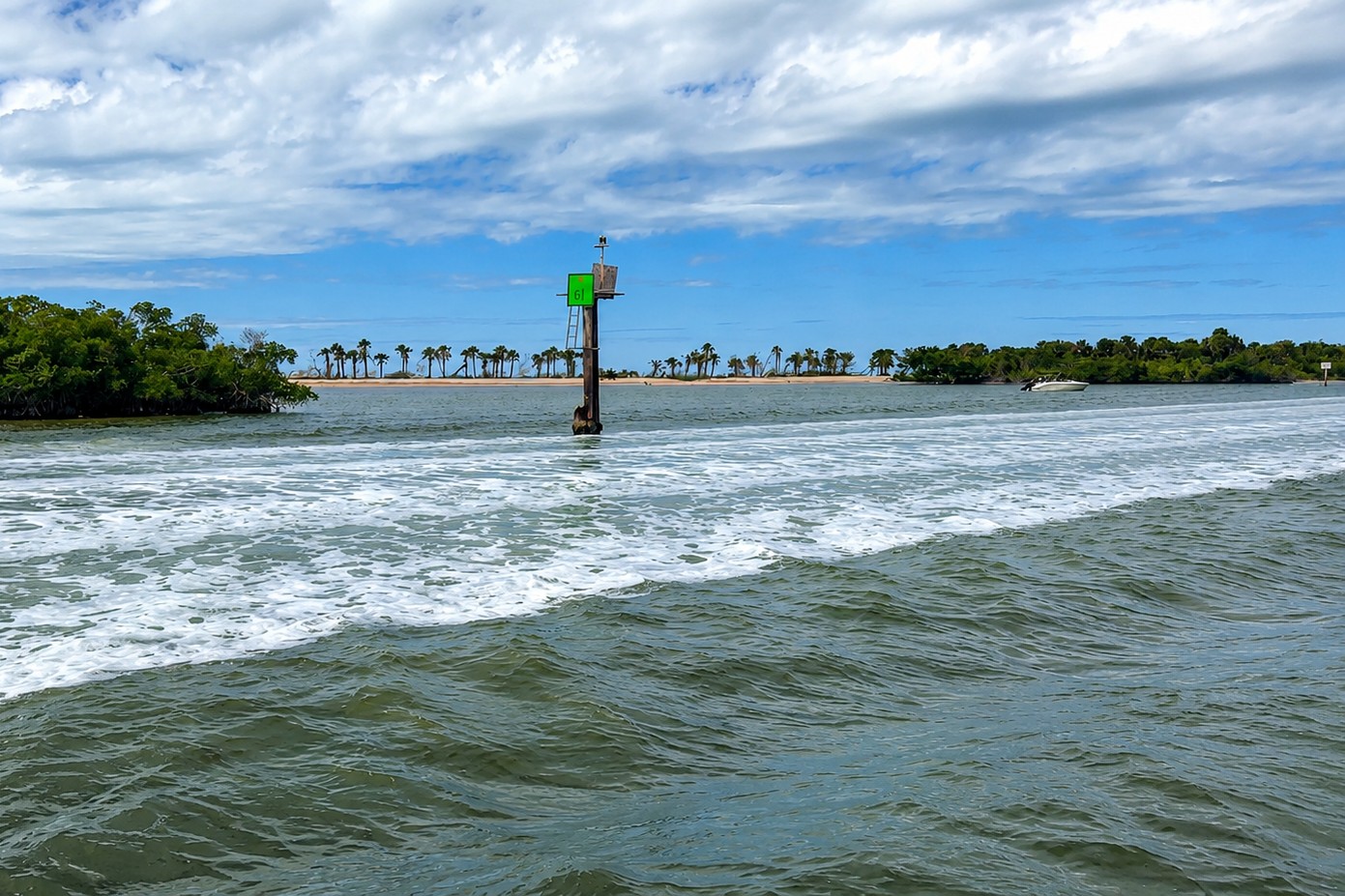
Intracoastal Waterway Marker 61 marks the federally maintained navigation channel through Lemon Bay near Caspersen Beach. The channel allows recreational boats, cruising vessels, and emergency responders to safely navigate the shallow estuary, where extensive grass flats and sandbars lie just outside the marked route. Following the numbered channel markers is essential for safe boating along this section of Southwest Florida's Gulf Intracoastal Waterway.
As the afternoon sun began its slow descent toward the Gulf, we turned the boat south and started our journey back to Placida. The return trip offered time to relax, enjoy the scenery, and reflect on everything we had experienced throughout the day. Calm water, blue skies, and a gentle breeze made for a perfect cruise through Lemon Bay.
During a single day on the water, we had watched bottlenose dolphins hunting at Stump Pass, explored the peaceful shoreline of Blind Pass Beach, passed beneath two of Lemon Bay's most recognizable bridges, witnessed Hurricane Milton's lasting impact at Pavel's Secret Place, quietly observed a feeding manatee, searched for fossilized shark teeth at Caspersen Beach, and encountered two protected gopher tortoises in their natural habitat.
People often ask if every tour follows the same route. The answer is simple—no two journeys are ever alike. Tides change, weather shifts, wildlife appears on its own schedule, and Florida's barrier islands continue to evolve with every season. Even when visiting the same destinations, each day brings something new to discover.
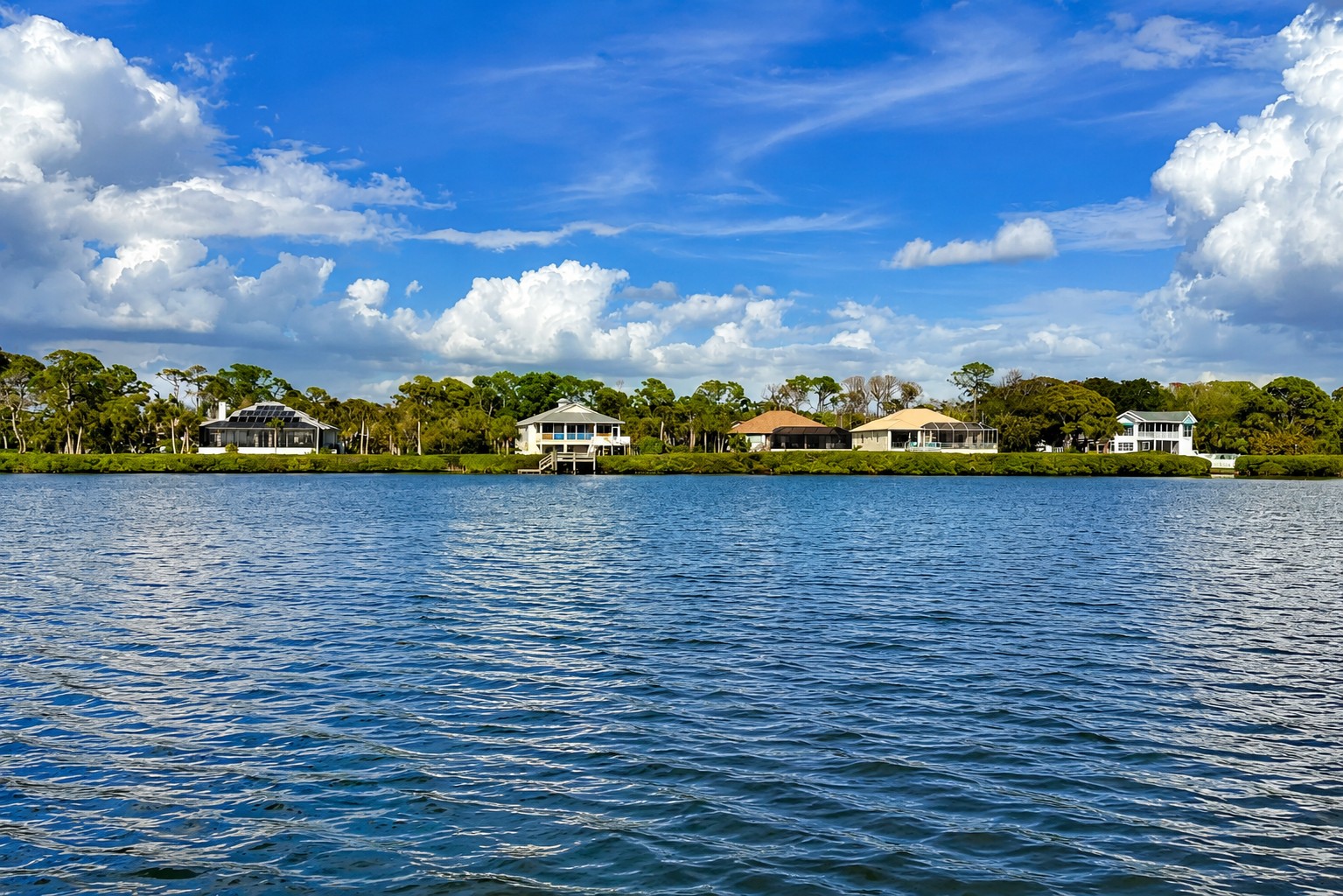
Waterfront homes line the shores of Lemon Bay on Manasota Key, where residents enjoy panoramic bay views, private docks, and direct boating access to the Gulf Intracoastal Waterway. Many properties also offer convenient access to the nearby Gulf beaches, creating one of Southwest Florida's most desirable waterfront lifestyles for boating, fishing, kayaking, paddleboarding, and year-round coastal living.
As Captain, I can plan the route, but nature creates the experience. Dolphins may appear beside the boat, a manatee may surface unexpectedly, or guests may discover the largest shark tooth they have ever found. Those unplanned moments often become the memories people talk about long after the trip is over.
As we approached Eldred's Marina, our conversations turned to favorite moments from the day and the adventures still waiting to be discovered across Southwest Florida's waters. Every journey tells a different story, and I look forward to discovering the next one with my guests.
14. Plan Your Adventure
If this journey inspired you to explore Southwest Florida, I'd be honored to welcome you aboard. Every private boat tour is customized to your interests, whether you want to search for dolphins, visit secluded beaches, collect shark teeth and shells, explore barrier islands, enjoy waterfront dining, or simply spend a relaxing day on the water.
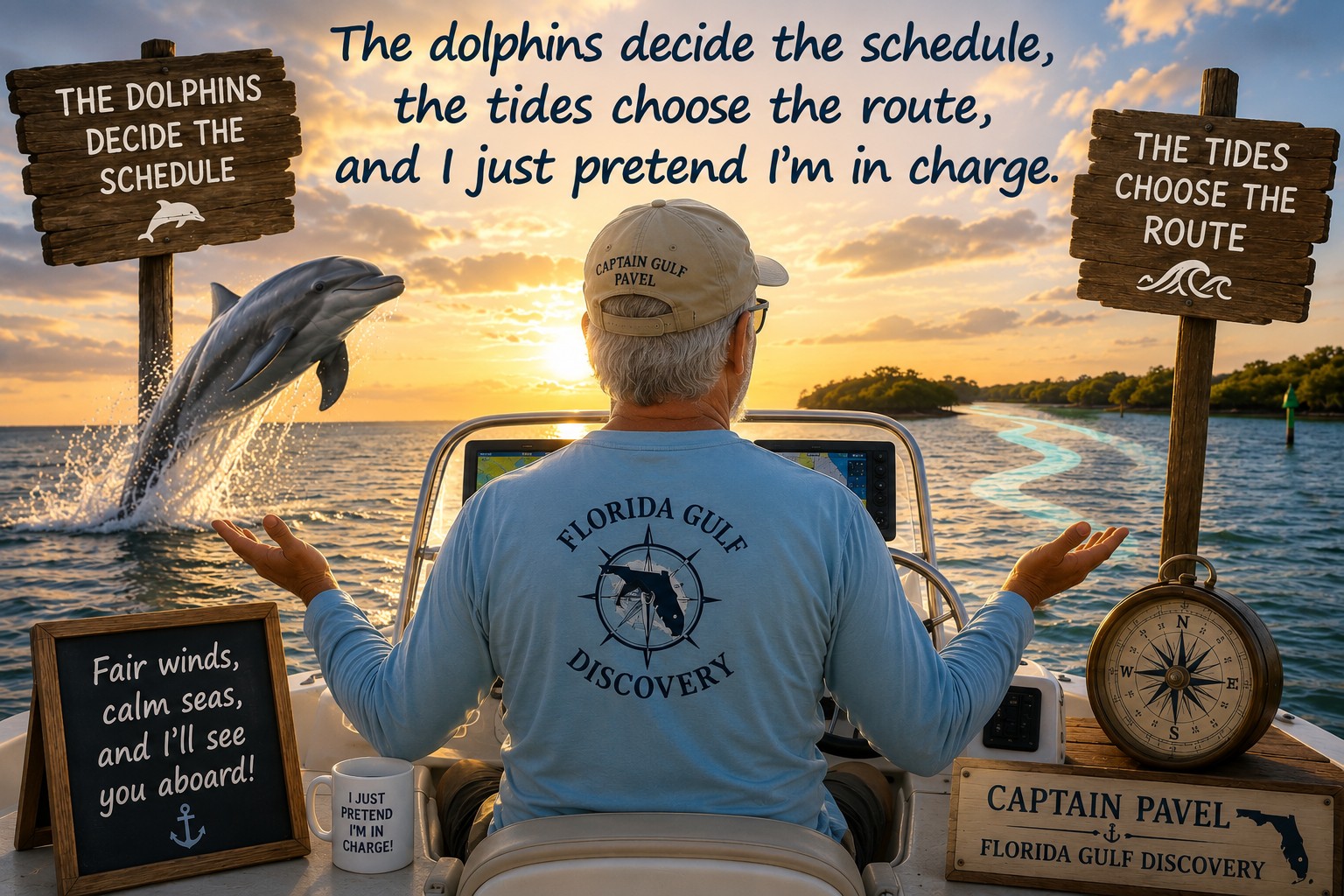
Captain Pavel pauses to watch a pod of wild bottlenose dolphins during a private boat tour in Southwest Florida. Around here, the dolphins often decide the schedule. When they appear, there's no reason to rush. It's a chance to slow down, enjoy the moment, and experience these remarkable animals in their natural habitat. Fair winds and following seas.
No two trips are ever the same. Weather, tides, wildlife, and your interests all help shape the day's adventure. From Lemon Bay and Stump Pass to Boca Grande, Gasparilla Sound, Cayo Costa, Pine Island Sound, and beyond, every destination offers something unique to discover.
Whether you're visiting Southwest Florida for the first time or returning to experience it from a different perspective, I'll help you create a memorable day on the water for your family and friends.
Explore our private boat tours, choose the adventure that fits your interests, and let's discover Southwest Florida together.
The dolphins decide the schedule, the tides choose the route, and I just pretend I'm in charge.
Fair winds, calm seas, and I'll see you aboard!
Captain Pavel
Florida Gulf Discovery