Guide Contents
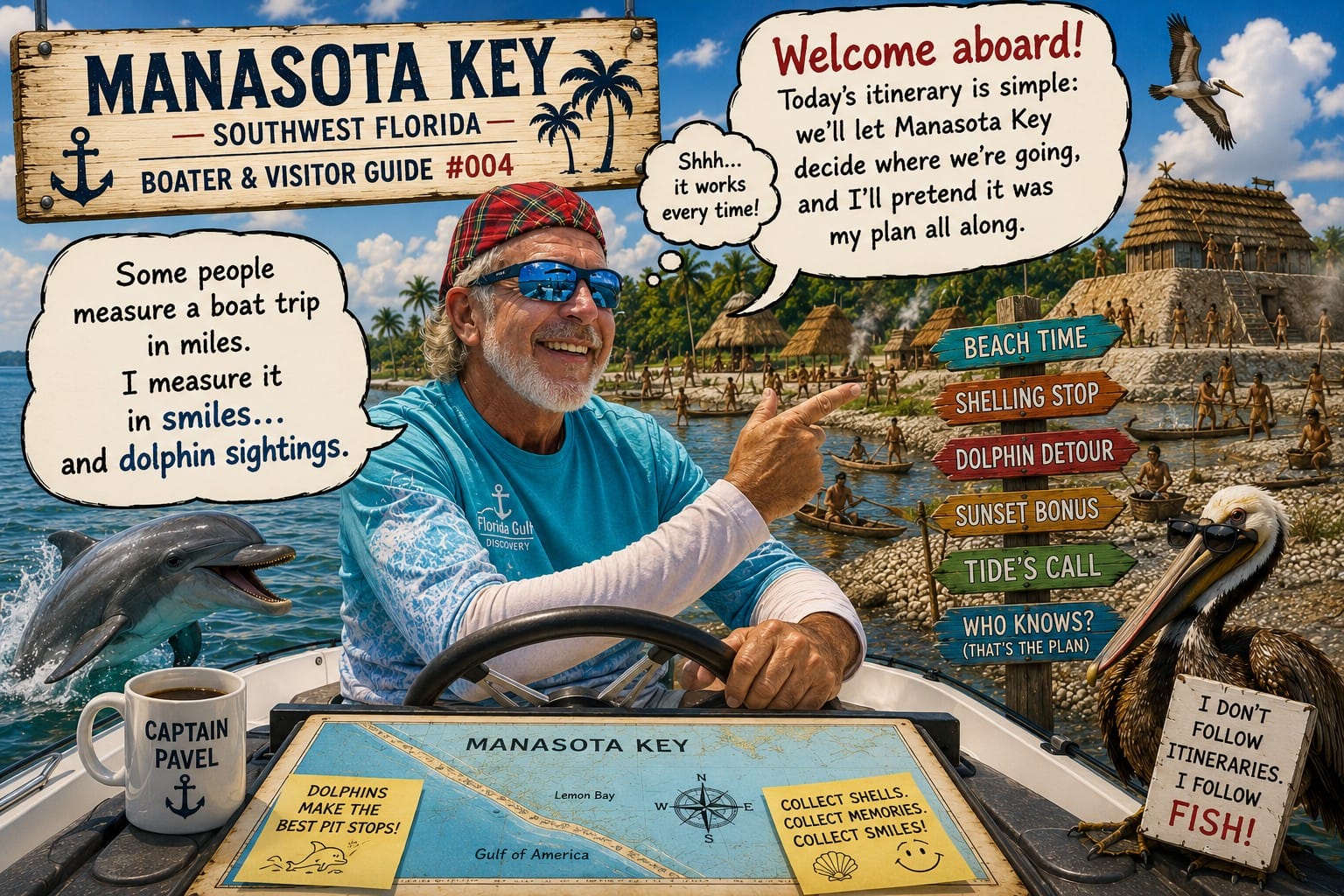
Use this guide to explore Manasota Key, one of Southwest Florida's most beautiful barrier islands—from its geography and history to its beaches, wildlife, Stump Pass, activities, waterfront dining, and Captain Pavel's personal explorer's note.
2. Where Manasota Key Is
Manasota Key is a barrier island located along Florida's Gulf Coast in Southwest Florida, stretching approximately 11 miles between the Gulf of America and Lemon Bay. The island lies within both Sarasota and Charlotte counties and forms a natural barrier that protects the calm waters of Lemon Bay from the open Gulf.
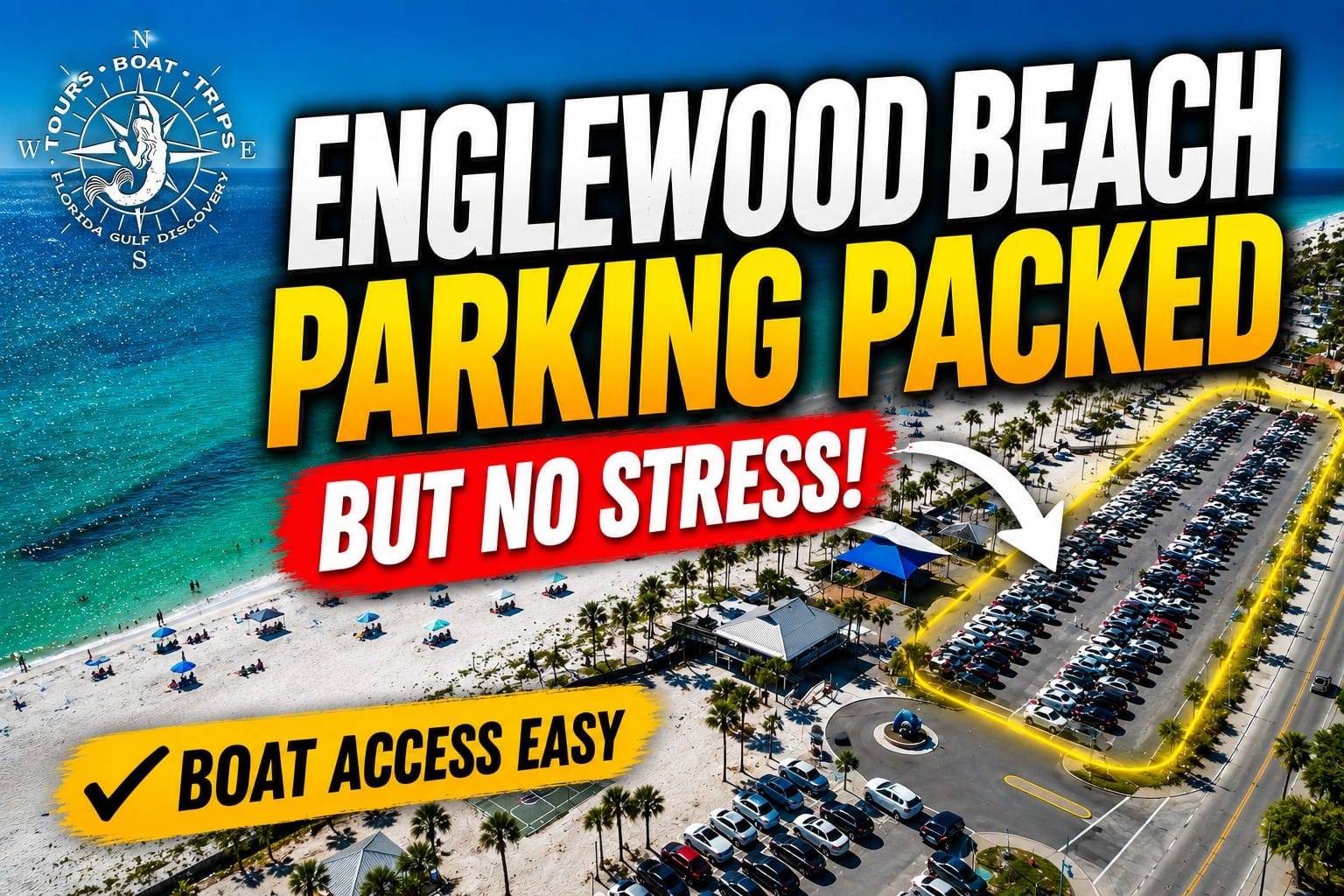
Watch on YouTube: Learn everything you need to know about Englewood Beach parking, public beach access, boat launching, nearby amenities, and local tips before visiting one of Southwest Florida's most popular Gulf Coast beaches.
The northern end of Manasota Key begins near the city of Venice, while the southern end reaches Stump Pass Beach State Park, where Stump Pass provides a natural connection between Lemon Bay and the Gulf of America. Throughout its length, the island features wide sandy beaches, coastal dunes, residential communities, parks, and public beach access points that attract visitors throughout the year.
Four bridges connect Manasota Key to the mainland. From north to south, these are the Manasota Beach Road Bridge, Beach Road Bridge, Tom Adams Bridge (State Road 776), and Placida Road Bridge. These crossings provide convenient access from Englewood, Grove City, Placida, and surrounding Southwest Florida communities.
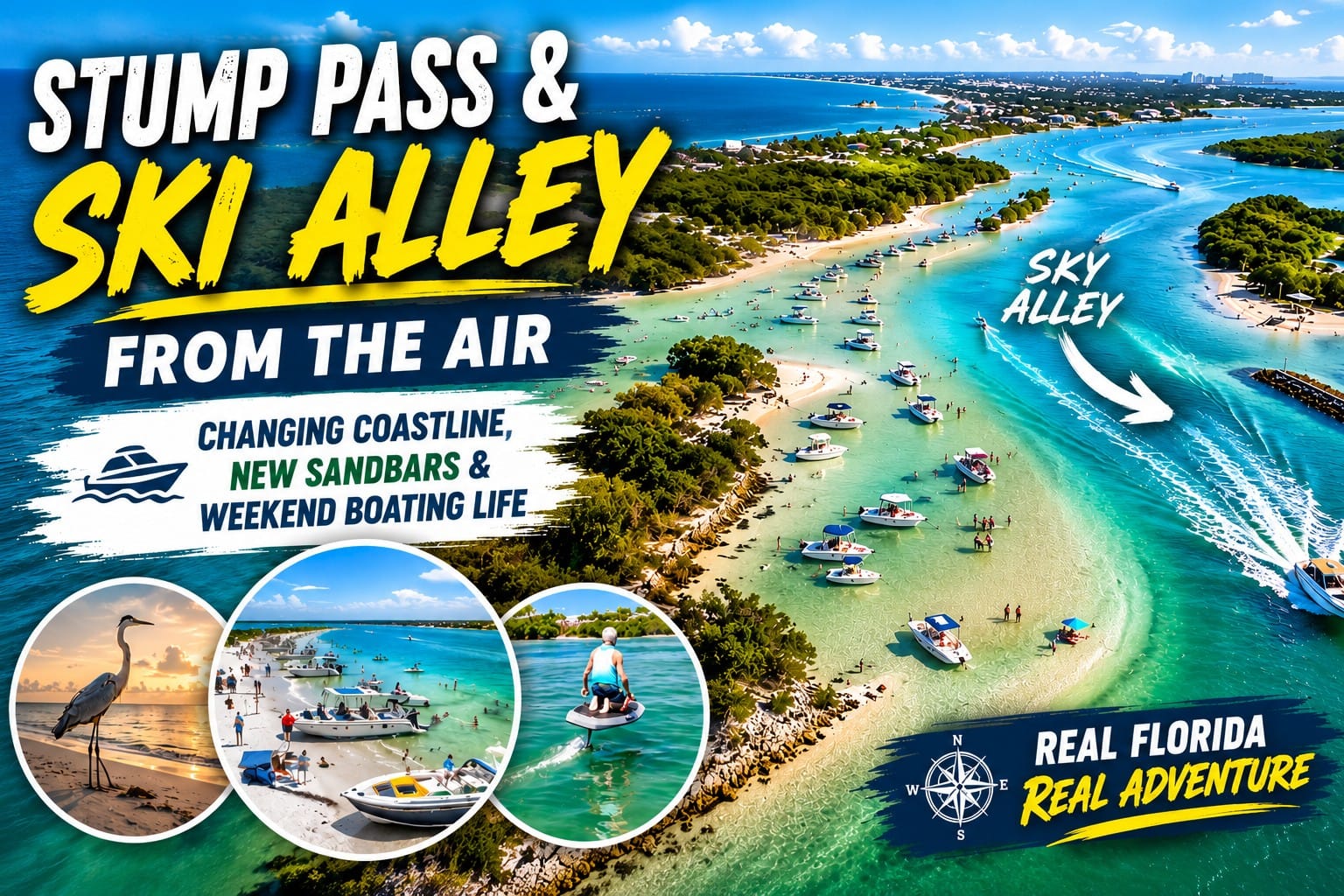
Watch on YouTube: Experience breathtaking aerial views of Ski Alley, Stump Pass, Lemon Bay, and Manasota Key as Captain Pavel explores one of Southwest Florida's most scenic waterways, showcasing barrier islands, wildlife, and hidden coastal landscapes.
Unlike many Florida barrier islands dominated by high-rise development, Manasota Key has retained a quieter, more natural character. Most of the island consists of low-rise homes, condominiums, beach parks, nature preserves, and native coastal vegetation, preserving much of the area's scenic beauty.
The island is bordered by two very different bodies of water. The Gulf of America offers broad sandy beaches, rolling surf, spectacular sunsets, swimming, shelling, and seasonal shark tooth hunting. On the eastern side, Lemon Bay provides protected waters ideal for kayaking, paddleboarding, wildlife observation, boating, and fishing.
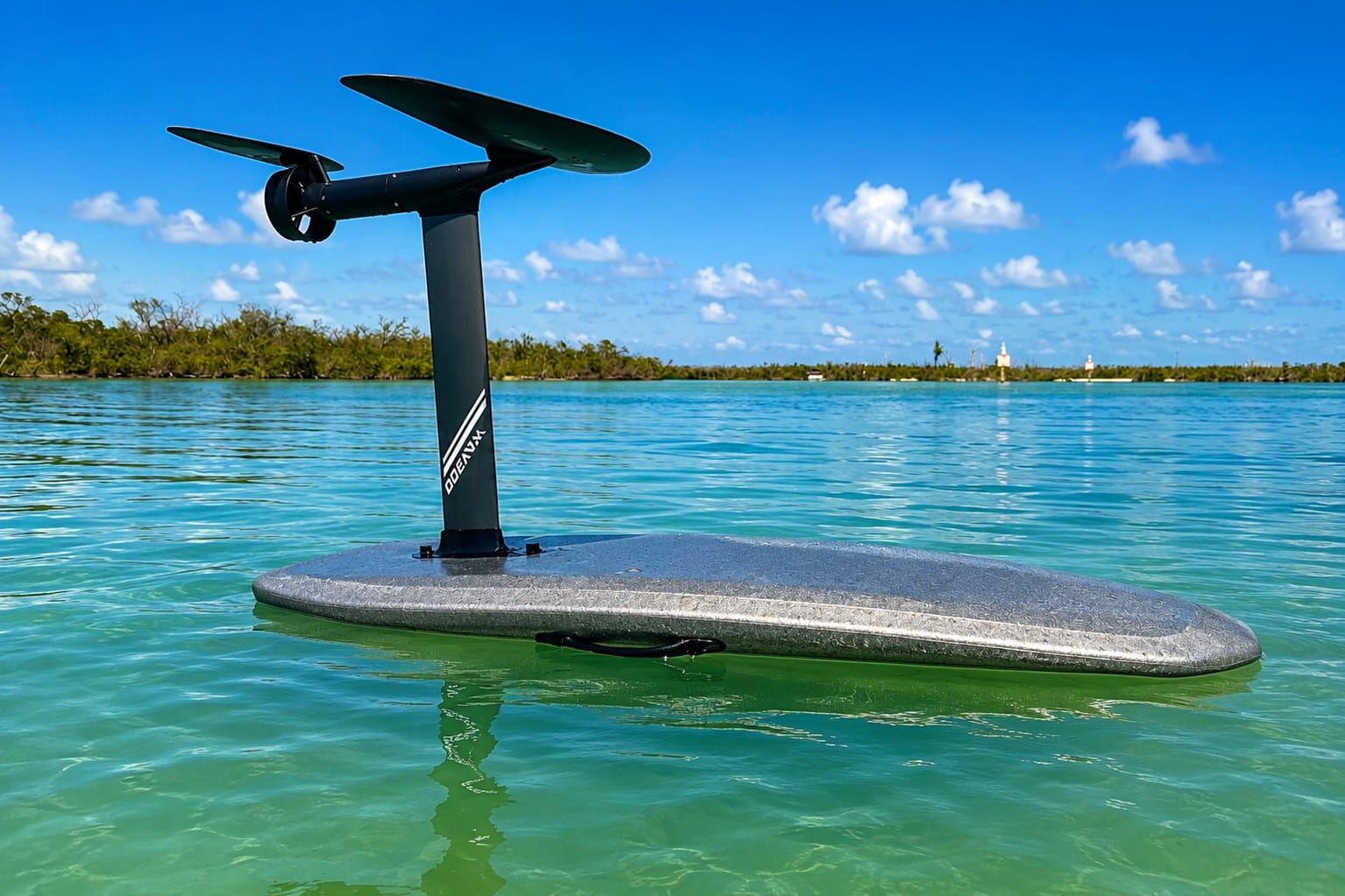
Watch on YouTube: Experience an exciting e-foil adventure at Ski Alley in Lemon Bay, near Stump Pass and Manasota Key. Watch the rider glide silently above the water while Captain Pavel explores one of Southwest Florida’s favorite boating and recreation areas.
Manasota Key also serves as an important gateway to some of Southwest Florida's most popular coastal destinations. Visitors can easily explore Englewood Beach, Blind Pass Beach, Manasota Beach, Stump Pass Beach State Park, and the surrounding waters of Lemon Bay. The island's location also provides convenient access to nearby Boca Grande, Gasparilla Sound, Venice, Cape Haze, and Charlotte Harbor.
For both visitors and boaters, Manasota Key offers one of the most diverse coastal environments in Southwest Florida. Whether arriving by car or by boat, guests can experience beautiful beaches, abundant wildlife, protected estuaries, and easy access to the Gulf, all within a relatively short stretch of coastline.
3. Geography
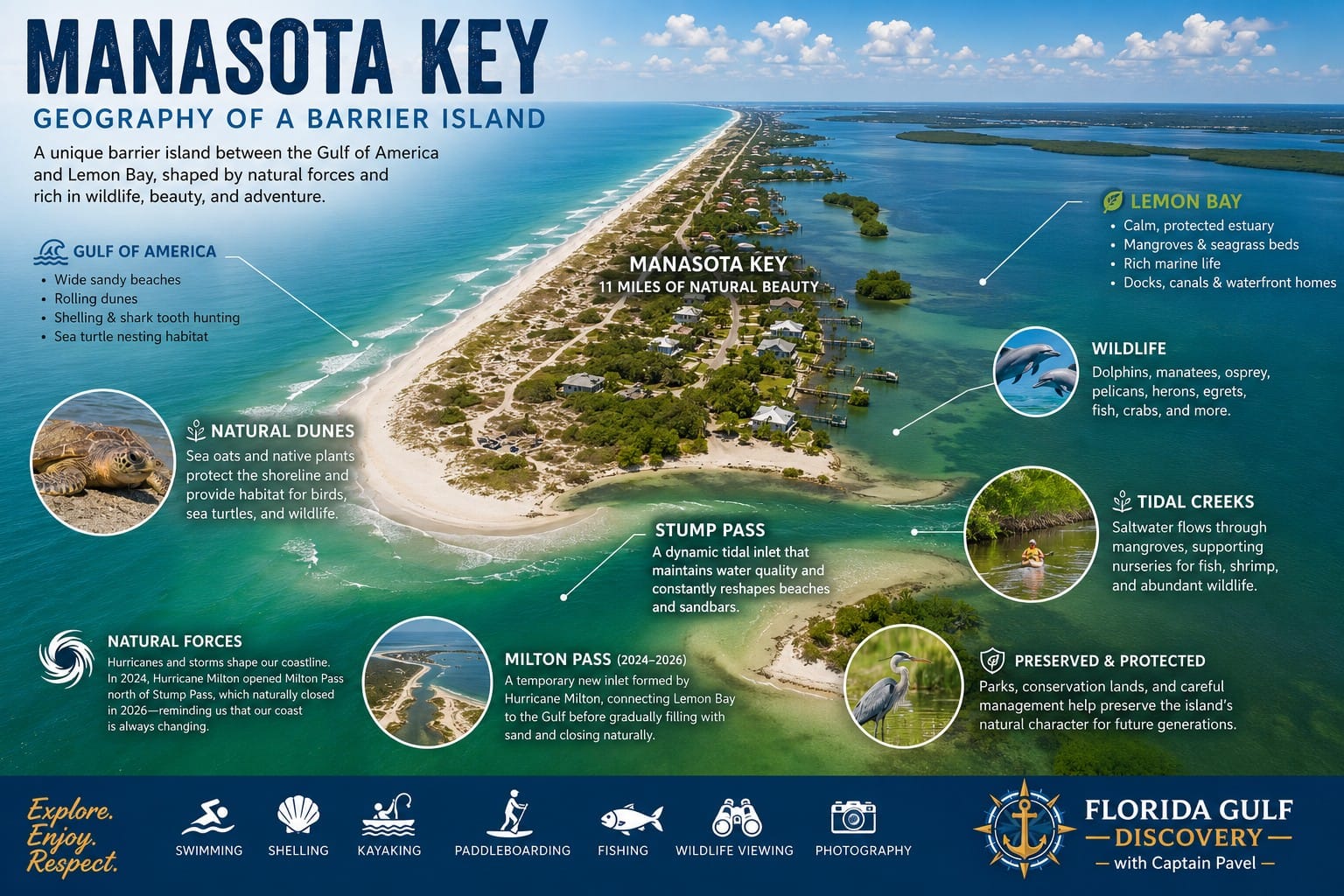
This aerial view illustrates the unique barrier island geography of Manasota Key, where a narrow ribbon of land separates the open waters of the Gulf of Mexico from the protected estuary of Lemon Bay.
Manasota Key is one of Southwest Florida's beautiful barrier islands, formed over thousands of years by waves, tides, currents, and wind-driven sand. Extending for approximately 11 miles along Florida's Gulf Coast, the island separates the open waters of the Gulf of America from the protected estuary of Lemon Bay. This unique geography creates two distinctly different coastal environments within a short distance of each other.
The Gulf-facing side of Manasota Key is characterized by broad sandy beaches, rolling dunes, and gently sloping shorelines. The beaches are composed primarily of fine white quartz sand mixed with darker shell fragments that have washed ashore from the Gulf. Seasonal changes in currents and storms constantly reshape the beaches, adding or removing sand while creating new shelling opportunities after strong tides and winter cold fronts.
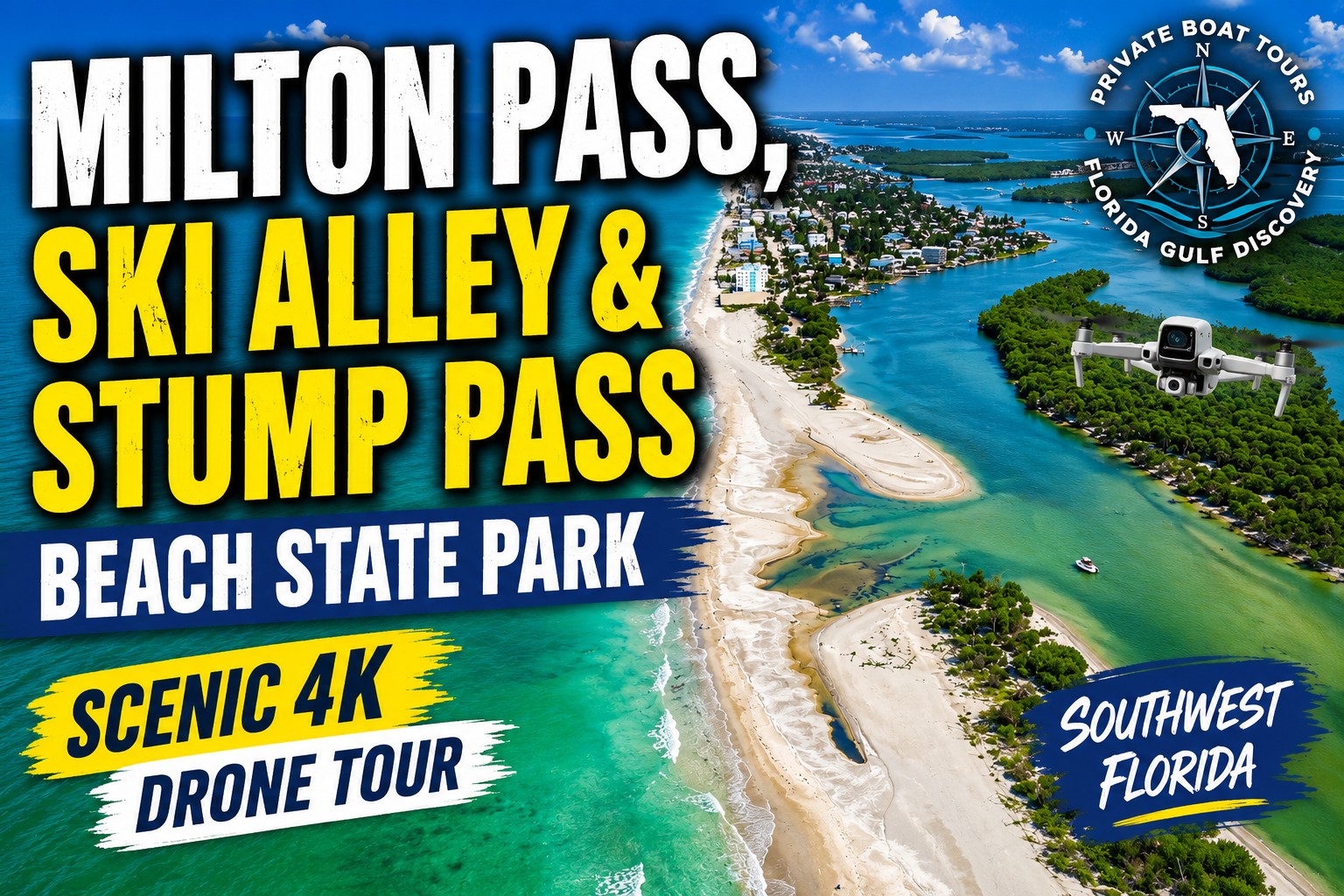
Watch on YouTube: Fly with Captain Pavel above Milton Pass, Ski Alley, and Stump Pass Beach State Park on Manasota Key. This scenic 4K drone tour reveals the remarkable coastal landscape shaped by Hurricane Milton, with sweeping views of the Gulf, Lemon Bay, barrier-island beaches, tidal waterways, and one of Southwest Florida's most beautiful boating areas.
Behind the beaches, natural dunes help stabilize the shoreline and provide important habitat for native plants and wildlife. Sea oats, railroad vine, beach elder, and sea grapes grow throughout the dune system, helping protect the island from erosion while serving as nesting and shelter areas for birds and other coastal species. During sea turtle nesting season, portions of the beaches are carefully managed to protect nests laid by loggerhead sea turtles.
The eastern side of Manasota Key presents a completely different landscape. Instead of open surf, Lemon Bay offers calm, protected waters bordered by mangrove forests, seagrass beds, docks, canals, and residential waterfront properties. These shallow estuarine waters support one of the richest ecosystems along Florida's Gulf Coast and serve as nursery habitat for countless fish, crabs, shrimp, and other marine life.
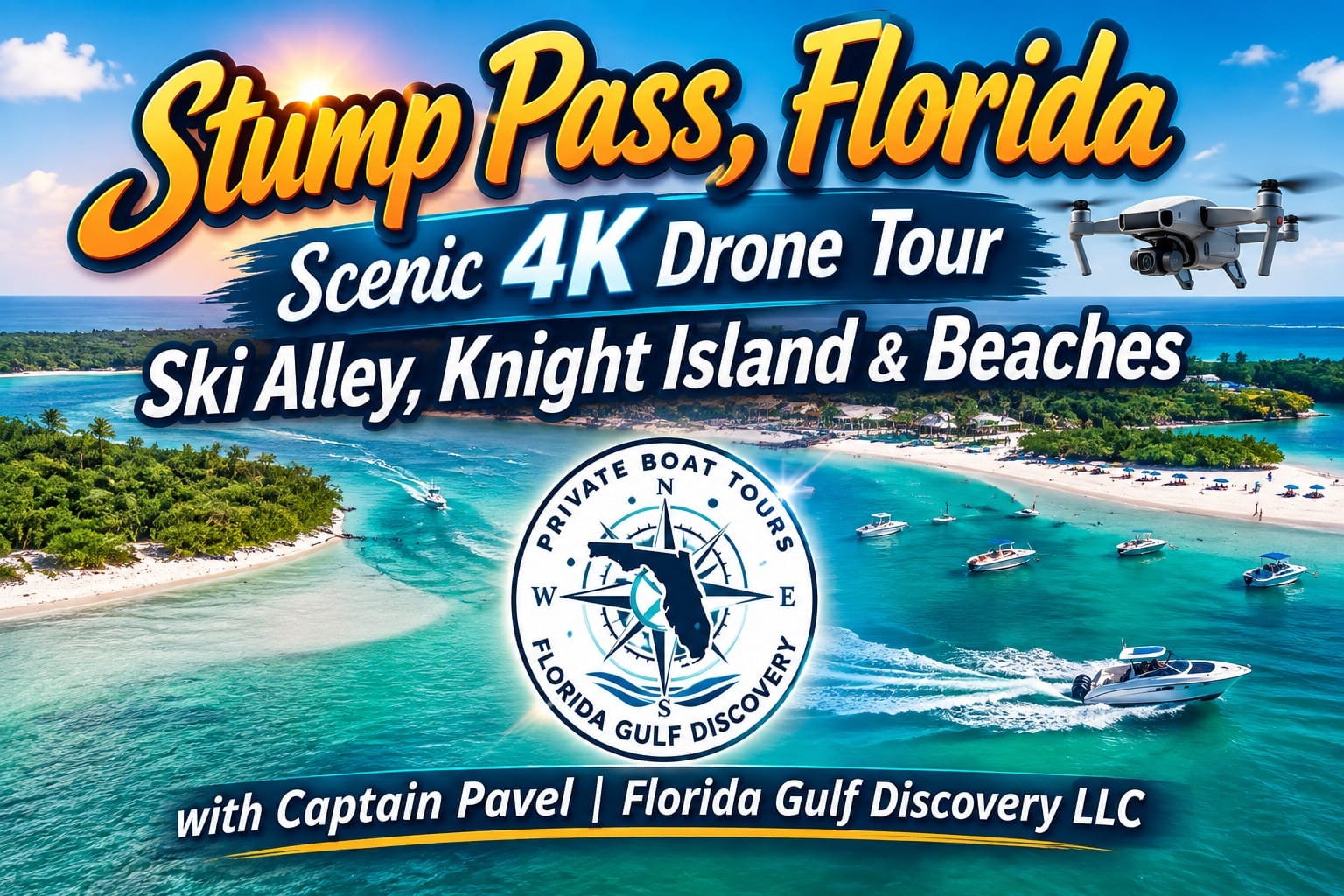
Watch on YouTube: Fly with Captain Pavel above Stump Pass, Ski Alley, and the beaches of Knight Island in this scenic 4K drone tour. See turquoise Gulf water, winding channels, barrier-island beaches, sandbars, and the beautiful coastal landscape surrounding Lemon Bay and Stump Pass Beach State Park in Southwest Florida.
Several tidal creeks and small waterways connect Lemon Bay with the island's interior, allowing saltwater to circulate through mangrove habitats while supporting abundant wildlife. Dolphins, manatees, osprey, pelicans, herons, egrets, and many other species are commonly observed throughout these protected waters.
The southern end of Manasota Key is dominated by Stump Pass, a naturally shifting tidal inlet that connects Lemon Bay with the Gulf of America. This pass plays a critical role in maintaining water quality and tidal exchange throughout the estuary. Strong tidal currents continually move sand through the inlet, causing nearby beaches and sandbars to change shape over time. Following hurricanes and tropical storms, these natural processes often accelerate, significantly altering the surrounding shoreline.
One of the most remarkable recent examples occurred in 2024 when Hurricane Milton opened a new inlet several miles north of Stump Pass. Known as Milton Pass, the breach temporarily connected Lemon Bay to the Gulf before gradually filling with sand and naturally closing in 2026. The event demonstrated how dynamic Florida's barrier islands remain and how coastal landscapes continue to evolve under the influence of storms and natural forces.
Despite ongoing shoreline changes, Manasota Key continues to preserve much of its natural character. Unlike many heavily developed barrier islands, large portions remain protected through public parks, conservation lands, and carefully managed beach access areas. Visitors can experience wide beaches, coastal dunes, mangrove shorelines, and tranquil estuarine waters within a single destination.
Today, the island's diverse geography supports a wide range of recreational activities, including swimming, shelling, shark tooth hunting, kayaking, paddleboarding, wildlife viewing, boating, fishing, beachcombing, and photography. This combination of Gulf beaches and protected estuarine waters makes Manasota Key one of Southwest Florida's most distinctive and ecologically important barrier islands.
4. History
Manasota Key has a history shaped by nature, Native American cultures, early pioneers, commercial fishing, and the continual forces of wind, waves, and hurricanes. Long before bridges connected the island to the mainland, this narrow barrier island served as an important resource for Indigenous peoples who depended on Southwest Florida's rich coastal waters for food, transportation, and trade.
The First People
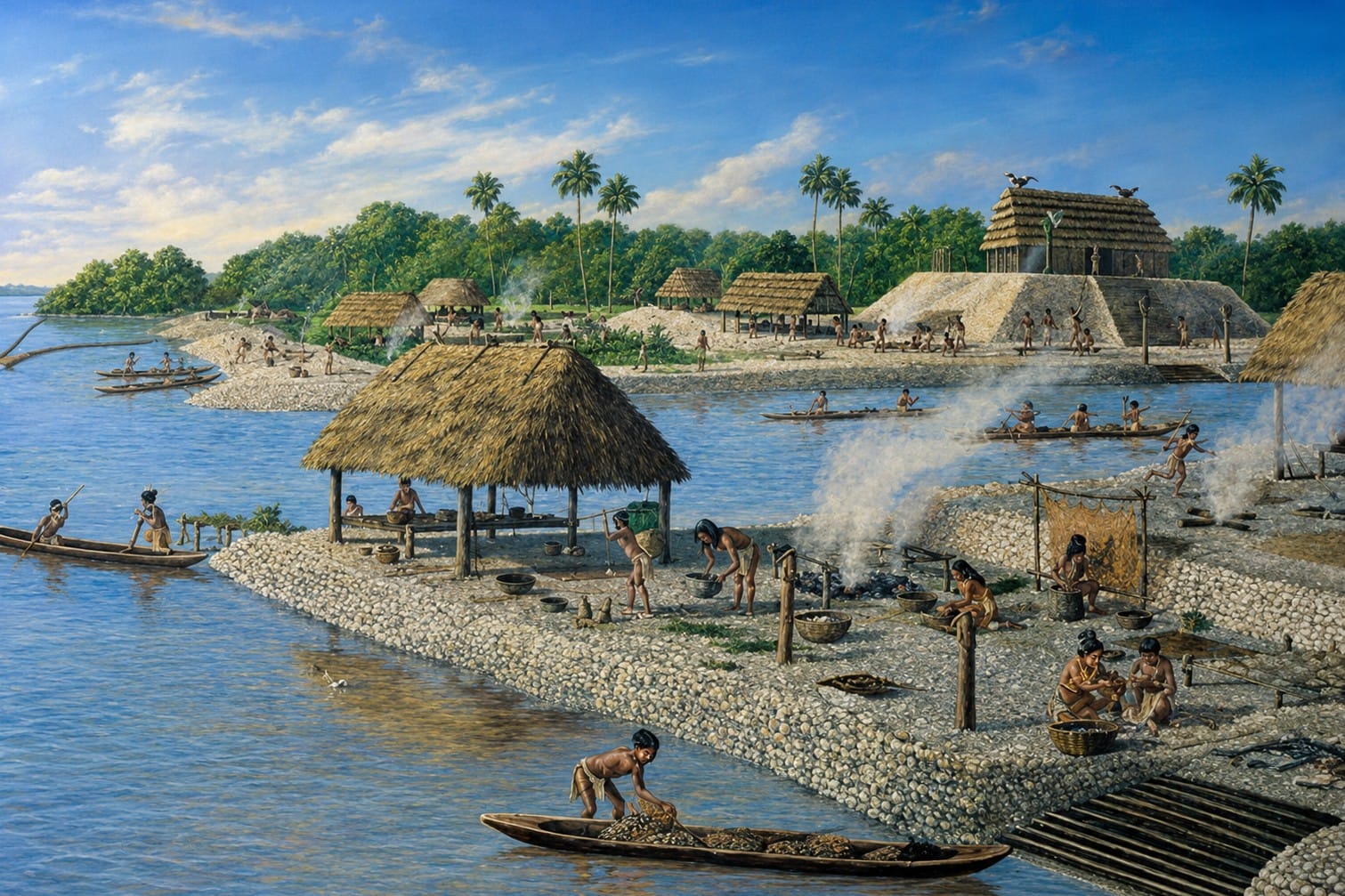
Artist's reconstruction of a Calusa village near Lemon Bay and Manasota Key. For thousands of years, the Calusa people lived along Southwest Florida's coast, relying on the rich estuaries for fishing, shellfish gathering, transportation, and trade long before European settlement.
For thousands of years, the ancestors of the Calusa people lived throughout Southwest Florida, occupying the shores of Lemon Bay, Charlotte Harbor, and nearby barrier islands. Archaeological discoveries indicate that Native Americans regularly visited what is now Manasota Key to fish, collect shellfish, gather plants, and travel between protected inland waters and the Gulf.
The surrounding estuaries provided abundant fish, oysters, clams, scallops, crabs, and other marine resources. Dugout canoes carved from large cypress trees allowed the Calusa to navigate the shallow waters of Lemon Bay while maintaining extensive trade networks throughout Southwest Florida.
Today, shell middens and archaeological sites found around Lemon Bay provide evidence of thousands of years of continuous Native American occupation long before European explorers arrived.
Early Exploration and Settlement
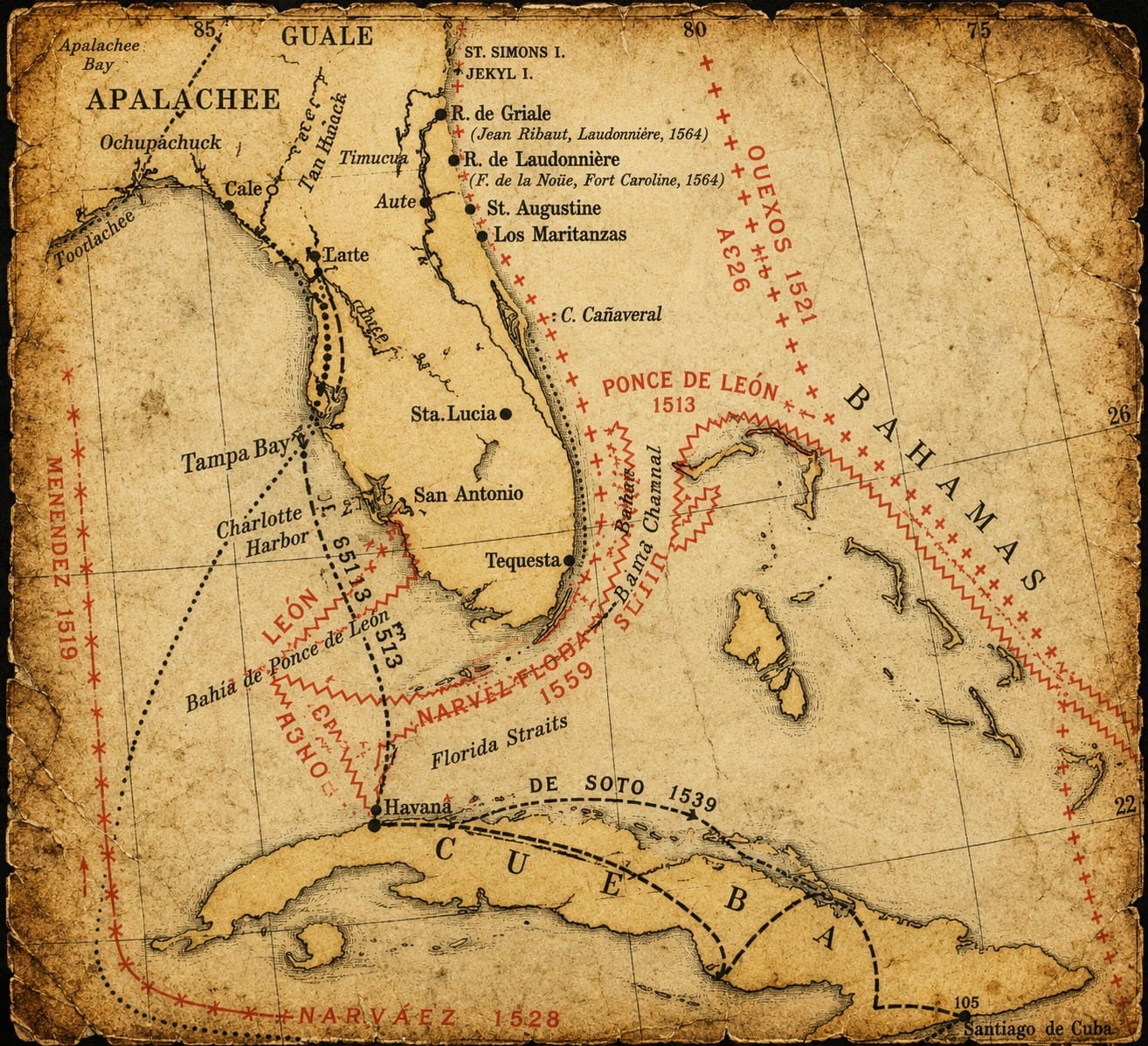
Antique map illustrating the principal Spanish exploration routes along Florida's Gulf Coast. During the sixteenth century, Spanish explorers sailed these waters while charting the coastline, searching for safe anchorages, and documenting the bays, barrier islands, and estuaries that would later become important landmarks in Southwest Florida's history.
Spanish explorers reached Florida's Gulf Coast during the early sixteenth century, but Manasota Key remained largely undeveloped for centuries. The island's isolation, lack of freshwater, dense vegetation, and shifting inlets discouraged permanent settlement.
During the eighteenth and nineteenth centuries, Cuban and Spanish fishermen established seasonal fishing camps, known as ranchos, along Southwest Florida's coast. These camps harvested fish that were salted and shipped to markets in Cuba and the Caribbean. Although larger ranchos were concentrated around Charlotte Harbor and Pine Island Sound, the protected waters of Lemon Bay offered excellent fishing grounds.
By the late nineteenth century, American settlers gradually established small communities around Englewood, Grove City, and Placida. The barrier island itself remained sparsely populated, serving primarily as a place for fishing, hunting, and occasional recreation.
The Development of Manasota Key
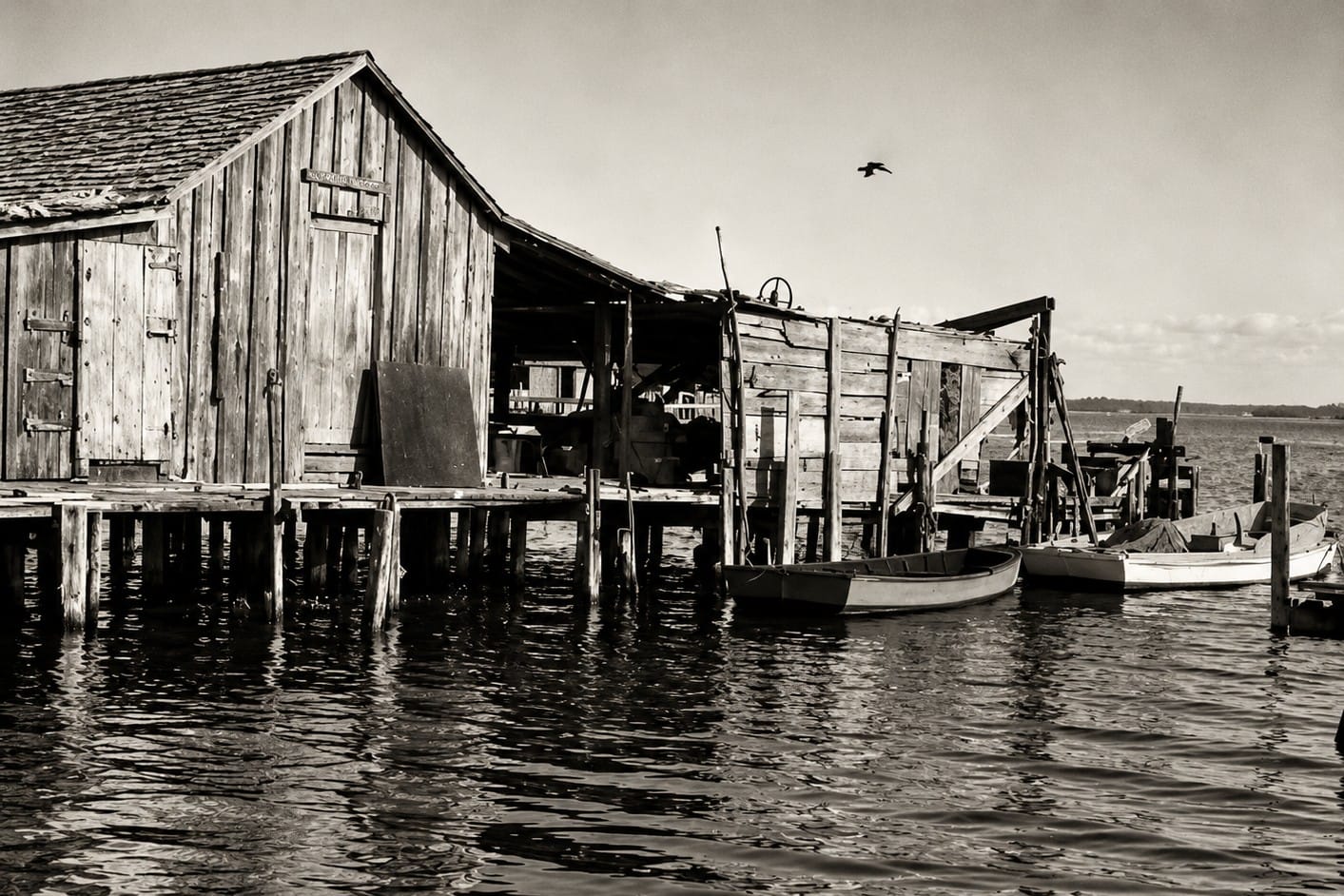
Historic Englewood Fishing Dock: This historic fishing dock on Lemon Bay reflects Englewood's long maritime heritage. For generations, local fishermen used these sheltered waters for commercial fishing, transportation, and recreation, helping shape the coastal community that continues to thrive along Lemon Bay today.
Significant development began during the twentieth century as roads improved and tourism expanded throughout Florida. Waterfront homes, cottages, small resorts, and beach communities gradually appeared along the island, particularly near Englewood Beach.
Unlike many Florida barrier islands that experienced large-scale high-rise construction, Manasota Key developed at a slower pace. Local zoning and community planning helped preserve much of the island's natural appearance, with most buildings remaining relatively low in height and surrounded by native vegetation.
Today, the island continues to maintain a quieter atmosphere compared to many of Florida's larger beach destinations, attracting visitors seeking natural beauty rather than extensive commercial development.
Bridges That Connected the Island
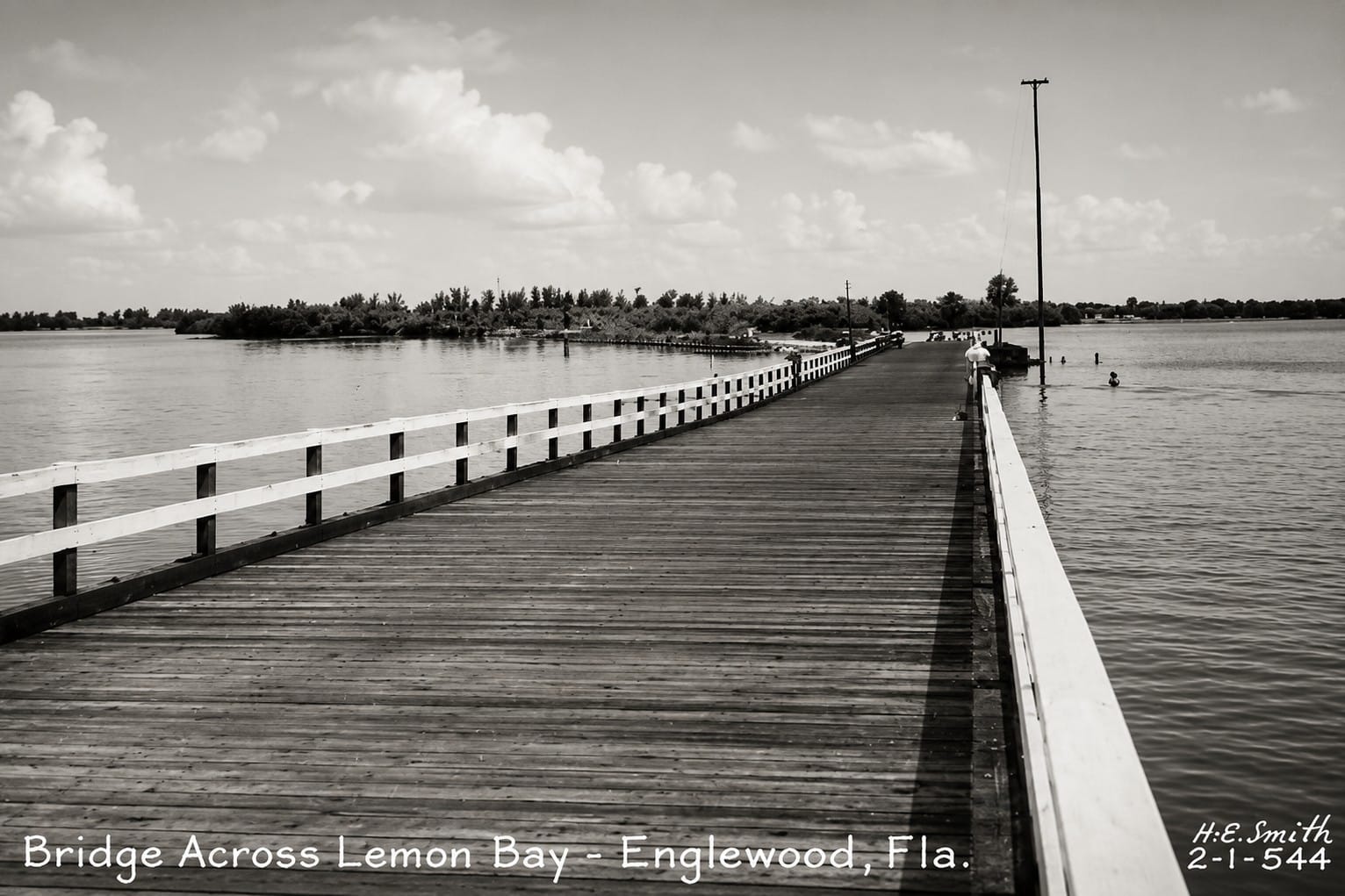
The historic Chadwick Bridge crossing Lemon Bay near Englewood, Florida, photographed in the late 1940s. Built by the Chadwick family in 1927, the privately financed wooden bridge provided the first permanent road connection between the mainland and Manasota Key, helping open the barrier island to residents and visitors before being replaced by modern bridges.
For many years, boats provided the only practical transportation between the mainland and Manasota Key. As permanent communities expanded, bridges became essential for residents, emergency services, and tourism.
Today, four bridges provide access to different sections of the island from the mainland. These crossings transformed Manasota Key from an isolated barrier island into an easily accessible destination while allowing communities such as Englewood and Placida to grow alongside the coast.
Despite improved access, the island has retained much of its relaxed character, with scenic roads, bicycle routes, beach parks, and residential neighborhoods replacing large commercial developments.
Hurricanes and Coastal Change
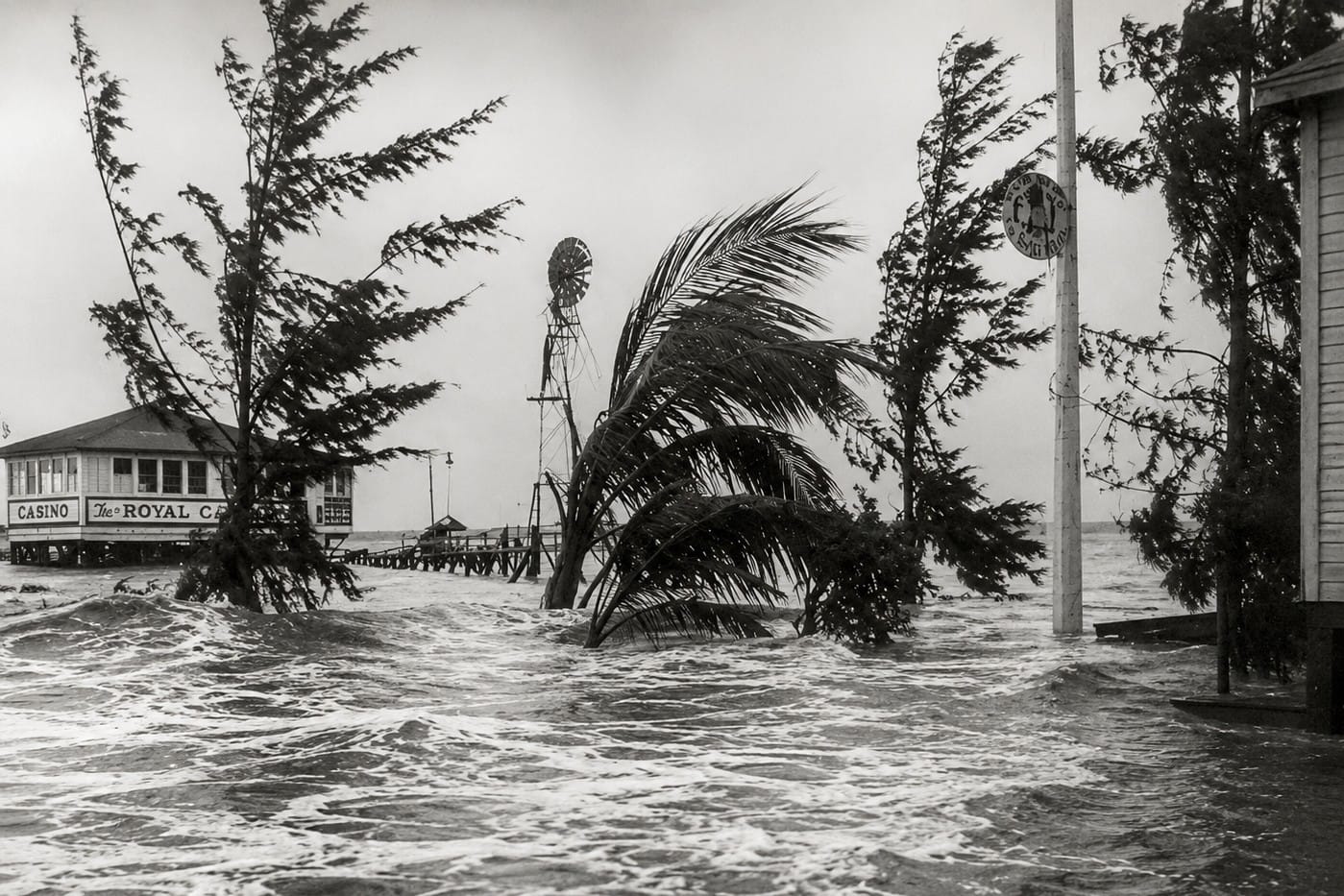
Buchan's Landing and the Royal Casino on Lemon Bay after the devastating 1926 hurricane. The powerful storm damaged much of Englewood's waterfront during Florida's land boom era, leaving the Royal Casino standing in the bay as a reminder of one of the community's most destructive natural disasters.
Like every barrier island along Florida's Gulf Coast, Manasota Key is constantly reshaped by tropical storms and hurricanes. Powerful storm surges, waves, and tidal currents periodically erode beaches, create new dunes, damage vegetation, and alter shorelines.
Beach nourishment projects have occasionally restored eroded sections, while natural processes continually rebuild dunes and redistribute sand along the coastline. These changes are part of the normal evolution of barrier islands and help create the dynamic landscapes visitors experience today.
One of the island's greatest strengths is its ability to adapt naturally. Coastal vegetation, dunes, and mangrove forests play an important role in protecting both the island and the mainland from storm impacts while providing habitat for countless wildlife species.
Milton Pass (2024–2026)
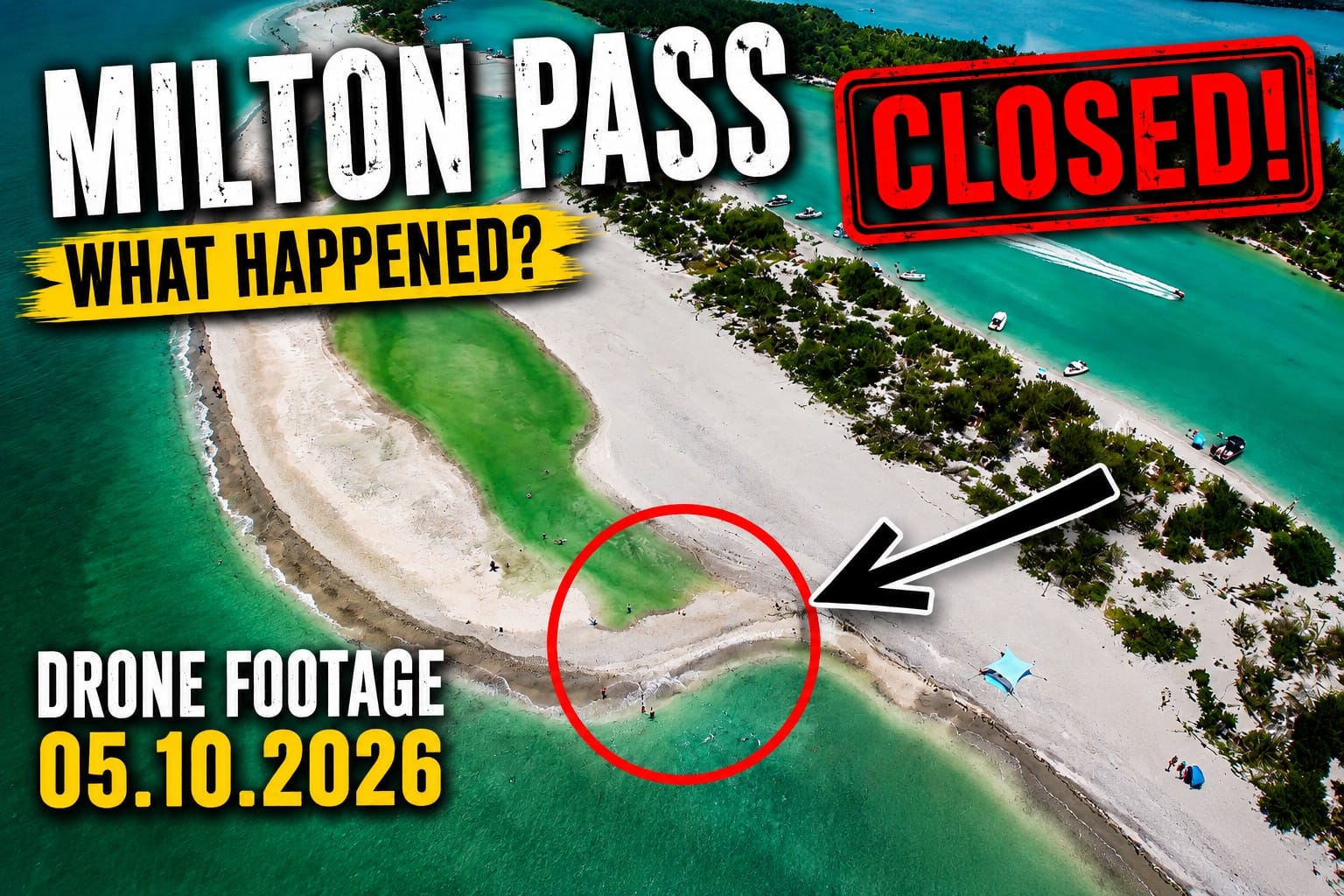
Watch on YouTube: Follow the complete history of Milton Pass from its creation on October 9, 2024, through its dramatic changes, to its closure on May 6, 2026. This video includes drone footage captured on May 10, 2026, documenting one of Southwest Florida's most significant coastal transformations.
One of the most remarkable events in Manasota Key's recent history occurred during Hurricane Milton in October 2024. The powerful storm cut a new inlet through the barrier island several miles north of Stump Pass, creating what quickly became known as Milton Pass.
For the first time in generations, a second tidal connection linked Lemon Bay with the Gulf of America. The new pass dramatically altered water circulation, currents, nearby sandbars, and local navigation.
Over the following months, natural coastal processes gradually filled Milton Pass with sand. By May 2026, the inlet had completely closed, once again restoring Stump Pass as the primary natural connection between Lemon Bay and the Gulf.
Captain Pavel documented the entire life cycle of Milton Pass using aerial drone photography and video—from its formation after Hurricane Milton to its natural closure nearly two years later. This rare visual record illustrates the ever-changing nature of Southwest Florida's barrier islands and highlights how quickly coastal landscapes can evolve under the forces of wind, waves, tides, and storms.
Today, Manasota Key remains a living example of Florida's dynamic coastline, where history continues to be written by both people and nature.
5. Beaches
Manasota Key is best known for its Gulf beaches, each offering a different combination of scenery, public facilities, wildlife, shelling, swimming, and access to the surrounding coastal environment. From the quieter northern shoreline to the more active Englewood Beach area and the natural landscapes of Stump Pass Beach State Park, visitors can experience several distinct sections of the island.
The beaches along Manasota Key are continually reshaped by waves, tides, seasonal currents, and tropical storms. Conditions can change considerably throughout the year. Some days bring calm, clear water and broad stretches of exposed sand, while stronger Gulf winds may produce waves, darker water, and newly deposited shells or fossilized shark teeth.
Englewood Beach
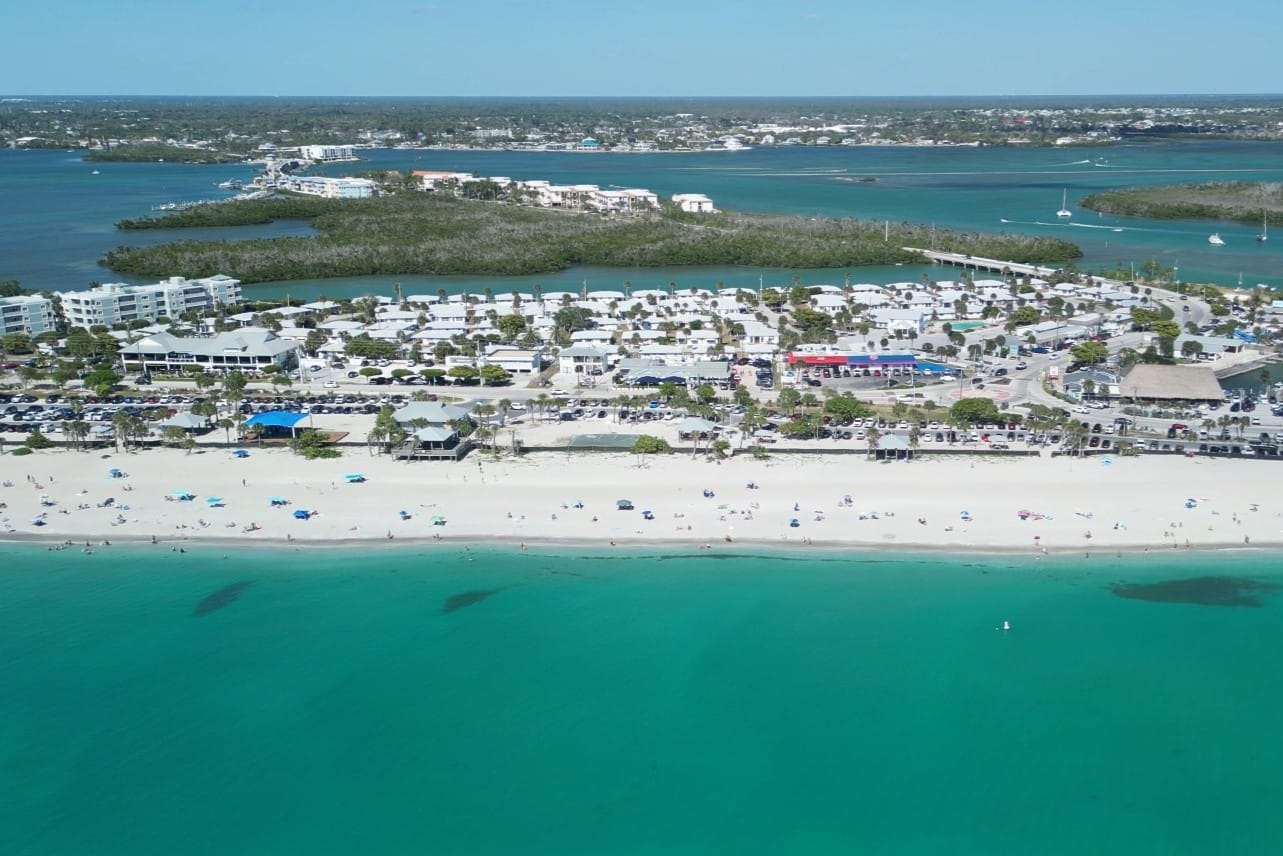
Aerial view of Englewood Beach on Manasota Key, one of Southwest Florida's most popular Gulf Coast destinations. Located between the Gulf of Mexico and Lemon Bay, the beach is known for its wide sandy shoreline, spectacular sunsets, boating, dolphin watching, shell collecting, and easy access to the natural beauty of the surrounding barrier island.
Englewood Beach, also known as Chadwick Park, is the most active and commercially developed public beach on Manasota Key. Located near the center of the island at the western end of Beach Road, the park provides convenient access from Englewood and surrounding mainland communities.
The beach features a broad sandy shoreline suitable for swimming, sunbathing, walking, shelling, and sunset viewing. Public facilities generally include parking, restrooms, picnic areas, outdoor showers, sports courts, and accessible walkways leading toward the Gulf.
Englewood Beach is surrounded by several restaurants, bars, vacation rentals, shops, and visitor services. This makes it one of the easiest areas on Manasota Key for visitors who want to combine a beach day with nearby dining and entertainment.
The shoreline can become busy during weekends, holidays, winter tourism season, and major local events. Visitors seeking a quieter experience may prefer arriving earlier in the morning or exploring Blind Pass Beach, Manasota Beach, or Stump Pass Beach State Park.
Sunset is one of the most popular times to visit Englewood Beach. The unobstructed western view across the Gulf creates excellent opportunities for photography, beach walks, and watching the sun descend below the horizon.
Blind Pass Beach
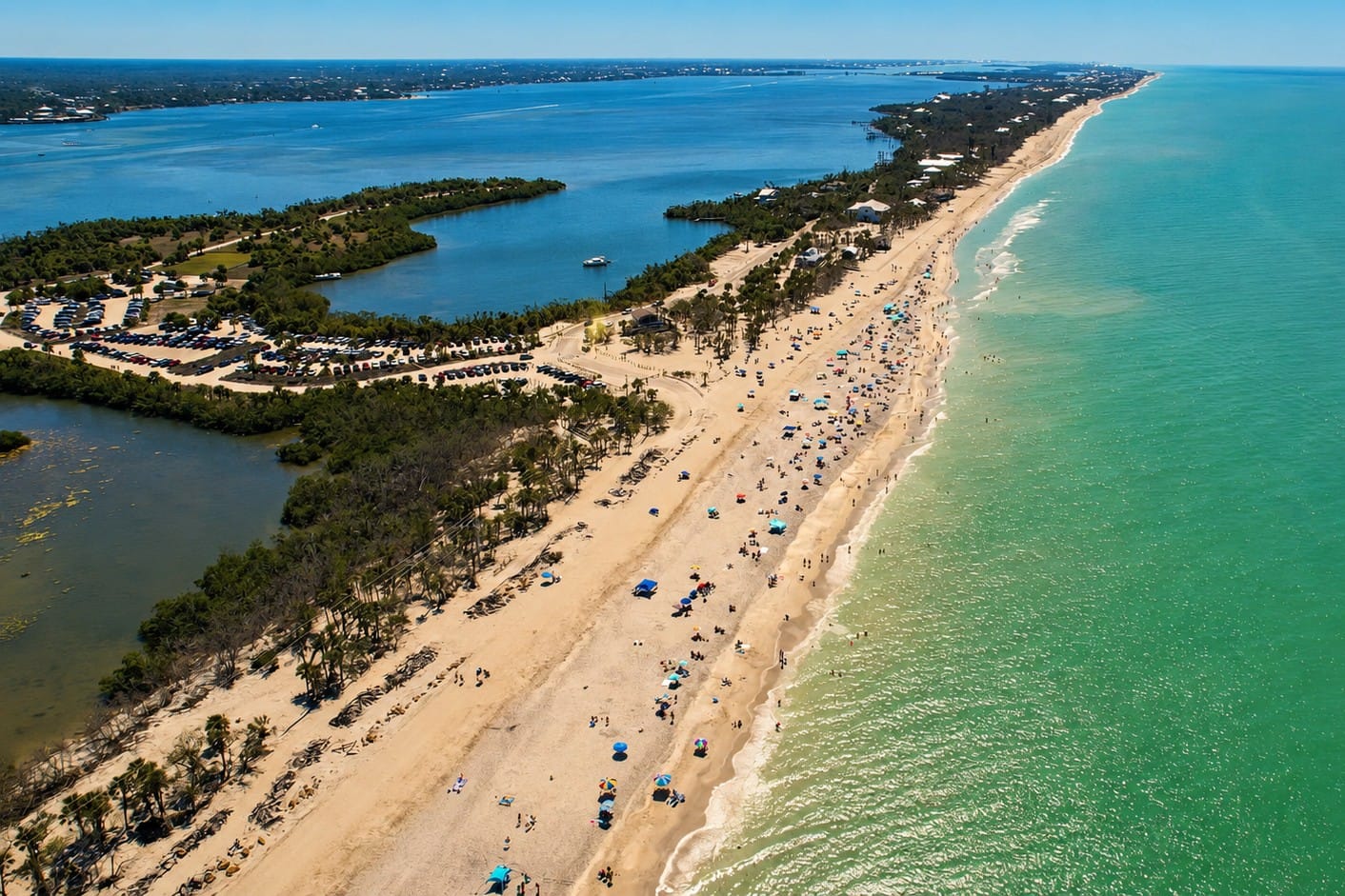
Aerial view of Blind Pass Beach on Manasota Key, a natural Gulf Coast beach known for its wide shoreline, fossil shark teeth, shell collecting, and peaceful setting. With public access to both the Gulf of Mexico and Lemon Bay, Blind Pass is a favorite destination for beachcombing, kayaking, birdwatching, fishing, and watching dolphins and spectacular Southwest Florida sunsets. :contentReference[oaicite:0]{index=0}
Blind Pass Beach is located several miles north of Englewood Beach and offers a quieter, more natural coastal setting. The park extends between the Gulf shoreline and Lemon Bay, allowing visitors to experience both sides of Manasota Key within a relatively short walk.
The Gulf side features a broad beach known for swimming, beachcombing, shelling, fossilized shark teeth, and sunset viewing. Conditions vary with the tides and weather, but the shoreline is often less crowded than Englewood Beach.
On the Lemon Bay side, visitors can explore mangrove shorelines, launch kayaks, observe wildlife, and enjoy calm estuarine waters. This combination of Gulf beach and bay access makes Blind Pass Beach one of the most geographically diverse public parks on the island.
Walking trails pass through native coastal vegetation and connect different areas of the park. Sea grapes, palms, mangroves, dunes, and shaded picnic areas provide habitat for birds and other wildlife while helping preserve the natural character of Manasota Key.
Blind Pass Beach should not be confused with an actively navigable Gulf inlet. Although the name reflects the area's coastal history, the site does not currently provide a navigable connection between Lemon Bay and the Gulf.
Manasota Beach
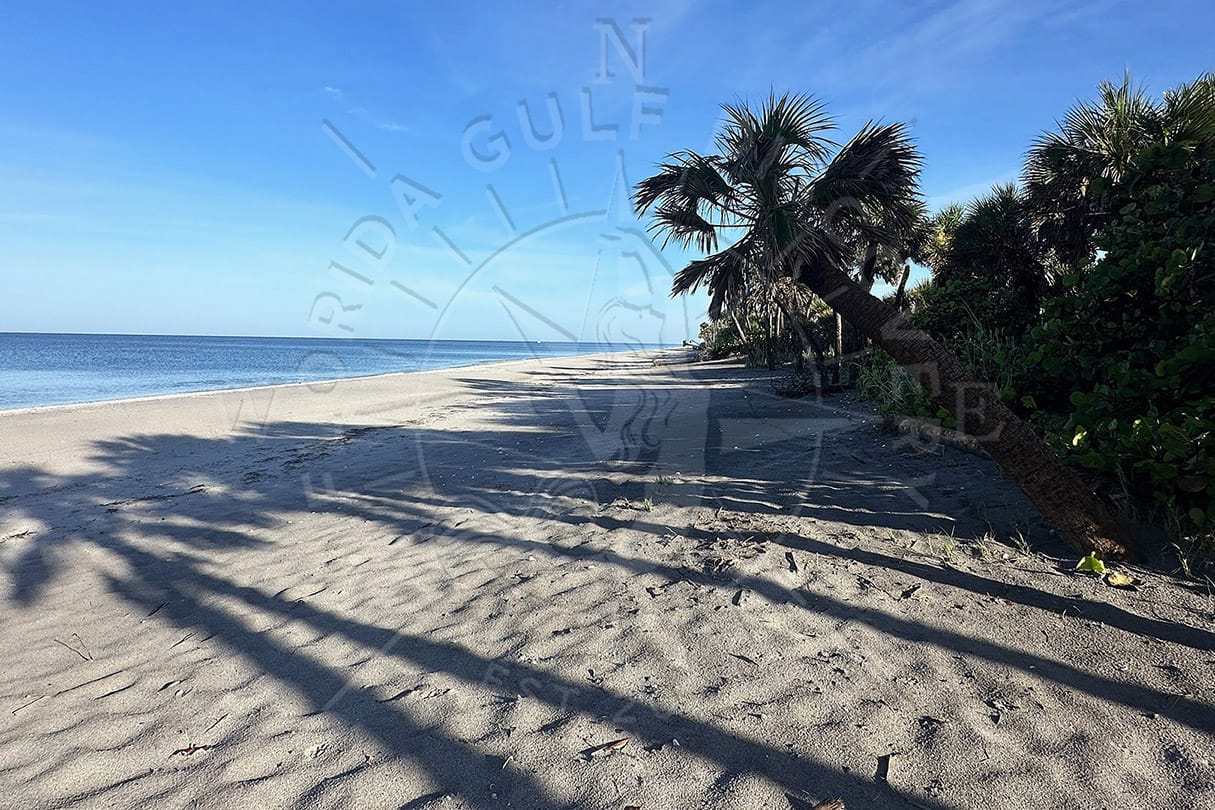
Palm trees cast long afternoon shadows across the natural shoreline of Caspersen Beach near Venice, Florida. Known for its unspoiled Gulf Coast scenery, fossil shark teeth, coastal dunes, and nature trails, Caspersen Beach offers one of Southwest Florida's most peaceful beach experiences for walking, wildlife viewing, shell collecting, and enjoying spectacular Gulf sunsets.
Manasota Beach is located near the northern end of Manasota Key at the western end of Manasota Beach Road. It is one of the island's most accessible public beaches for visitors traveling from Venice, South Venice, and northern Sarasota County.
The park provides direct access to the Gulf shoreline and is popular for swimming, sunbathing, walking, shelling, shark tooth hunting, and watching sunsets. The beach often has a relaxed atmosphere, especially during weekday mornings and outside the busiest winter months.
Fossilized shark teeth are frequently discovered along this section of coastline. Visitors often search near the waterline, especially after waves, strong tides, or storms expose darker shell material and gravel deposits.
The surrounding coastal vegetation and dune system help protect the shoreline while providing habitat for nesting birds, sea turtles, and native plants. Visitors should avoid walking across protected dunes and should use designated beach access paths.
Manasota Beach also provides convenient access to the northern residential section of the island. Unlike the commercial area around Englewood Beach, this part of Manasota Key remains primarily residential and retains a quieter coastal character.
Stump Pass Beach State Park
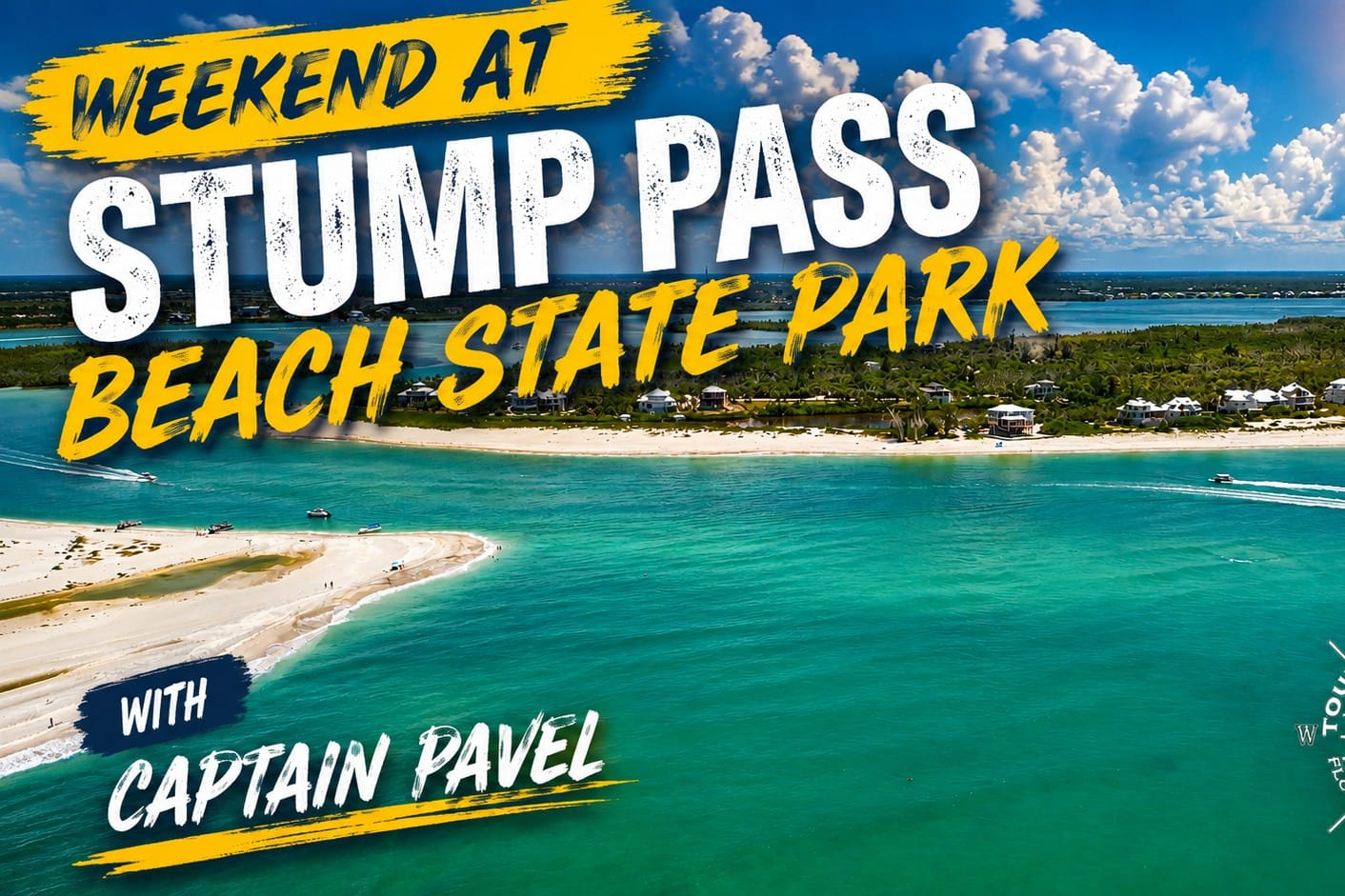
Watch on YouTube: Join Captain Pavel for a weekend adventure at Stump Pass Beach State Park, featuring spectacular drone views of Ski Alley, Lemon Bay, Manasota Key, busy boating activity, pristine beaches, and one of Southwest Florida's most popular coastal destinations.
Stump Pass Beach State Park occupies the southern end of Manasota Key and protects one of the island's most natural and dynamic coastal landscapes. The park extends southward from the public entrance toward Stump Pass, where Lemon Bay meets the Gulf of America.
The Gulf shoreline offers swimming, shelling, fossilized shark tooth hunting, beach walking, wildlife observation, and expansive views across the water. The beach becomes progressively quieter farther south from the main entrance.
A nature trail follows part of the island through native coastal vegetation, providing views of dunes, sea grapes, mangroves, and Lemon Bay. The trail and beach route allow visitors to explore the transition between Gulf shoreline, barrier-island habitat, and protected estuarine waters.
The southern tip of the park changes frequently because of tidal currents, storms, erosion, and sand movement around Stump Pass. Sandbars may appear, shift, expand, or disappear as the inlet naturally evolves.
Boaters frequently visit the waters near Stump Pass and the southern end of the park. However, the inlet can contain shallow water, shifting shoals, strong currents, and rapidly changing navigation conditions. Local knowledge and careful observation are important when approaching by boat.
Because Stump Pass Beach State Park protects a sensitive natural area, visitors should respect wildlife closures, avoid disturbing nesting birds, protect sea turtle nests, remove all trash, and remain off fragile dunes and vegetation.
6. Stump Pass
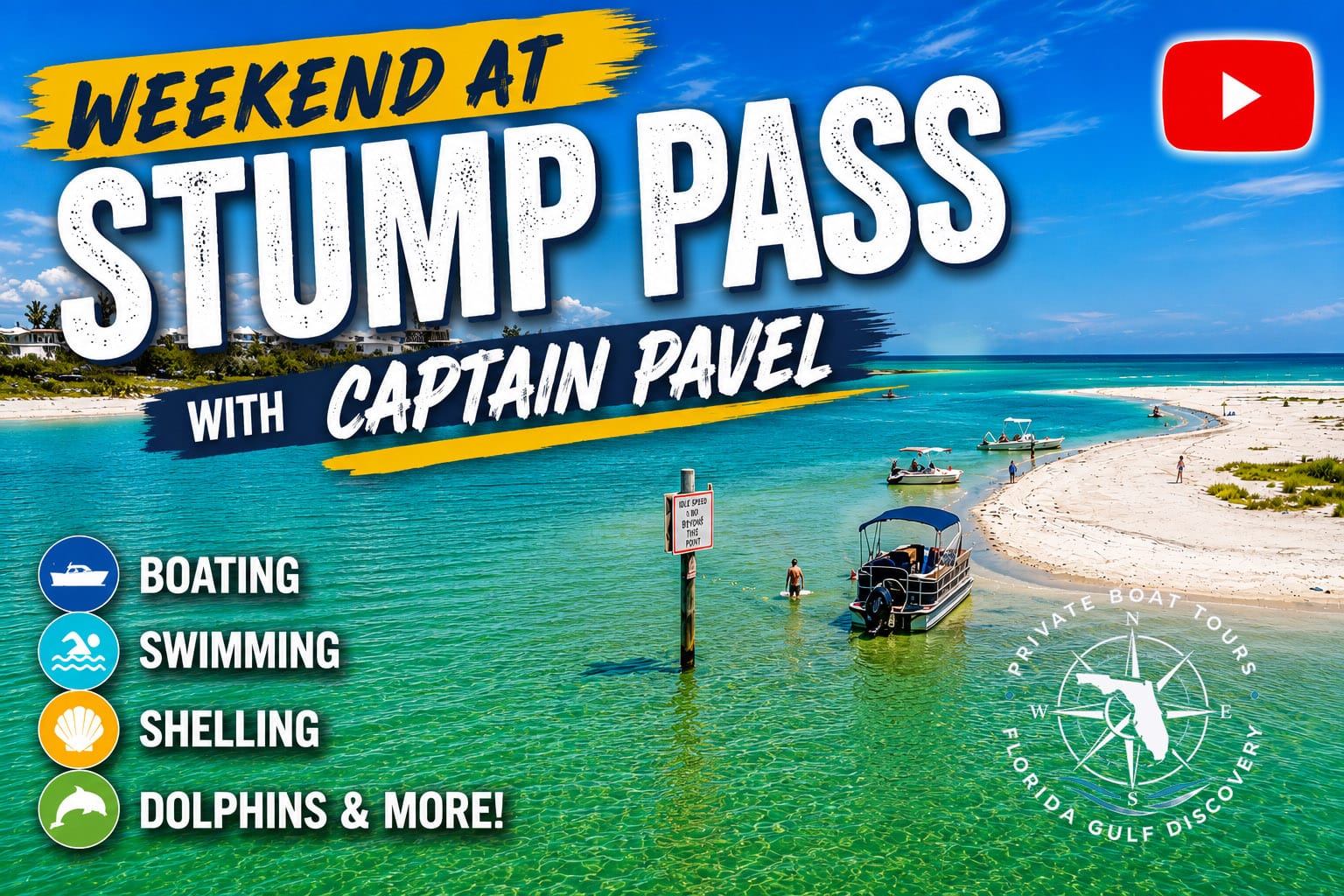
Watch on YouTube Shorts: Spend a beautiful weekend at Stump Pass Beach State Park with Captain Pavel. Enjoy crystal-clear water, scenic beaches, recreational boating, and one of Southwest Florida's most popular destinations from both the water and the air.
Stump Pass is a natural tidal inlet at the southern end of Manasota Key. It connects the protected waters of Lemon Bay with the Gulf of America and plays an essential role in the geography, ecology, water circulation, and boating activity of the surrounding area.
The inlet lies between Stump Pass Beach State Park on Manasota Key and Knight Island to the south. It provides the principal direct Gulf connection for boaters traveling from southern Lemon Bay, Englewood, Grove City, Cape Haze, and nearby waterfront communities.
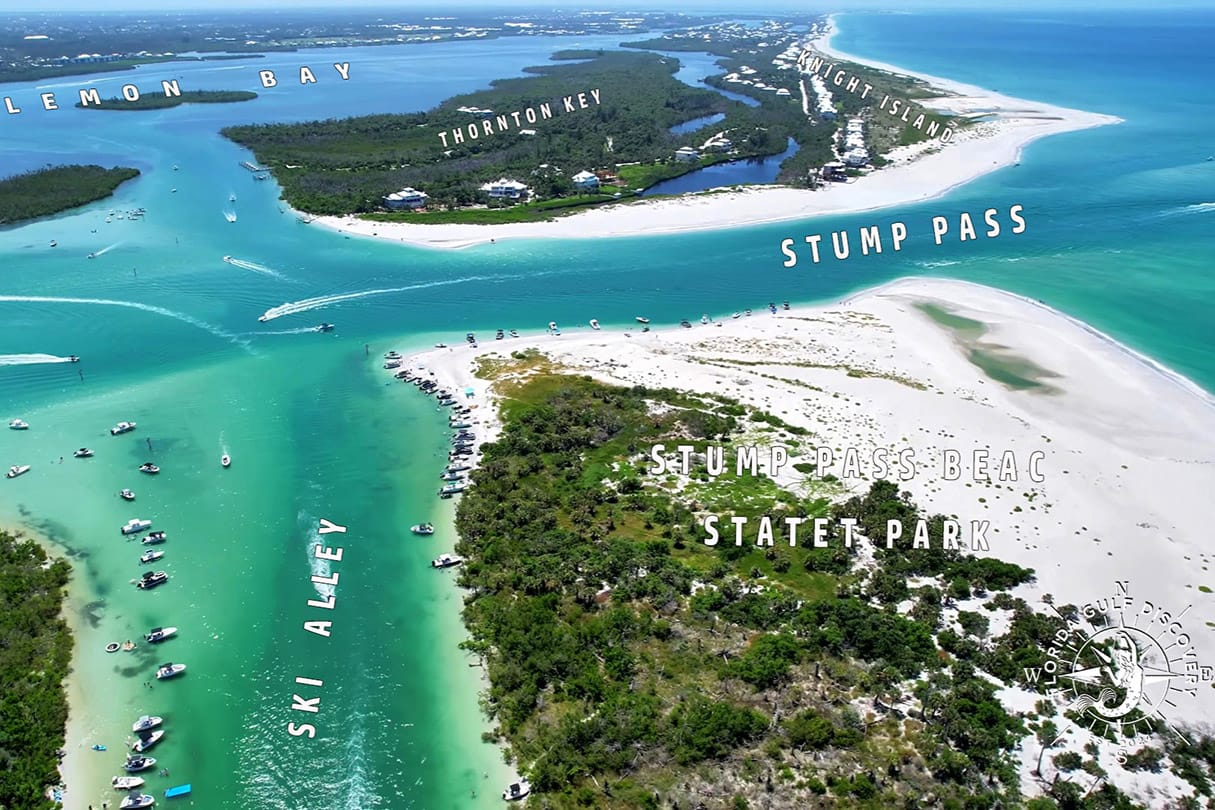
Labeled aerial map showing the relationship between Stump Pass, Ski Alley, Lemon Bay, and the Gulf of Mexico at the southern end of Manasota Key. This unique coastal area is one of Southwest Florida's most popular destinations for boating, kayaking, paddleboarding, wildlife viewing, and exploring the dynamic barrier island landscape shaped by tides, currents, and tropical storms.
Stump Pass is not a fixed channel. Waves, tides, currents, storms, and seasonal sand movement continually reshape the inlet and surrounding sandbars. Water depths and navigable routes may change significantly, particularly after tropical storms, hurricanes, strong winter fronts, or periods of heavy wave action.
During an outgoing tide, water flowing from Lemon Bay toward the Gulf can create strong currents through the narrowest portions of the pass. Incoming tides can produce equally noticeable flow in the opposite direction. Wind opposing the tidal current may create short, steep waves near the Gulf entrance.
Shallow shoals frequently develop along both sides of the navigable channel. Sandbars may be visible at lower tide but covered by shallow water at higher tide, making visual interpretation more difficult. Boaters should not rely exclusively on older charts or previous tracks because the safest route can shift over time.
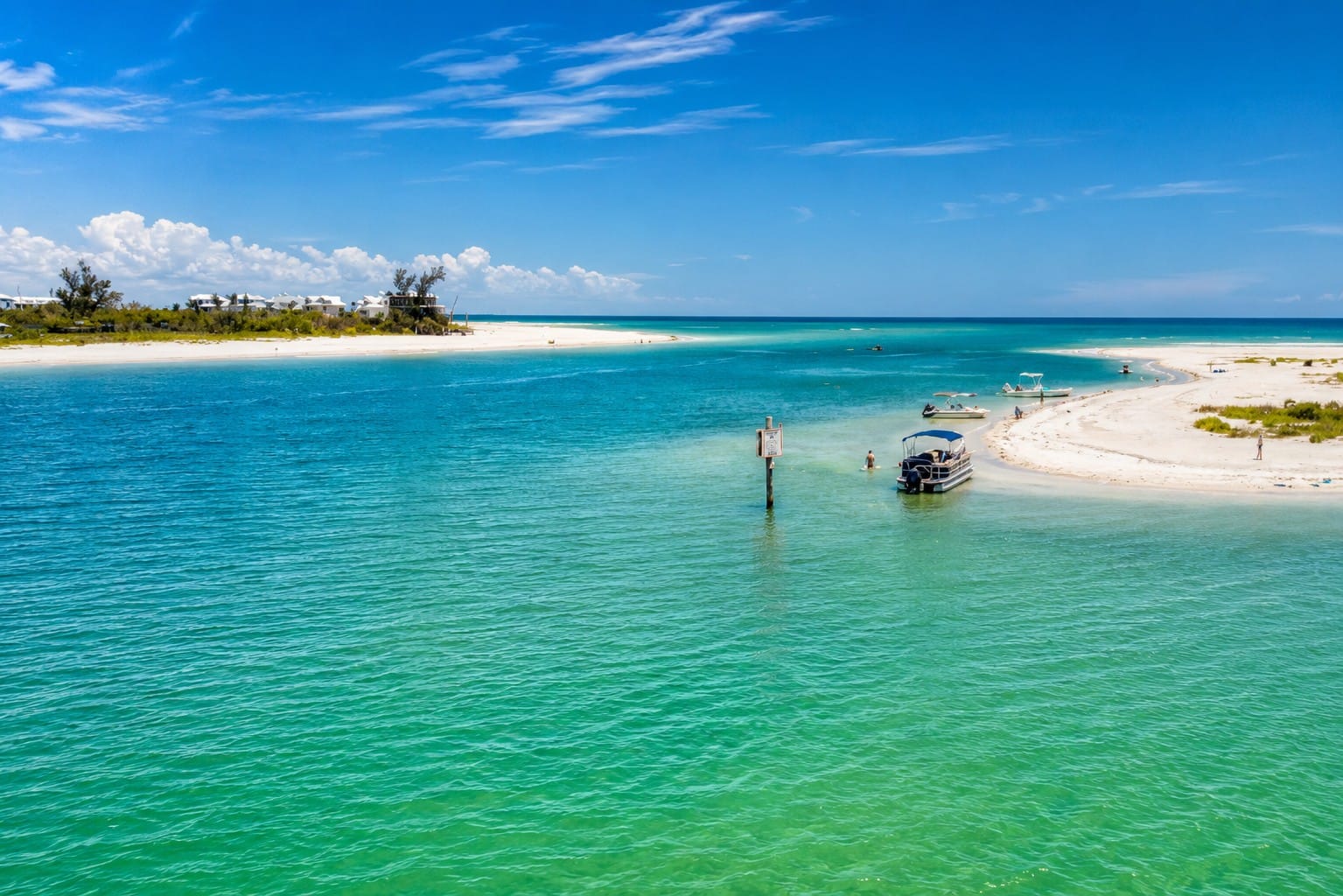
Aerial view of Stump Pass on a peaceful midweek day in 2025. Located at the southern tip of Manasota Key, Stump Pass connects Lemon Bay with the Gulf of Mexico, creating one of Southwest Florida's most scenic destinations for boating, kayaking, shelling, wildlife watching, and exploring the ever-changing coastal landscape shaped by tides, currents, and storms.
Navigation markers may help identify the general route, but local conditions should always be evaluated directly. Water color, breaking waves, current lines, visible shoals, tide stage, wind direction, and recent storm activity can all provide important information.
Stump Pass is also a productive wildlife area. Dolphins frequently travel through the inlet while hunting fish carried by the tide. Manatees may be observed in the calmer waters of Lemon Bay, particularly during warmer months. Pelicans, osprey, herons, egrets, terns, and shorebirds are commonly seen around the pass, beaches, mangroves, and exposed sandbars.
The surrounding waters support fish, rays, crabs, shellfish, and numerous other marine species. Seagrass beds and mangrove shorelines inside Lemon Bay provide nursery habitat, while the pass allows marine life to move between the estuary and the Gulf.
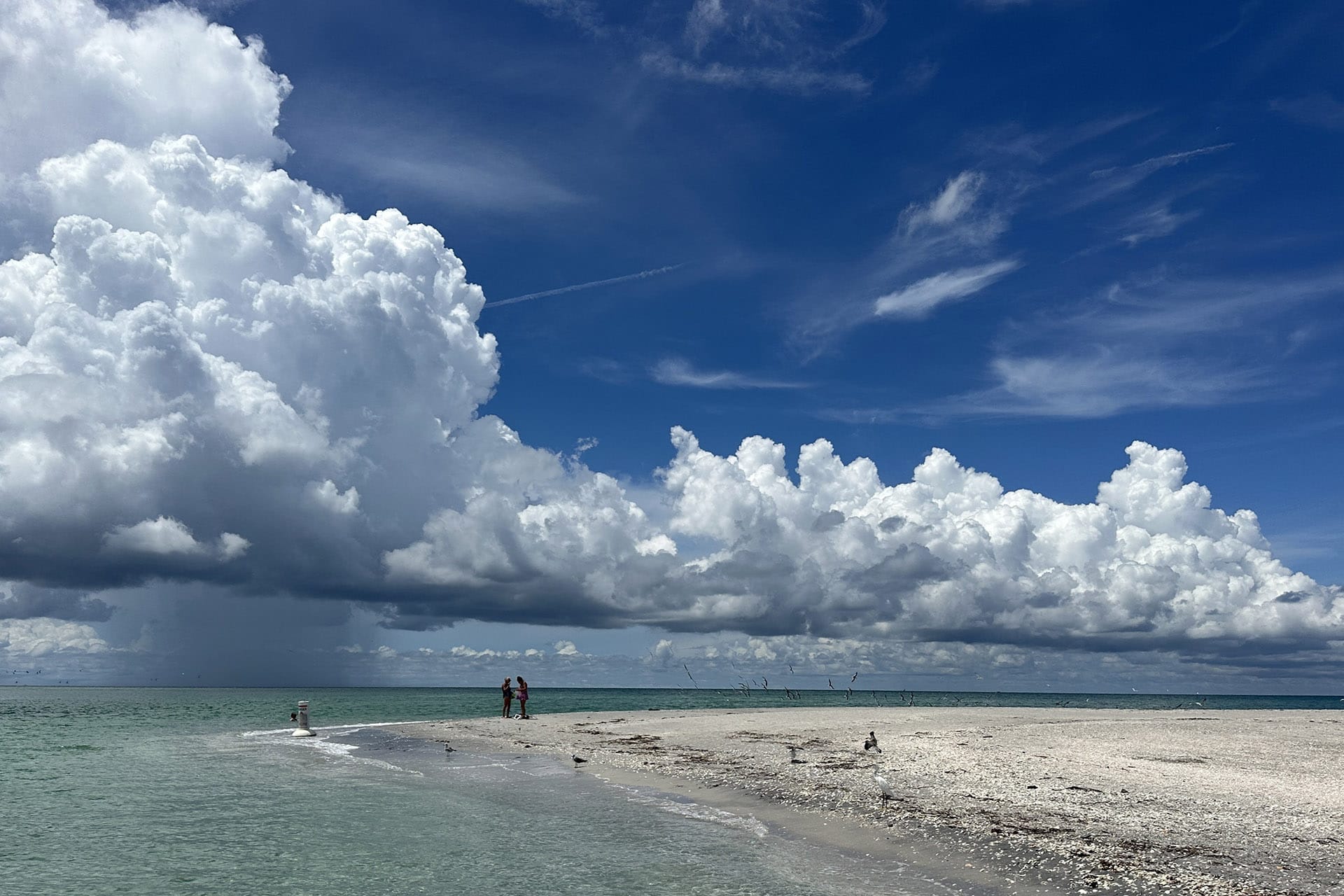
Dramatic storm clouds gather over the Stump Pass Sandbar at the southern end of Manasota Key. This ever-changing sandbar is shaped by tides, currents, and seasonal storms, creating one of Southwest Florida's most scenic boating destinations. Calm weather can quickly give way to passing thunderstorms, making changing skies a familiar part of the coastal landscape.
The southern shoreline of Manasota Key near Stump Pass has changed repeatedly throughout recorded history. Storms can remove large amounts of sand in a short period, while calmer conditions may gradually rebuild beaches and sandbars. These changes are natural features of an active barrier-island system.
Hurricane Milton demonstrated this process dramatically in October 2024 by opening an additional inlet farther north on Manasota Key. Although Milton Pass later filled with sand and closed in May 2026, its formation temporarily changed tidal circulation within Lemon Bay and showed how rapidly new coastal features can emerge.
For visitors on land, Stump Pass Beach State Park offers the best opportunity to observe the inlet and its surrounding landscape. Reaching the southern end requires a substantial walk along the beach or nature trail, but visitors are rewarded with views of shifting sandbars, tidal currents, boats, wildlife, and the meeting point of Lemon Bay and the Gulf.
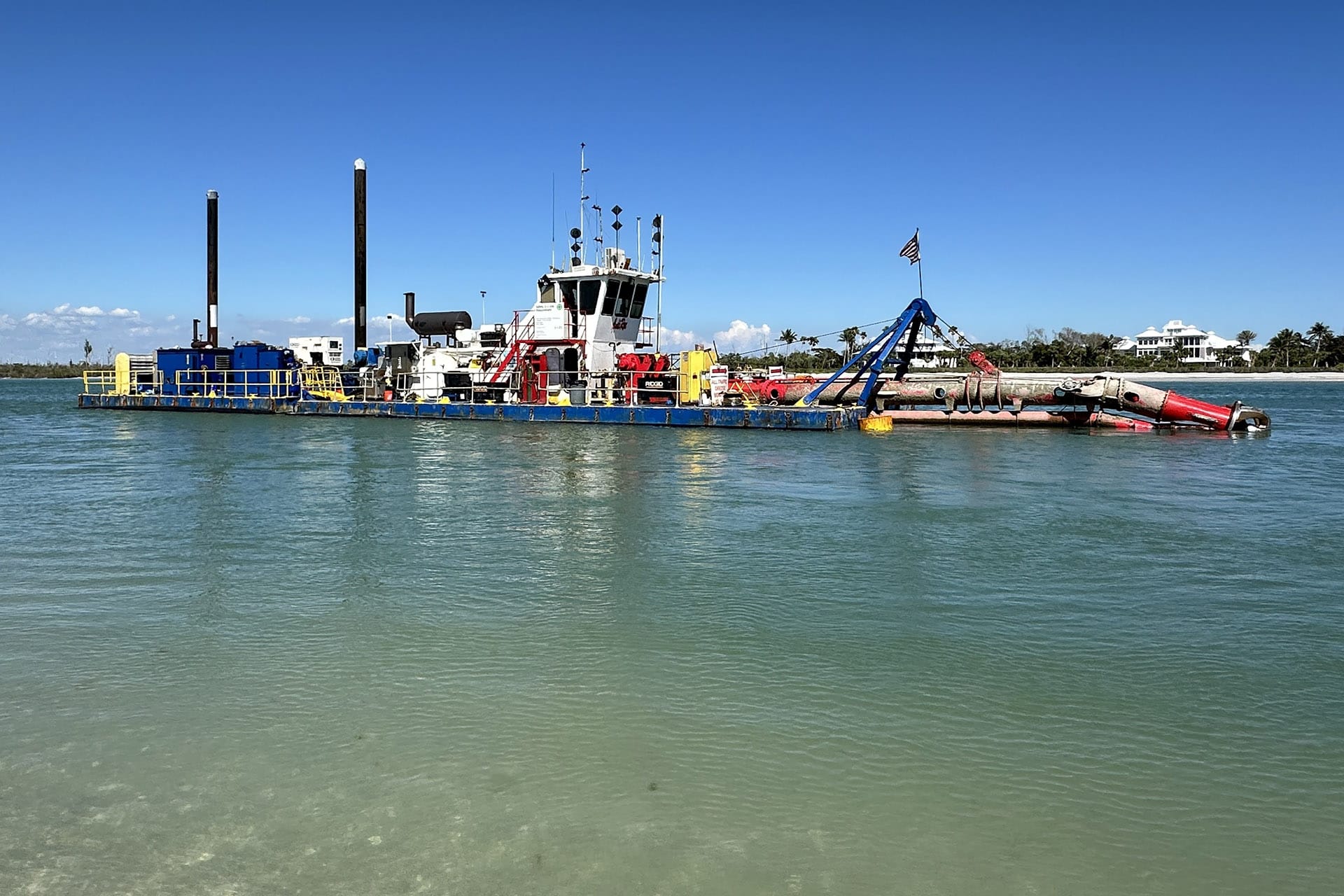
Dredging operations at Stump Pass following Hurricane Milton. Heavy equipment worked to restore navigation through the inlet after the storm dramatically reshaped the coastline, moving large volumes of sand and creating the temporary Milton Pass. Maintaining safe access through this area is essential for recreational boaters, local residents, and emergency response vessels navigating between Lemon Bay and the Gulf of Mexico.
For boaters, Stump Pass provides valuable Gulf access but requires caution and sound judgment. Conditions should be evaluated before every passage, even by experienced local operators. When waves, currents, visibility, or water depth appear unsafe, using an alternative route or postponing the passage is the prudent decision.
Stump Pass remains one of the defining natural features of Manasota Key. Its constantly changing channel, surrounding beaches, abundant wildlife, and connection between bay and Gulf make it both an important navigation route and one of Southwest Florida's most fascinating coastal environments.
7. Nature & Wildlife
Manasota Key supports a remarkably diverse coastal ecosystem shaped by the meeting of the Gulf of America, Lemon Bay, tidal passes, mangrove shorelines, sandy beaches, dunes, and shallow seagrass flats. These habitats provide feeding, nesting, shelter, and nursery areas for a wide variety of marine animals, birds, and native plants.
Wildlife can be observed throughout the year, although activity varies with season, tide, water temperature, weather, and time of day. Early mornings and quieter weekday periods often provide the best opportunities for watching animals with less disturbance.
Dolphins
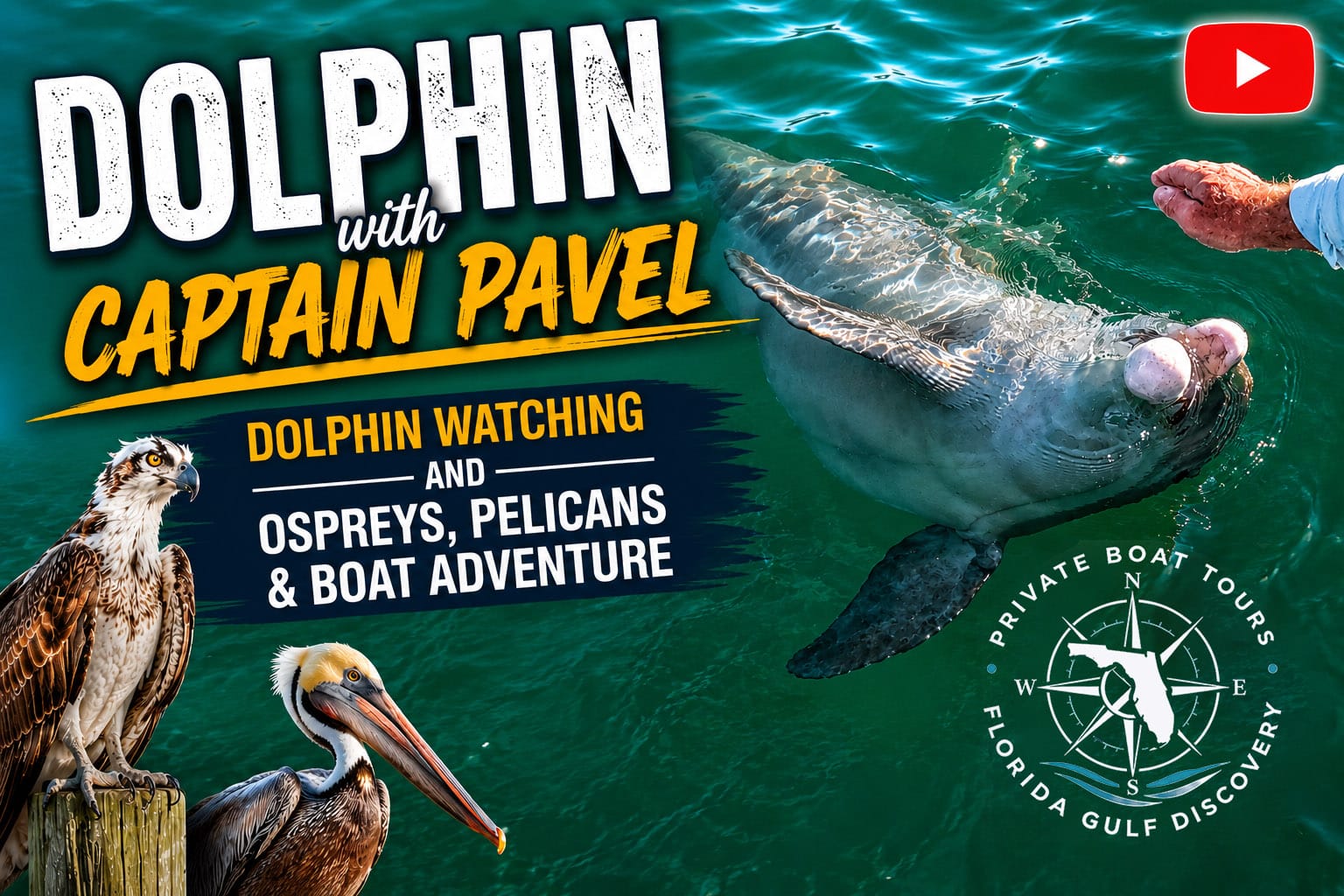
Watch on YouTube: Experience an unforgettable wildlife adventure with Captain Pavel as wild bottlenose dolphins swim alongside the boat while ospreys and brown pelicans soar overhead. Discover the natural beauty and abundant marine life of Southwest Florida's Gulf Coast during a private boating adventure. :contentReference[oaicite:0]{index=0}
Atlantic bottlenose dolphins are commonly seen in the waters surrounding Manasota Key. They frequently travel through Lemon Bay, Stump Pass, nearby channels, and the Gulf shoreline while searching for fish.
Dolphins may appear alone, in pairs, or in small groups. They are often observed near tidal current lines, schools of baitfish, channel edges, bridges, and passes where moving water concentrates prey.
Boaters should maintain a respectful distance and avoid chasing, circling, feeding, or attempting to touch dolphins. Allowing the animals to choose whether they approach helps reduce stress and supports responsible wildlife viewing.
Manatees
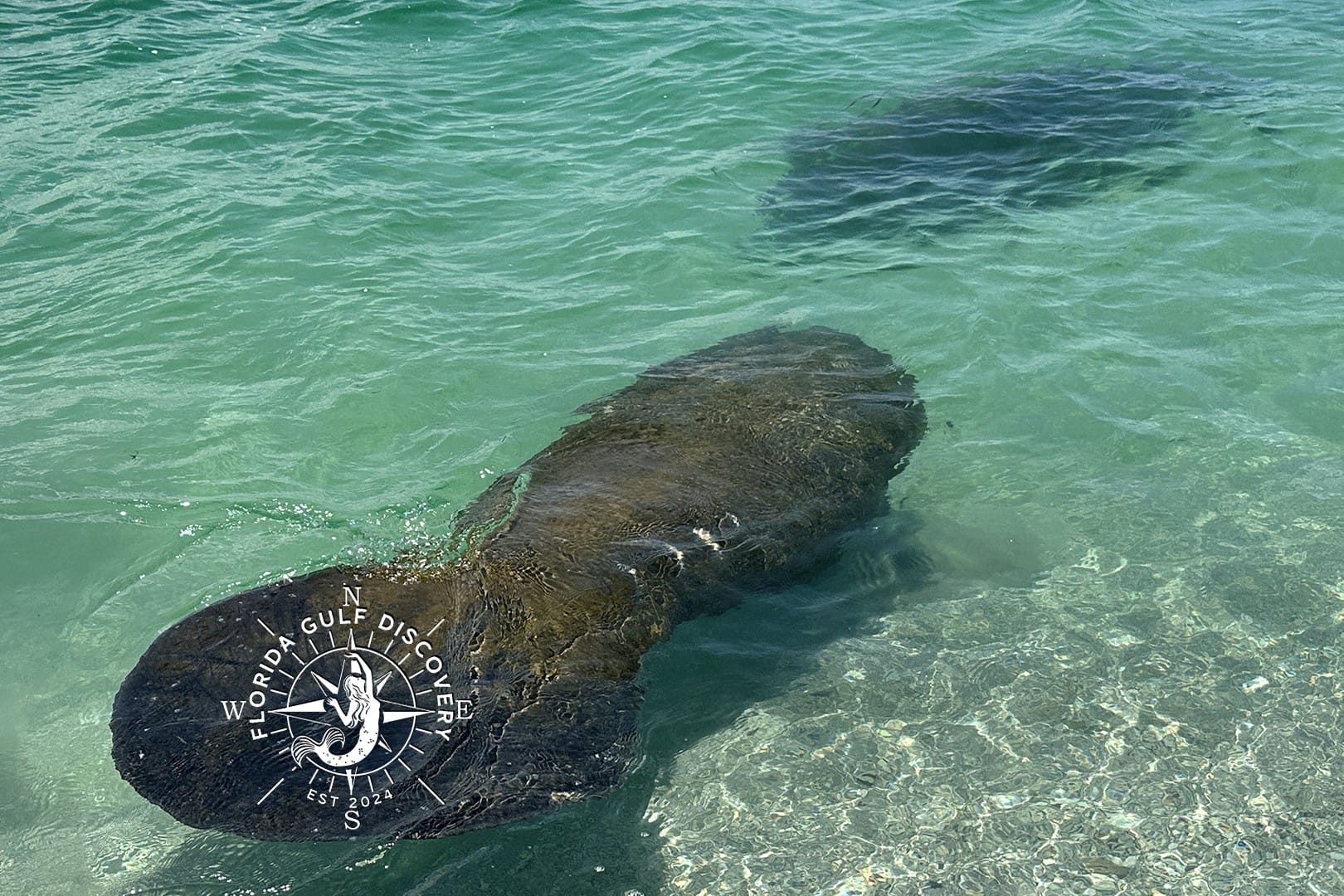
Watch on YouTube: Join Captain Pavel for a remarkable encounter with a wild Florida manatee in the crystal-clear waters near Stump Pass Beach State Park.
West Indian manatees are regularly observed in Lemon Bay and nearby protected waterways, especially during warmer months. These slow-moving marine mammals often travel close to mangrove shorelines, docks, canals, and shallow seagrass areas.
Because manatees frequently remain just below the surface, they can be difficult to see from a moving boat. Boaters should reduce speed in shallow water, watch for circular surface disturbances, visible backs, noses, or paddle-shaped tails, and follow all posted manatee protection zones.
Manatees should never be fed, touched, followed closely, or given freshwater from a hose. Quiet observation from a safe distance is the most responsible approach.
Birds
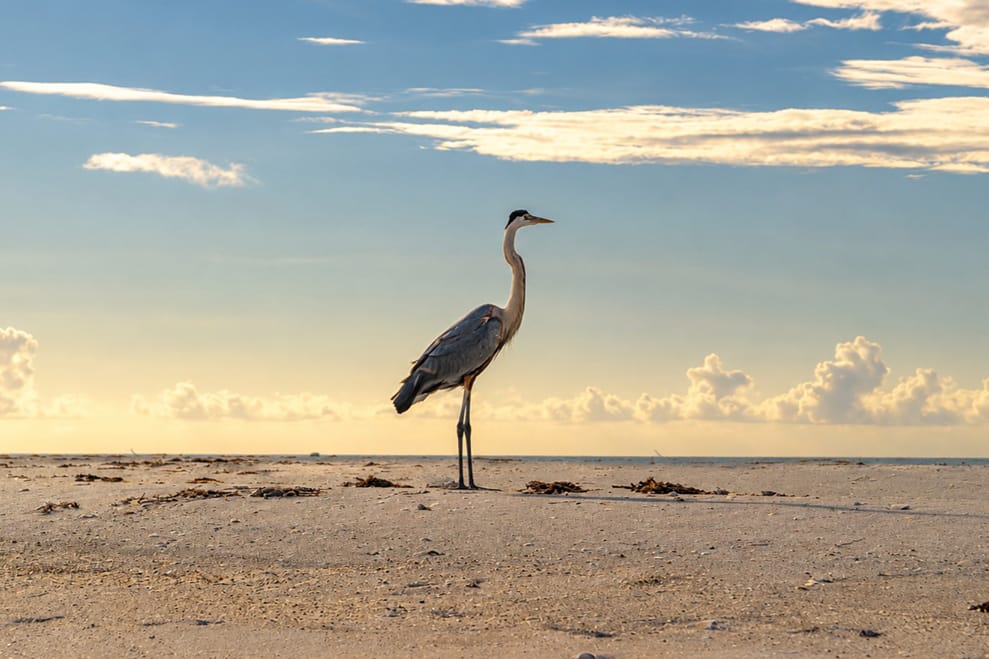
Great Blue Heron standing at sunrise near Stump Pass, one of Southwest Florida's premier wildlife destinations. Click the image to discover our Island Hopping Tours and explore secluded barrier islands, pristine beaches, dolphins, manatees, shelling opportunities, and the remarkable coastal ecosystems that make Florida's Gulf Coast unique.
Manasota Key and Lemon Bay support a large population of coastal and wading birds. Brown pelicans, osprey, great blue herons, great egrets, snowy egrets, ibis, terns, gulls, cormorants, anhingas, and roseate spoonbills may all be seen in the surrounding area.
Mangrove shorelines, exposed sandbars, docks, beaches, and shallow flats provide important feeding and resting areas. Osprey are especially common and can often be seen carrying fish to nests built on platforms, utility poles, navigation structures, and tall trees.
During nesting season, some sections of beach or sandbar may be temporarily closed to protect shorebirds. Visitors should respect signs, fencing, and marked nesting areas, and should keep pets away from wildlife.
Sea Turtles
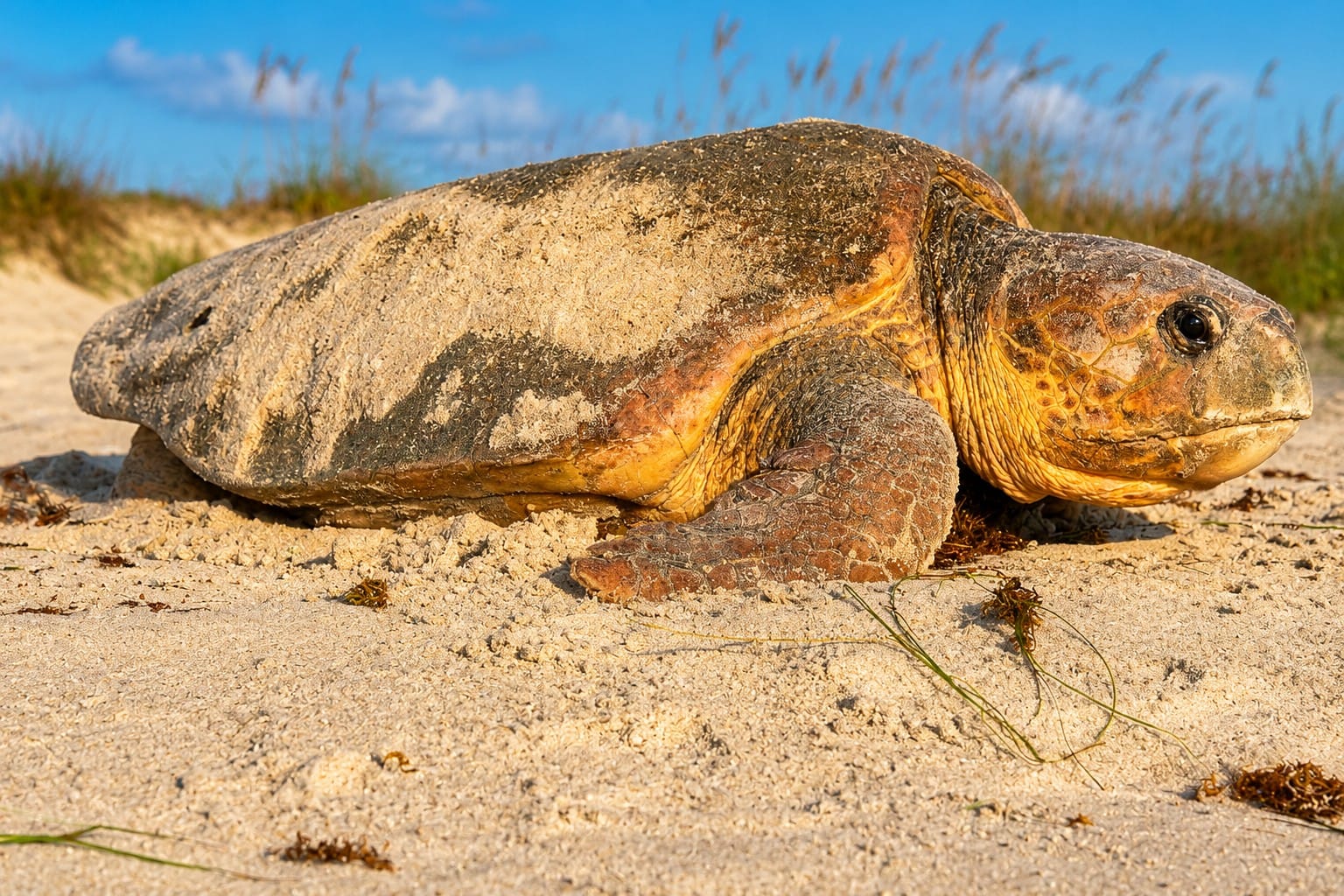
A loggerhead sea turtle emerges onto the sands of Blind Pass Beach on Manasota Key during Florida's nesting season.
Loggerhead sea turtles commonly nest on Manasota Key during the warmer months. Female turtles come ashore at night to dig nests above the high-tide line, where eggs remain buried in the sand for several weeks before hatching.
Artificial lighting can disorient nesting turtles and hatchlings. Residents and visitors should follow local turtle-lighting guidelines, avoid using bright flashlights on the beach at night, fill holes in the sand, remove furniture and equipment, and keep the shoreline clear after sunset.
Marked nests should never be touched or disturbed. Sea turtles are protected, and responsible beach use is essential to maintaining successful nesting habitat.
Shelling & Shark Teeth
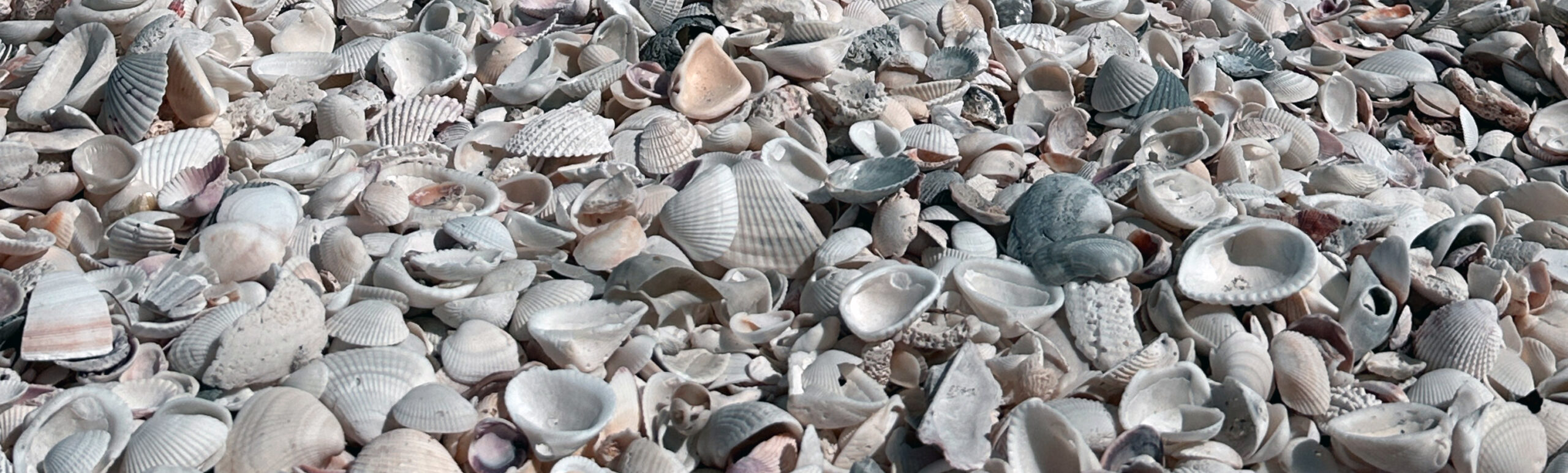
Thousands of seashells blanket the shoreline at Shell Beach near the south end of Stump Pass Beach State Park in Englewood, Florida.
The Gulf beaches of Manasota Key are popular for shelling and fossilized shark tooth hunting. Waves and currents continually deposit shell fragments, small fossils, and darker material along the waterline.
Shark teeth are often found in areas where black or dark gray shell gravel accumulates. Conditions are frequently best after stronger waves, winter cold fronts, high tides, or storms that expose new material.
Visitors may find small fossilized teeth from several prehistoric shark species. Most are dark brown, gray, or black because minerals gradually replaced the original tooth material during fossilization.
Live shells, sand dollars, starfish, and other living marine animals should be left in place. Collecting only empty shells and fossils helps protect the coastal ecosystem.
Marine Life
The waters around Manasota Key support many species of fish, rays, crabs, shrimp, shellfish, and other marine animals. Snook, redfish, mullet, sheepshead, trout, tarpon, and baitfish move through Lemon Bay, tidal channels, passes, and nearshore Gulf waters.
Stingrays are sometimes visible in shallow sandy areas, especially during warmer weather. Visitors entering the water should use a slow shuffling motion with their feet rather than taking large steps, giving nearby rays an opportunity to move away.
Small sharks also inhabit the Gulf and estuarine waters as part of the natural marine ecosystem. Encounters close to swimmers are uncommon, but visitors should always remain aware of changing water conditions and visible marine activity.
Coastal Habitats
Several connected habitats make Manasota Key ecologically important. Gulf beaches provide nesting areas for sea turtles and shorebirds. Dunes support native vegetation and help protect the island from wind and storm-driven waves.
Mangrove forests along Lemon Bay stabilize shorelines, filter water, provide shelter, and support juvenile fish and crustaceans. Seagrass beds offer feeding and nursery habitat for manatees, fish, crabs, shrimp, and many other species.
These habitats are sensitive to trampling, pollution, boat propellers, litter, and shoreline alteration. Visitors can help protect the island by using designated paths, avoiding seagrass damage, removing trash, respecting wildlife closures, and following local boating regulations.
8. Things to Do
Manasota Key offers a wide range of activities for visitors who enjoy beaches, boating, wildlife, photography, outdoor recreation, and the natural character of Southwest Florida. The island can be explored by car, bicycle, kayak, paddleboard, or boat, with each method offering a different perspective.
Relax on the Beach
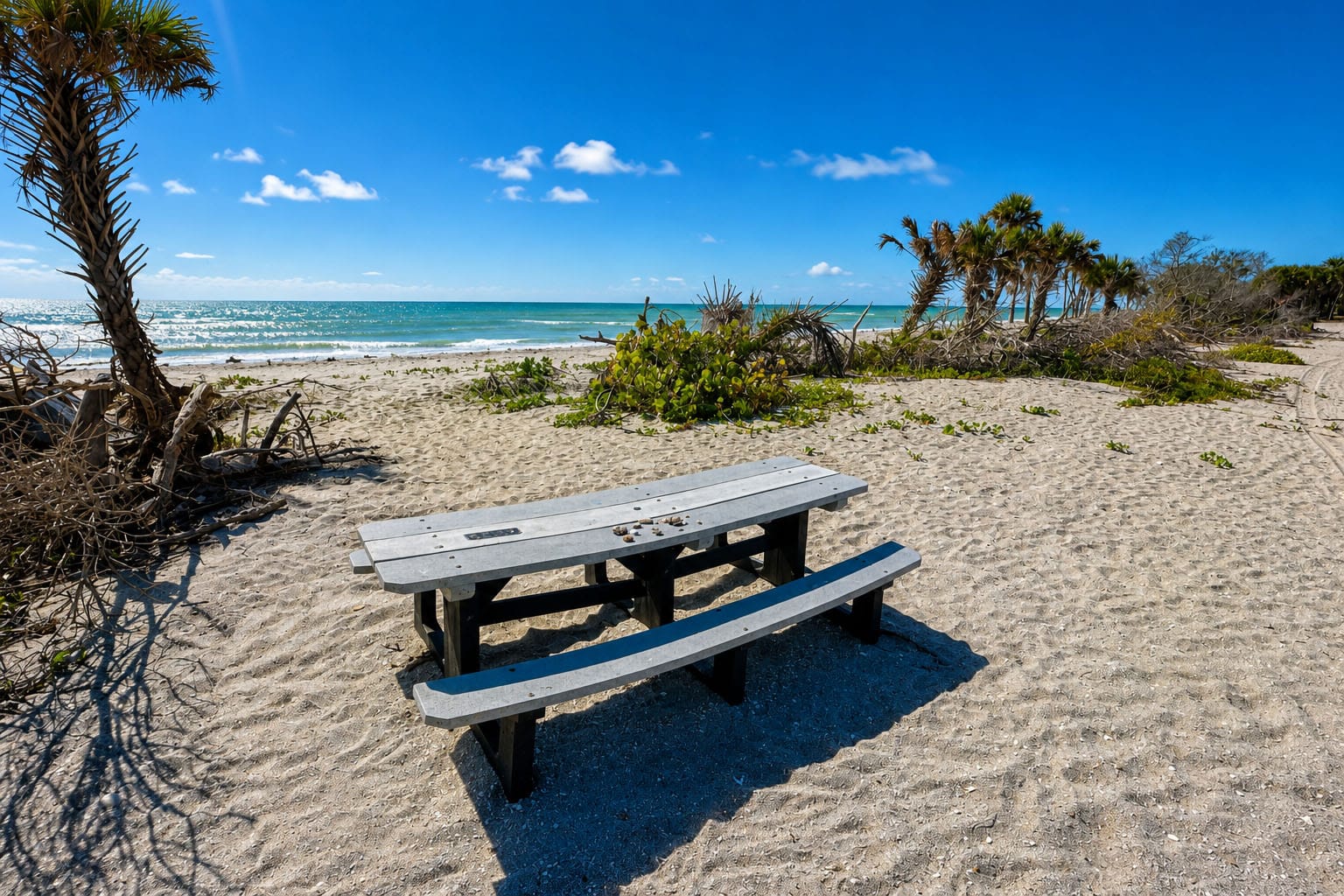
A picnic table overlooks the natural shoreline of Caspersen Beach near Venice, Florida, providing a peaceful place to relax between beach walks and shark tooth hunting.
Spending time on the Gulf shoreline is one of the most popular activities on Manasota Key. Englewood Beach offers convenient access to restaurants and visitor services, while Blind Pass Beach, Manasota Beach, and Stump Pass Beach State Park provide quieter and more natural settings.
Visitors can swim, sunbathe, walk along the shoreline, watch seabirds, photograph changing clouds, and enjoy open views across the Gulf. Beach conditions vary with wind, waves, tides, and storms, so visitors should observe posted warnings and local conditions before entering the water.
Search for Shark Teeth and Seashells
Manasota Key is one of Southwest Florida's best-known locations for finding fossilized shark teeth. Small teeth are frequently discovered among darker shell material near the waterline.
A small scoop or sand sifter can make searching easier, but many visitors find teeth simply by walking slowly and examining exposed shell deposits. Early morning, lower tides, and the period after stronger waves may provide favorable conditions.
Shelling is also popular throughout the island. Empty shells can be collected, but live shells and living marine animals should remain in the water.
Watch Dolphins and Wildlife
Dolphins, manatees, pelicans, osprey, herons, egrets, and other wildlife are commonly observed around Manasota Key and Lemon Bay. Wildlife viewing can be enjoyed from beaches, bridges, parks, kayaks, paddleboards, and boats.
The best encounters usually occur when animals are observed quietly without being followed or disturbed. Binoculars and zoom lenses allow visitors to enjoy wildlife while maintaining a respectful distance.
Visit Stump Pass Beach State Park
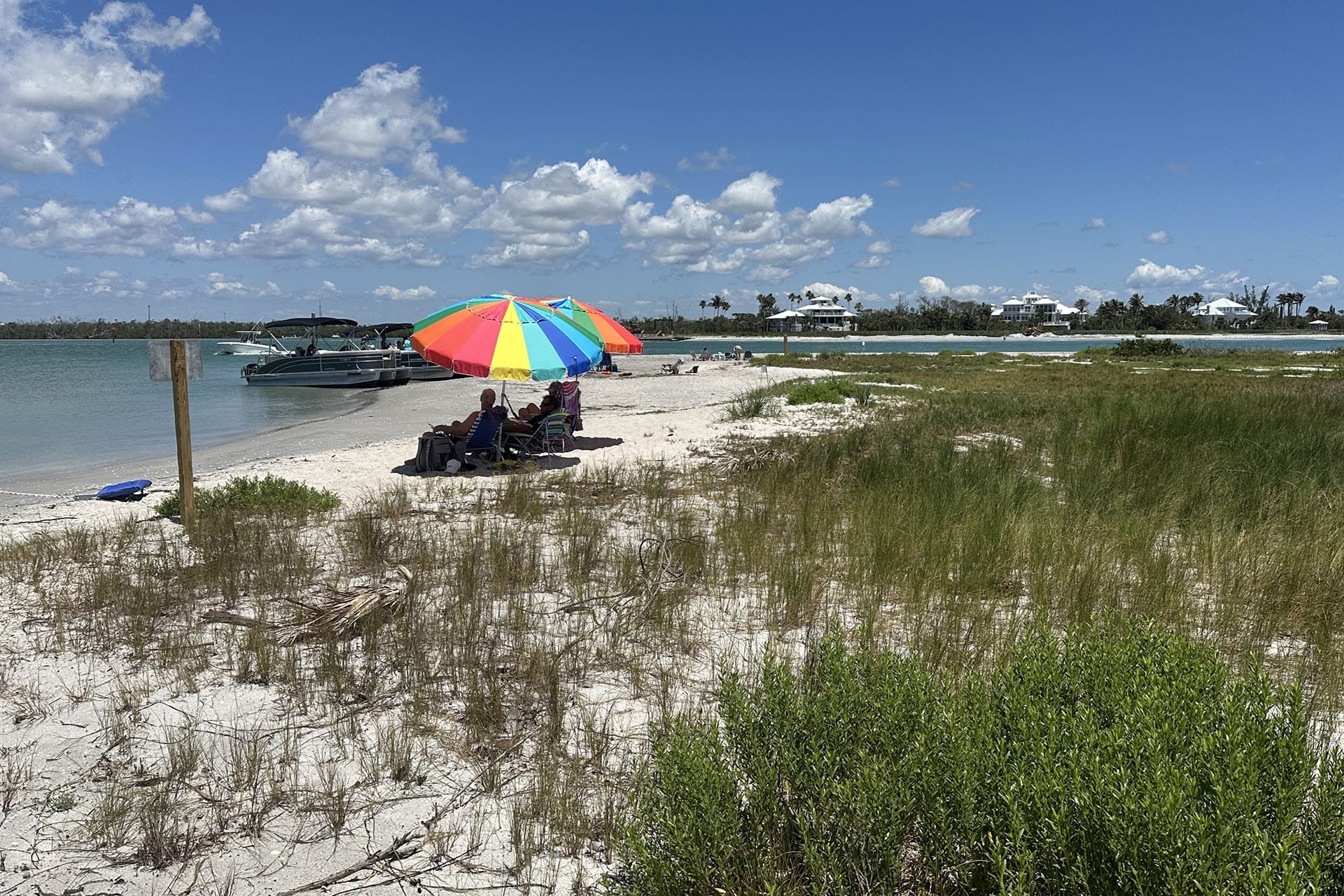
Boaters gather in the calm waters of Ski Alley, a popular anchorage near Stump Pass on the southern end of Manasota Key.
Stump Pass Beach State Park provides one of the best opportunities to experience the natural southern end of Manasota Key. Visitors can walk along the Gulf beach, follow the nature trail, observe native vegetation, search for shells and shark teeth, and continue toward the inlet.
The walk to the southern tip is longer than a typical beach visit, so visitors should bring water, sun protection, suitable footwear, and only the equipment they can comfortably carry.
Explore Lemon Bay
The protected waters of Lemon Bay are well suited for kayaking, paddleboarding, boating, wildlife observation, and photography. Mangrove shorelines, shallow flats, canals, and quiet coves provide a contrast to the open Gulf side of the island.
Paddlers should pay attention to tides, wind, boat traffic, and changing weather. Shallow seagrass areas should be crossed carefully to prevent damage to the bottom habitat.
Enjoy a Private Boat Tour
A private boat tour provides access to Manasota Key, Lemon Bay, Stump Pass, nearby sandbars, hidden beaches, wildlife areas, and surrounding Southwest Florida destinations that are difficult to fully experience from land.
Trips can include dolphin watching, sightseeing, swimming, shelling, island exploration, photography, waterfront dining, and visits to nearby locations such as Boca Grande, Gasparilla Sound, Little Gasparilla Island, and Charlotte Harbor.
Private tours with Captain Pavel depart from Placida and can be customized around guest interests, weather, tides, and current boating conditions. Passenger capacity is limited to six guests in accordance with licensing regulations.
Watch the Sunset
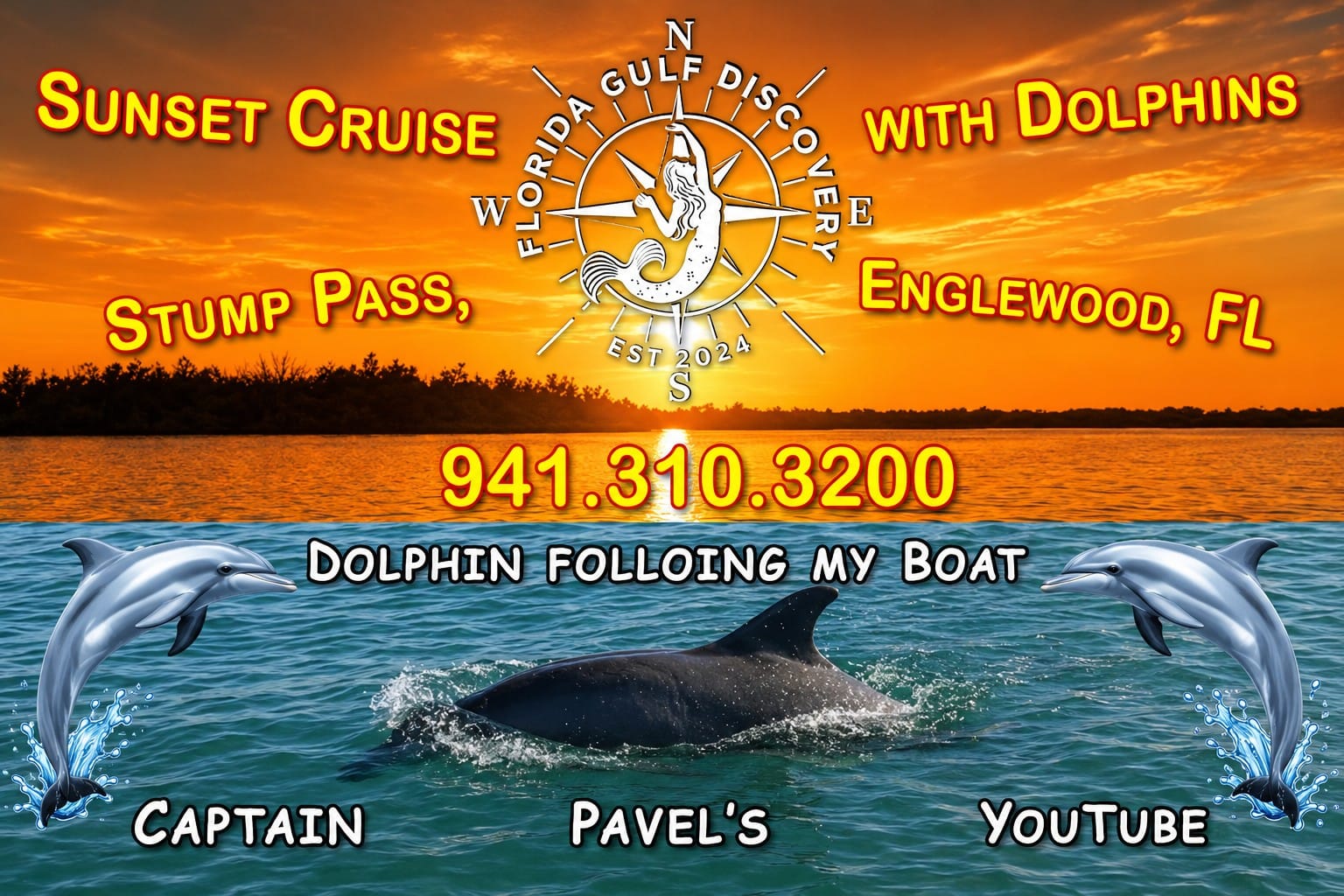
Experience a Private Sunset Cruise in Southwest Florida as playful dolphins swim alongside the boat near Stump Pass. Click the image to discover unforgettable evening cruises featuring spectacular Gulf Coast sunsets, coastal wildlife, peaceful waterways, and memorable moments on the water with Captain Pavel.
Manasota Key's western shoreline offers unobstructed sunset views across the Gulf of America. Englewood Beach, Blind Pass Beach, Manasota Beach, and Stump Pass Beach State Park all provide strong sunset viewing locations.
Clouds, waves, seasonal weather, and changing light create a different scene each evening. Visitors should arrive early enough to find parking and choose a safe location before the sun approaches the horizon.
Dine at a Waterfront Restaurant
The area around Englewood Beach includes several restaurants located close to the Gulf and Lemon Bay. Visitors can combine a beach day, sunset, or boating trip with lunch, dinner, or drinks near the water.
Some restaurants can also be reached by boat from Lemon Bay, depending on dock availability, vessel size, tide, and current operating conditions. Boaters should confirm docking information before arrival.
9. Waterfront Restaurants
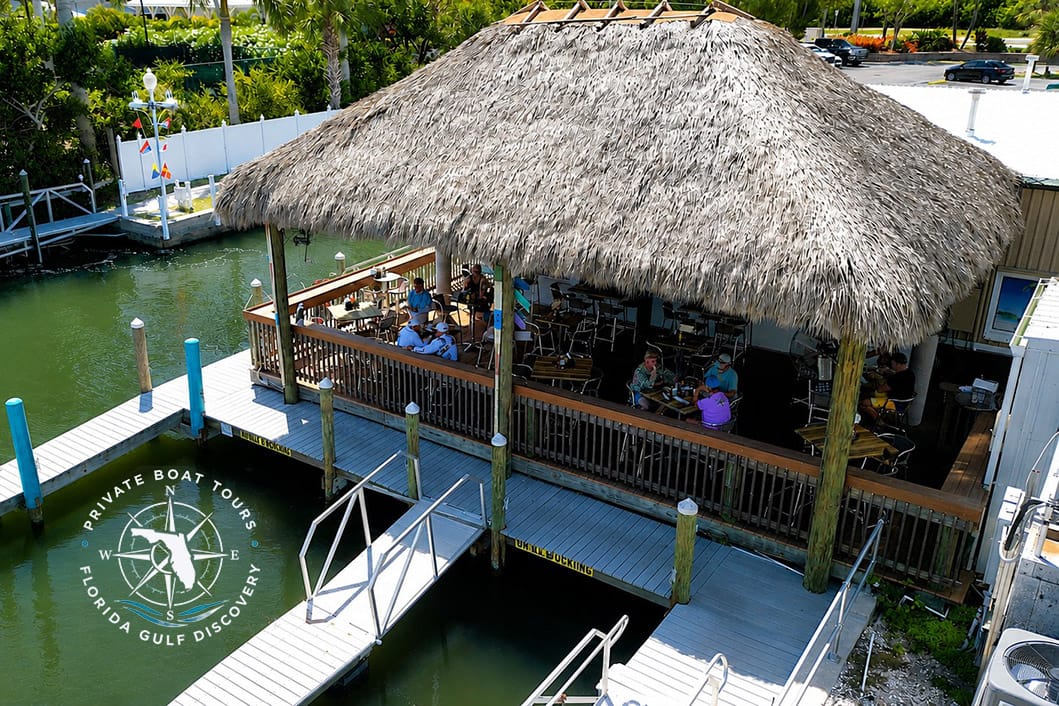
Smokin Jerry's Tiki Hut overlooks the waters of Gasparilla Marina in Placida.
Manasota Key and the surrounding Englewood area offer several waterfront and beachside restaurants where visitors can enjoy lunch, dinner, drinks, and sunset views. Most are concentrated near Englewood Beach and along Beach Road, making them convenient stops before or after a day on the Gulf.
Restaurant hours, dock access, parking availability, and reservation policies can change seasonally. Visitors should confirm current information before traveling, especially during weekends, holidays, and the busy winter tourism season.
SandBar Tiki & Grille
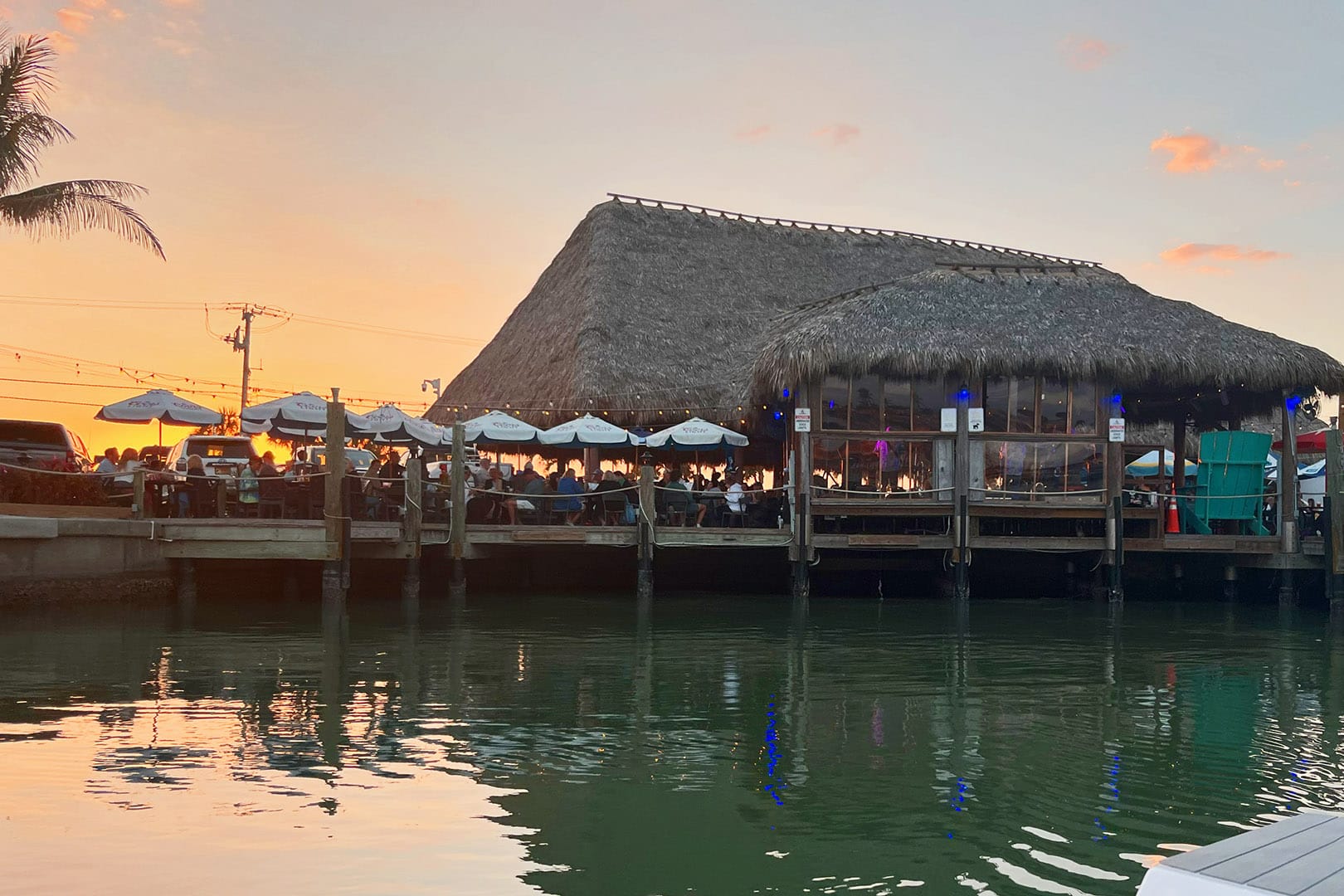
A spectacular sunset settles over Lemon Bay from SandBar Tiki & Grille on Manasota Key. Located directly across from Englewood Beach.
SandBar Tiki & Grille is located near Englewood Beach and overlooks the protected waters of Lemon Bay. Its open-air atmosphere, waterfront setting, live entertainment, and casual menu make it a popular gathering place for beach visitors, local residents, and boaters.
The restaurant's location between the Gulf shoreline and Lemon Bay reflects the distinctive geography of Manasota Key. Guests can spend part of the day at Englewood Beach and then walk or drive a short distance for food and drinks beside the bay.
Because SandBar can become busy during evenings, weekends, holidays, and special events, arriving early may reduce waiting time.
White Elephant Pub
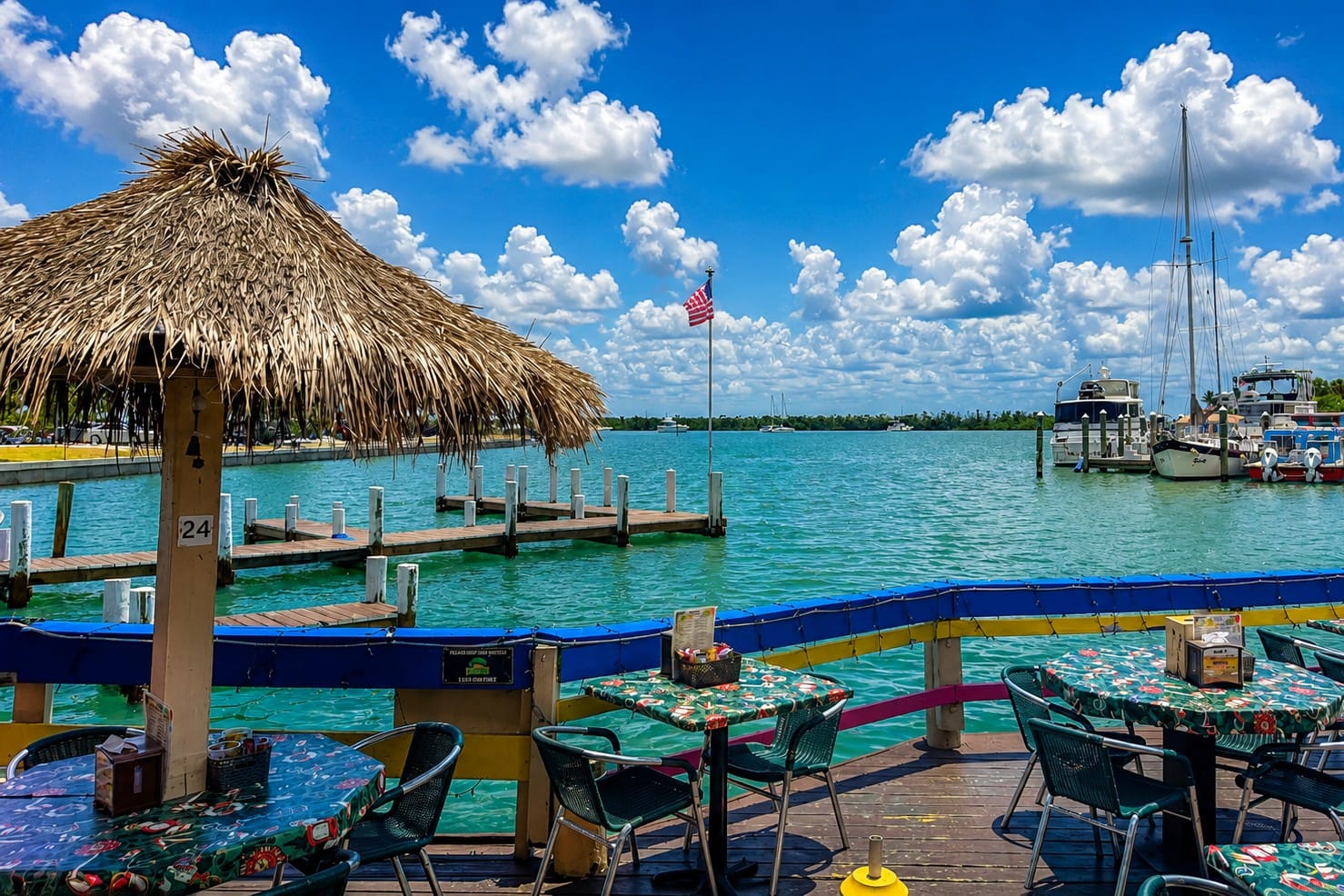
White Elephant Pub overlooks the peaceful waters of Lemon Bay on Manasota Key, making it a favorite waterfront destination for both boaters and beachgoers.
White Elephant Pub is a casual waterfront restaurant located near Englewood Beach. It is known for its informal atmosphere, views of the surrounding water, live music, and convenient location within the island's main visitor area.
The restaurant is a common stop for visitors looking for a casual meal after swimming, shelling, boating, or spending the afternoon on the beach. Outdoor seating and sunset-hour activity contribute to its relaxed Southwest Florida character.
Magnolias on the Bay
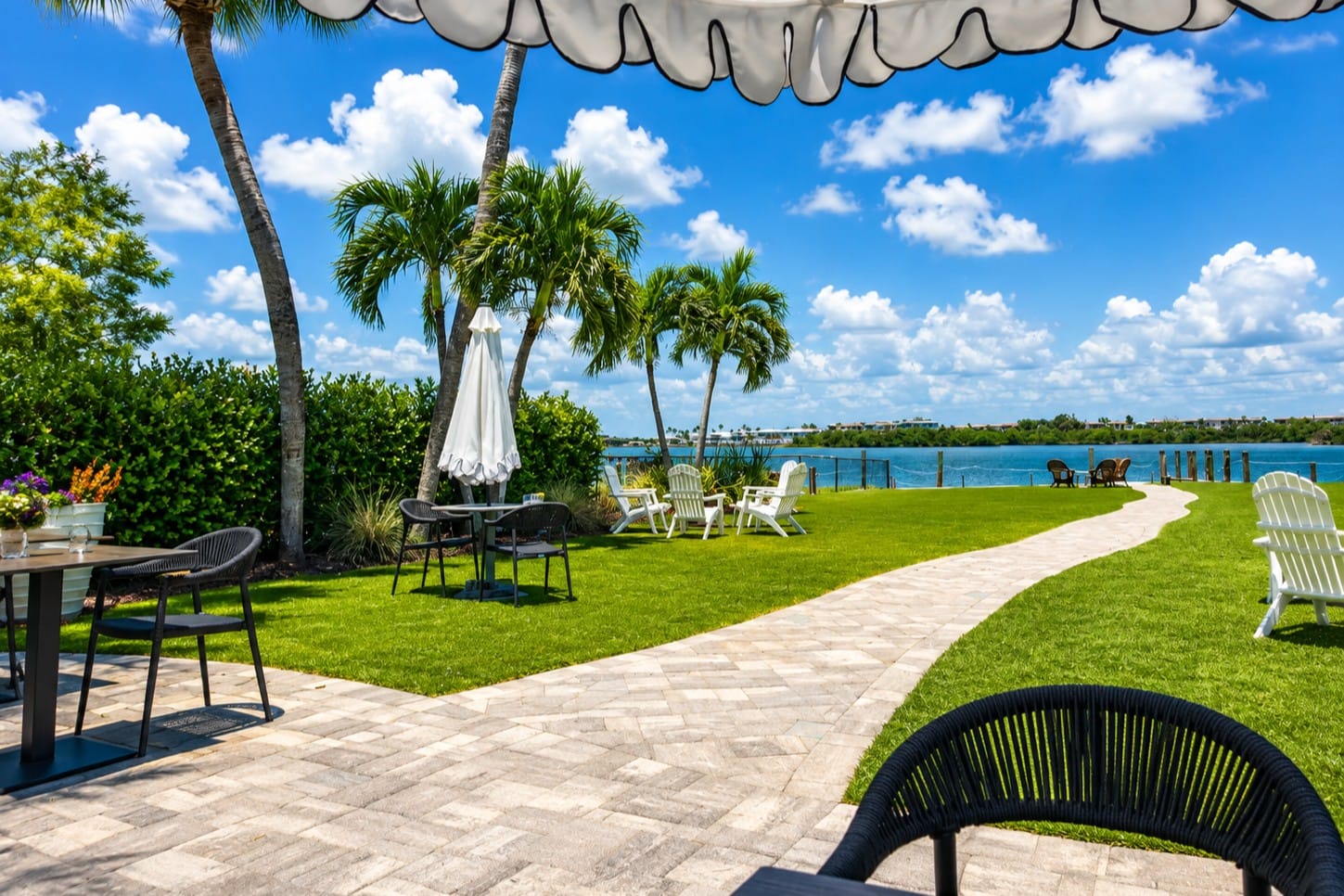
Magnolias on the Bay overlooks the peaceful waters of Lemon Bay on Manasota Key.
Magnolias on the Bay offers waterfront dining along Lemon Bay on the eastern side of Manasota Key. The setting provides views across the protected estuary rather than the open Gulf, creating a quieter atmosphere for lunch or dinner.
The restaurant's bayfront location makes it a suitable choice for visitors who want to combine dining with views of boats, mangrove shorelines, and the calm waters between Manasota Key and the mainland.
Dining by Boat

Arrive in style on a Private Waterfront Dining Cruise with Captain Pavel. Cruise scenic bays, barrier islands, and wildlife-rich waterways before docking at one of Southwest Florida's favorite waterfront restaurants.
Some waterfront restaurants around Lemon Bay and Englewood can be reached by boat, depending on dock availability, water depth, tide, vessel size, and current operating conditions. Arriving by water allows visitors to combine sightseeing, wildlife observation, and coastal dining within the same trip.
Boaters should confirm docking arrangements before arrival and approach restaurant docks slowly. Wind, current, shallow water, and boat traffic can make docking more difficult during busy periods.
A private boat tour with Captain Pavel can include a waterfront dining stop when time, weather, dock space, and guest preferences allow. Restaurant visits can be combined with dolphin watching, sightseeing, swimming, shelling, sandbars, and exploration of nearby coastal destinations.
10. Plan Your Visit
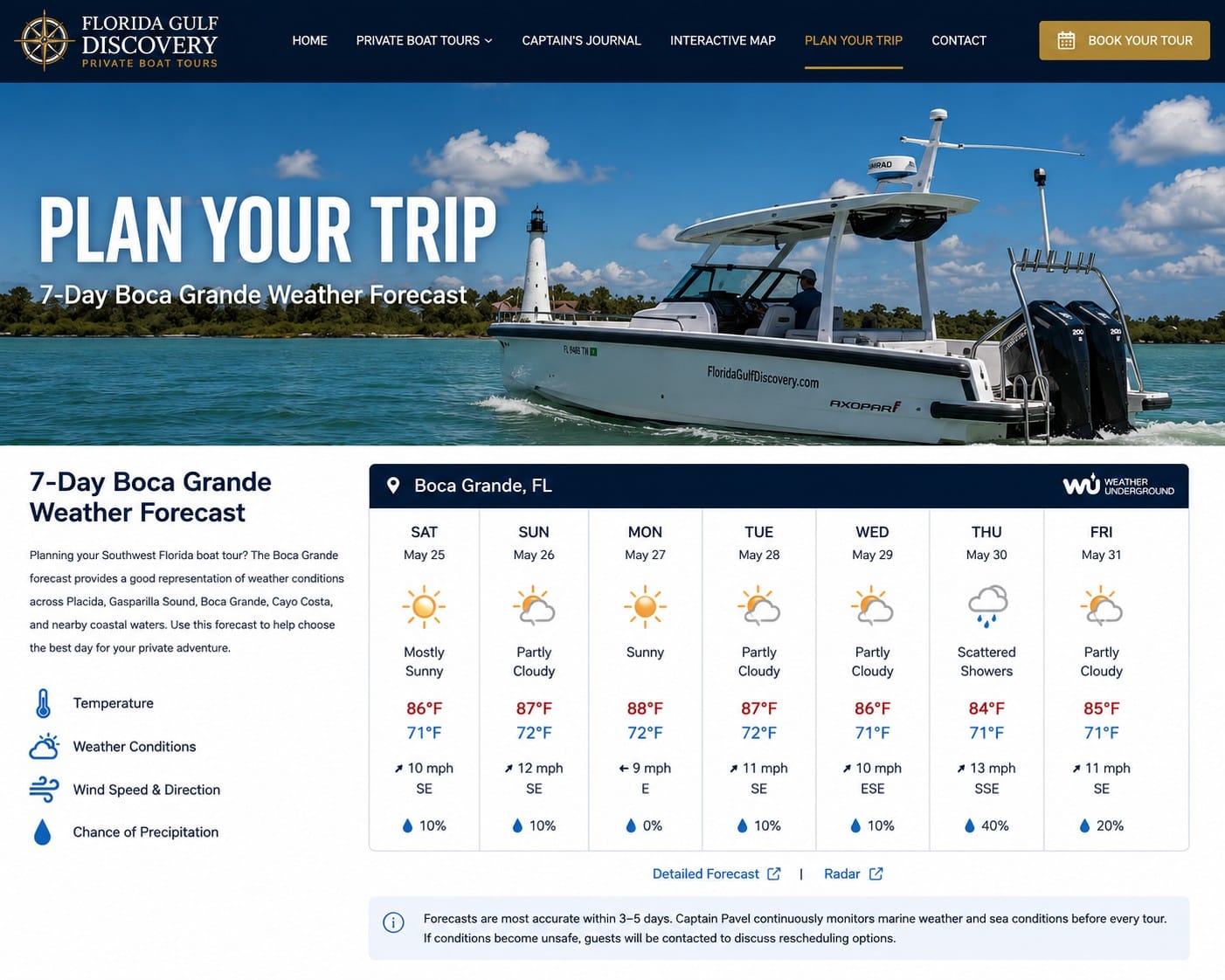
Boca Grande Weather Forecast helps boaters and visitors plan safe days on the water along Florida's Gulf Coast. Click the image to view the latest forecast, including wind, temperature, tides, and marine conditions before exploring Boca Grande, Gasparilla Sound, Cayo Costa, and the surrounding waters of Southwest Florida.
Manasota Key can be visited throughout the year, but the experience changes with the season, weather, tides, water temperature, and visitor activity. Planning around these conditions can make a beach day, boating trip, or wildlife excursion more comfortable and enjoyable.
Best Time to Visit
Late fall through spring generally brings cooler temperatures, lower humidity, and less frequent afternoon rainfall. This is also the busiest tourism period, particularly between January and April, when parking areas, restaurants, and public beaches may become crowded.
Summer offers warmer Gulf water, longer daylight hours, and fewer seasonal visitors. However, heat, humidity, thunderstorms, and rapidly changing weather are more common. Morning activities are often preferable before temperatures rise and afternoon storms develop.
Hurricane season officially extends from June through November. Visitors traveling during this period should monitor weather forecasts and understand that storms can affect beach access, water clarity, boating conditions, and local operations.
Parking and Beach Access
Watch on YouTube: Learn everything you need to know about Englewood Beach parking, public beach access, boat launching, nearby amenities, and local tips before visiting one of Southwest Florida's most popular Gulf Coast beaches.
Public beach access is available at Englewood Beach, Blind Pass Beach, Manasota Beach, and Stump Pass Beach State Park. Parking capacity varies by location, and the most popular areas can fill early during weekends, holidays, special events, and the winter season.
Arriving earlier in the day generally provides better parking availability and a quieter beach experience. Visitors should use designated parking areas and avoid blocking residential roads, driveways, emergency access points, or private property.
What to Bring
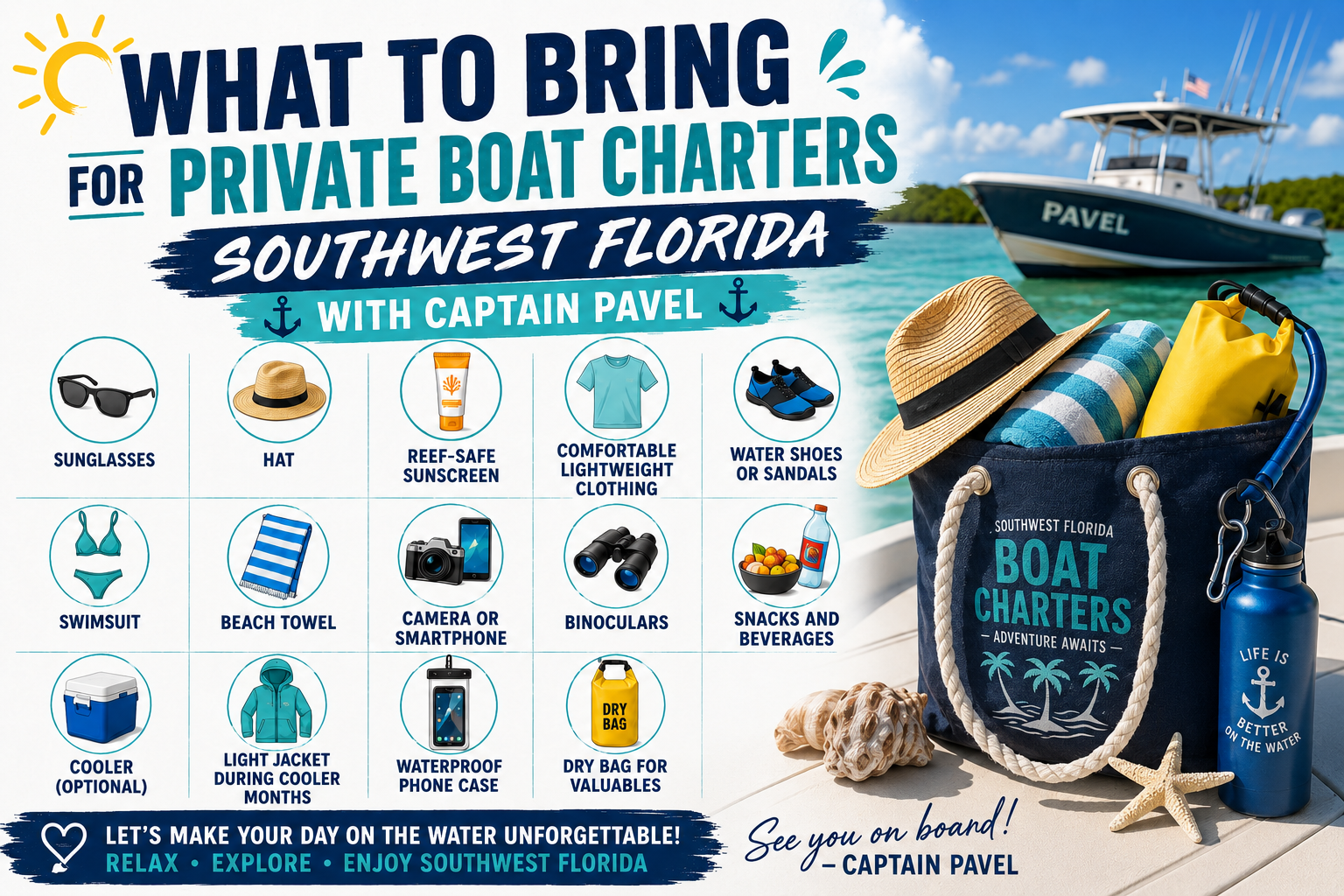
Preparing for a Private Boat Tour is simple. Bringing a few essentials—including sunscreen, sunglasses, a hat, swimsuit, towel, comfortable clothing, water, snacks, and a camera—will help you enjoy a safe and relaxing day exploring Southwest Florida's barrier islands, sandbars, hidden beaches, and coastal waterways with Captain Pavel. :contentReference[oaicite:0]{index=0}
Recommended items include drinking water, sunscreen, a hat, sunglasses, towels, comfortable footwear, insect repellent, and weather-appropriate clothing. Visitors planning longer walks at Stump Pass Beach State Park should carry only what they can comfortably transport.
A small shell bag or sand sifter can be useful for searching for fossilized shark teeth. Binoculars and a camera with a zoom lens are helpful for observing birds, dolphins, manatees, and other wildlife without approaching too closely.
Swimming and Beach Safety
Gulf conditions can change quickly. Wind, waves, currents, tides, storms, and nearby inlets may influence swimming conditions along Manasota Key. Visitors should observe posted warnings, remain aware of weather changes, and avoid entering rough water when conditions appear unsafe.
Stingrays may rest in shallow sandy areas, especially during warmer months. Shuffling the feet while entering the water can alert nearby rays and give them time to move away.
Children should remain under close supervision around the Gulf, Lemon Bay, docks, bridges, tidal channels, and passes. Flotation devices should be appropriate for the activity and properly fitted.
Protecting the Island
Manasota Key's beaches, dunes, mangroves, seagrass beds, and wildlife habitats are environmentally sensitive. Visitors should use marked paths, remain off protected dunes, avoid disturbing nesting areas, and remove all trash.
Live shells, sand dollars, starfish, and other living marine animals should remain in their natural habitat. Wildlife should never be fed, touched, chased, or surrounded.
Boaters should avoid damaging seagrass with propellers or anchors, follow posted speed zones, and operate cautiously near dolphins, manatees, paddlers, swimmers, and shallow-water habitats.
Explore Manasota Key by Boat
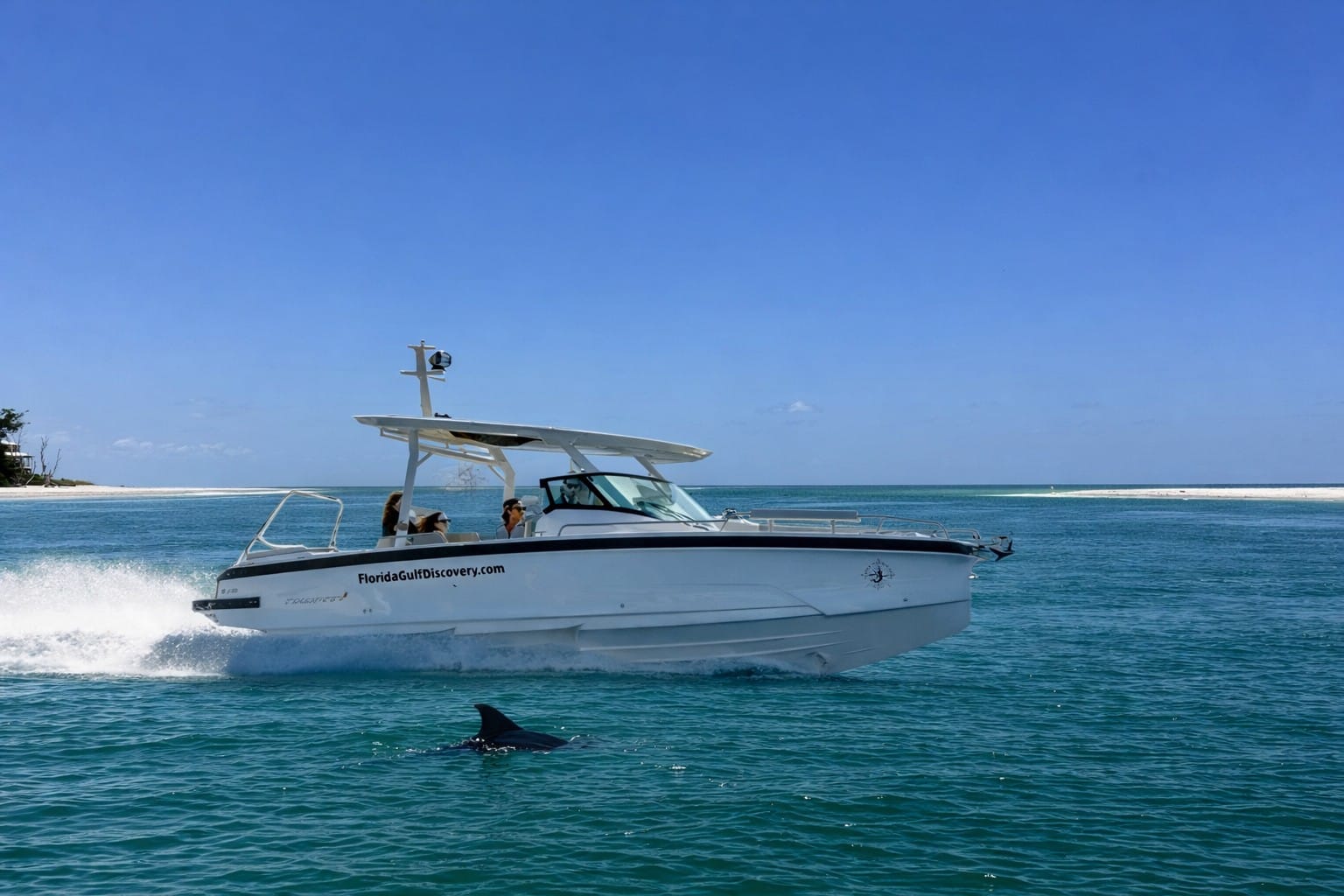
A bottlenose dolphin swims alongside a Private Boat Tour near Stump Pass, one of Southwest Florida's premier wildlife viewing areas. Encounters like this are among the highlights of exploring Lemon Bay, Manasota Key, and the surrounding coastal waters, where dolphins, manatees, ospreys, pelicans, and other native wildlife are frequently observed in their natural habitat. :contentReference[oaicite:0]{index=0}
Although Manasota Key is easily explored from land, a private boat tour provides a broader view of the island and the surrounding Southwest Florida coast. From the water, guests can experience Lemon Bay, Stump Pass, mangrove shorelines, waterfront communities, wildlife areas, nearby sandbars, and secluded beaches that are difficult to reach by car.
Captain Pavel's private tours depart from Placida, Florida, and can be customized around guest interests, weather, tides, and current boating conditions. Possible activities include dolphin watching, sightseeing, swimming, shelling, island exploration, photography, sunset cruising, and waterfront dining.
Depending on the length of the trip, tours may also include nearby destinations such as Little Gasparilla Island, Boca Grande, Gasparilla Sound, Charlotte Harbor, Cayo Costa, and other coastal locations throughout Southwest Florida.
Every trip is private, allowing guests to enjoy the day at their own pace rather than following a fixed group itinerary. Per licensing regulations, capacity is limited to six passengers.
Whether you visit for the beaches, wildlife, boating, shark teeth, sunsets, or quiet coastal atmosphere, Manasota Key offers one of Southwest Florida's most complete barrier-island experiences.
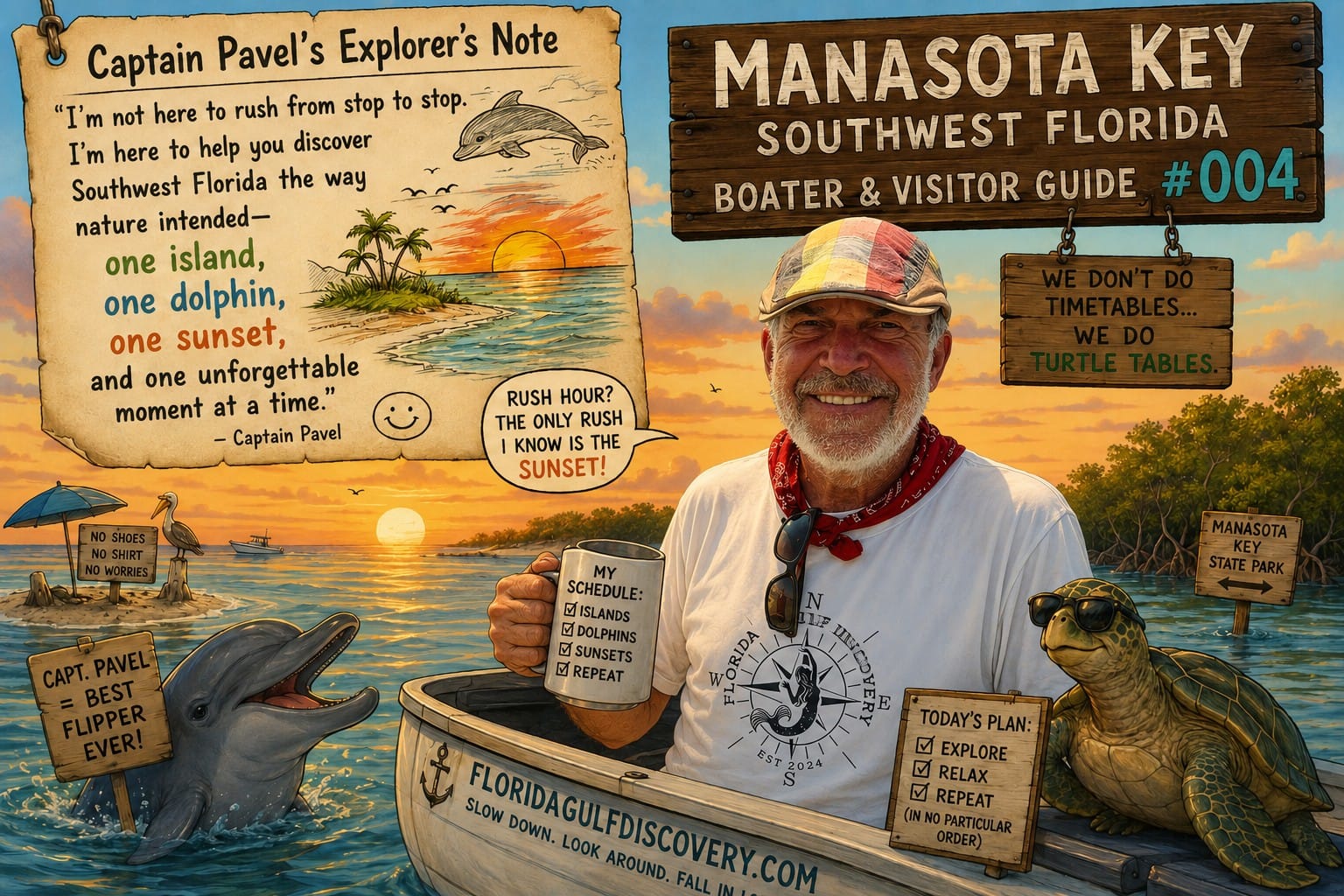
11. Captain Pavel's Note
Captain Pavel's Explorer's Note
“I'm not here to rush from stop to stop. I'm here to help you discover Southwest Florida the way nature intended— one island, one dolphin, one sunset, and one unforgettable moment at a time.”
— Captain Pavel Florida Gulf Discovery LLC
Explore Manasota Key with Captain Pavel
Discover Lemon Bay, Stump Pass, wildlife, hidden beaches, sandbars, and nearby Southwest Florida islands on a private boat tour departing from Placida.
Book Your Explore My Private Boat ToursPrivate tours • Up to 6 guests • Departing from Placida, Florida