Guide Contents
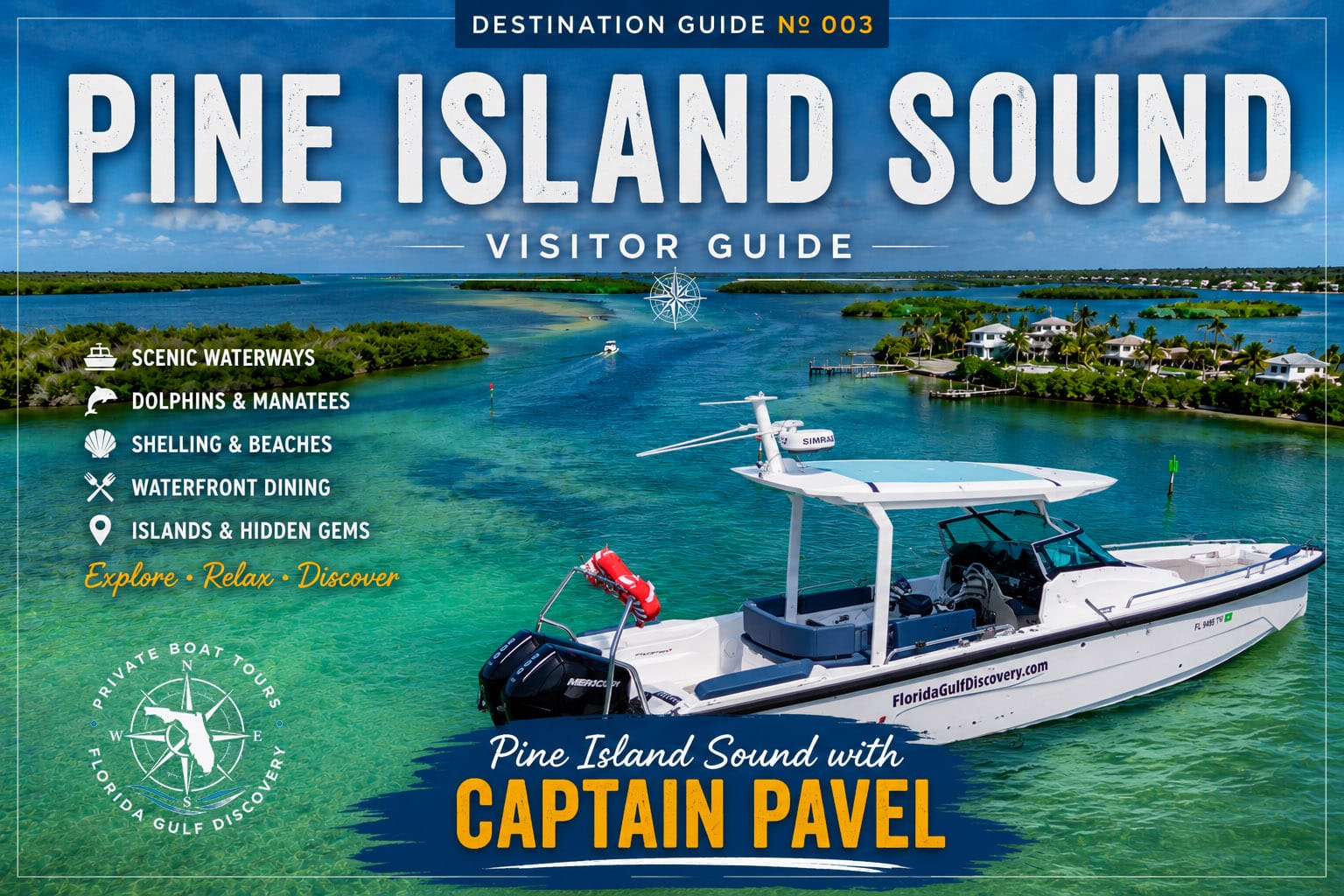
Use this guide to explore Pine Island Sound, one of Southwest Florida's largest and most ecologically important estuaries—from its geography and early history to its wildlife, island destinations, boating opportunities, and navigation.
2. Introduction
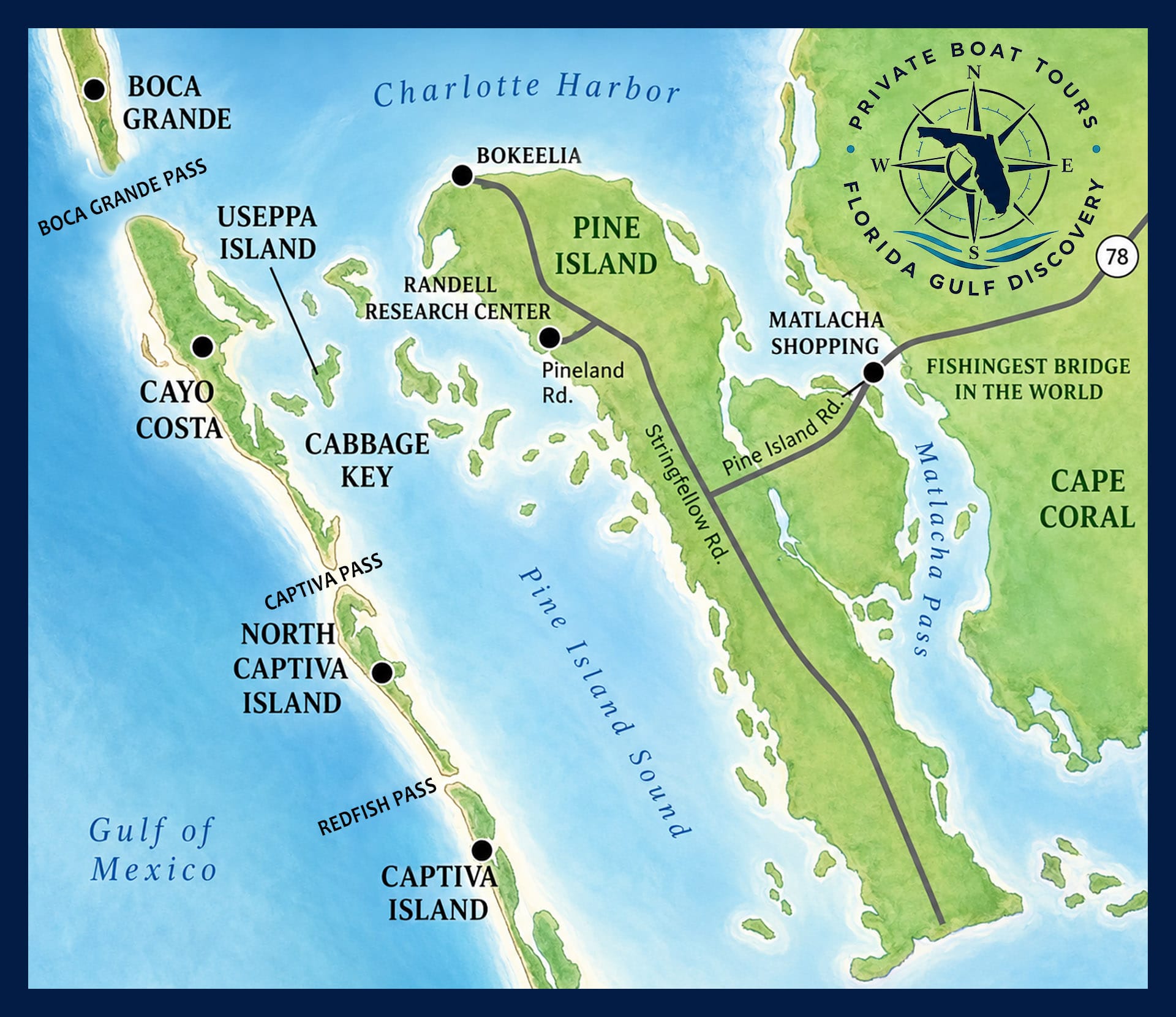
Pine Island Sound is one of the largest and most ecologically important estuaries along Florida's Gulf Coast. Stretching between Pine Island and a chain of barrier islands that includes Cayo Costa, North Captiva, Captiva, and Sanibel, the Sound forms a vast network of protected coastal waters renowned for their natural beauty, abundant wildlife, and exceptional boating opportunities.
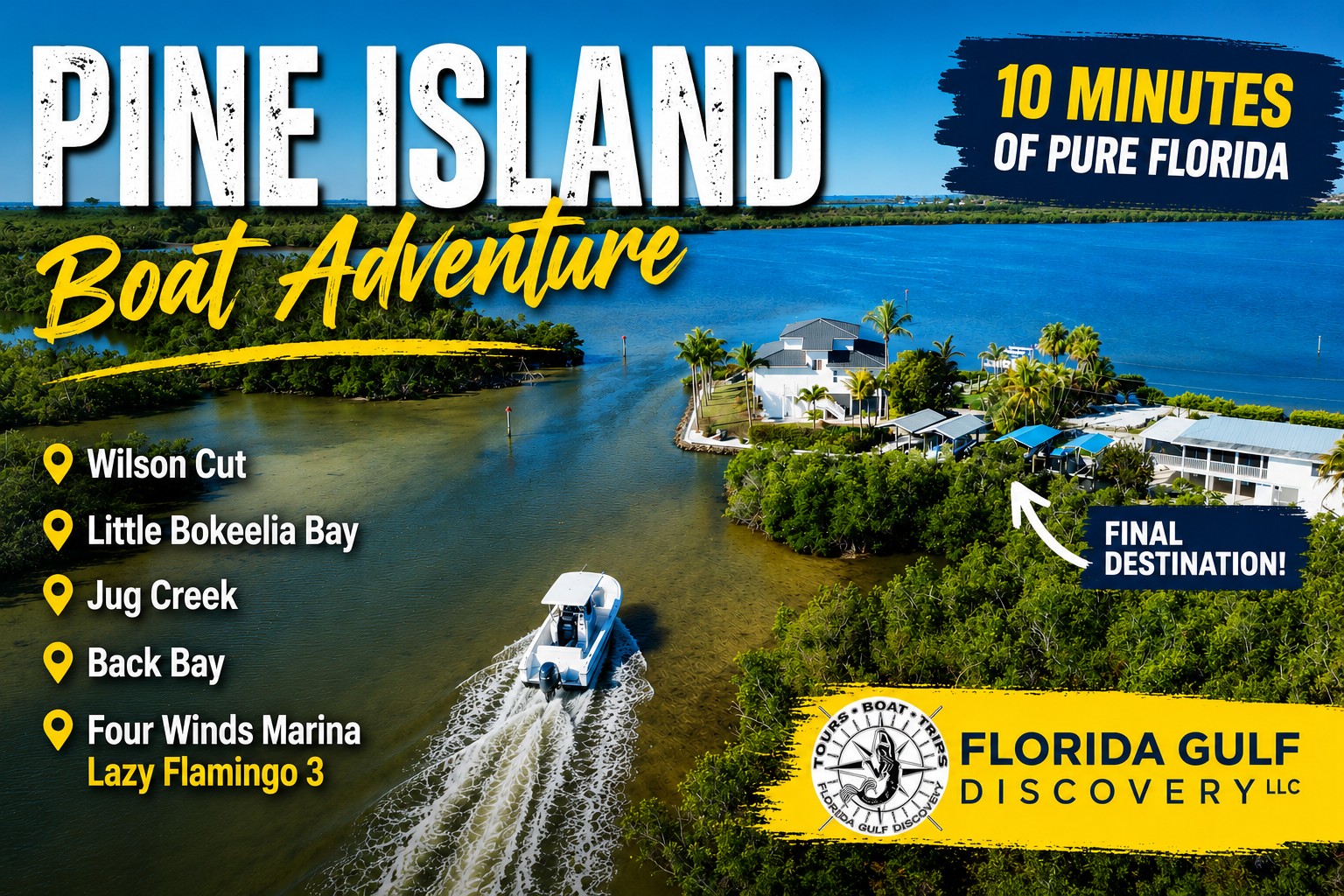
Watch on YouTube: Explore Pine Island Sound from the air.
Unlike many bays that open directly to the Gulf of America, Pine Island Sound is sheltered by barrier islands that reduce wave action while allowing tides to circulate through several natural passes. This unique geography creates calm waters, extensive seagrass meadows, thriving mangrove forests, and productive estuarine habitats that support dolphins, manatees, fish, shorebirds, and many other marine species.
For centuries, these waters have sustained life. The Calusa people established thriving communities along its shores long before Spanish explorers arrived, followed by commercial fishermen, pioneer settlers, and generations of boaters who came to appreciate the Sound's scenery and rich natural resources.
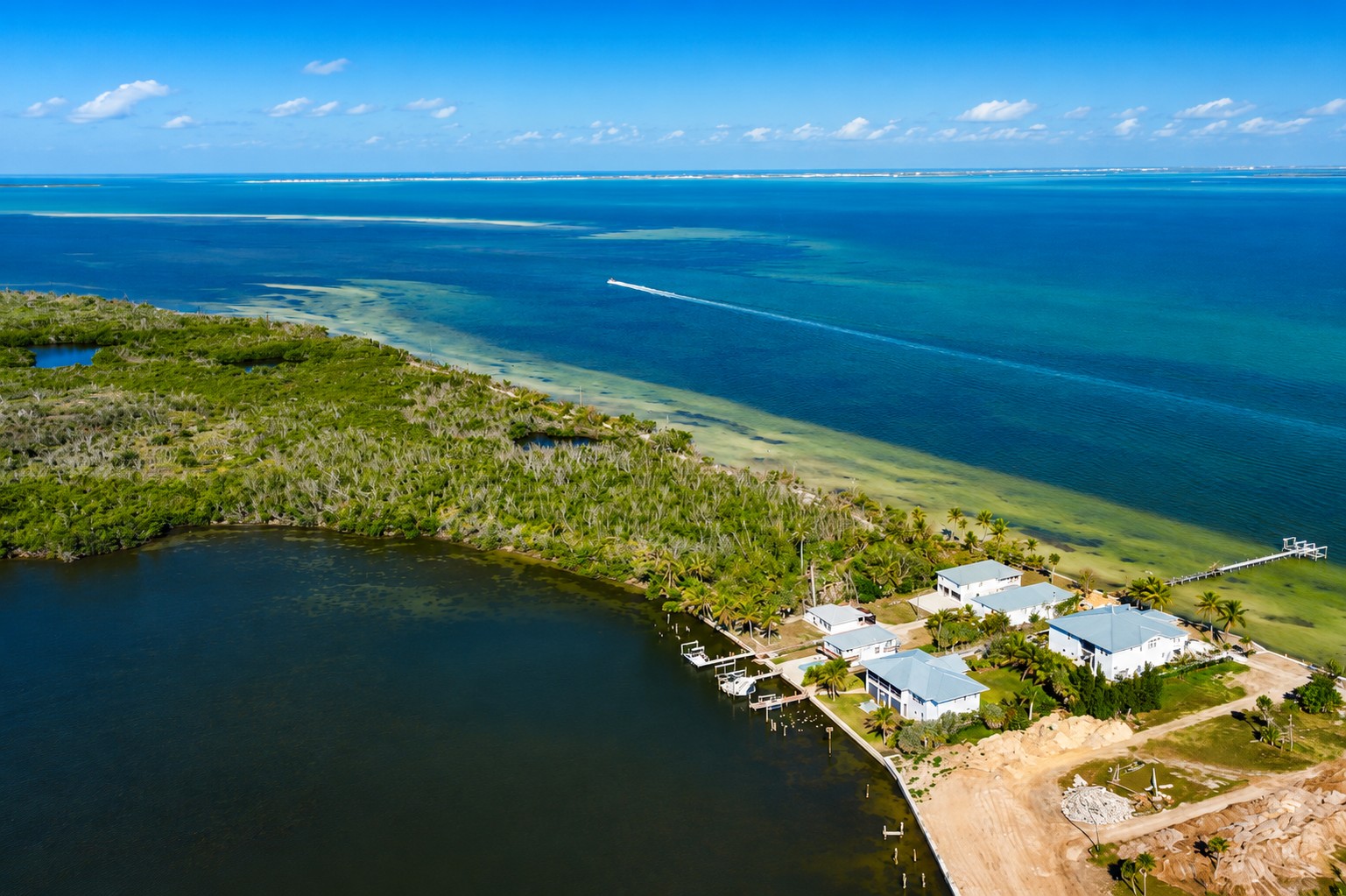
Aerial view of Pine Island Sound, Bokeelia, and Back Bay.
Today, Pine Island Sound is recognized as one of Southwest Florida's premier destinations for boating, kayaking, wildlife viewing, fishing, photography, and exploring remote islands. Its protected waters provide an ideal environment for both experienced mariners and first-time visitors seeking to discover Florida's remarkable coastal ecosystems.
This guide explores the geography, history, ecology, navigation, and many experiences that make Pine Island Sound one of the Gulf Coast's most treasured waterways.
3. Where Pine Island Sound Is
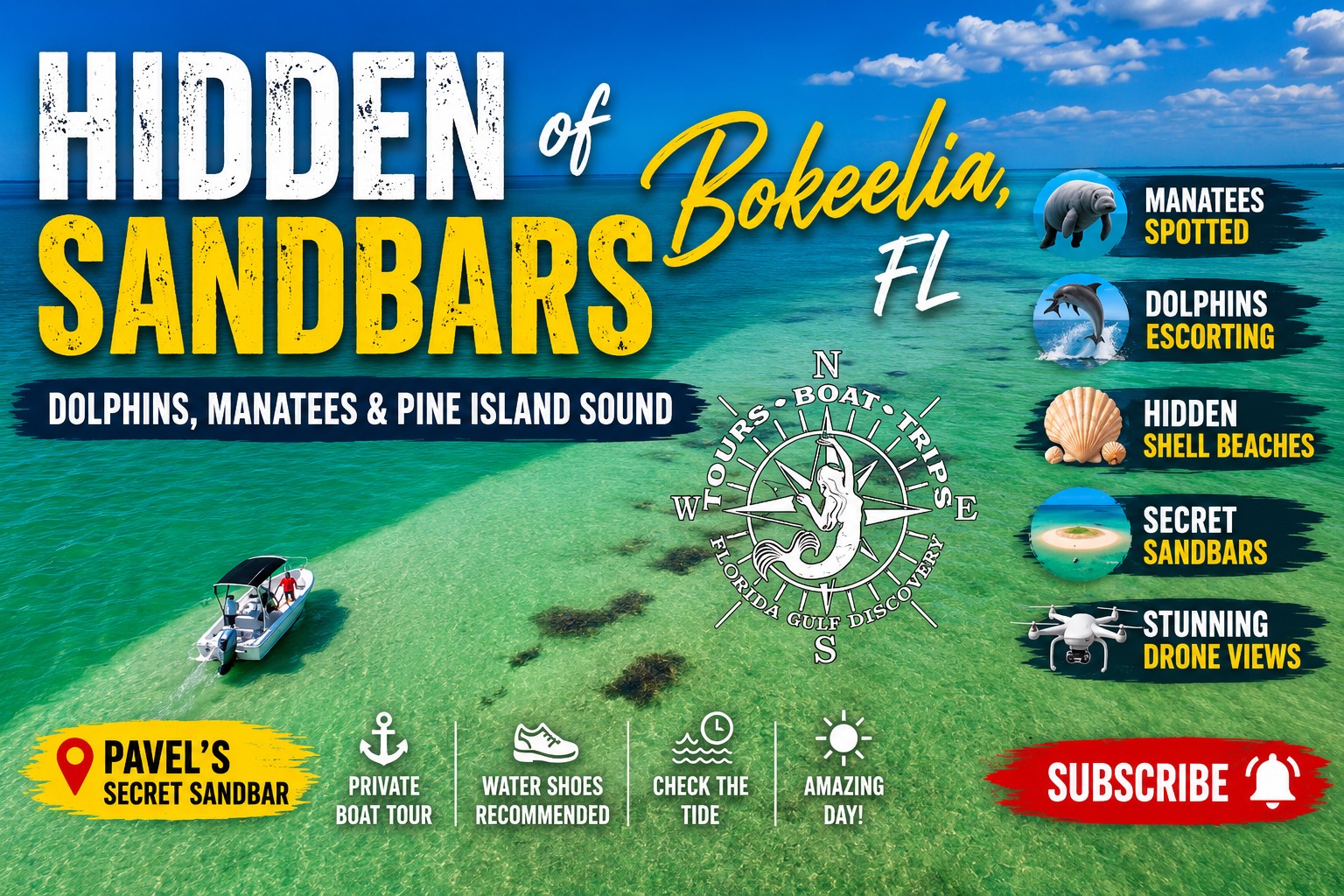
Watch on YouTube: Discover the hidden sandbars of Pine Island Sound near Bokeelia.
Pine Island Sound is a broad estuary on Florida's southwest Gulf Coast, extending between Pine Island on the east and the barrier islands of Sanibel, Captiva, North Captiva, and Cayo Costa on the west. It lies primarily within Lee County and forms part of the interconnected estuarine system that includes Matlacha Pass, Charlotte Harbor, and San Carlos Bay.
Unlike open Gulf waters, Pine Island Sound is protected by barrier islands that shelter it from large ocean swells while allowing tidal exchange through several natural passes. These conditions create relatively calm waters, making the Sound one of Southwest Florida's most popular destinations for recreational boating, kayaking, paddleboarding, wildlife viewing, and fishing.
The Gulf Intracoastal Waterway passes through Pine Island Sound, providing an important north-south navigation route for recreational vessels traveling Florida's Gulf Coast. Numerous islands, mangrove shorelines, shallow grass flats, and protected coves make the Sound both environmentally significant and highly attractive to visitors seeking to explore Southwest Florida by water.
4. Quick Facts
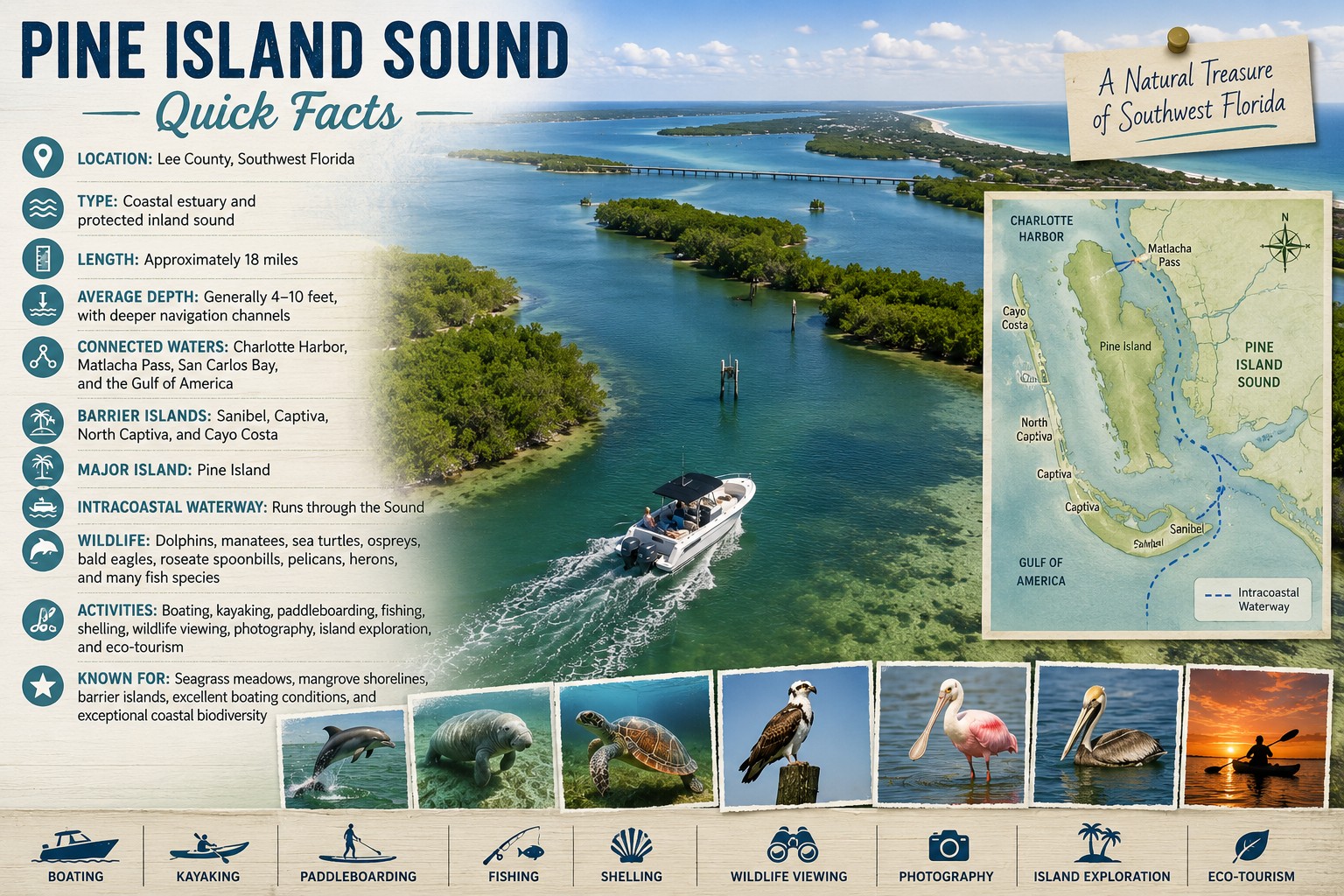
Pine Island Sound Quick Facts. Click the infographic to learn more about the historic Padilla Cemetery on Cayo Costa, one of Southwest Florida's most significant pioneer and fishing heritage sites.
- Location: Lee County, Southwest Florida
- Type: Coastal estuary and protected inland sound
- Length: Approximately 18 miles
- Average Depth: Generally 4–10 feet, with deeper navigation channels
- Connected Waters: Charlotte Harbor, Matlacha Pass, San Carlos Bay, and the Gulf of America
- Barrier Islands: Sanibel, Captiva, North Captiva, and Cayo Costa
- Major Island: Pine Island
- Intracoastal Waterway: Runs through the Sound
- Wildlife: Dolphins, manatees, sea turtles, ospreys, bald eagles, roseate spoonbills, pelicans, herons, and many fish species
- Activities: Boating, kayaking, paddleboarding, fishing, shelling, wildlife viewing, photography, island exploration, and eco-tourism
- Known For: Seagrass meadows, mangrove shorelines, barrier islands, excellent boating conditions, and exceptional coastal biodiversity
5. Geography
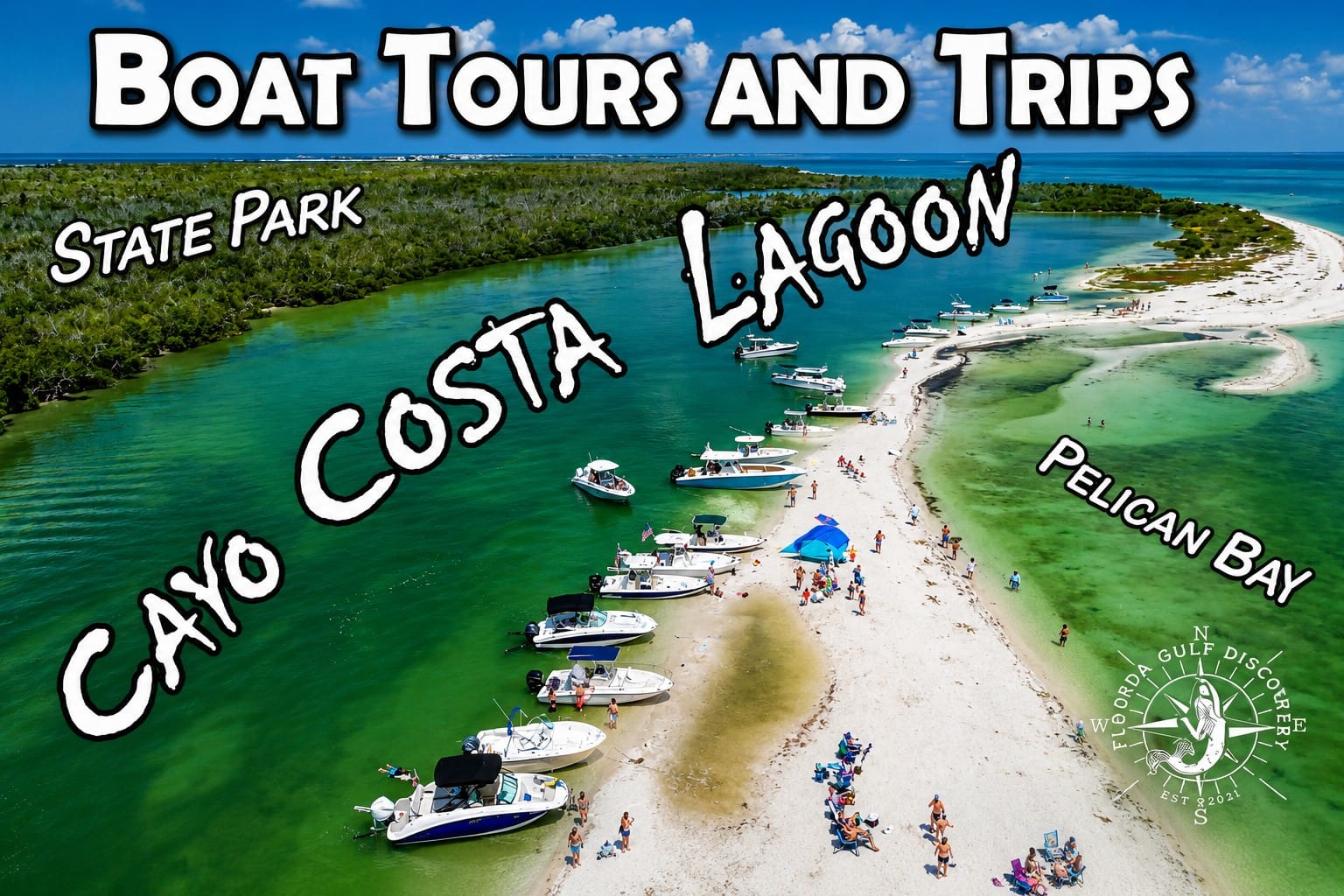
Watch on YouTube: Explore the spectacular Cayo Costa Lagoon by boat as Captain Pavel cruises through crystal-clear waters, secluded beaches, and the untouched beauty of Cayo Costa State Park—one of Southwest Florida's most scenic barrier island destinations.
Pine Island Sound is a shallow estuary formed between Pine Island and a chain of barrier islands that includes Sanibel, Captiva, North Captiva, and Cayo Costa. Protected from the open Gulf of America by these islands, the Sound provides calm inland waters while remaining connected to the Gulf through several natural passes.
The estuary stretches approximately 18 miles from north to south and ranges from one to five miles wide. Most of the Sound is relatively shallow, with extensive seagrass meadows, oyster bars, mangrove shorelines, and tidal flats that support one of the richest marine ecosystems in Southwest Florida.
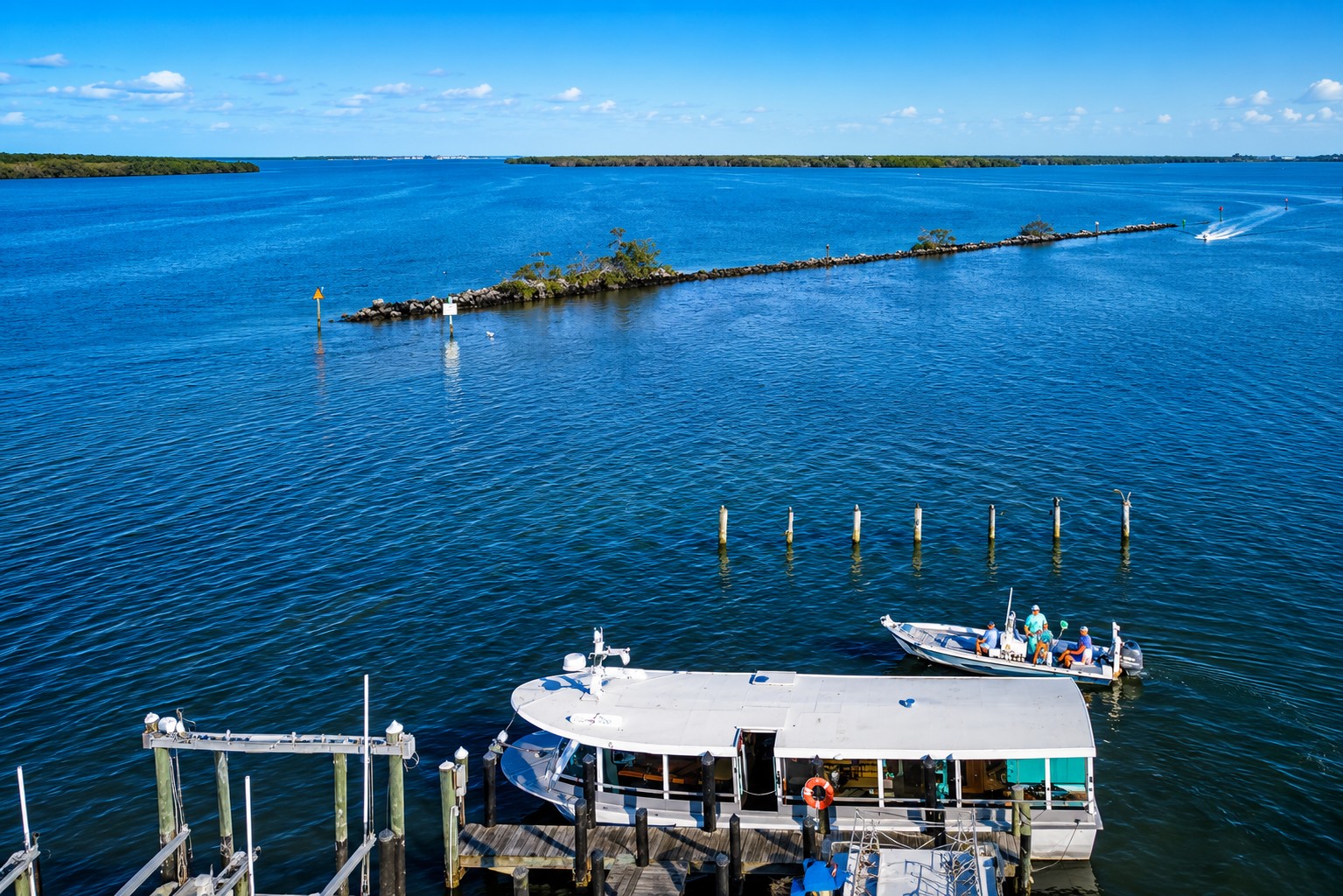
Aerial view of Pineland, Wilson Cut, and Pine Island Sound.
Freshwater enters the Sound from Matlacha Pass, nearby creeks, canals, and seasonal rainfall, while tides flow through Boca Grande Pass, Captiva Pass, Redfish Pass, and smaller inlets. The constant mixing of fresh and salt water creates the brackish conditions that define a healthy estuary and provide ideal habitat for countless fish, birds, marine mammals, and invertebrates.
Unlike many coastal bays, Pine Island Sound experiences relatively small waves because the barrier islands absorb most Gulf energy before it reaches the estuary. This natural protection makes the Sound one of Southwest Florida's safest and most enjoyable boating destinations throughout much of the year.
The Sound also forms part of the Gulf Intracoastal Waterway, creating an important navigation corridor that connects Charlotte Harbor with San Carlos Bay and the waters surrounding Fort Myers Beach.
6. History
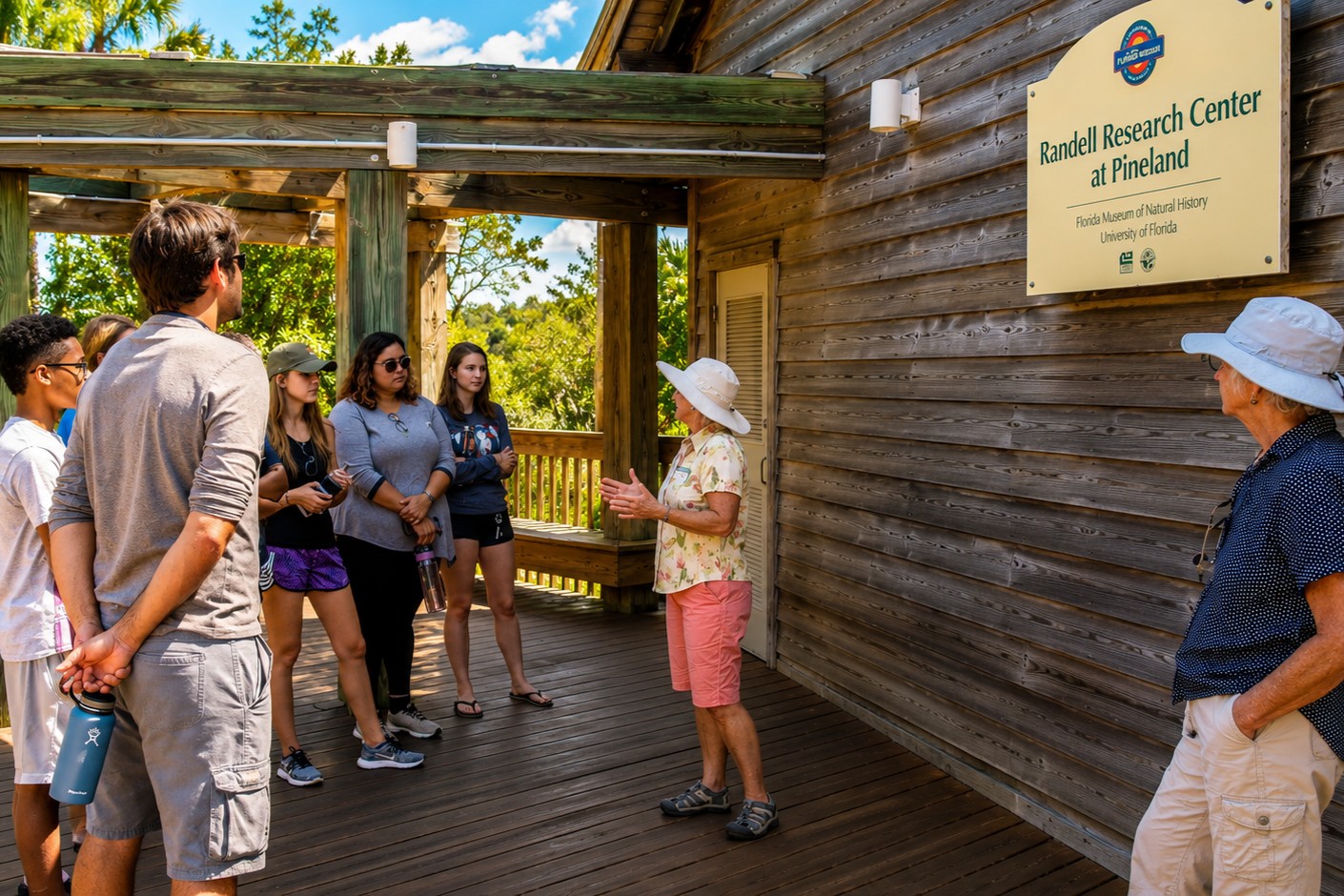
Visitors on a guided tour of the Randell Research Center and Calusa Heritage Trail in Pineland. The trail leads through ancient Calusa shell mounds, canals, and archaeological features, offering one of the best opportunities to learn about the history, archaeology, and ecology of Pine Island Sound and Southwest Florida's remarkable Indigenous heritage.
Long before European explorers reached Florida, Pine Island Sound was home to the Calusa, one of North America's most advanced coastal civilizations. Rather than relying on agriculture, the Calusa built their society on the extraordinary abundance of fish, shellfish, and other marine resources found throughout the estuary. Large shell mounds, canals, and archaeological sites discovered around Pine Island demonstrate the importance of these waters for transportation, trade, and daily life.
Spanish explorers arrived along Florida's southwest coast during the early sixteenth century, documenting the powerful Calusa people who controlled much of the surrounding coastline. Although Spanish expeditions established contact with the region, permanent European settlement remained limited for centuries because of the area's shallow waters, dense mangrove forests, mosquitoes, and remote location.
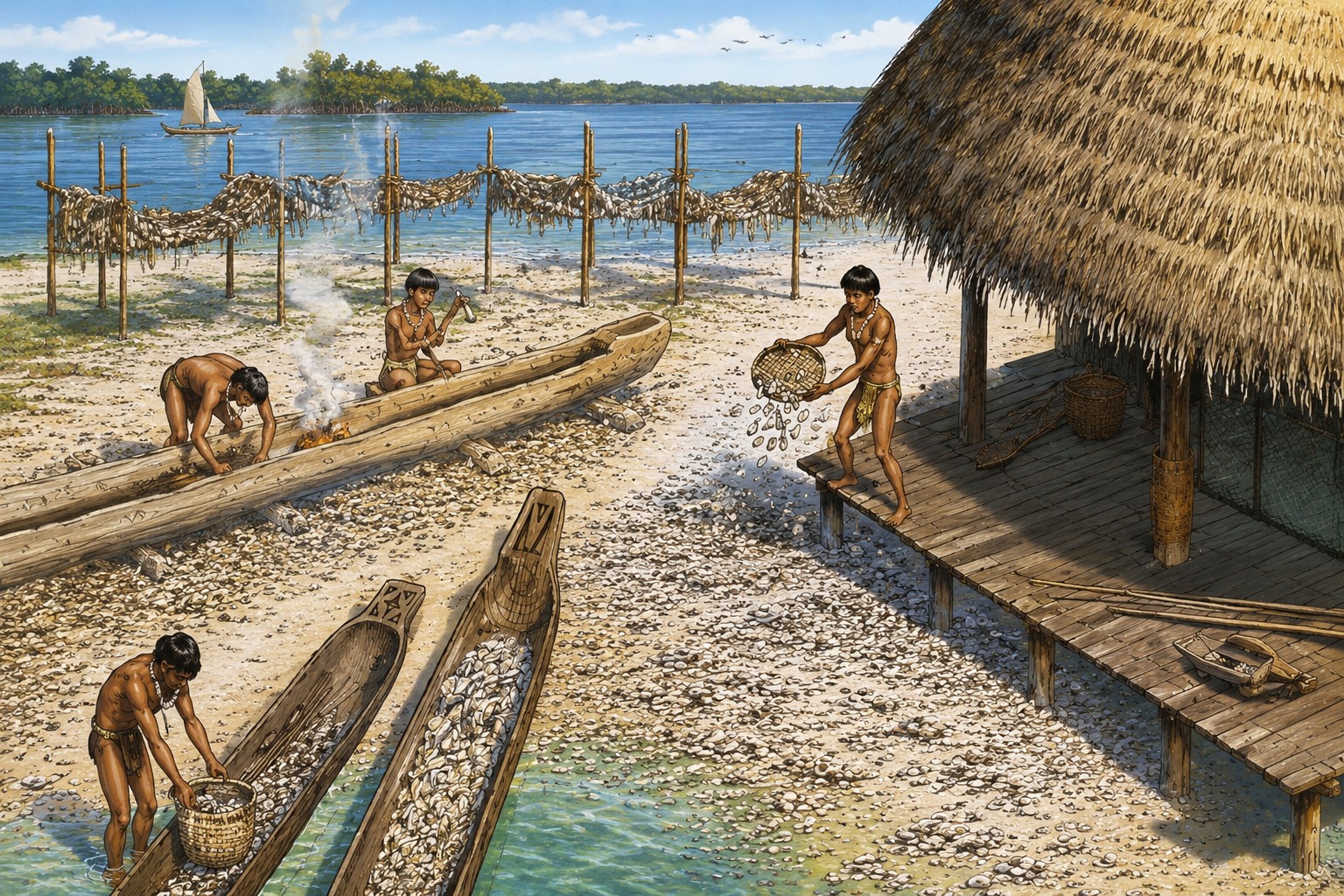
Artist's reconstruction of a Calusa village along Pine Island Sound. Built on shell mounds beside protected waterways, Calusa communities featured thatched homes, canoe landings, and extensive shellworks that supported one of North America's most sophisticated maritime civilizations long before European contact. This illustration is based on archaeological evidence and represents a historical interpretation rather than an exact reconstruction.
During the eighteenth and nineteenth centuries, Cuban fishing ranchos became established throughout Southwest Florida. Commercial fishermen harvested mullet, grouper, snapper, and other species from Pine Island Sound before salting and shipping their catch to markets throughout the Caribbean. The estuary's protected waters made it an ideal location for seasonal fishing operations.
American settlers gradually arrived during the late nineteenth century, establishing small communities on Pine Island and neighboring barrier islands. Fishing, oystering, farming, and maritime commerce became the foundation of the local economy, while small docks and waterfront settlements developed along protected shorelines.
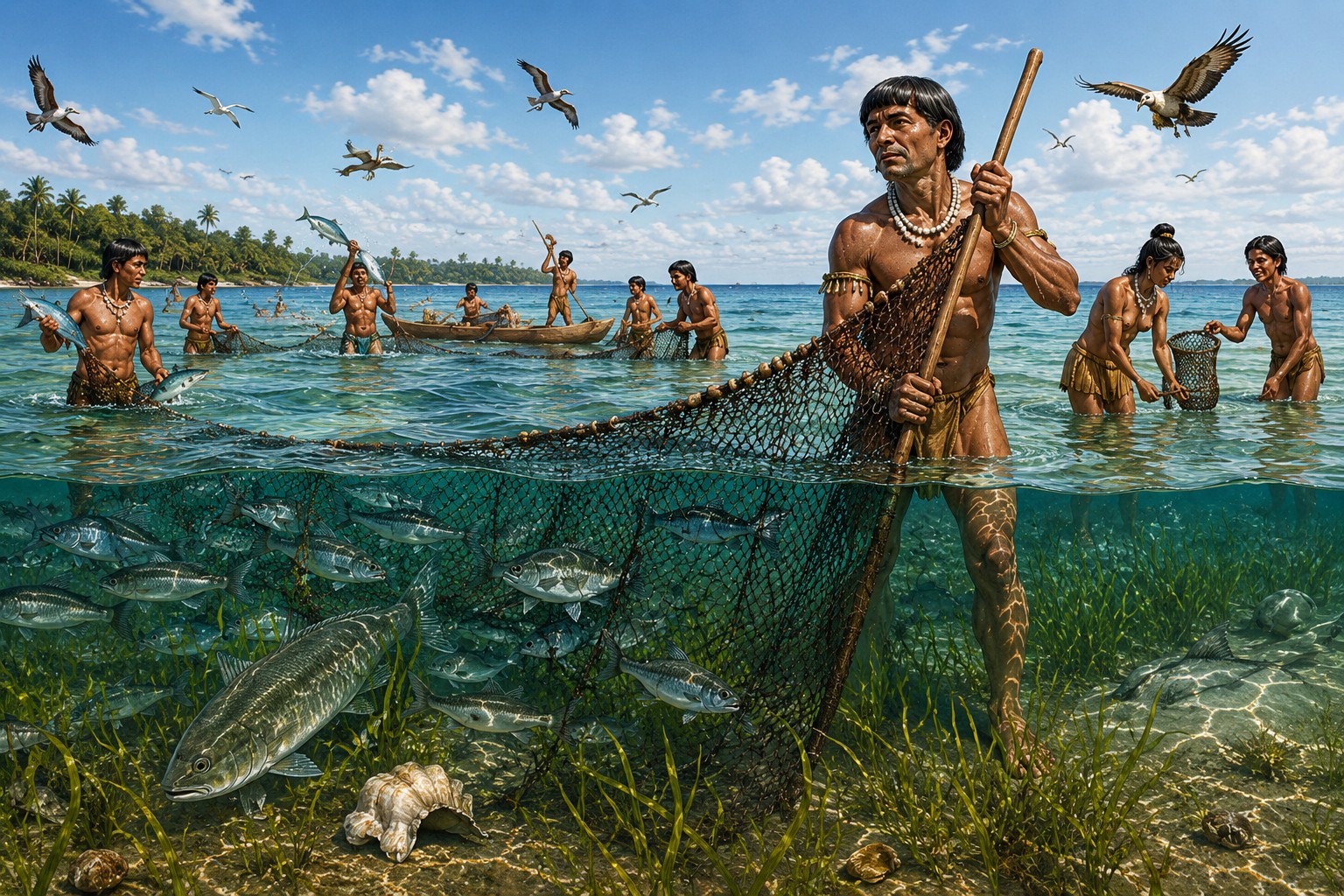
Artist's reconstruction of Calusa fishermen harvesting fish in Pine Island Sound. Using dugout canoes, woven nets, fish traps, and generations of knowledge about tides and estuarine waters, the Calusa built one of North America's most successful maritime civilizations. This illustration is based on archaeological evidence and historical research and represents an interpretation of daily Calusa life rather than an exact historical scene.
Throughout the twentieth century, improved transportation, bridges, and recreational boating transformed Pine Island Sound into one of Southwest Florida's premier destinations for anglers, boaters, wildlife enthusiasts, and visitors seeking a quieter alternative to Florida's larger coastal cities.
Today, conservation efforts protect much of the Sound through aquatic preserves, wildlife refuges, conservation lands, and state parks. These protections help preserve the estuary's remarkable biodiversity while allowing visitors to experience one of Florida's most important coastal ecosystems.
7. Wildlife & Ecology
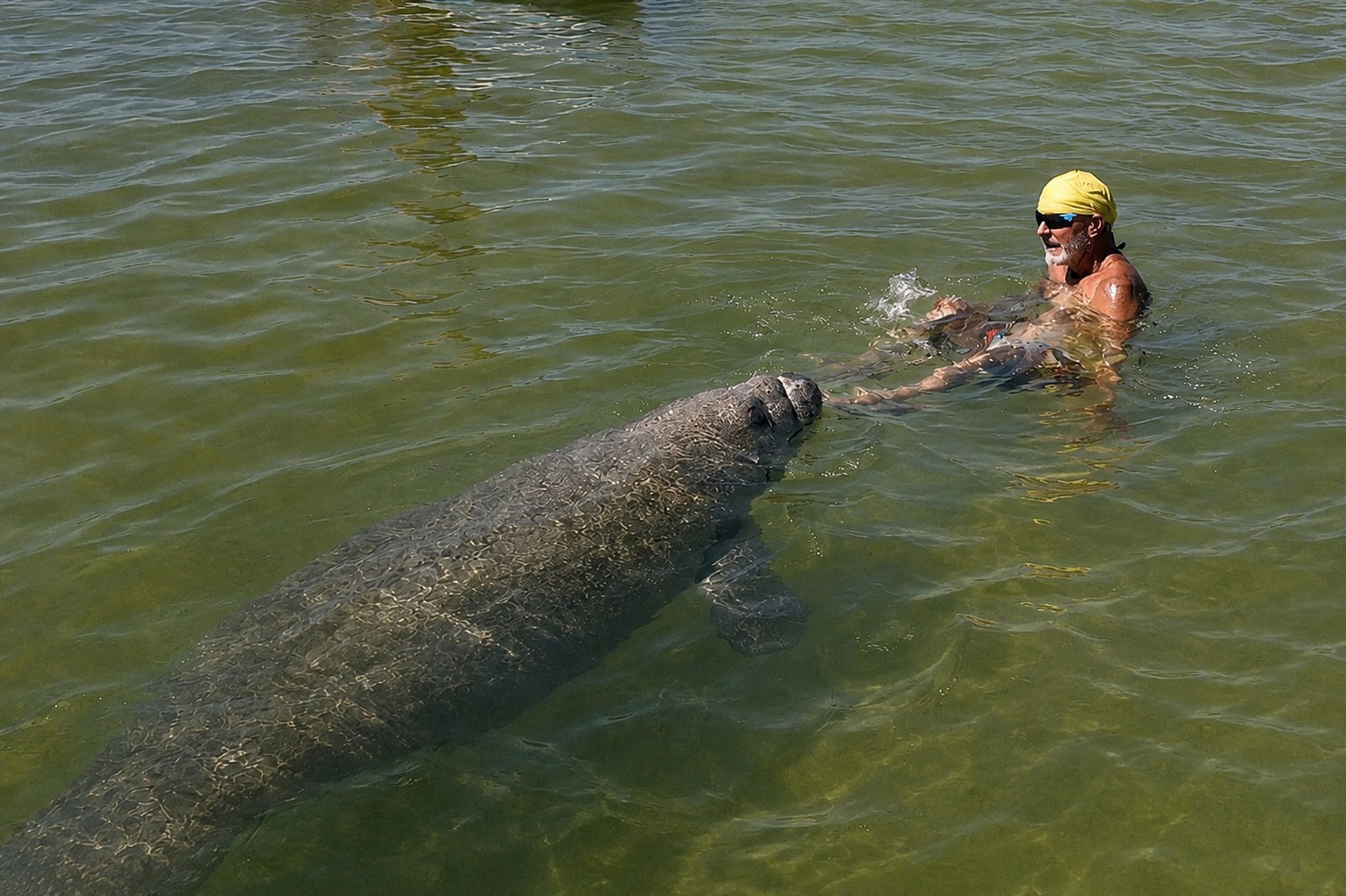
Captain Pavel swimming alongside a curious Florida manatee in the shallow waters of Pine Island Sound near Bokeelia. The seagrass-rich estuary provides important habitat for manatees, which are frequently seen feeding, resting, and traveling through these protected coastal waters.
Pine Island Sound supports one of the richest estuarine ecosystems in Florida. Extensive seagrass meadows, mangrove forests, oyster reefs, and tidal creeks provide habitat for hundreds of marine and bird species throughout the year. These healthy ecosystems make the Sound one of Southwest Florida's premier destinations for wildlife observation and eco-tourism.
Common sightings include bottlenose dolphins, West Indian manatees, sea turtles, ospreys, bald eagles, pelicans, herons, egrets, roseate spoonbills, ibis, and numerous migratory shorebirds. Beneath the surface, juvenile snook, redfish, spotted seatrout, tarpon, mangrove snapper, sheepshead, mullet, and many other fish depend on the estuary as a nursery before moving into deeper coastal waters.
Mangrove shorelines stabilize the coastline, reduce erosion, and shelter countless juvenile fish and crustaceans. Seagrass beds produce oxygen, improve water quality, and provide food for manatees while supporting one of the most productive marine food webs in the Gulf of America.
Several conservation areas help protect Pine Island Sound, including the Pine Island Sound Aquatic Preserve, J.N. "Ding" Darling National Wildlife Refuge, Cayo Costa State Park, and numerous state-owned submerged lands. Together, these protected areas preserve the estuary's ecological health while allowing responsible boating, kayaking, fishing, wildlife photography, and nature exploration.
8. Exploring the Destinations
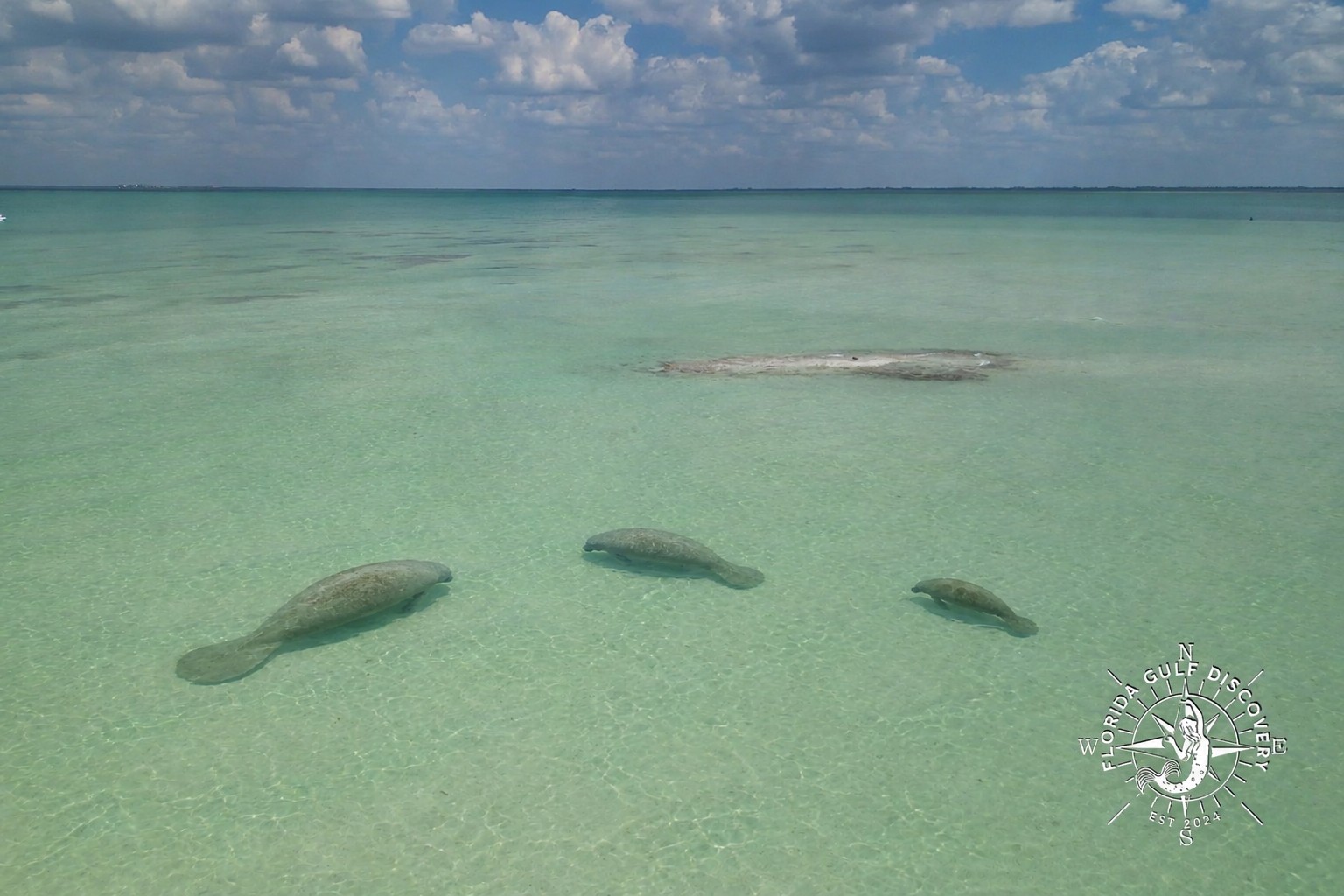
Three Florida manatees swimming together over a shallow sandbar near Bokeelia in Pine Island Sound. The protected estuary's clear, shallow waters and extensive seagrass beds provide ideal habitat for manatees, making Pine Island Sound one of Southwest Florida's best places to observe these gentle marine mammals in their natural environment.
Pine Island Sound is surrounded by islands, beaches, passes, marinas, and historic waterfront communities that together create one of Southwest Florida's most diverse boating destinations. Each location offers its own scenery, wildlife, and opportunities for exploration.
Pine Island
Pine Island is Florida's largest island connected by road and serves as the eastern shoreline of Pine Island Sound. Unlike many Gulf Coast destinations, it has retained its Old Florida character with fishing villages, waterfront parks, mangrove preserves, tropical fruit farms, art galleries, and quiet residential communities. Matlacha, St. James City, Pineland, and Bokeelia all provide convenient access to the Sound.
Cayo Costa State Park
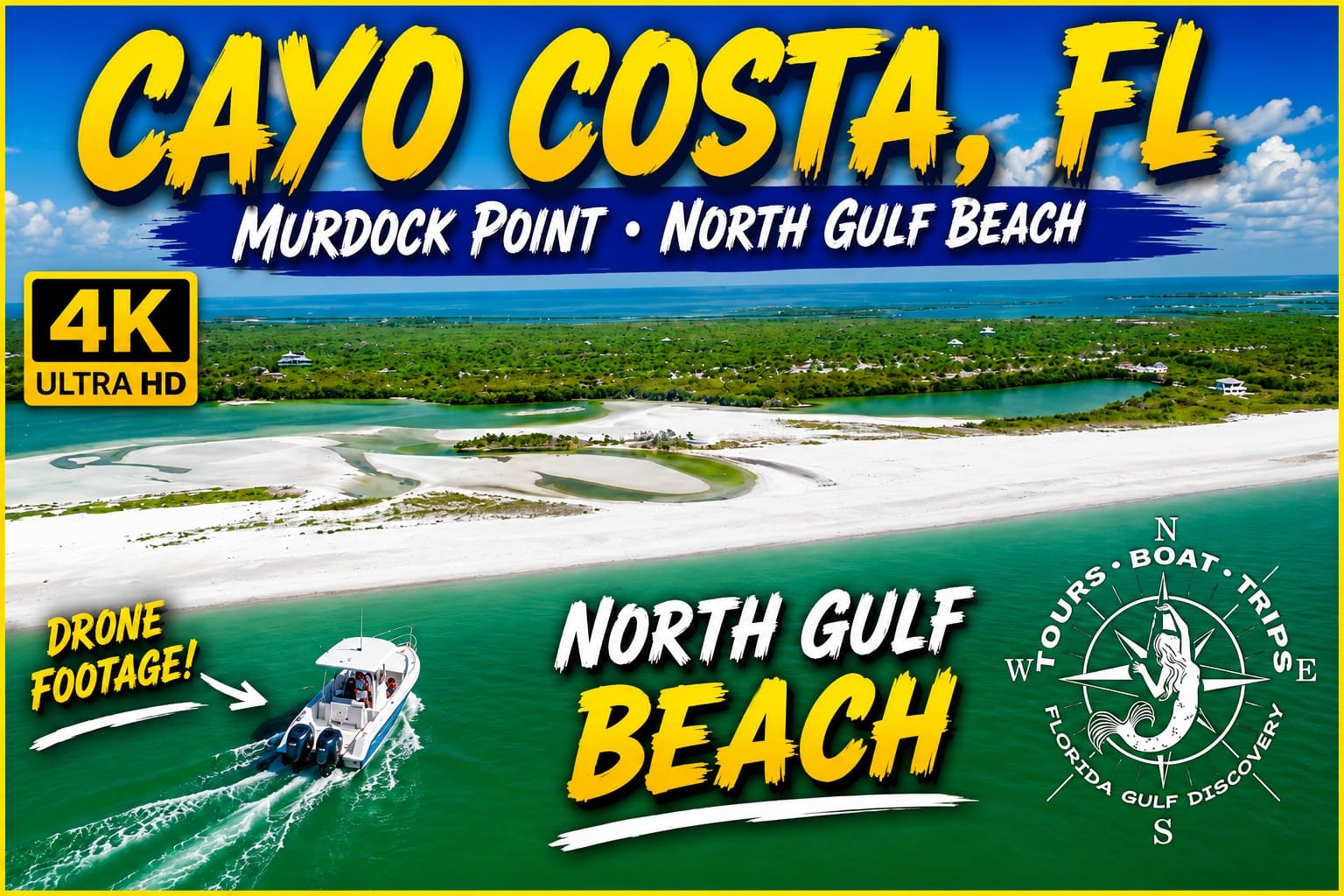
Watch on YouTube: Join Captain Pavel as he explores the remote North Gulf Beach at Murdock Point on Cayo Costa. Discover pristine white sand, turquoise Gulf waters, and one of the quietest stretches of shoreline in Cayo Costa State Park—accessible only by boat and surrounded by unspoiled natural beauty.
Cayo Costa is one of Florida's most spectacular barrier islands. Accessible only by boat or ferry, it offers miles of undeveloped beaches, hiking trails, shelling, wildlife viewing, historic cemeteries, and a peaceful natural setting. Captain Pavel frequently visits Cayo Costa during private boat tours because it combines beautiful beaches with fascinating pioneer history.
North Captiva Island
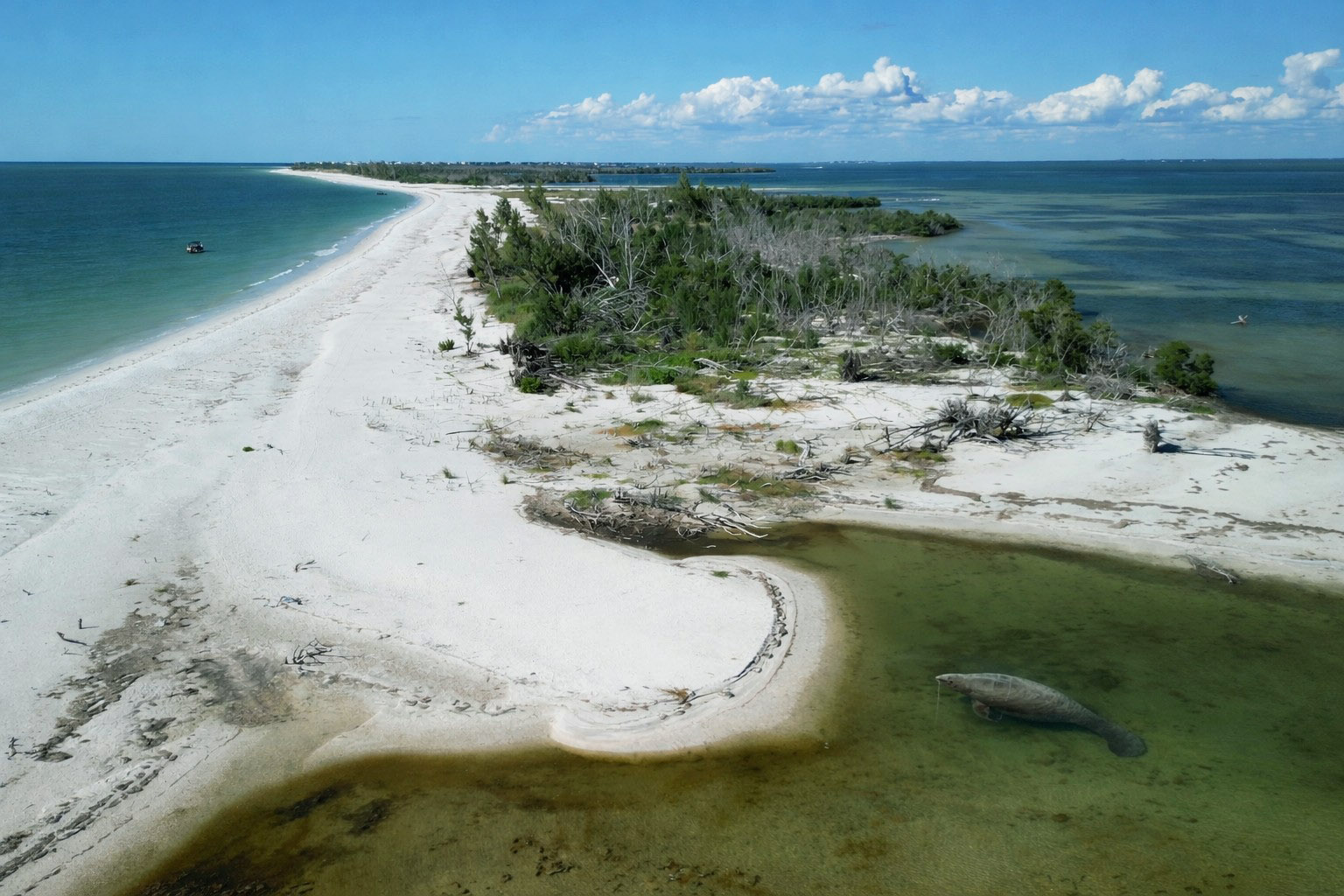
North Captiva Island viewed from above as a Florida manatee swims through the island's clear coastal waters. Click the image to explore Southwest Florida's remarkable Barrier Islands, including Cayo Costa, North Captiva, Little Gasparilla, Sanibel, Captiva, and other protected islands that define the region's unique Gulf Coast.
North Captiva is a secluded, car-free barrier island known for its quiet beaches, abundant wildlife, vacation homes, and relaxed atmosphere. Accessible only by boat or small aircraft, it remains one of Southwest Florida's most exclusive island destinations.
Captiva Island
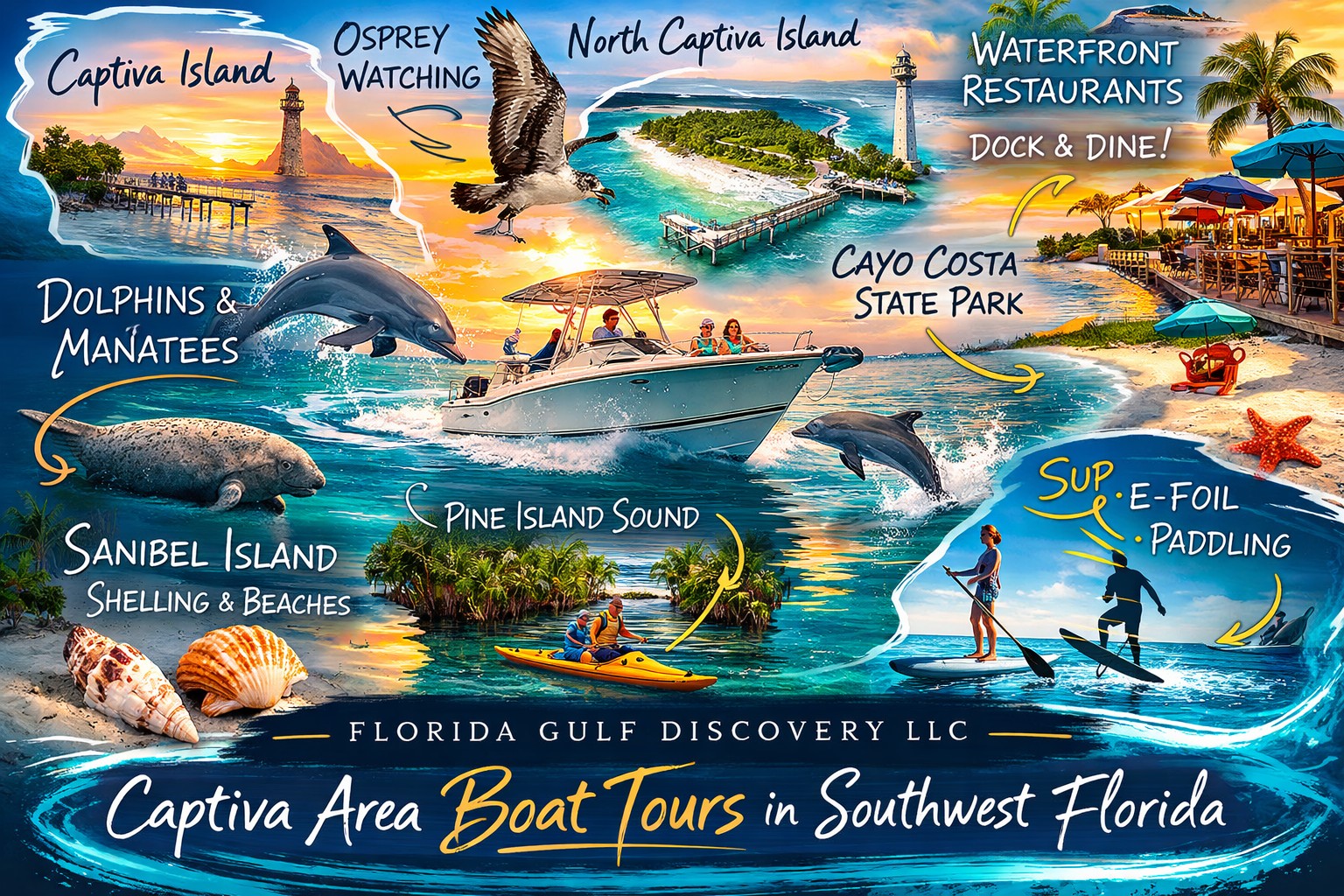
Planning to explore the waters beyond Pine Island Sound? Click the image to discover our complete guide to Captiva Area Boat Tours, featuring private excursions to Captiva Island, North Captiva, Cayo Costa State Park, Boca Grande, Cabbage Key, secluded beaches, shelling destinations, dolphin watching, and some of Southwest Florida's most spectacular barrier islands.
Captiva Island combines beautiful Gulf beaches with waterfront restaurants, marinas, resorts, and easy boating access to Pine Island Sound. Captiva Pass, located at the island's northern end, serves as one of the principal natural connections between the Sound and the Gulf.
Sanibel Island
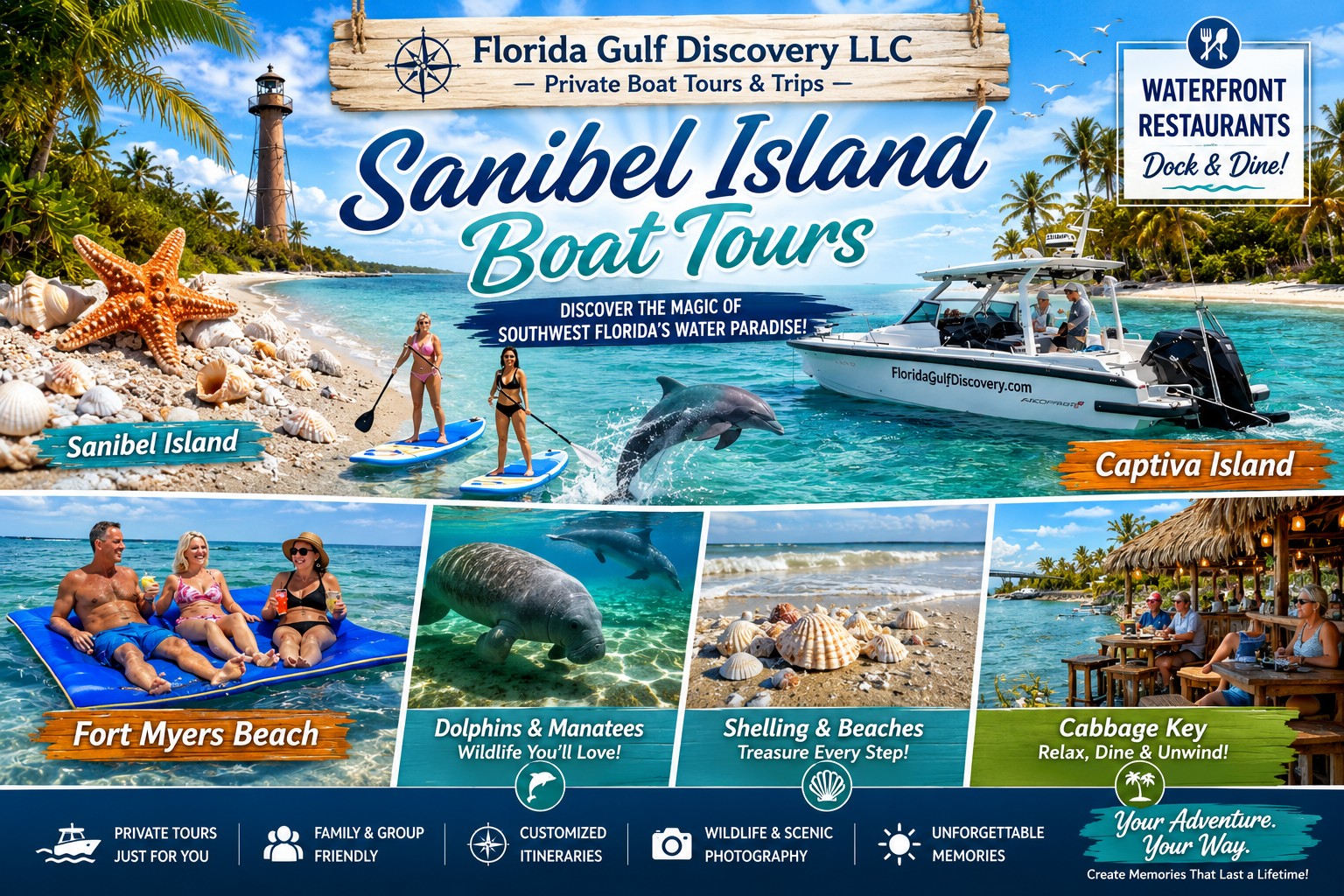
Discover Sanibel Island and its surrounding coastal waters on a private boat adventure through Southwest Florida. Click the image to explore our complete guide to private boat tours near Sanibel, including dolphin watching, shelling, island exploration, secluded beaches, wildlife encounters, and scenic routes through Pine Island Sound.
Sanibel Island forms the southern entrance to Pine Island Sound and is internationally recognized for shelling, wildlife conservation, and beautiful beaches. The J.N. "Ding" Darling National Wildlife Refuge protects thousands of acres of mangroves, tidal flats, and wetlands that support remarkable bird populations throughout the year.
Bokeelia & Pineland
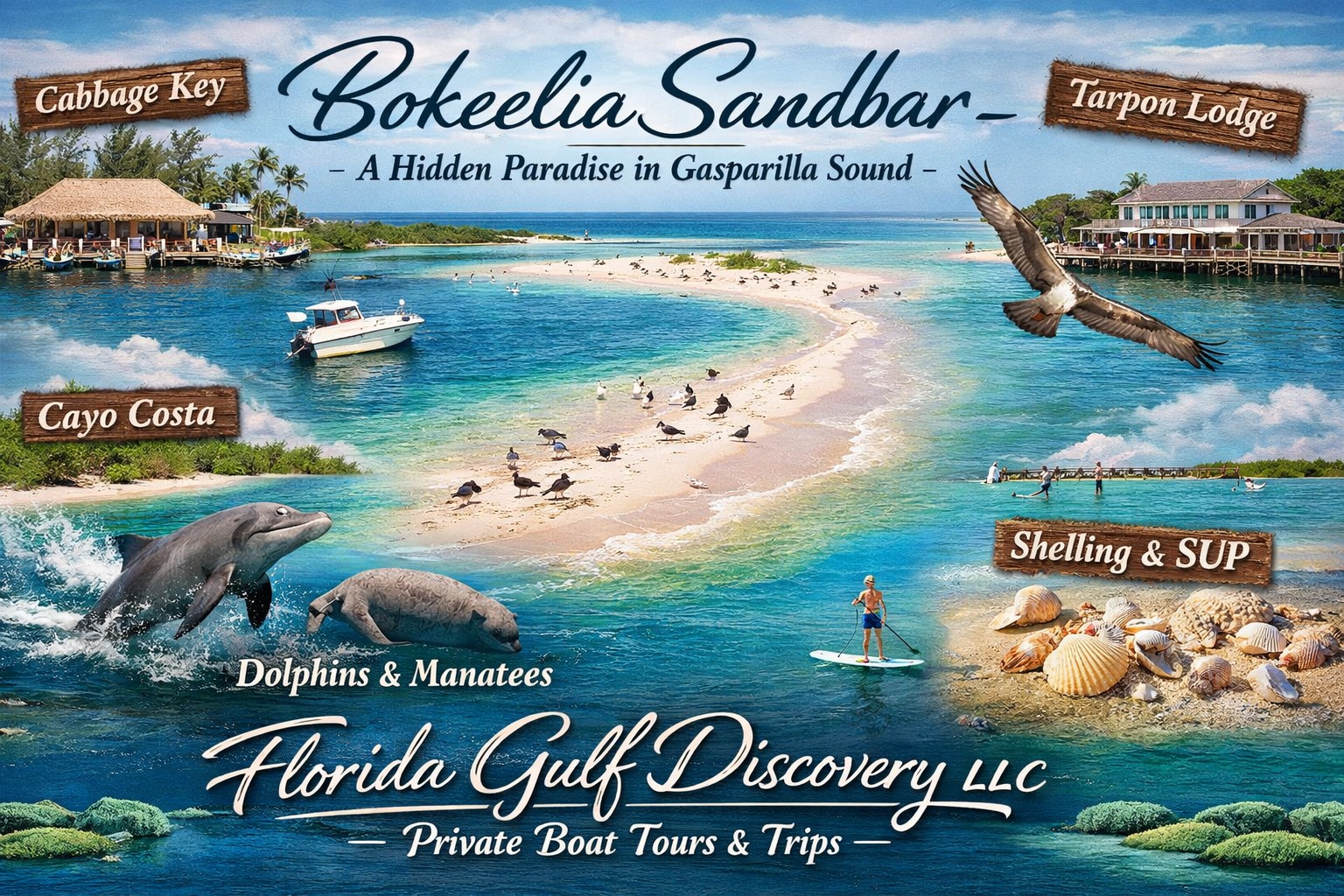
Bokeelia Sandbar is a peaceful shallow-water destination in northern Pine Island Sound, known for swimming, relaxing, wildlife viewing, and scenic private boat tours. Click the image to explore this hidden Southwest Florida sandbar and learn more about visiting it with Florida Gulf Discovery.
Located on Pine Island's northern shoreline, Bokeelia and Pineland provide excellent boating access to the Sound. The area features marinas, waterfront restaurants, fishing docks, Calusa archaeological sites, and scenic waterways including Jug Creek and nearby Back Bay.
Passes & Waterways
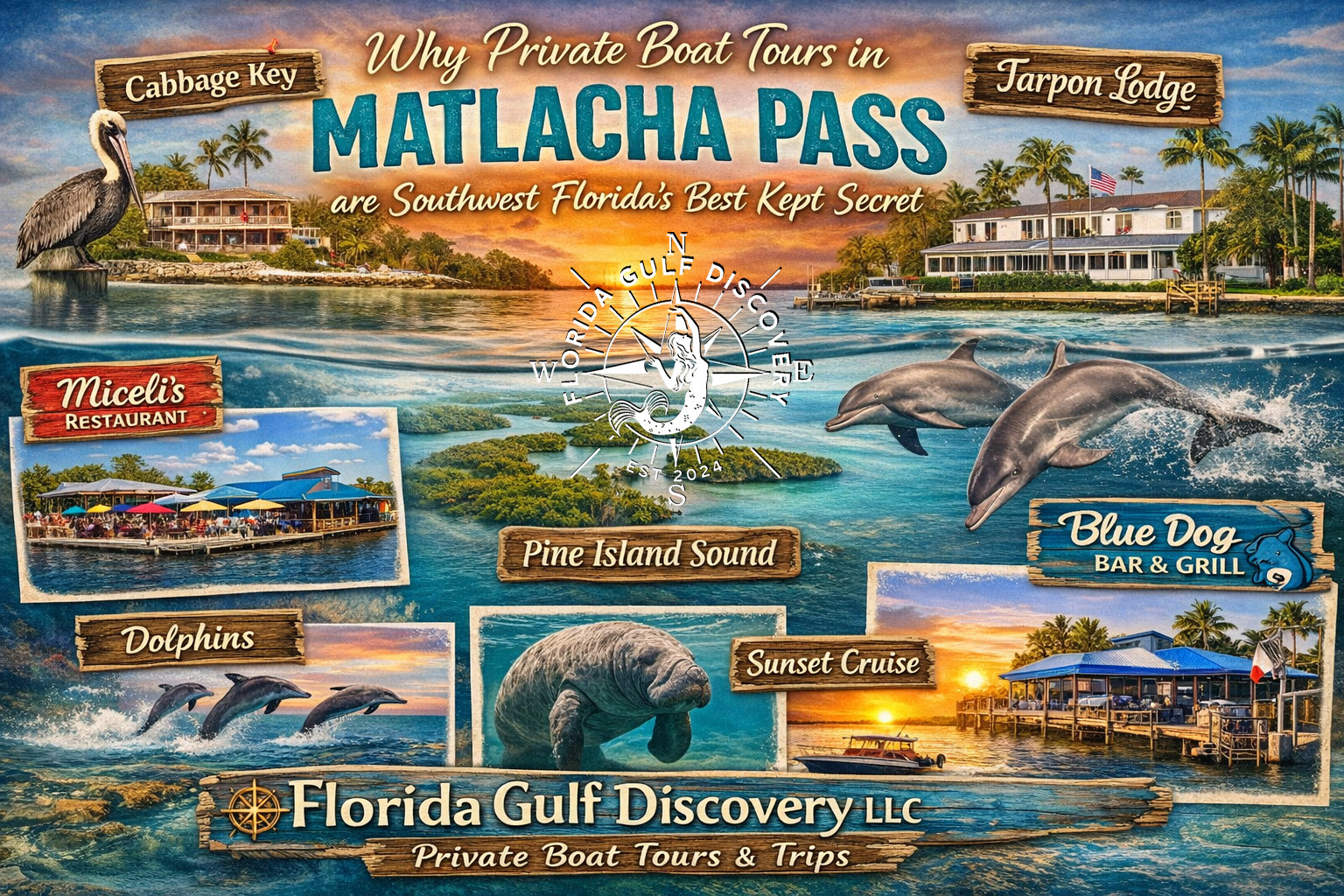
Matlacha Pass is a scenic tidal waterway connecting Pine Island Sound with the Caloosahatchee estuary. Click the image to explore our guide to Private Boat Tours in Matlacha Pass, featuring mangrove shorelines, dolphins, manatees, wading birds, hidden backwaters, and one of Southwest Florida's most diverse coastal ecosystems.
Boca Grande Pass, Captiva Pass, Redfish Pass, and numerous smaller channels connect Pine Island Sound with the Gulf of America and neighboring estuaries. These waterways shape tidal flow, influence marine habitats, and provide navigation routes for recreational boaters exploring Southwest Florida.
9. Boating & Recreation
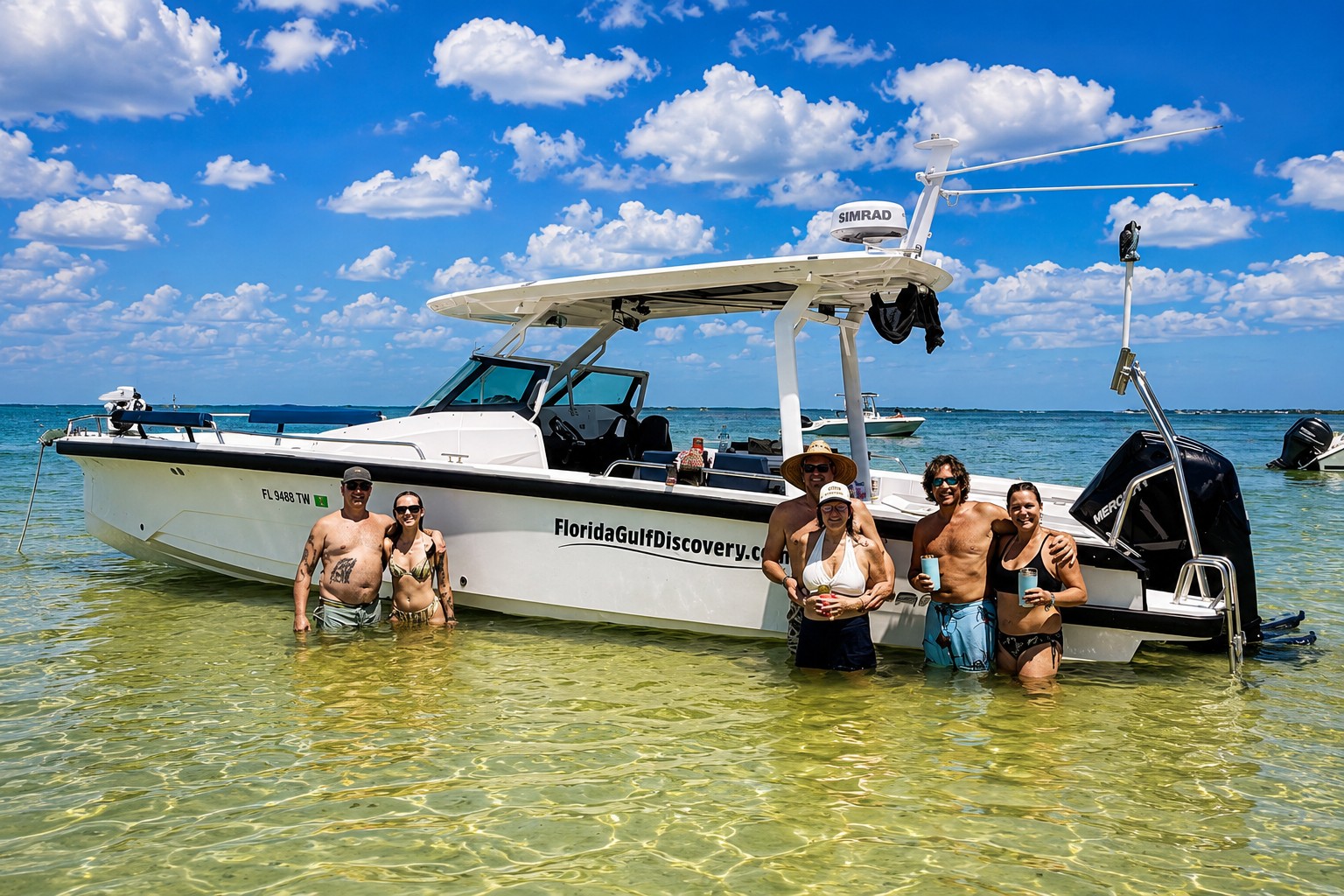
Experience a memorable family private boat tour at beautiful Padilla Beach on Cayo Costa. Click the image to watch a short YouTube video showcasing crystal-clear water, a quiet Gulf beach, and one of Southwest Florida's most unforgettable family boating destinations.
Pine Island Sound is considered one of Southwest Florida's premier boating destinations. Its protected waters, scenic islands, abundant wildlife, and numerous waterfront stops make it ideal for both experienced captains and first-time visitors exploring the Gulf Coast.
Private boats, center consoles, pontoons, sailboats, kayaks, paddleboards, and personal watercraft are common throughout the Sound. The Gulf Intracoastal Waterway provides a well-marked navigation route, while countless side channels, mangrove creeks, and quiet anchorages invite boaters to explore beyond the main channel.
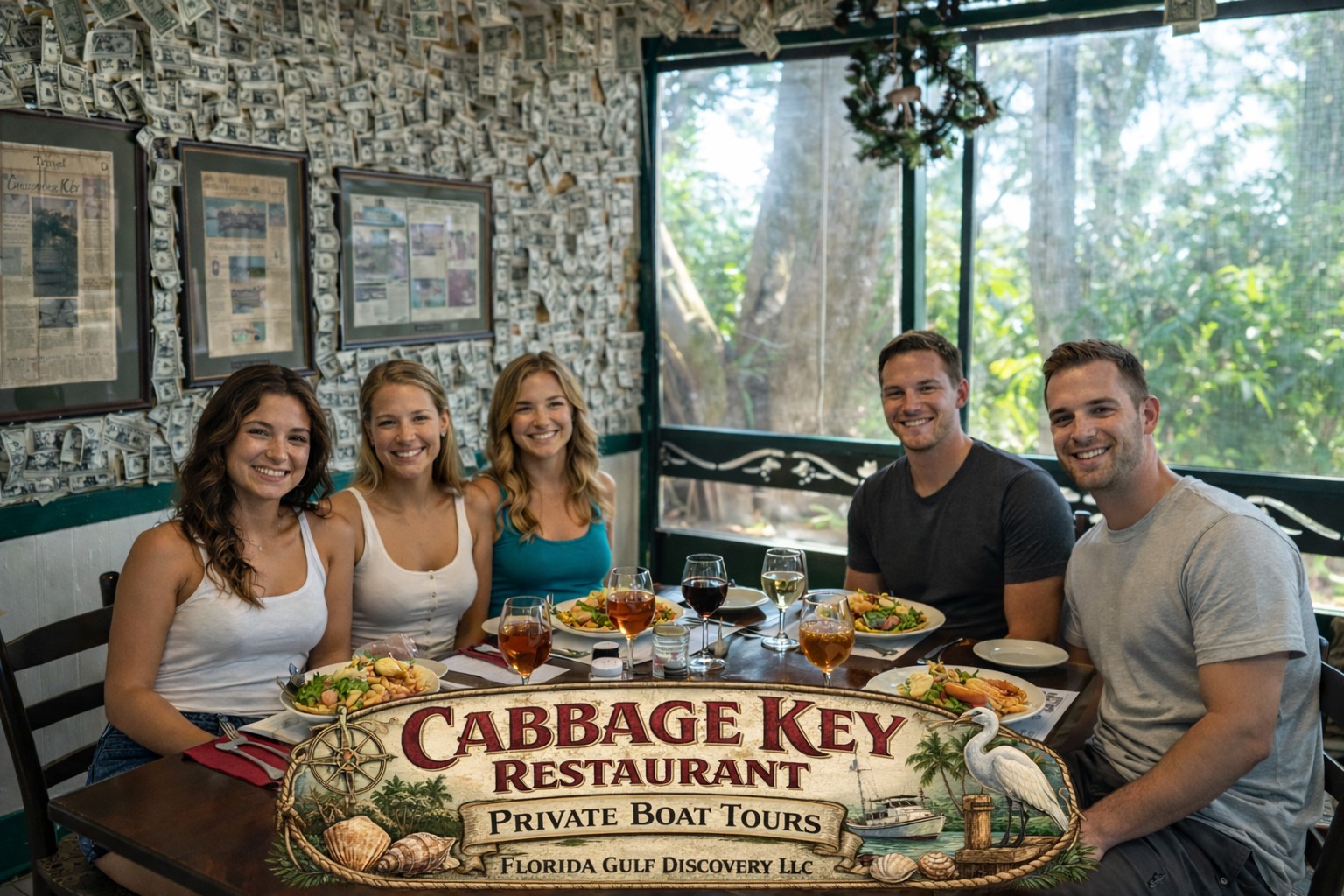
Enjoy a waterfront lunch at the legendary Cabbage Key Restaurant, one of Southwest Florida's most iconic boat-access-only destinations. Click the image to watch a short YouTube video featuring the island, its famous restaurant, and a memorable stop during a private boat tour.
Popular activities include island hopping, dolphin watching, shelling, wildlife photography, kayaking, paddleboarding, beach walks, swimming, snorkeling in favorable conditions, and relaxing at waterfront restaurants. Anglers also enjoy world-class fishing for snook, redfish, spotted seatrout, tarpon, mangrove snapper, sheepshead, and many other inshore species.
Captain Pavel regularly explores Pine Island Sound while guiding private boat tours. Every trip is different because weather, tides, wildlife activity, and guests' interests shape each day's itinerary. Some cruises focus on remote beaches and shelling, while others emphasize wildlife encounters, scenic waterways, waterfront dining, or the rich history of Southwest Florida's barrier islands.
10. Navigation
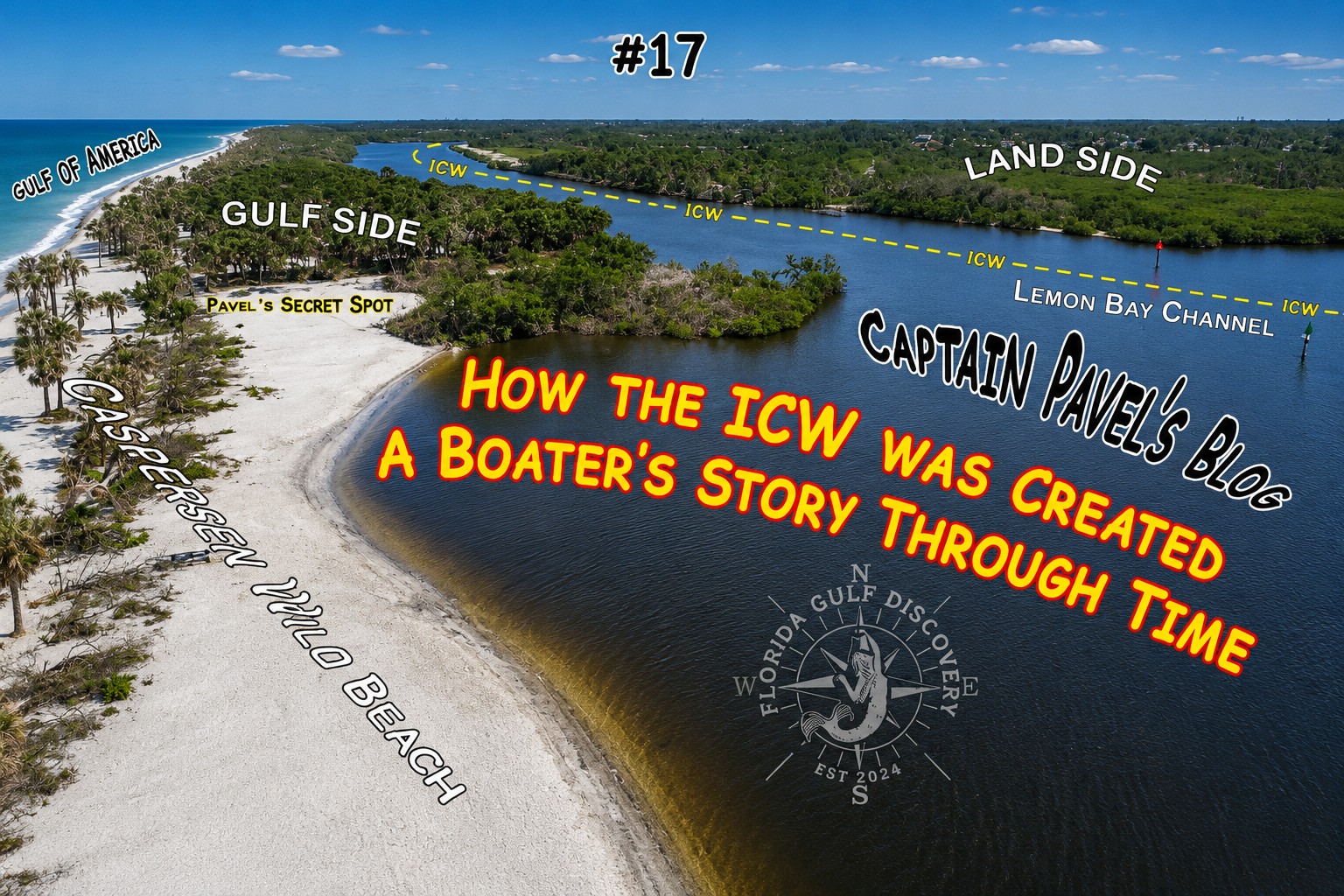
Discover how the Gulf Intracoastal Waterway (ICW) transformed the coastline between Venice, Lemon Bay, Gasparilla Sound, and Placida. Click the image to explore the complete history of one of Southwest Florida's most important engineering projects, including historic dredging, navigation improvements, and the creation of today's protected inland boating route.
Although Pine Island Sound offers relatively protected boating conditions, safe navigation requires careful attention to marked channels, tides, water depth, and seasonal shoaling. Much of the estuary is shallow, with extensive seagrass flats and oyster bars located outside the maintained navigation channels.
The Gulf Intracoastal Waterway serves as the primary north-south route through the Sound and is well marked by federal navigation aids. Recreational boaters should remain within marked channels whenever possible, particularly when operating larger vessels or boating during periods of low tide.
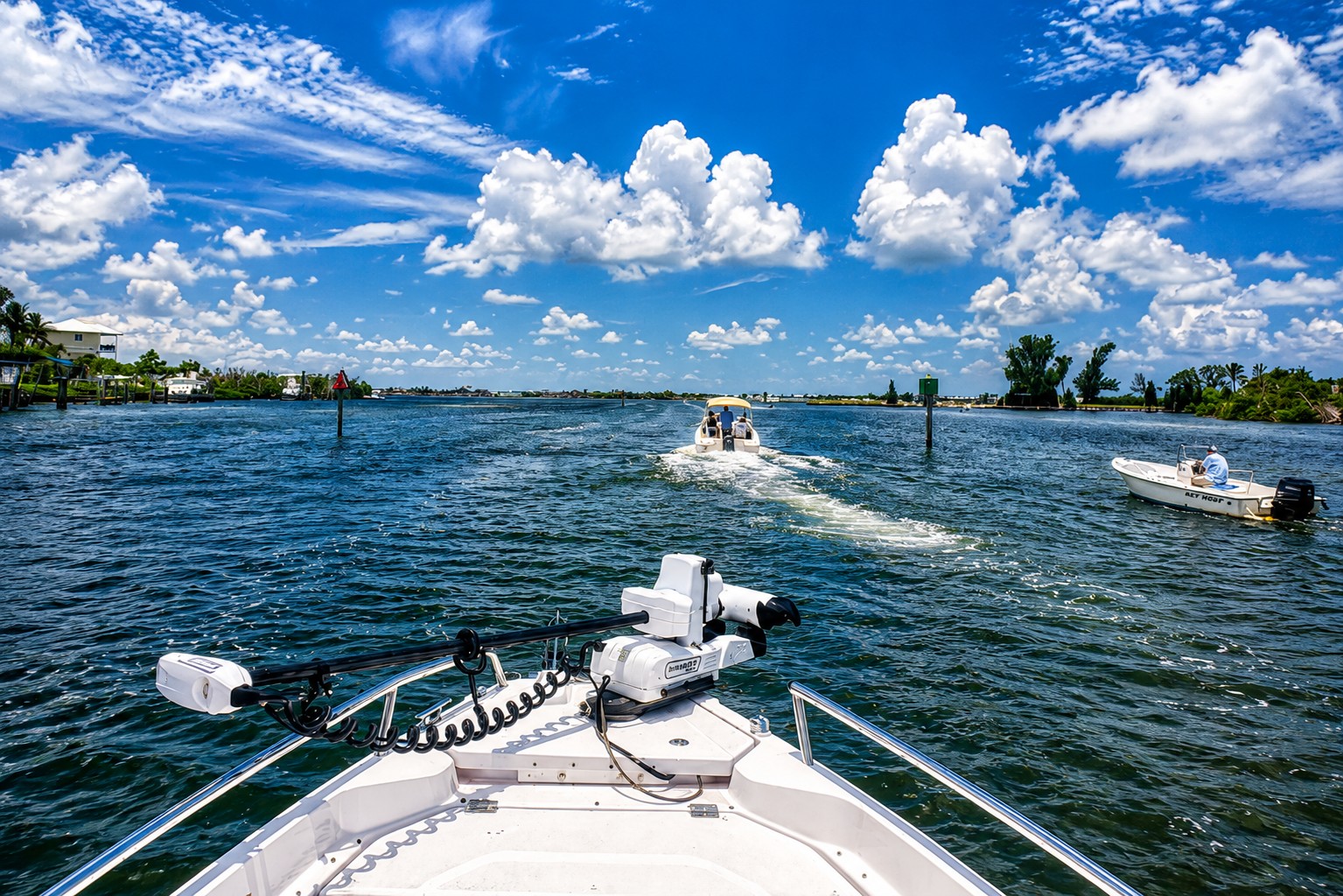
Safely entering Gasparilla Marina begins with following the marked navigation channel from the Intracoastal Waterway. Click the image to watch a short YouTube video showing the channel markers, approach, and local navigation around Placida—valuable information for boaters visiting one of Southwest Florida's most convenient gateways to Gasparilla Sound, Boca Grande, and the Gulf waters.
Weather conditions can change quickly, especially during the summer thunderstorm season. Boaters should always monitor marine forecasts, carry current navigation charts or electronic chartplotters, and observe posted speed restrictions and manatee protection zones.
Visitors unfamiliar with the area often discover that local knowledge is invaluable. Hidden sandbars, shifting shoals, narrow mangrove passages, and changing tidal conditions reward careful planning while making guided private boat tours an excellent way to experience the Sound safely.
11. Why Pine Island Sound Is Special
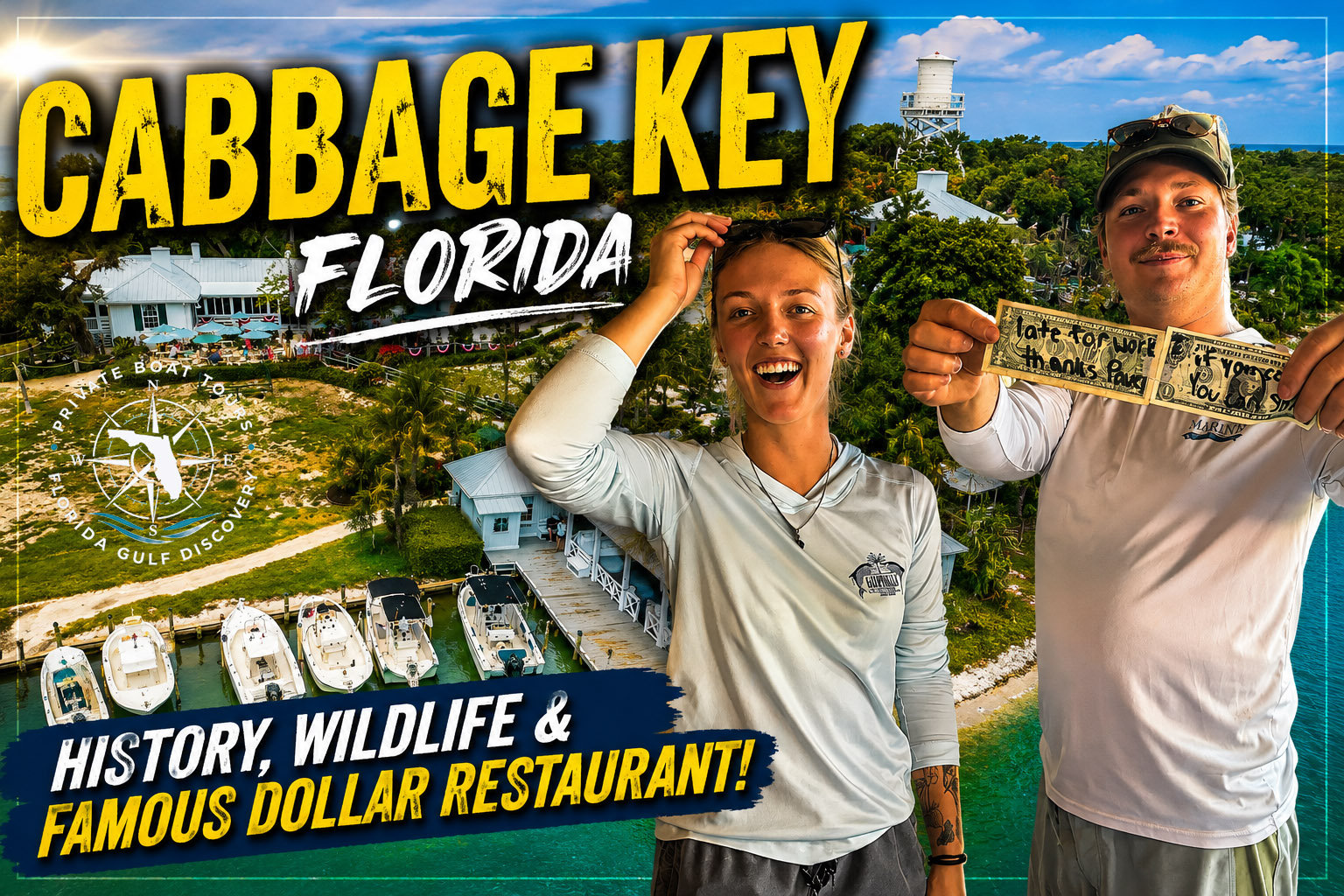
Watch on YouTube: Cruise with Captain Pavel to legendary Cabbage Key.
Pine Island Sound represents the best of Florida's natural Gulf Coast. Its combination of protected waters, thriving estuarine habitats, historic waterfront communities, barrier islands, and remarkable wildlife creates an environment unlike anywhere else in Southwest Florida.
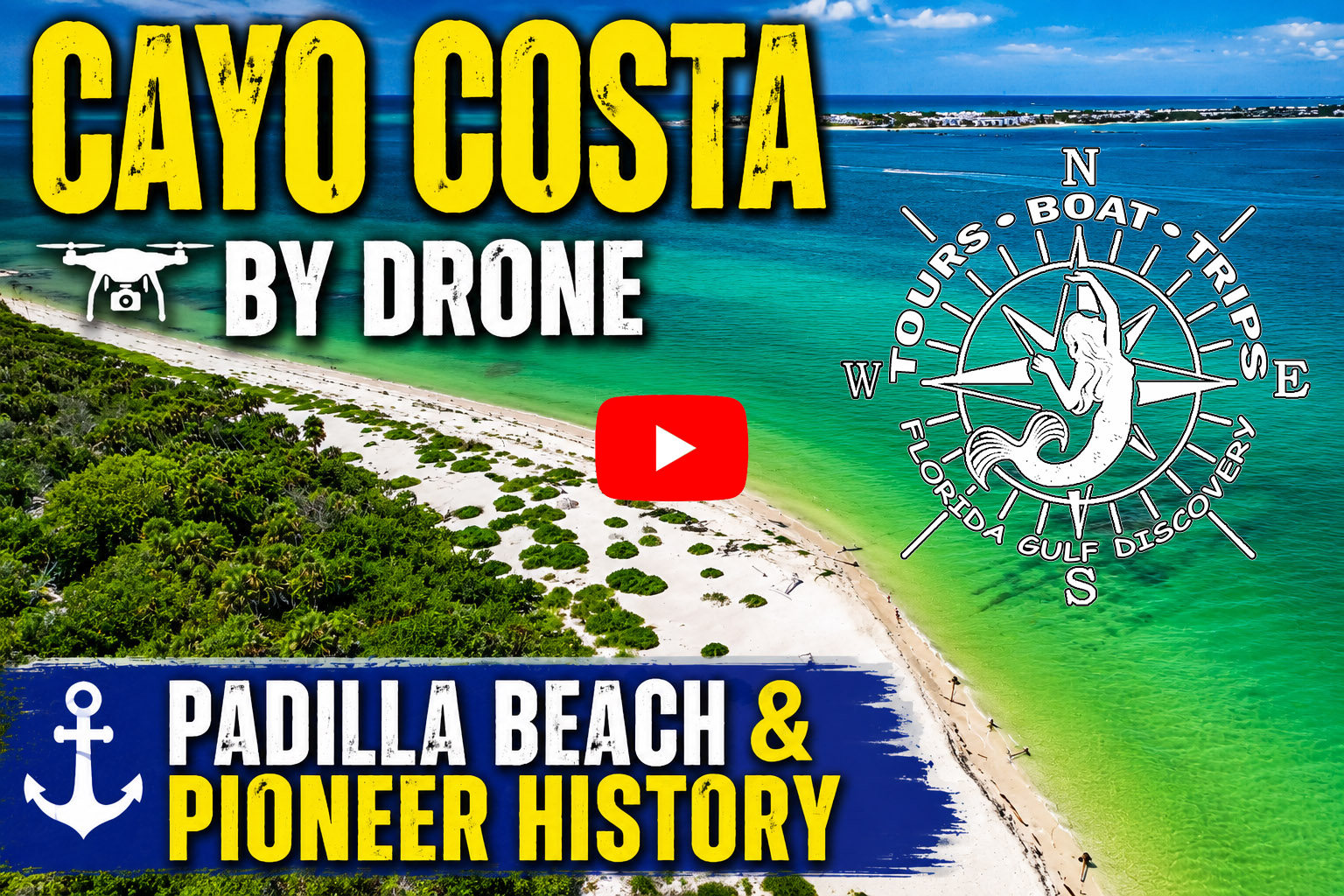
Watch on YouTube: Fly above historic Padilla Beach on Cayo Costa.
Whether you're cruising through quiet mangrove channels, watching dolphins beside your boat, exploring the beaches of Cayo Costa, visiting historic Pineland, enjoying lunch at a waterfront restaurant, or simply experiencing another spectacular Gulf Coast sunset, Pine Island Sound offers experiences that continue to bring visitors back year after year.
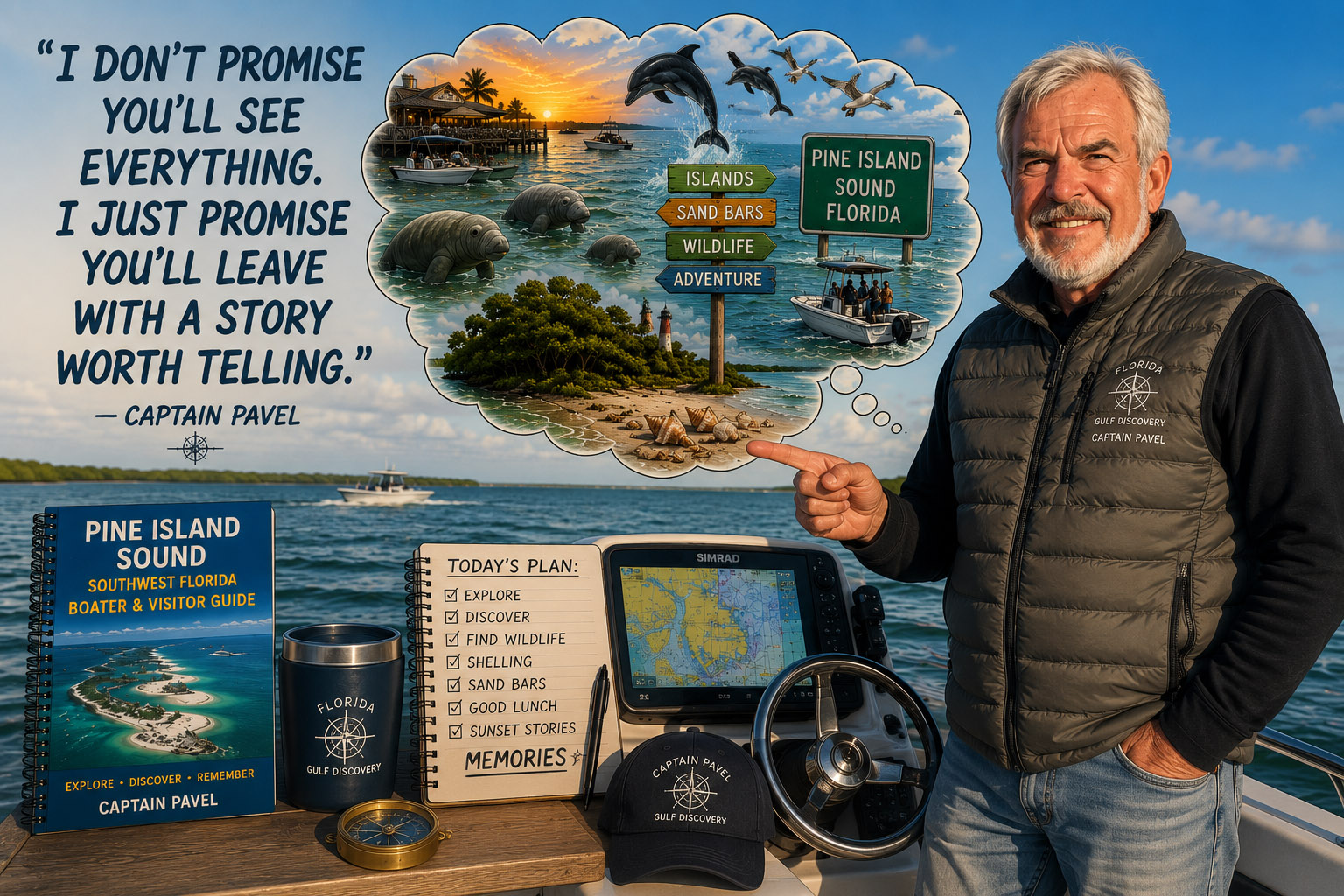
I just promise you'll leave
with a story worth telling."
— Captain Pavel
For Captain Pavel, Pine Island Sound is more than a destination—it's one of the waterways that defines Florida Gulf Discovery. Every season reveals something different, from migrating birds and playful dolphins to changing tides, blooming mangroves, and unforgettable days spent exploring Southwest Florida's beautiful coastal waters.
Whether you arrive aboard your own boat or join one of Captain Pavel's private tours, Pine Island Sound offers an authentic Old Florida experience where nature, history, and adventure come together on the water.